
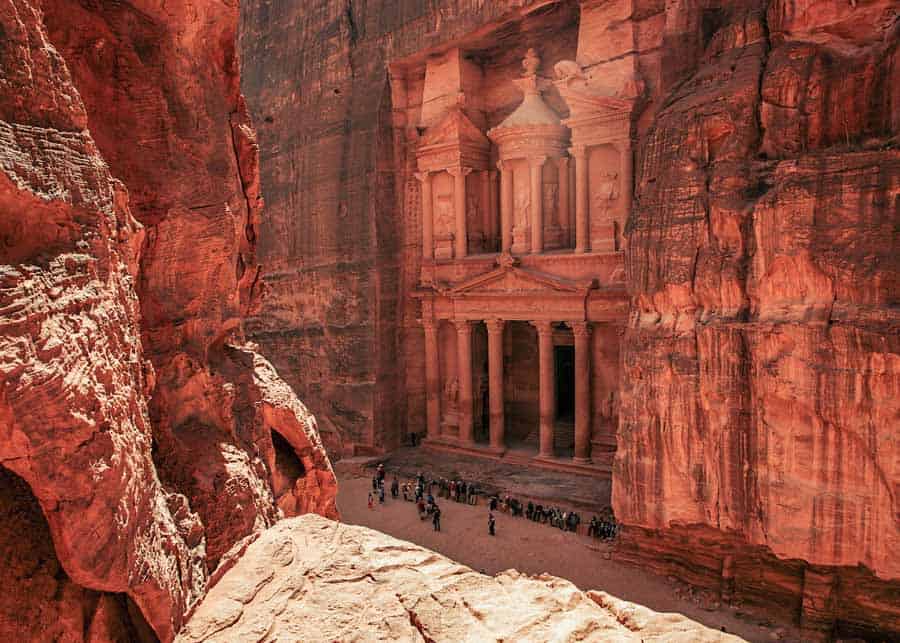
For many travelers, Petra is the reason to visit Jordan in the first place. But despite its fame, very few of those who flock to the mysterious city truly know what to expect or arrive fully prepared for the experience. Petra is far bigger, more physically demanding, and more layered than most people imagine before they step into the Siq for the first time. In this guide, I’ll try to answer all the questions you may have about visiting Petra –– from the practical details that make the trip smoother to the small insights that help you experience the Rose City like someone who understands the place, not just someone passing through it.
Is Petra Safe to Visit in 2026?
Despite the unrest and conflicts in the region, Petra is very safe to visit in 2026 . Jordan is one of the most stable countries in the Middle East, and Wadi Musa — the town at the gates of Petra — sees thousands of international visitors every week.
Tourist numbers dropped during the conflict in neighboring Israel and Gaza, but the area around Petra has not been affected. The site is well patrolled by tourist police, and solo female travelers can visit comfortably, though I’d suggest sticking to busier trails if you are on your own. Always check your country’s travel advisory before booking, and consider basic travel insurance that covers regional disruptions.
Where is Petra and How to Get There
Petra is located in southern Jordan, in the town of Wadi Musa, about 240 km south of Amman and 130 km north of Aqaba. There are three common ways to reach it.
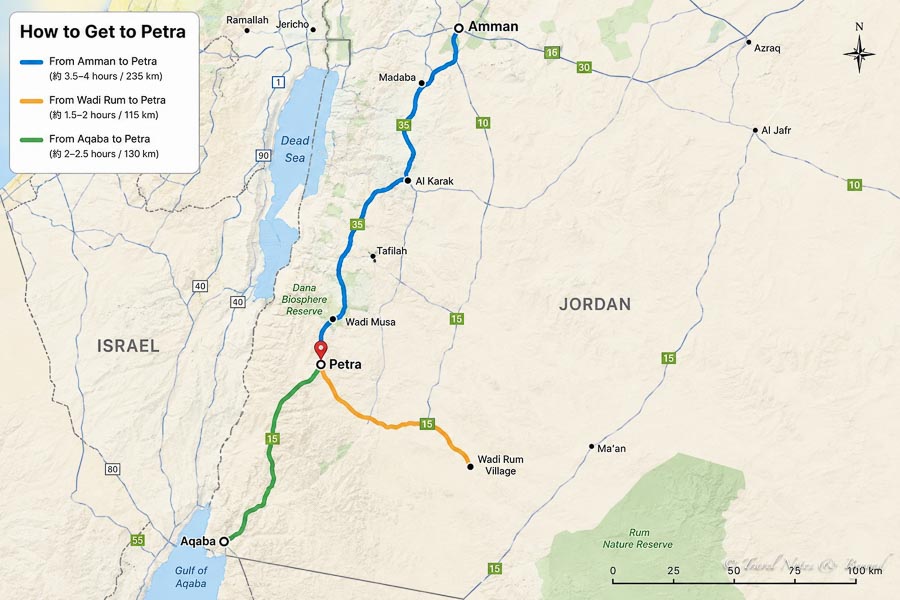
From Amman to Petra
The JETT bus is the cheapest option at 10 JOD (about $14) one way. It leaves Amman at 6:30 am and arrives in Wadi Musa around 10 am. The return bus leaves Petra at 5 pm. A private taxi or transfer from Amman Airport costs around 60 JOD ($82). Renting a car gives you the most flexibility — the drive on the Desert Highway takes about three hours, and the Kings Highway takes longer but is more scenic.
From Aqaba to Petra
Aqaba is the closest airport to Petra. A taxi takes around two hours and costs 50 to 60 JOD. There’s also a daily minibus.
From Wadi Rum to Petra
The drive from Wadi Rum takes about an hour and a half. Most desert camps will arrange a transfer for around 30 to 40 JOD per car.
Petra Ticket Prices in 2026
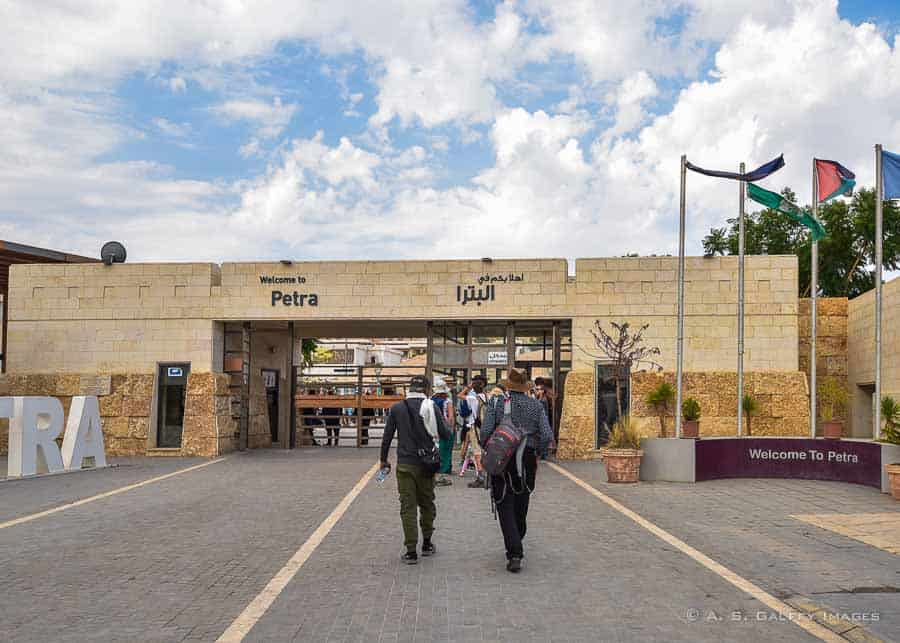
If you are not buying the Jordan Pass, you can purchase a ticket directly at the Visitor Center. Prices are:
- 1-day ticket: 50 JOD (about $70)
- 2-day ticket: 55 JOD
- 3-day ticket: 60 JOD
- Day-trippers from Israel (no overnight stay in Jordan): 90 JOD
- Children under 12: free
Tickets must be paid in Jordanian dinars, and you’ll need your passport to purchase.
Opening Hours & Best Time to Visit Petra
Petra is open year-round, but the experience changes dramatically depending on the season and even the hour of the day you enter. In the cooler months, the long walks through the desert mountains feel pleasant and unhurried. In summer, the same trails can become exhausting by midday. We visited in October, and despite being outside the hottest season, the temperatures still felt quite high.
Petra Opening Hours
- Summer hours (March 2 to October 1): 6 am to 6 pm
- Winter hours (October 2 to March 1): 6:30 am to 5 pm
The ticket office usually closes about an hour before sunset.
No matter the season, arriving early makes a huge difference. The temperatures are cooler, the Siq is quieter, and the soft morning light makes Petra feel far more atmospheric before the crowds arrive.
READ NEXT: Guide to Visiting Jerash, Jordan’s Best-Peserved Roman Citiy
Best Time of Year to Visit Petra
The best months to visit Petra are generally March, April, October, and November, when daytime temperatures usually range between 18°C and 25°C (65°F to 77°F). These months are warm enough for long hikes without the intense summer heat.
July and August are the most difficult months for sightseeing. Afternoon temperatures often climb above 35°C (95°F), and exposed trails like the Monastery hike can feel draining under the sun.
Winter has its own appeal. Petra is quieter, hotel prices are lower, and the cooler air makes hiking easier during the day. However, mornings can be surprisingly cold, and heavy rain occasionally causes flash floods that temporarily close the Siq.
How Many Days Do You Need in Petra?
Two days. Petra is far larger than the photos make it seem. Most visitors arrive expecting a quick stop at the Treasury, only to discover that Petra is an entire world of trails, tombs, and hidden corners spread across the desert mountains. The archaeological park spans more than 60 square kilometers, and even the main trail is roughly 8 km round trip.
With one day, you’ll only have time to see the Treasury, the Royal Tombs, and — if you are reasonably fit — the Monastery. But you will likely spend the entire visit rushing from one landmark to the next. Two days gives you time to add the High Place of Sacrifice, the back-door trail from Little Petra, and Petra by Night without ending the trip with sore feet and regret.
Suggested 1-Day & 2-Day Petra Itinerary
If you only have one day in Petra, start as early as possible and focus on the main trail. With two days, you can slow down, add some of Petra’s quieter corners, and avoid turning the visit into an endurance test.
One Day in Petra
- 6:00 am — Enter the park through the Visitor Center
- 6:20 am — Walk through the Siq
- 7:00 am — Reach the Treasury before the large tour groups arrive
- 8:00 am — Continue past the Street of Facades and the Royal Tombs
- 10:00 am — Climb the 800 steps to the Monastery
- 12:30 pm — Lunch near the Basin area
- 2:00 pm — Walk back along the main trail and photograph the Treasury in softer afternoon light
- 5:00 pm — Exit the park
Two Days in Petra
Day 1
Explore the main trail: the Treasury, Street of Facades, Royal Tombs, and the High Place of Sacrifice. Leave the site by late afternoon and rest before attending Petra by Night.
Day 2
Drive to Little Petra and hike the back-door trail to the Monastery. This route is mostly downhill and avoids the famous 800-step climb. From there, continue through Petra’s main trail and exit around golden hour, when the light inside the Siq becomes especially beautiful.
Petra by Night
If you are spending two days in Petra, this is an experience worth trying to fit into your itinerary. Here is what you should know before you go:
Petra by Night takes place three evenings per week: Monday, Tuesday, and Wednesday, between 8:30 pm – 10:30. During the event, the Siq and the area in front of the Treasury are lit with hundreds of candles while Bedouin music echoes through the canyon. It is undeniably touristy, but also strangely atmospheric, especially if it is your first time seeing the Treasury emerge from the darkness.
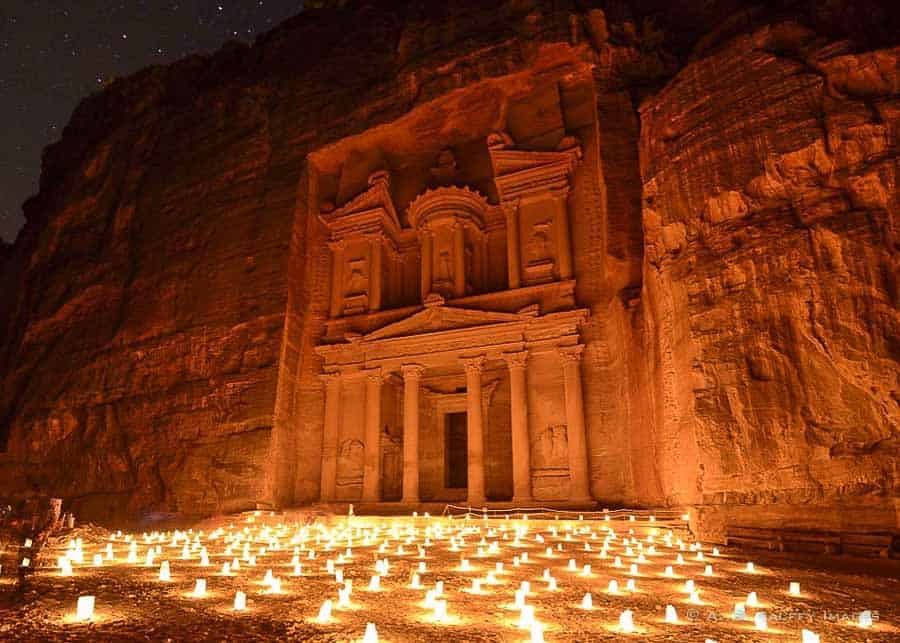
The candlelit evening show lasts about two hours and requires a separate ticket because it is not included in your Petra entrance pass. If you plan to attend, my advice is to arrive early as the best seats directly facing the Treasury fill quickly. Just keep in mind that Petra by Night is not about exploring the archaeological site, but rather about experiencing the mood of the place after dark.
How to Visit Petra: Advice & Tips
Petra is not the kind of place you “quickly see” in an hour or two. It’s a vast conglomerate of elaborate tombs and religious high places, half-built and half-carved into red sandstone cliffs. The archaeological park is enormous, the terrain is uneven, and the distances between monuments are often much longer than they appear on a map. A little planning makes an enormous difference here, not only in terms of comfort, but in how much you will actually enjoy the experience.
Buy the Jordan Pass Before You Arrive
The first question people ask themselves is whether the pass is worth it or not. For most visitors, yes. If you are spending at least two consecutive nights in Jordan, the Jordan Pass is almost always worth buying. It includes your tourist visa fee as well as entry to Petra and dozens of other sites across the country. Buying it online before your trip will save you both money and time.
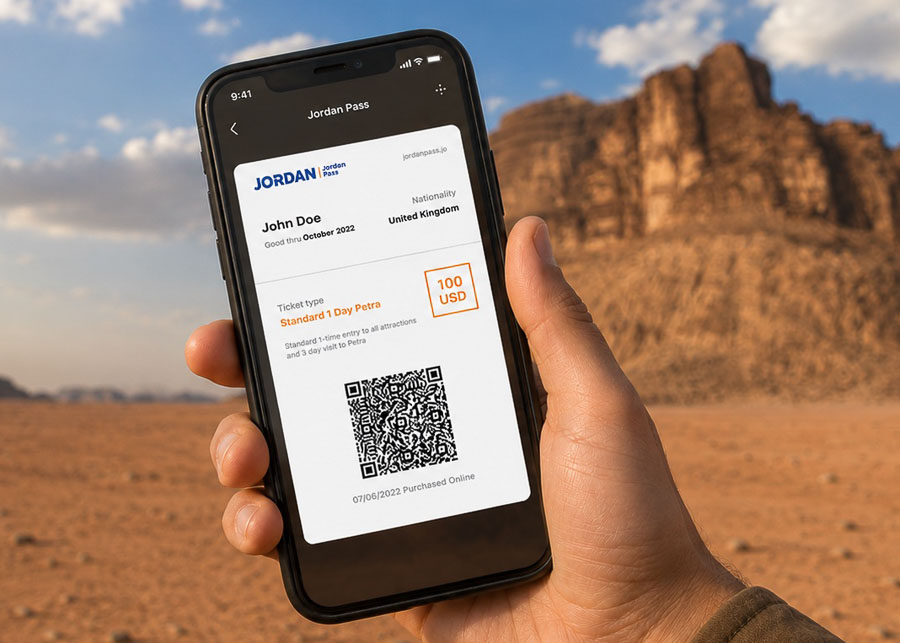
If you’d like to learn more about what the Jordan Pass includes and which option is best for your trip, I’ve written a detailed guide covering everything you need to know.
Give Yourself More Than One Day
Many visitors buy a one-day ticket and rush through Petra trying to see everything at once. The result is usually exhaustion. Petra is best experienced slowly. Two days gives you time to explore the main sites without constantly watching the clock, and it allows you to visit early in the morning or later in the afternoon when the light is softer and the crowds thin out.
Arrive Early
The difference between entering Petra at 6 am and entering at 10 am is enormous. Early mornings are cooler, quieter, and far more atmospheric. The walk through the Siq feels almost meditative before the tour groups arrive, and seeing the Treasury emerge from the shadows in the first light of the day is part of what makes Petra unforgettable.
Wear Proper Shoes
This sounds obvious until you see people trying to climb rocky trails in sandals or fashion sneakers. Petra involves a surprising amount of walking, stairs, and uneven stone paths polished smooth by centuries of footsteps. Comfortable walking or hiking shoes will make the day much easier.
Be Prepared to Walk in Full Sun
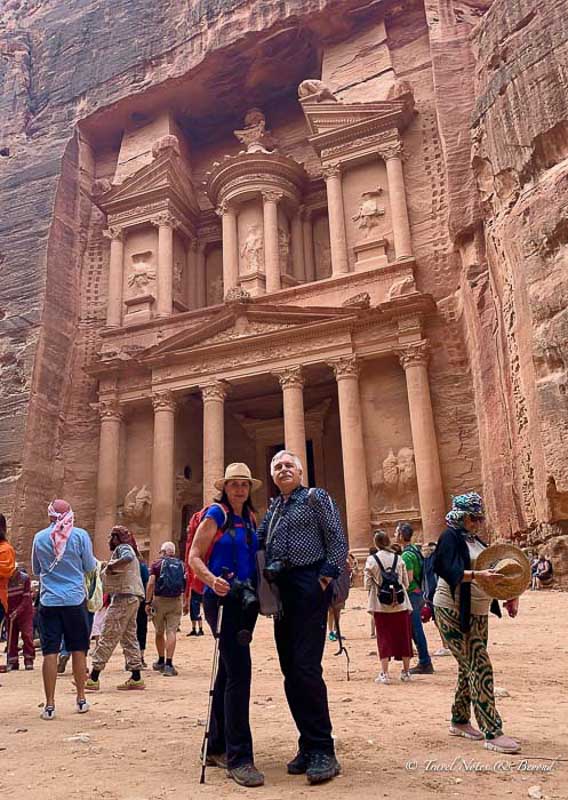
There is barely any shade in Petra, so be prepared to do a lot of walking in full sun. This makes hiking really difficult during the summer months and even in the fall. You get no break from the sun, so wearing a hat or a scarf and lots of sunscreen is a must! Also, carry at least 1.5 liters of water with you.
Carry Cash
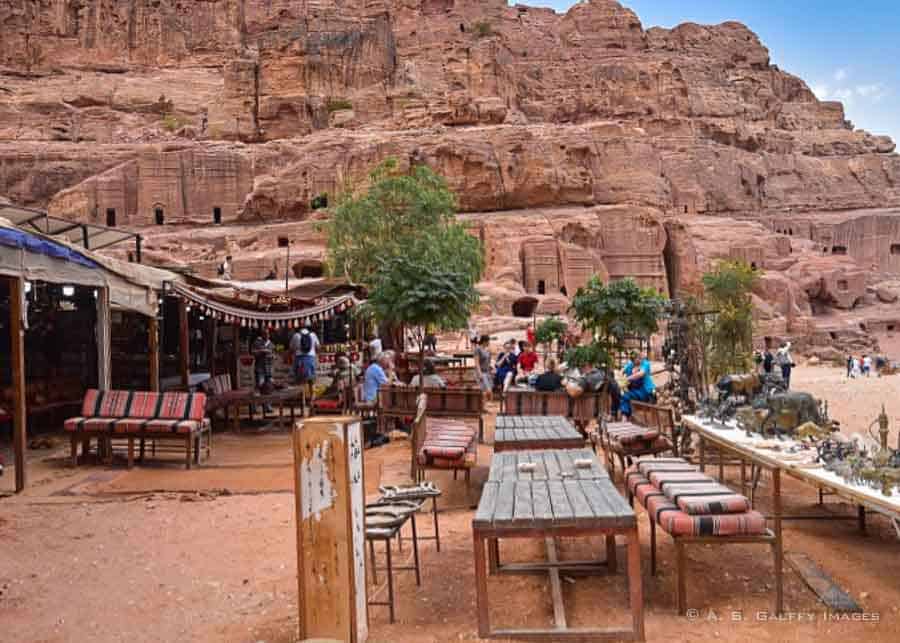
Although the entrance ticket itself is usually prepaid through the Jordan Pass or online purchase, many smaller purchases inside Petra are cash only. If you want to grab a bite or have a drink, there are several eateries on the site as well as many souvenir stalls. They only accept cash, so carry small bills if possible.
Do Not Underestimate the Distances
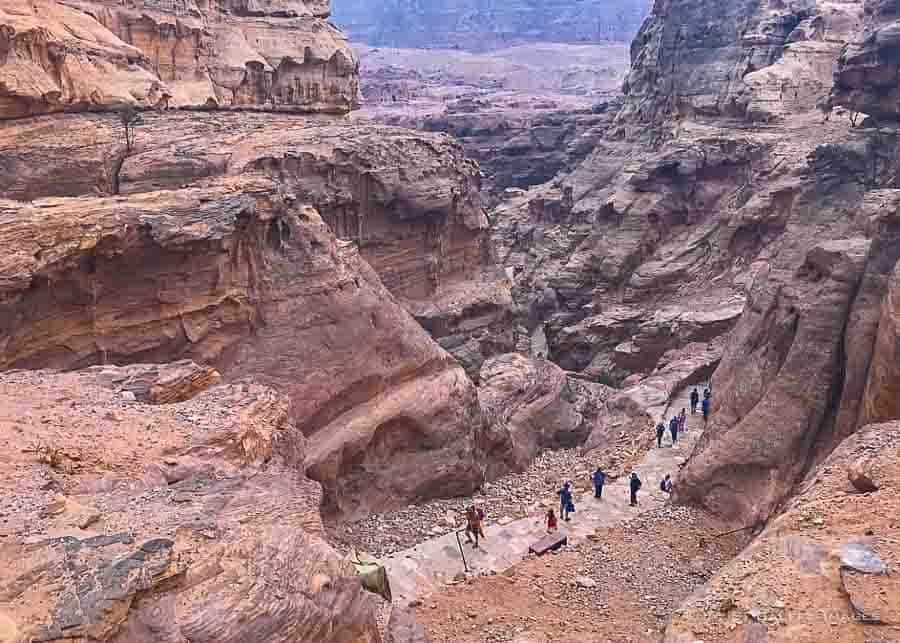
Walking to the Monastery and back alone can take several hours, especially in the heat. Petra looks compact on paper, but once inside, the landscape unfolds slowly through valleys and mountain trails. Bring more water than you think you need and pace yourself throughout the day.
Stay for the Changing Light
Petra changes character constantly depending on the hour. In the morning, the cliffs glow pale pink and gold. By midday, the stone turns almost white beneath the sun. Late in the afternoon, deeper reds and oranges begin to emerge from the rock. If you can, avoid rushing through the site and allow yourself time simply to sit and absorb the landscape around you.
Top Sites to Visit in Petra
Petra is really big, so unless you have several days to explore the site, you should choose some bits to focus on. You can concentrate on the ones along the main pathway towards the centre of Petra past the Street of Façades and the grand Royal Tombs.
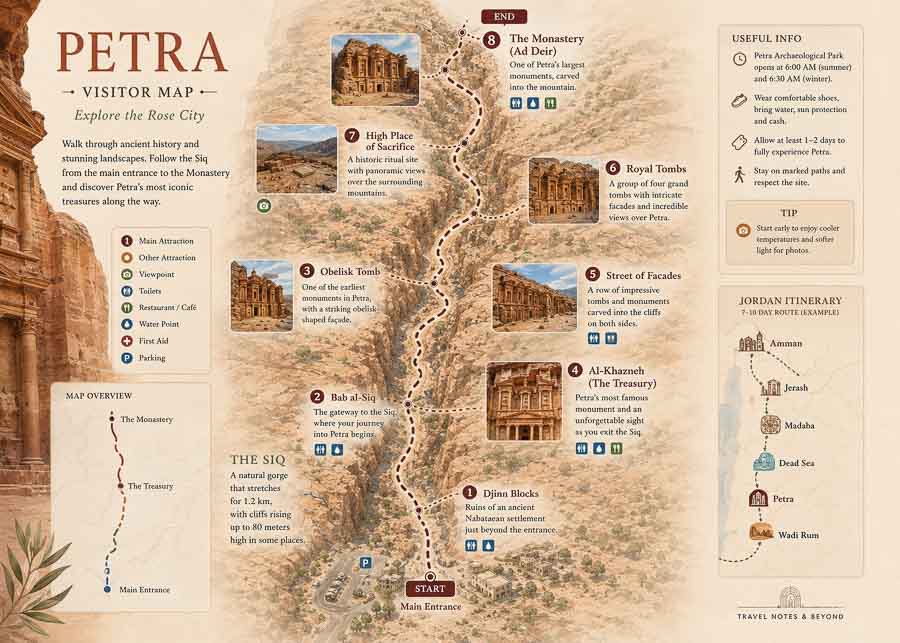
The Bab Al Siq and the Obelisk Tomb
Right after you pass the Visitor Centre, you’ll start walking along a wide path known as the Bab Al Siq. There are several monuments and tombs in this area, among which you’ll notice the Obelisk Tomb. The tomb has four pyramidal obelisks, which were funerary symbols of the Nabataeans.
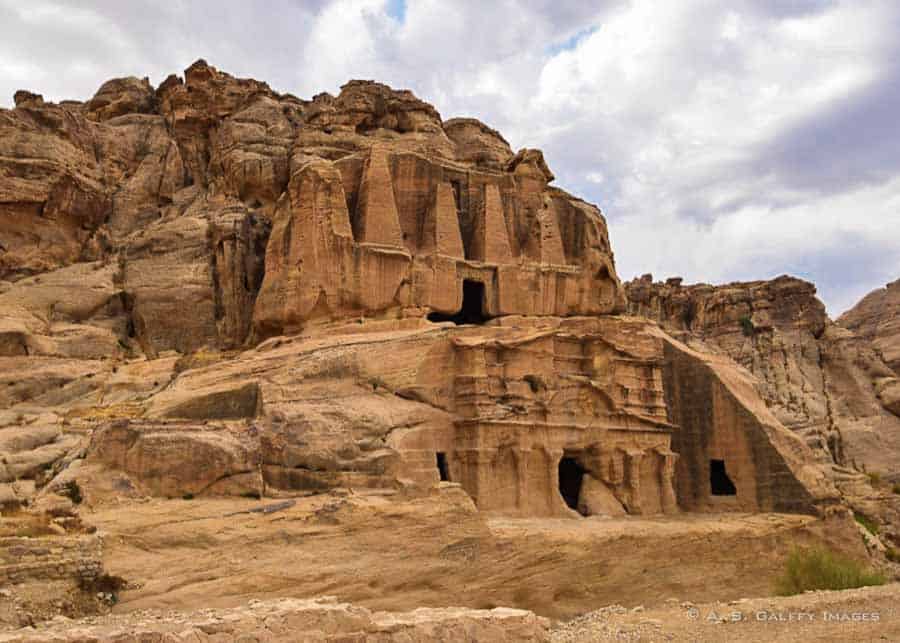
The Siq
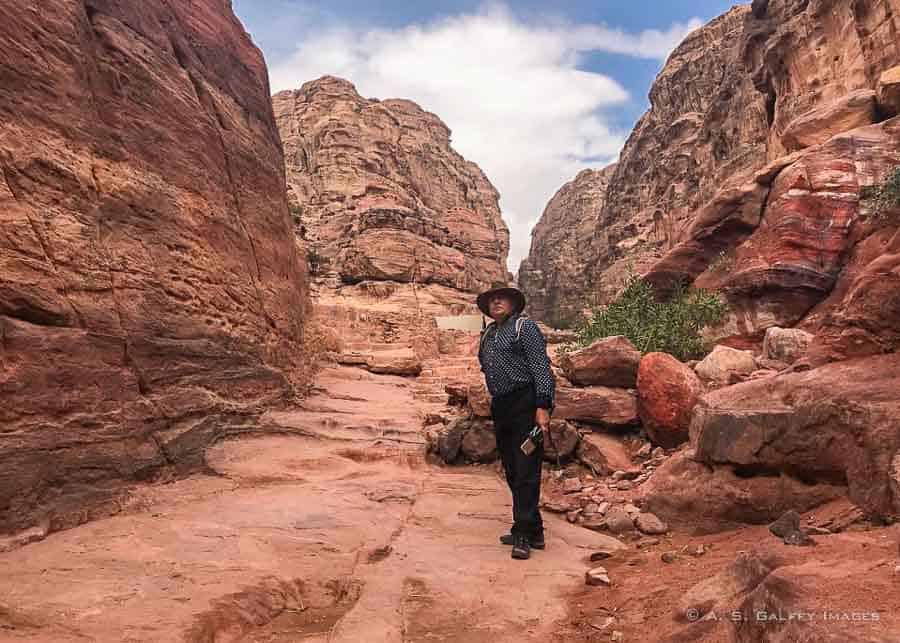
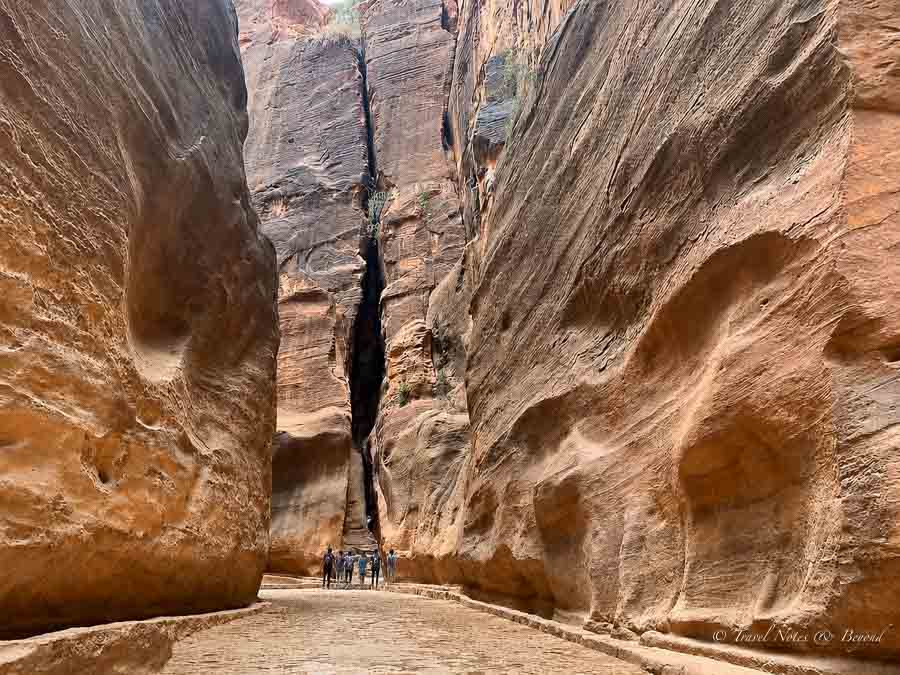
The entrance passage to the hidden city of Petra is via a towering, narrow canyon called the Siq. The path twists and turns between strangely eroded cliffs for over a kilometer.
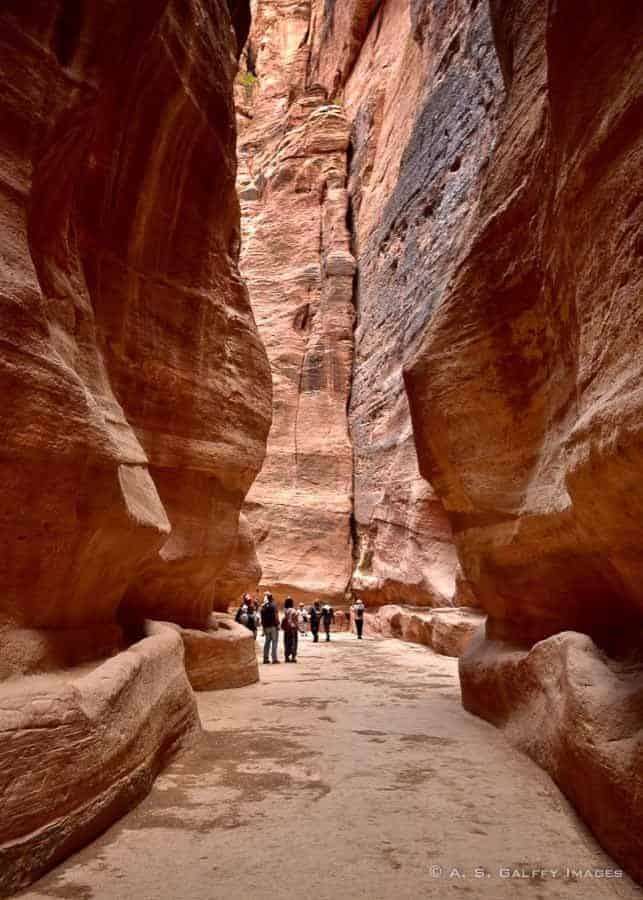
Walking the Siq is one of the most pleasant experiences in Petra. The 150 m high emerging walls close to a few meters apart, blocking out sound and light. It’s about the only place in Petra where you’ll enjoy shade.
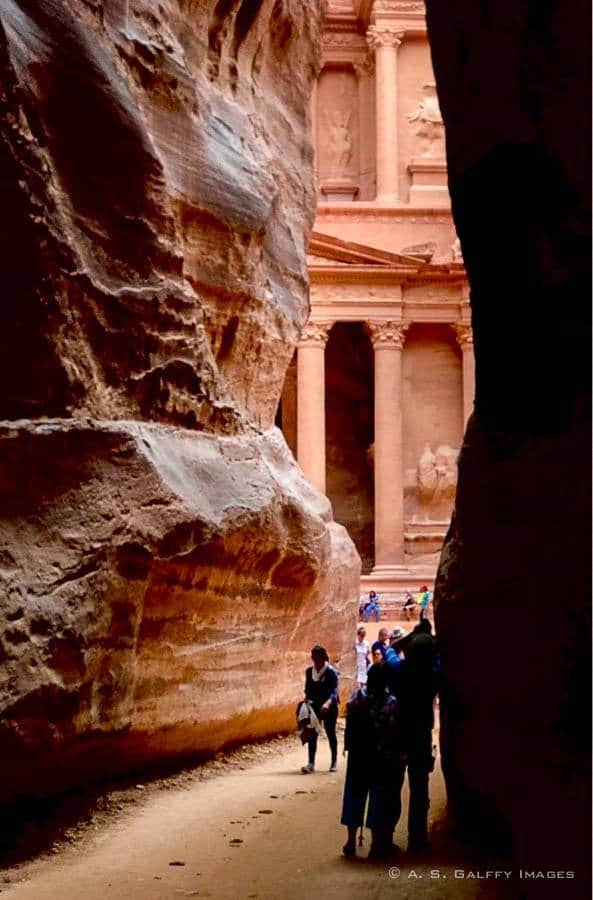
The ‘Treasury’
At the end of the Siq the path narrows becoming completely dark. As you step out into the sunlight you’ll find yourself in front of the Khazneh, or the Treasury. That first glimpse of the Treasury through the narrow passage is a sight you’ll never forget.
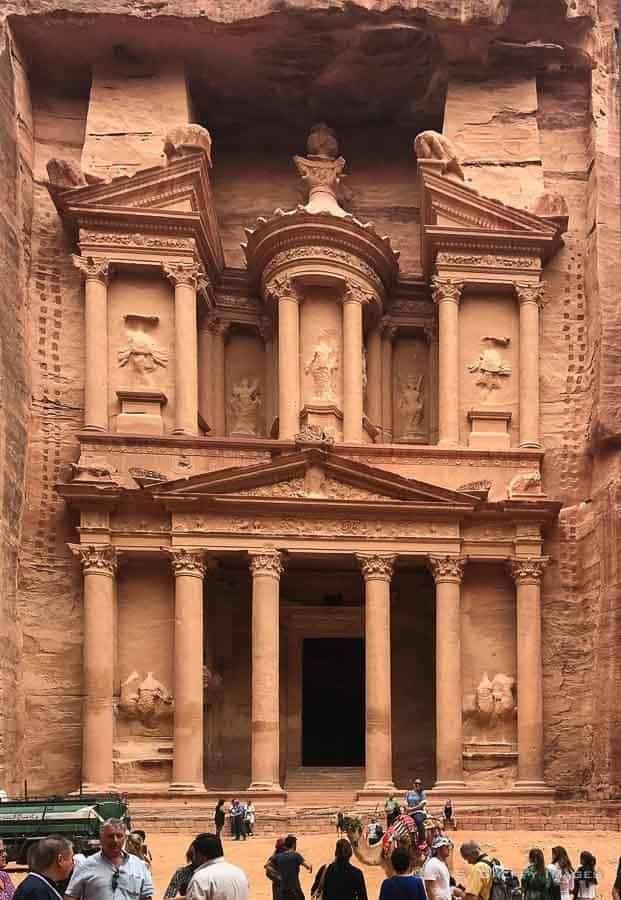
Carved directly into the cliff, the 40-meter high Treasury was never a treasury, but rather a beautifully ornate tomb which became Petra’s most iconic site.
The Street of Façades
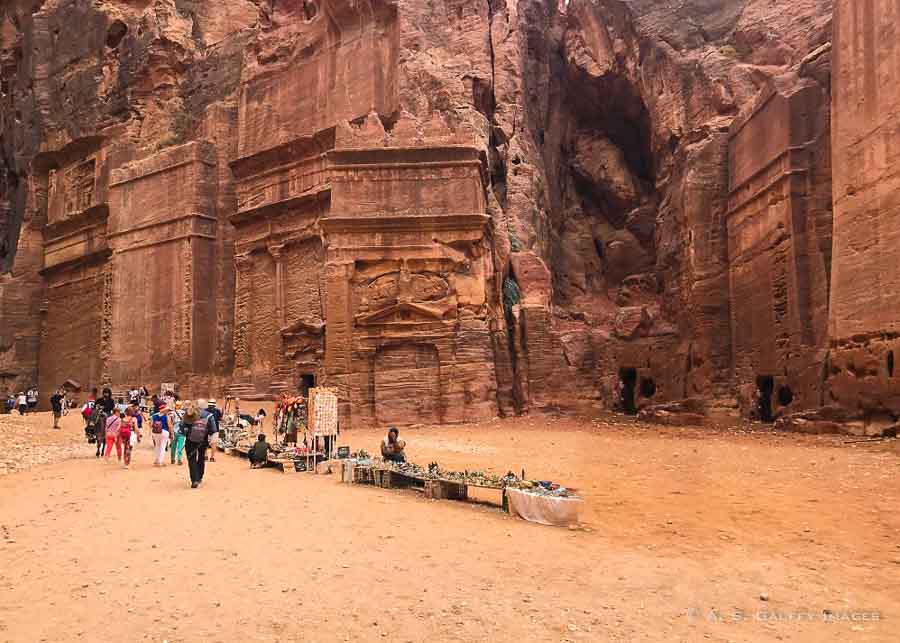
From the Khazneh, the pathway broadens into a wider area lined with large tombs carved into the rock. The area which is known as the Street of Façades, is a cliff face with a cluster of tombs considered to be the oldest ones in Petra.
The Theater
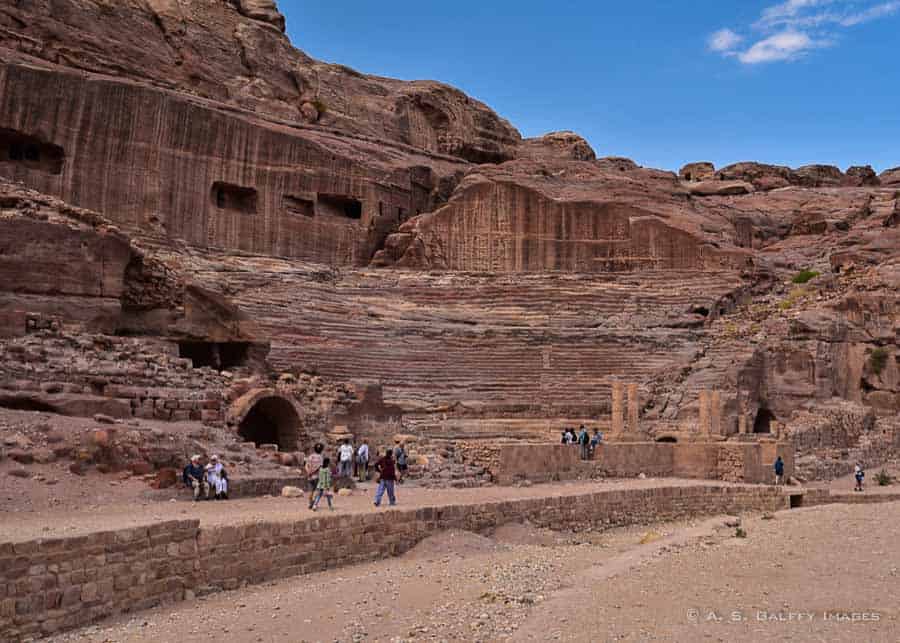
Further down the road is Petra’s spectacular Theater, built by the Nabataeans around the 1st century AD. The Theater which was later enlarged by the Romans, can seat 8,500 people!
The Royal Tombs
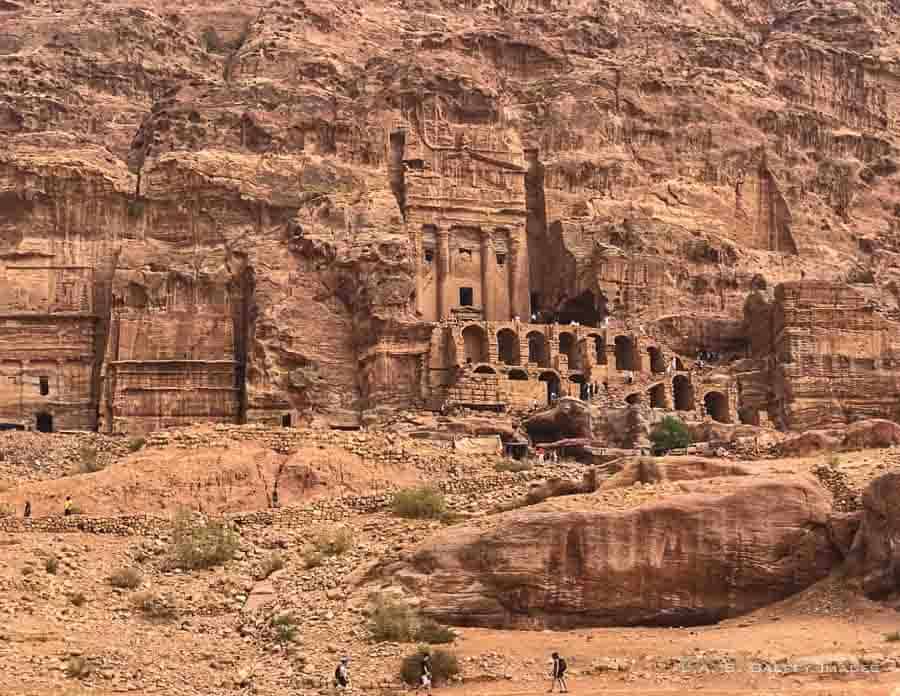
After passing the Theater, on the right side of the wadi you’ll notice the great massif of Jebel Al Khubtha. Within its cliffs are carved some of the most impressive burial places in Petra, known collectively as the ‘Royal Tombs’. They look particularly impressive in the afternoon light.
The Colonnaded Street
Downhill from the Theatre is the Colonnaded Street, that marks the centre of the Ancient City.
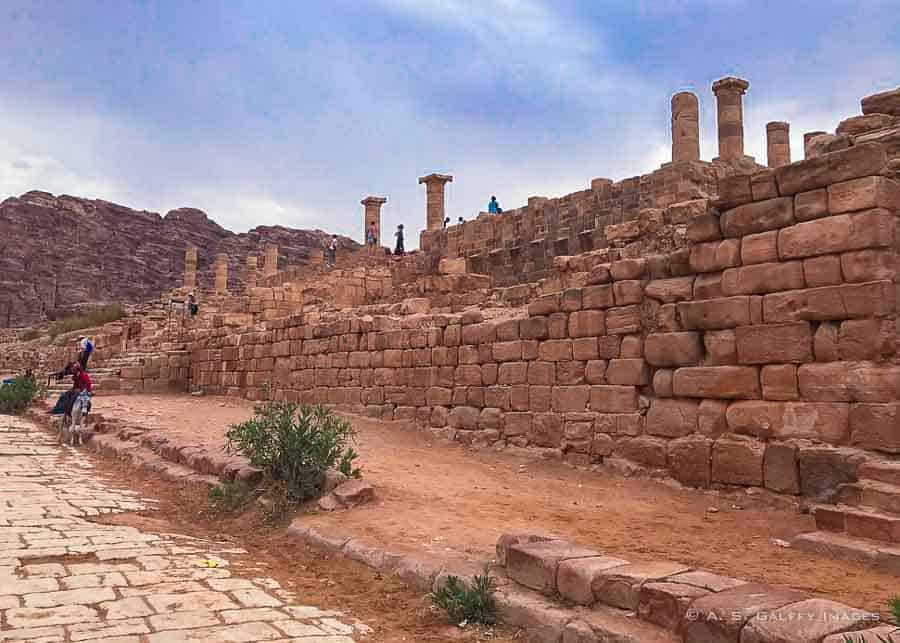
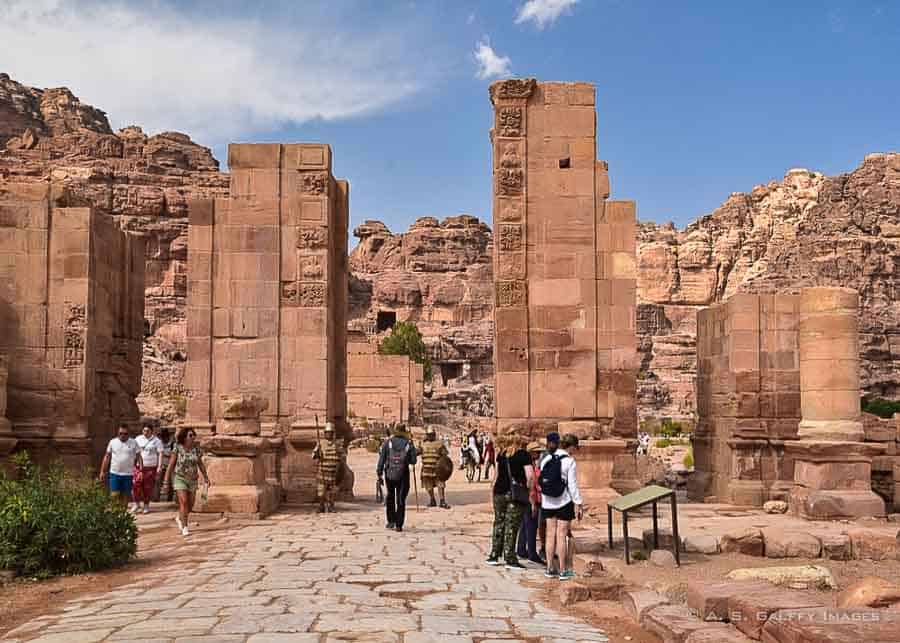
The street ends at the Roman Gate, built in the 2nd century A.D. Originally, the gate had huge wooden doors and side towers and marked the entrance to the sacred courtyard of the temple.
The Monastery
The hike to the Monastery was the highlight of our visit to Petra. Hidden high in the hills, the Monastery is one of the most spectacular monuments of Petra.
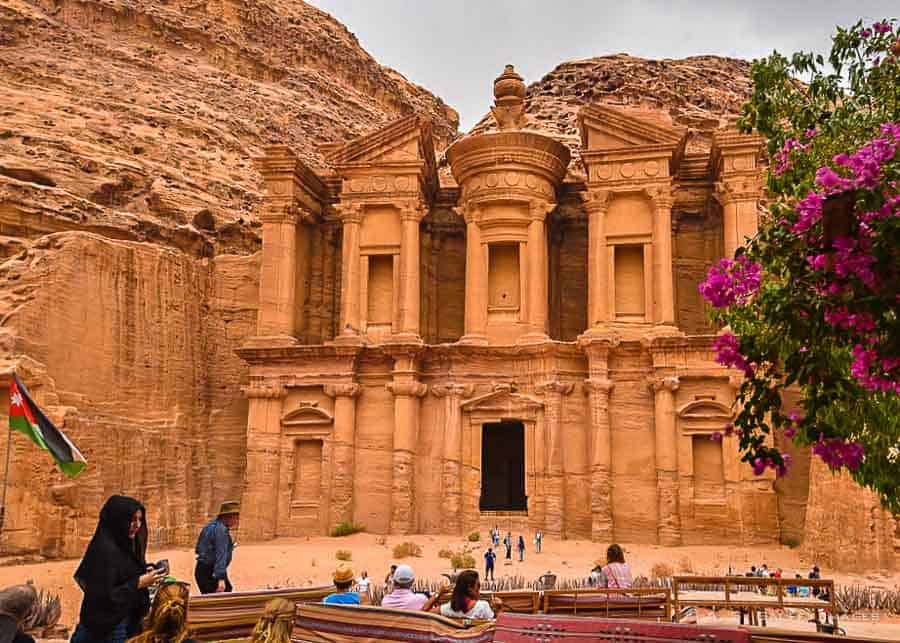
The Monastery (called Ad Deir in Arabic) is half-carved, half-built out of rock. The design is very similar to that of the Treasury, but far bigger. The structure was built in the 3rd century BC as a Nabataean tomb.
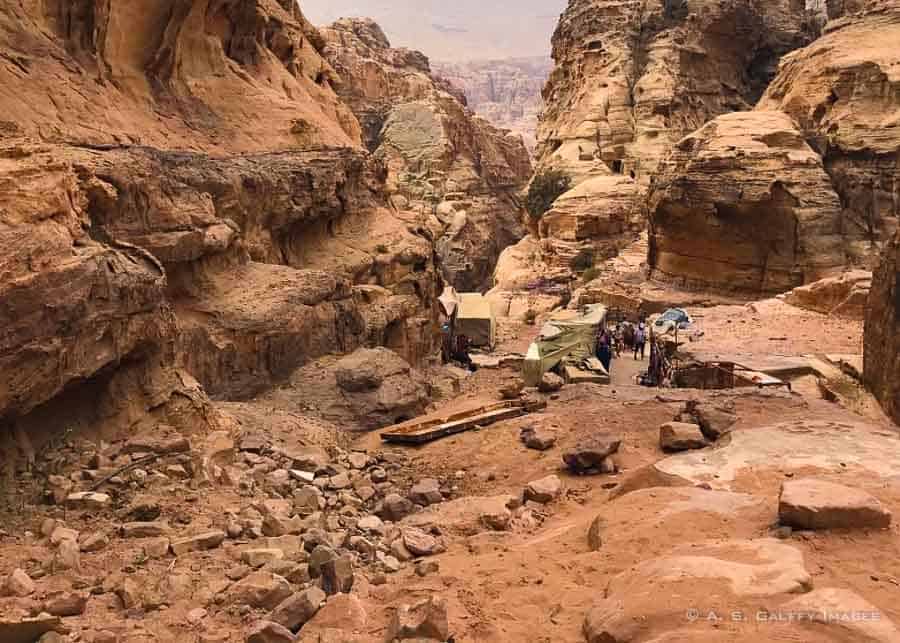
Hiking to the famous Monastery is quite exhausting, involving climbing almost 900 steep steps! Nonetheless, the hike is really beautiful, allowing bird-eye views of the entire archeological site.
Petra Hikes & Trails
Most visitors see Petra as a single monument — the Treasury at the end of the Siq — but the real magic of Petra lies in its trails. The archaeological park stretches across desert valleys and mountains, with paths leading to hidden viewpoints, ancient sacrificial altars, cliffside tombs, and monasteries carved directly into the rock. Some hikes are short and easy. Others leave you sweaty, dusty, and wondering whether you packed enough water.
We hiked most of these trails ourselves during our two days in Petra, and these are the ones we would recommend:
The Main Trail (Easy)
This is the classic Petra route that almost every visitor follows. It begins at the Visitor Center, passes through the Siq, reaches the Treasury, and then continues through the Street of Facades, the Theater, the Royal Tombs, and the Colonnaded Street toward Qasr al-Bint.
The trail itself is relatively easy, although the distance adds up quickly. Walking from the Visitor Center to Qasr al-Bint and back already makes for a long day, especially in warm weather.
Distance: roughly 8 km round trip
Difficulty: Easy
Highlights: Siq, Treasury, Royal Tombs, Theater, Colonnaded Street
The Monastery Trail (Moderate)
The hike to the Monastery (Ad Deir) is Petra’s most famous climb. From the Basin area, the trail rises through roughly 800 stone steps carved into the mountainside. Along the way, small tea stalls and viewpoints offer places to stop and catch your breath.
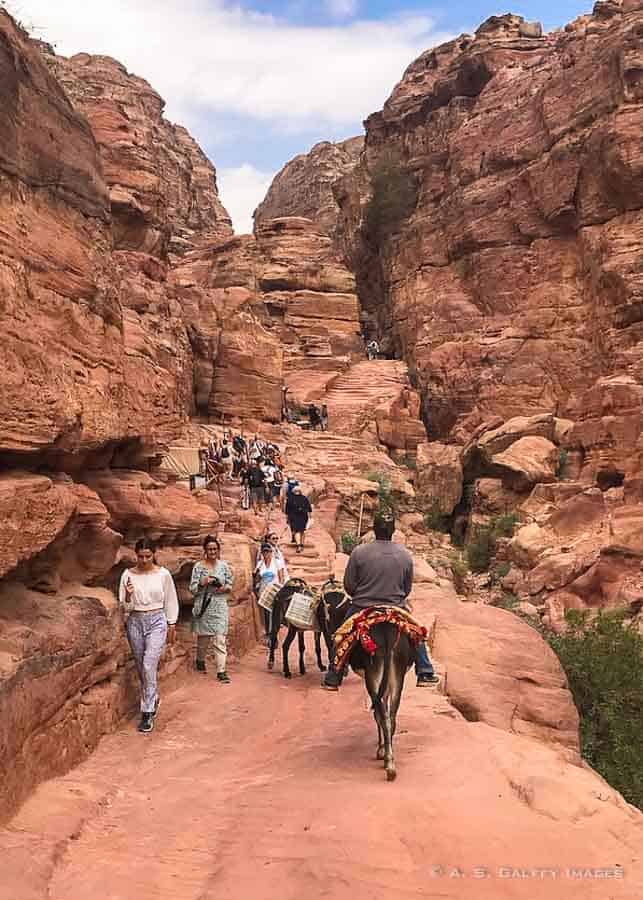
The climb can feel punishing in the midday heat, but the reward is enormous. The Monastery is even larger than the Treasury, yet somehow feels calmer and more remote because fewer visitors make the effort to reach it.
Time: about 1.5–2 hours round trip from the Basin
Difficulty: Moderate to challenging in hot weather
Highlights: Monastery, panoramic desert views
The High Place of Sacrifice Trail (Strenuous)
One of the most beautiful hikes in Petra, but very strenuous! Take the stairs located before the theater; they are clearly signposted. There are fewer steps than on the path to the Deir, but they are steeper. At the summit, you first catch sight of the two pyramids, though the High Place of Sacrifice itself can be tricky to find.
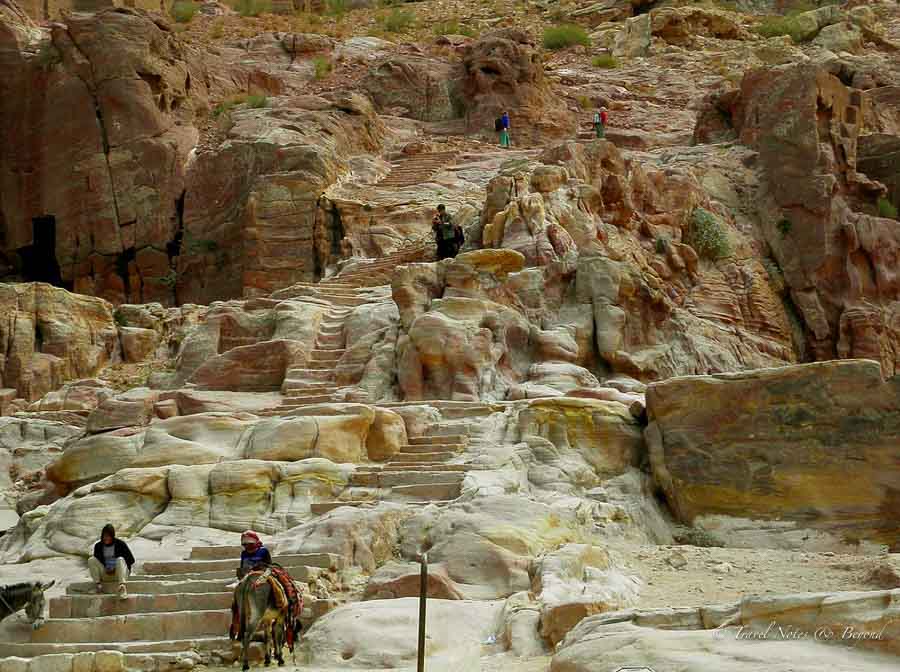
Many visitors skip this trail because they are focused on the Monastery. But if you have time, I strongly encourage you to do it. The views here are some of the best in Petra, and the route itself feels wilder and less crowded than the main tourist path.
If you continue beyond the viewpoint, the trail loops down through Wadi Farasa, where you pass tombs, caves, and ruined facades that many day-trippers never see.
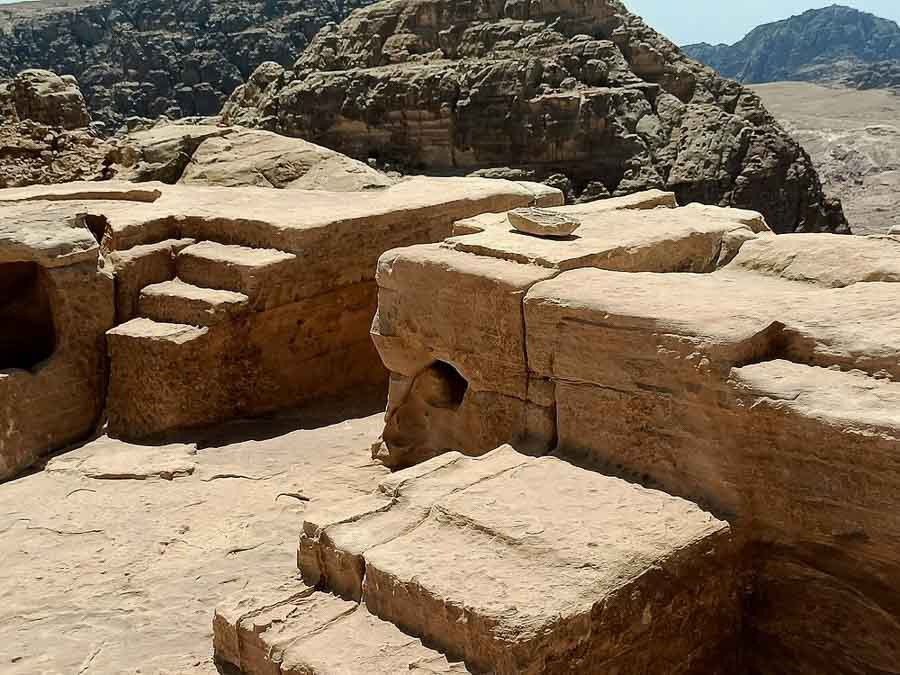
Time: 2–3 hours as a loop
Difficulty: Moderate
Highlights: Panoramic viewpoints, quieter trails, Wadi Farasa ruins
The Back-Door Trail from Little Petra (Moderate)
Instead of climbing up to the Monastery from the main site, this trail begins at Little Petra and approaches Petra from the back through open desert landscapes and narrow mountain paths. The route is mostly downhill, which makes it far easier than climbing the famous 800 steps from inside Petra.
The scenery along the way feels completely different from the main archaeological park — quieter, emptier, and more connected to the surrounding desert. After about two to three hours of hiking, the trail suddenly opens onto the Monastery from above, which is one of the most memorable entrances anywhere in Petra.
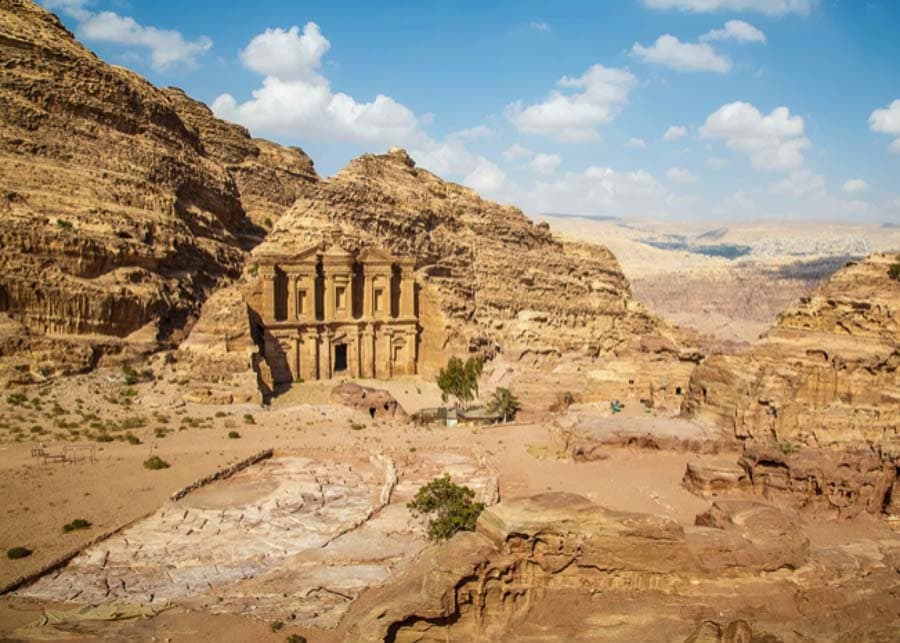
Many travelers arrange a taxi to Little Petra early in the morning, hike into Petra through the back door, and then exit through the main entrance later in the day.
Time: 2–3 hours to the Monastery
Difficulty: Moderate
Highlights: Desert scenery, fewer crowds, dramatic arrival at the Monastery
Treasury Viewpoint Trails (Short but Steep)
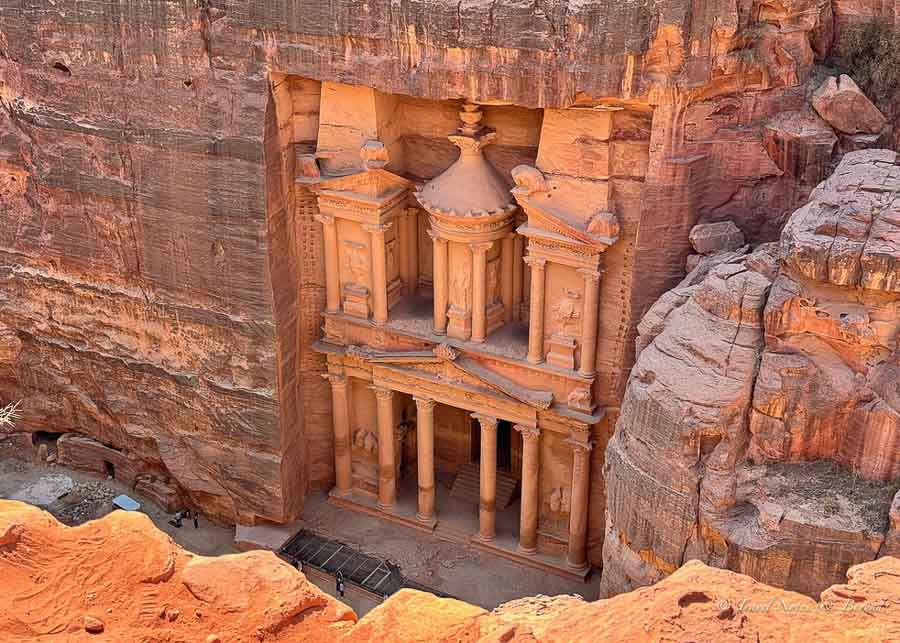
Several unofficial trails climb above the Treasury to panoramic viewpoints looking down onto the famous facade. You will almost certainly be approached by local guides offering to take you there.
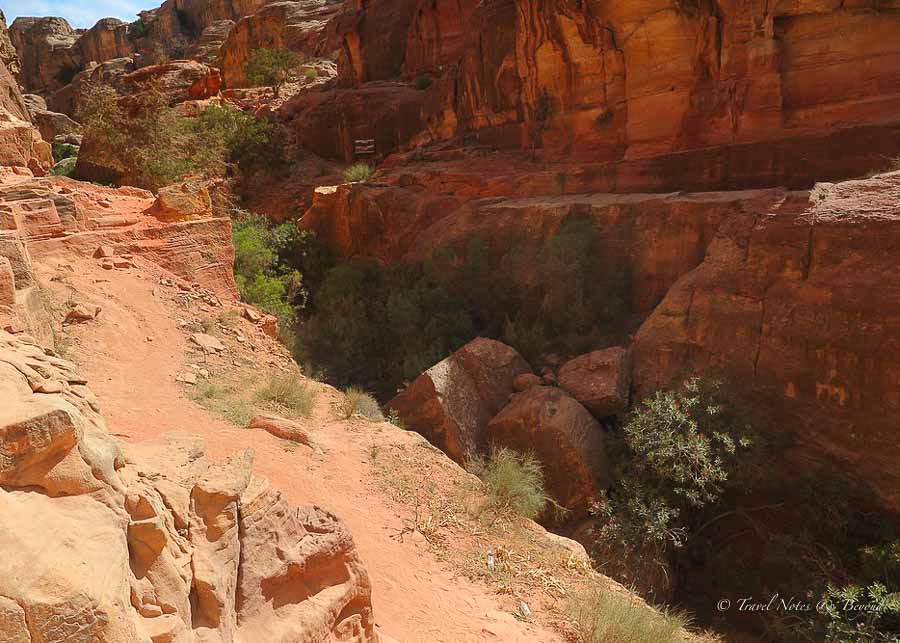
The views are totally worth the effort, but some of these paths are unofficial and can feel steep or slippery in places. If you decide to go, wear proper shoes and avoid attempting them during the hottest hours of the day.
A Few Trail Tips
- Start early, especially if you plan to hike to the Monastery or the High Place of Sacrifice.
- Carry more water than you think you need.
- Wear proper walking shoes — Petra’s stone paths become slippery and uneven.
- Do not underestimate distances inside the park.
- In summer, avoid major climbs in the middle of the afternoon.
- If you only have one day, prioritize either the Monastery or the High Place of Sacrifice rather than trying to rush through both.
Animal Rides in Petra: Please Don’t!
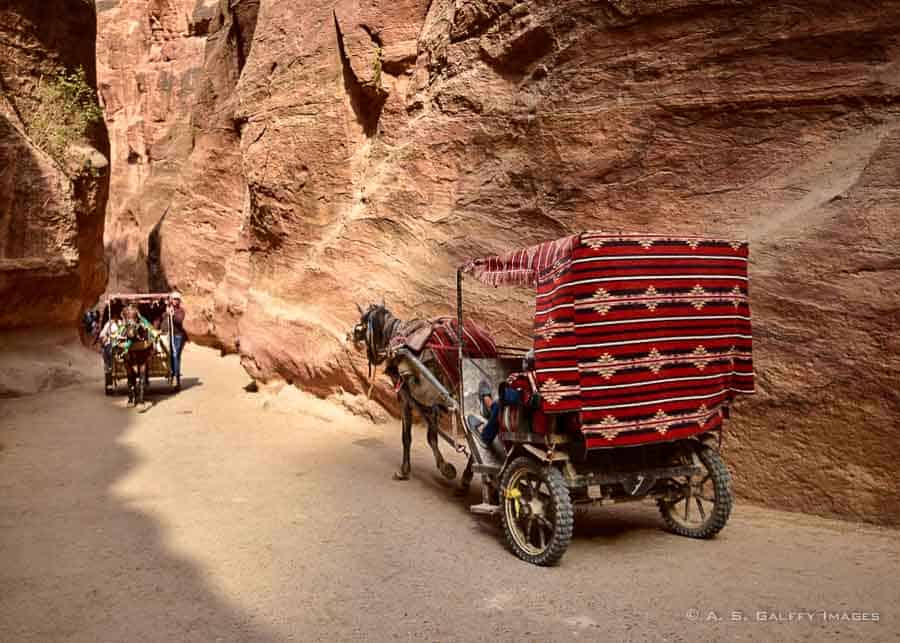
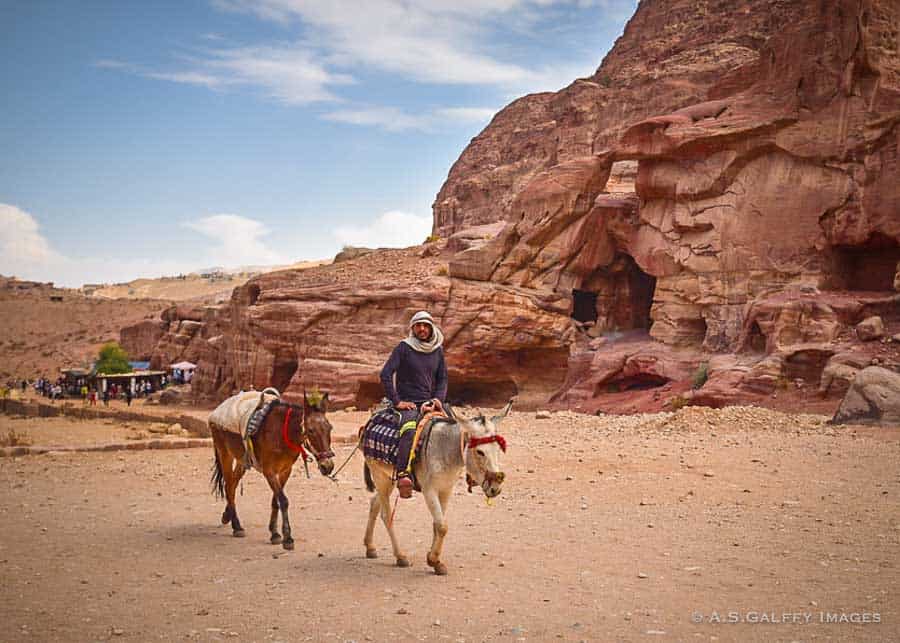
During your visit to Petra you will likely be offered horse, donkey, camel, or cart rides throughout the site. While these animals are a source of income for the Bedouins, there is much debate as to how well they are kept and cared for. Donkeys and mules haul tourists up 900 steep and eroded steps to the Monastery, horses and camels carry tourists through the city, by pulling carriages and carts.
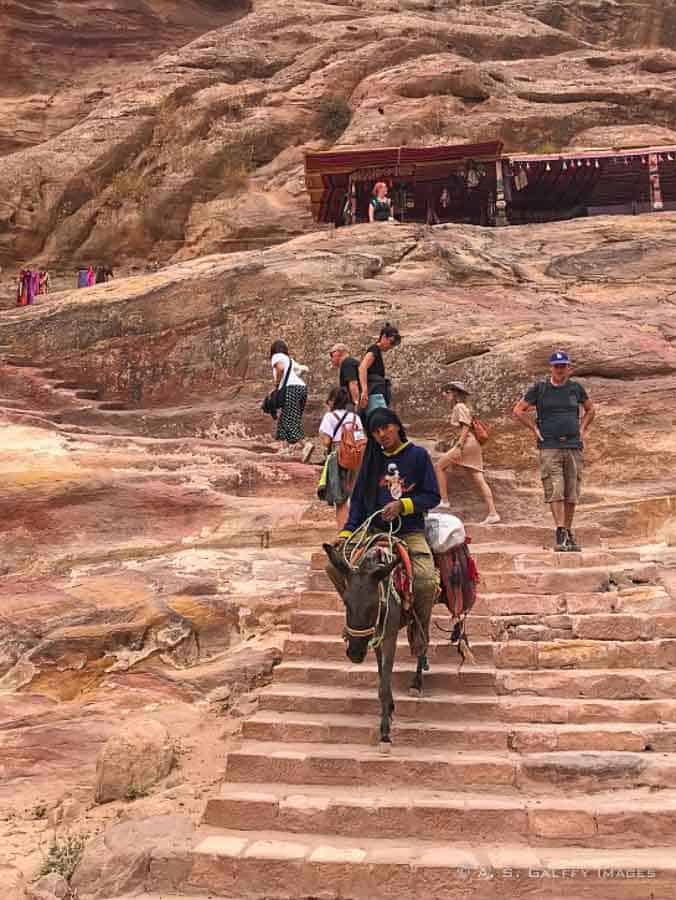
Some of these animals looked abused and deprived of food and water. We personally witnessed the whipping of an exhausted donkey struggling to hike the steep steps to the Monastery. I would strongly discourage tourists from riding these animals, except for elderly people who are unable to walk long distances or climb up steep steps.
If you see an animal in distress, report it at the Visitor Center or to the tourist police. Petra is walkable for anyone in reasonable shape, and walking is how you actually see it.
A quick word about the “free” rides included with your entrance ticket: the short horse ride from the Visitor Center to the entrance of the Siq is technically covered by your ticket, but handlers will press hard for a 10 JOD tip, and the animal is the one paying the real price either way. Skip it.
What to Wear in Petra
Petra is far more physically demanding than many visitors expect, so comfortable walking clothes matter more here than at most archaeological sites. Lightweight breathable clothing works best for the desert heat, but the real priority is the footwear. Between the uneven stone paths, loose gravel, and long stair climbs to places like the Monastery and the High Place of Sacrifice, proper walking or hiking shoes will make a huge difference by the end of the day.
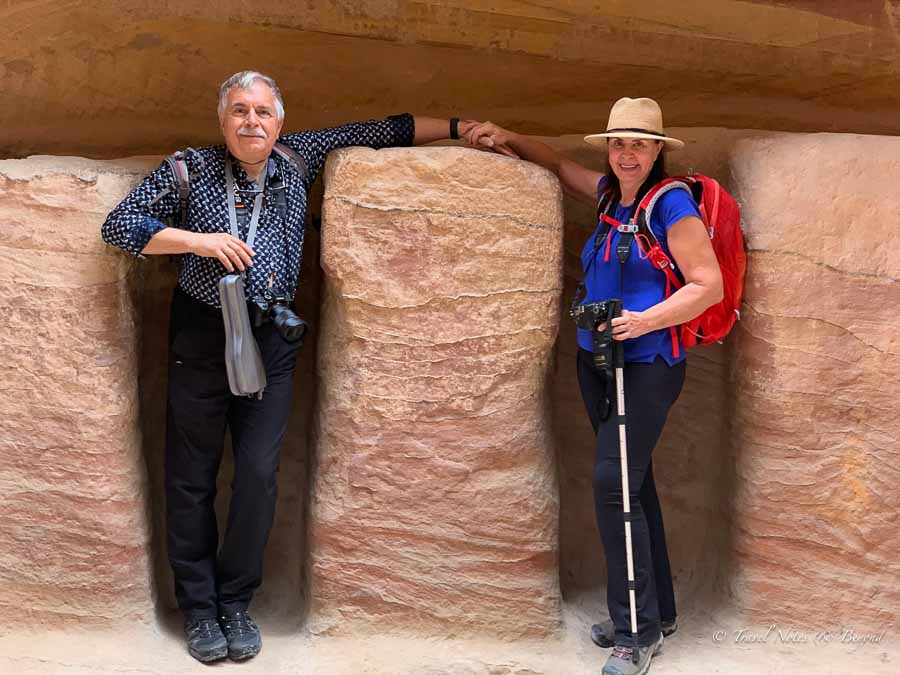
If you are visiting in winter, bring an extra layer for the early mornings, which can feel surprisingly cold before sunrise. A hat, sunglasses, and sunscreen are also worth carrying, especially between spring and early autumn when much of Petra sits fully exposed to the sun.
I also suggest bringing hiking poles if you plan on doing any of the hike. Except for the Siq, the main trail from the Treasury to the Royal Tombs and the Colonnaded Street area, the rest of the hikes are demanding enough to justify using hiking poles.
Where to stay in Petra
The nearest town to the archeological site of Petra is Wadi Musa (Valley of Moses). The town sits on a very steep hill at the bottom of which is the main entrance to Petra.
There are plenty of hotels in Wadi Musa to choose from, but you should choose a hotel that is near Petra. Prices range from $55 to over $380/night and don’t necessarily reflect the quality or cleanness of the rooms.
We didn’t want to spend a lot of money since Jordan is an expensive country anyway, so we chose an $85/night hotel (Al Rashid). However, despite the good reviews on TripAdvisor, we weren’t happy with it. The hotel was clean, but very old and outdated. If you want a nice hotel room, you’ll have to pay over $180/night.
There are several nice hotels in Wadi Musa, like Petra Guest House Hotel, La Maison Hotel, or Petra Boutique Hotel, which are also within 2 miles from the archeological park entrance.
A Brief History of Petra
Petra was once the thriving capital of the Nabatean Kingdom. Nabateans were the people who inhabited the area until 100AD, when the Romans invaded it and took over Petra.
Because of its location at the crossroads between Arabia, Egypt and Phoenicia, Petra was a major caravan centre during the Roman period. However, in time the city’s importance declined and Petra was ultimately abandoned and forgotten. Since it wasn’t marked on any modern maps, Petra remained ‘hidden’ to the Western world for more than 500 years.
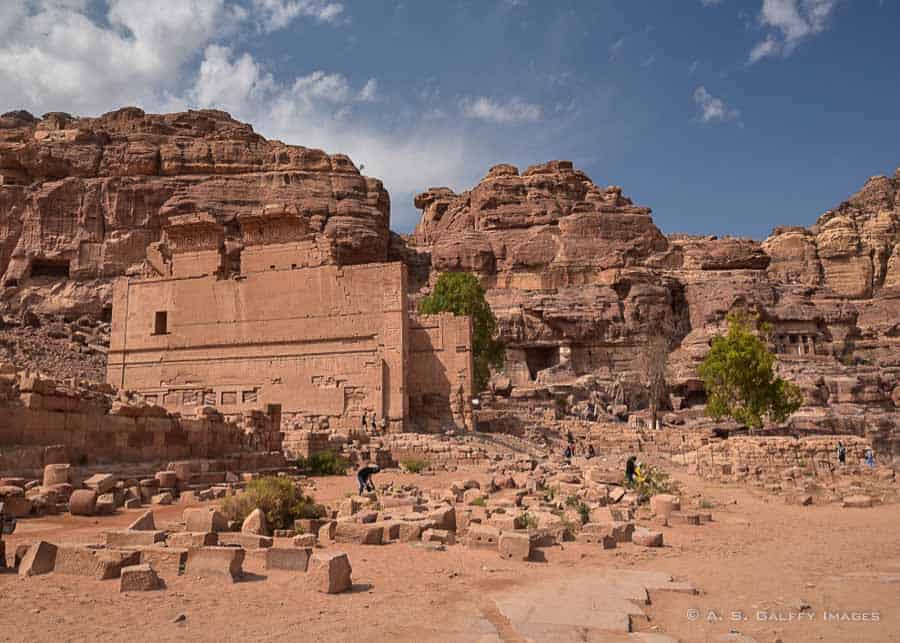
In the 19th century, a Swiss explorer by the name of Burckhardt discovered the prehistoric city of Petra accidentally. In the last two centuries since its discovery, Petra has seen more visitors than it has seen in its 3000 years of existence!
Scams, Hawkers, and How to Handle Them
Petra is one of the most spectacular places on earth, but the constant sales pressure can wear you down. You’ll be approached every few minutes by people selling postcards, jewelry, scarves, donkey rides, “shortcuts” up to viewpoints, and tea. Most of them are friendly Bedouins who actually live inside the park. If you don’t want to buy anything, be polite but firm. A simple “la, shukran” (no, thank you) goes a long way.
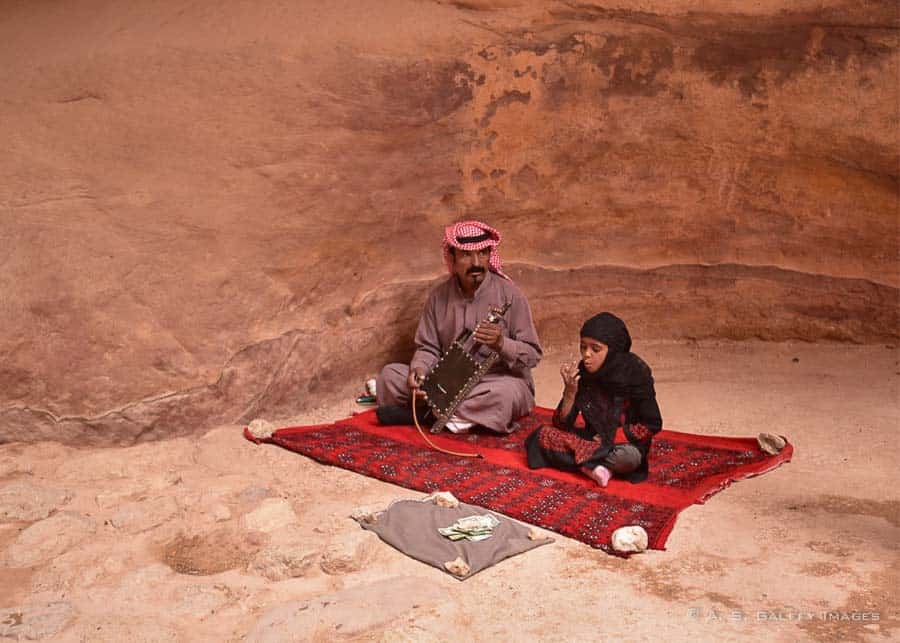
Avoid the “free” rides included with your ticket — the tip is steep and the animals are mistreated. Don’t follow anyone offering a shortcut without agreeing on a price first. And keep small bills handy if you do want to buy tea or souvenirs from the women’s cooperatives. Those purchases support local families directly.
FAQ For Visiting Petra
How much does it cost to visit Petra?
A one-day ticket costs 50 JOD ($70). Most travelers buy the Jordan Pass for 70 to 80 JOD, which also covers the 40 JOD visa fee.
Can you go inside the tombs and caves in Petra?
Yes. Except for the Treasury and the Monastery which are roped and can only be admired from the outside, most of the carved tombs and caves in Petra are open to walk inside, including many of the Royal Tombs and several smaller caves along the main trail.
How do you get to Petra?
The easiest way is the JETT bus from Amman (10 JOD, leaves at 6:30 am) or a private taxi from Amman Airport (around 60 JOD). From Aqaba, a taxi takes about two hours.
What time does Petra open?
Petra opens at 6 am in summer (March to September) and 6:30 am in winter (October to February). Last entry is roughly one hour before sunset.
How many days do you need to visit Petra?
Two days is ideal. One day works if you’re fit and arrive at 6 am, but you’ll miss several major trails.
Is Petra worth visiting?
Absolutely! Petra is one of the New Seven Wonders of the World and easily the most extraordinary archaeological site I’ve ever walked through. Expect crowds at the Treasury and constant sales pressure on the trails — but the scale, the colors, and the silence on the side paths make it more than worth it.
Can you visit Petra in one day from Israel?
Technically yes, but it’s going to be a rushed visit and you’ll only see the Treasury and a stretch of the main trail. Also, day-trippers crossing from Eilat pay a higher 90 JOD entry. Staying overnight in Wadi Musa is strongly recommended.
Is Petra by Night included in the Jordan Pass?
No. Petra by Night is a separate 30 JOD ticket, and you also need a valid daytime entry.
Is it safe to visit Petra right now?
Yes. Jordan remains stable and Petra is well patrolled. Always check your government’s current travel advisory before booking.
Planning a trip to Petra? You may want to read these Tips for Traveling to Jordan
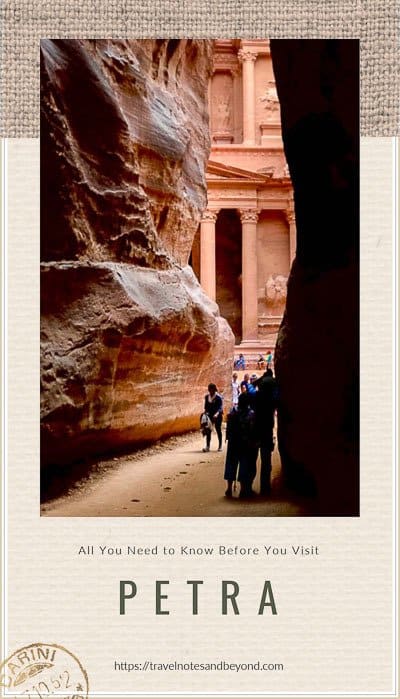
If you found this information helpful, pin this article to help other travelers to Petra:
Looking for some other exotic destinations? You may also like these:
• Morocco 10 Day Itinerary
• Two Weeks Israel Itinerary for Independent Travelers
• Is the Jordan Pass Worth It? A Comprehensive Review
• The 23 Most Important Places to Visit in Jerusalem
• Best Day Trips from Tel Aviv
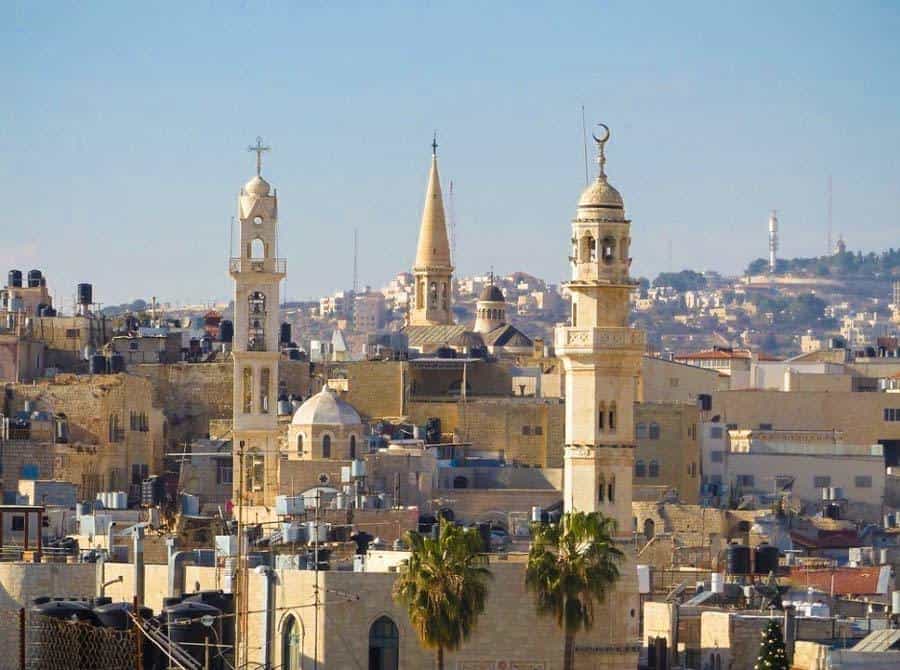 How to Take a Day Trip from Jerusalem to Bethlehem





Giancarlo Pena
Hi! I am planning to go to Abu Dhabi during the first week of April and would love to do a day trip to Petra. I would fly in at 9:00 am and take the red-eye back at 11:00 pm. Would that be enough time?
I know I would have to drive there and back from AMMAN airport, so would tickets be available by then, or should I buy tickets prior to my arrival?
Thank you so much!
Anda
Hi Giancarlo,
Petra is bigger than you think and visiting it takes at least one full day. From what I see your schedule is pretty tight. Driving from Amman to Petra takes around 3 hours (one-way), so if you arrive in Amman at 9:00 you’ll be in Petra the earliest around noon (possibly later). The park closes at 6:00 p.m., so that will leave you with 5 hours, at the most. Considering that you have to catch a plane at 11:00 p.m., I’d say your visit would be not only very rushed but also very stressful. As for buying tickets ahead of time, I don’t think it would be necessary. Most visitors come to Petra early morning, so around noon you won’t be faced with long lines.
Beth
I’m really grateful you mentioned the donkeys in the context of not using them – I visited yesterday and my experience was completely ruined by what I witnessed towards the donkeys and camels; the behaviour of the handlers is disgusting, and I would also urge absolutely everyone to avoid financing this abuse at all costs.
This is a great review in general, and you’re absolutely right about needing multiple days to explore fully, my legs are still aching 24 hours later after the back entrance hike to the front gates, and I still didn’t see everything!
Anda
Thank you for your comment. I’m saddened by the fact the the animal abuse continues in Petra. I was hoping it was just an incident, although I’ve heard other people complaining about it.
caroline
I saw a similar situation in Luxor, Egypt….and I refused to hire horses/camels there. I could see that the locals were hurting financially (it was around 2013)–but it’s good to find animal welfare types locally and support them, if u can.
Anda
Yes, I totally agree.
Ami Bhat
For quite sometime now I have been dreaming of Petra. I so want to get there. And see the lost city with its abandoned wonders. I even dreamt of the treasury once… something about me on a horseback. Seeing all this in your post, reminds me to start planning and maybe fulfill that dream this year. I am definitely gonna take the tips that you have shared and yes, petra at night is on!
Anda Galffy
Hope you’ll get to visit Petra soon, Ami.
Kate
I never would have guessed that Petra gets snow! Regardless of when I visit, I know I definitely want to see the night light show. It looks even more mysterious being a hidden city at night with the candlelight.
Yukti Agrawal
What a timely post, as I was planning to visit Jordan in a very short period of time. The Obelisk Tomb really looks interesting and it would be great to take beautiful photos of ancient ruins. Walking through narrow zig-zag alleys of the Siq also looks beautiful thing to do here. Amazing photo of The Treasury.
Bhushavali N
Ofcourse, like everyone else, Jordan is in my wishlist as well! And you’re right, that place totally needs a dedicated study about it before visiting there, even as a tourist. Without knowing the history, importance and the excavation of it, its just pointless! Good to know that there are donkey rides available. While we mostly walk, sometimes it gets a bit exhausting with our toddler!
Cat Lin
This is so cool! Your blog is very informative and detailed. As seen in pictures the people were like ants because of these huge structures. Hopefully I’ll be able to have a tour there soon.
Marion Halliday
I’ve always been fascinated by Petra and I’ve seen many photos over the years, but I still had no idea of the sheer scale of the city! While the traditional tourist sites look amazing, I particularly like the idea of going off the main trail to some of the less visited sites like the High Place of Sacrifice and the Lion monument. I can see how easy it would be to spend at least 2 or 3 days there – that’s a great travel tip 😀
Anda Galffy
Thank you Marion.
Agnes
When I first time saw Indiana Jones and the Last Crusade and heard for the first time the nickname of Petra the “Rose City,” Perta became my must-see place to visit. I hope I will do it soon. I would love to see The ‘Treasury’ and The Royal Tombs Accessed and narrow canyon called Al Siq because I love slot canyons. I like to taste local food, so it’s great to know about the Street of Façades. Your article is very detailed and will be helpful during trip planning for sure.
Anda Galffy
Thank you, Agnes. I’m glad if you could use the information for your trip.
Linda (LD Holland)
We loved our visit to Petra. But I wish I read your blog post before we went. We didn’t have control over the timing since we went on a tour. And mid-day was crazy busy. And hot. We really did not understand how big the site was. And how much of the walk you did without cover. I agree that one day may not be enough if you really want to hike and spend some time at the site. I guess it just means we need to go back. There was so much more of Jordon to explore as well.
Anda Galffy
It’s great that you could visit Petra even for a short time, Linda.
Danik
This has been on my radar for years and there are still good flight prices to Jordan from London, UK. However I am waiting for my daughters to grow up a little bit more so I am going to hold off for a few years, not because I want them to see Petra in it’s amazing glory but also to educate them. I really cant wait to give them history and geography lessons whilst on the road and give them the early start in life. 🙂
Anda Galffy
I know what you are saying, Danik. It’s difficult to travel to Jordan with two little kids.
Fiona
Really informative guide! I really loved Petra and I could recommend the Movenpick as a good local hotel – amazing food too.
Anda Galffy
Thanks, Fiona. I should check it out for next time.
Rhonda Albom
Petra has been on my bucket list for years. Thanks for all the good advice. I think I will have to stay for at least 2 days. I am going to look at your recommendations for nearby “nice” hotels as I wouldn’t want to have to make the same trip from Aqaba multiple days in a row.
Anda Galffy
You are long due for a trip to Jordan, Rhonda. I know how much you want this trip and hope you’ll get there soon.