
Jerash surprised me because I expected a few scattered ruins and a quick stop from Amman, but it ended up being one of my favorite places in Jordan outside Petra. What makes Jerash different is how much of the ancient city is still standing. You are not just looking at broken stones in a field. Instead, you can pass through massive gates, walk along old Roman streets past temples, theaters, arches, and towering columns that still feel incredibly intact. In some areas, Jerash feels more like an abandoned city than an archaeological site.
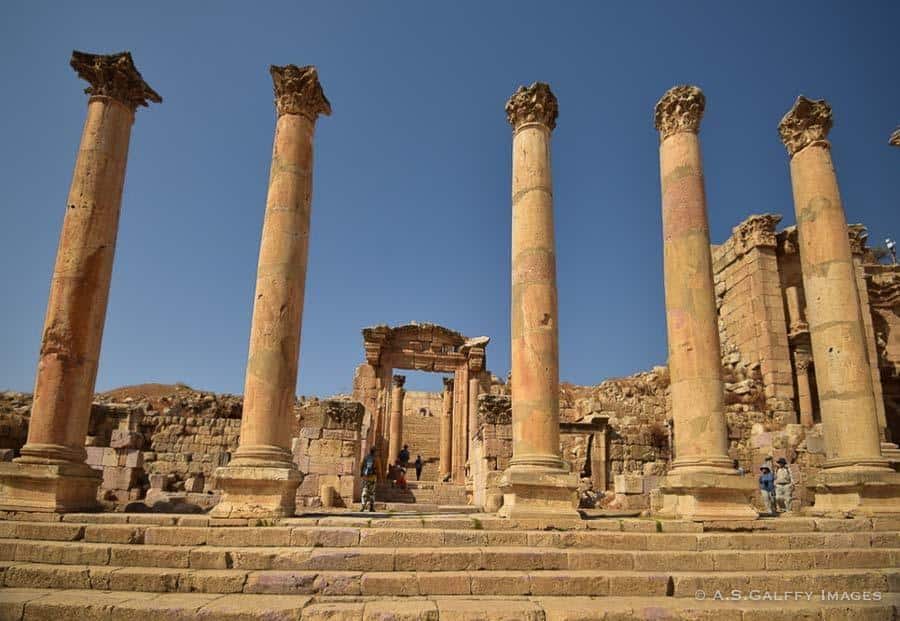
The best part is that Jerash is very easy to visit. Located only about an hour from Amman, the site is straightforward to explore on your own, and you can see a lot in just a few hours. In this guide, I will cover exactly what to expect at the Jerash ruins in Jordan, the top sites to see, how much walking is involved, practical tips for visiting, and whether Jerash is actually worth adding to your Jordan itinerary.
Why Visit Jerash?
Jerash is one of the best-preserved Roman cities in the world. I know this sounds like a big claim, but once you walk through the site, it will make sense. Unlike many archaeological sites where you need a lot of imagination, Jerash still has entire streets, temples, arches, theaters, and colonnades standing nearly intact.
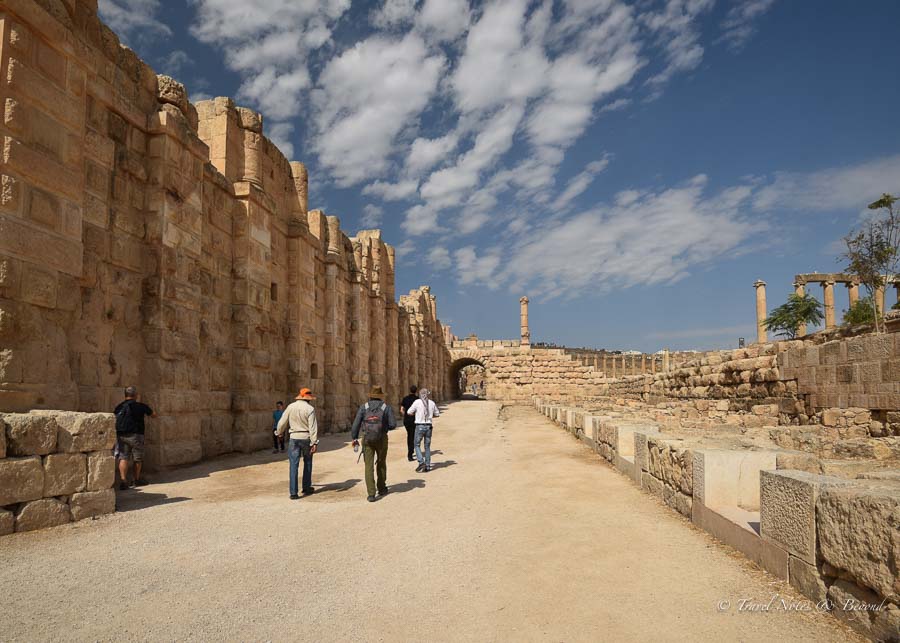
The city dates back more than 2,000 years and became especially important during Roman rule, when it was part of the Decapolis — a group of major Roman cities in the region. At its peak, Jerash was wealthy, cosmopolitan, and heavily influenced by Greco-Roman architecture. Today, it is one of Jordan’s most visited historical sites after Petra.
And yet, compared to famous Roman sites in Europe, like the Valley of the Temples in Sicily, Jerash still feels surprisingly relaxed. You can walk around huge sections of the ancient city without crowds, especially if you arrive early in the morning.
Brief History of Jerash
Jerash, known to the Romans as Gerasa, was originally settled during the Hellenistic period after the campaigns of Alexander the Great, but the city flourished under Roman rule beginning in the 1st century A.D. The Romans transformed Jerash into a prosperous regional center filled with temples, paved roads, theaters, baths, fountains, and public squares. Much of what visitors see today was built between the 1st and 3rd centuries A.D.
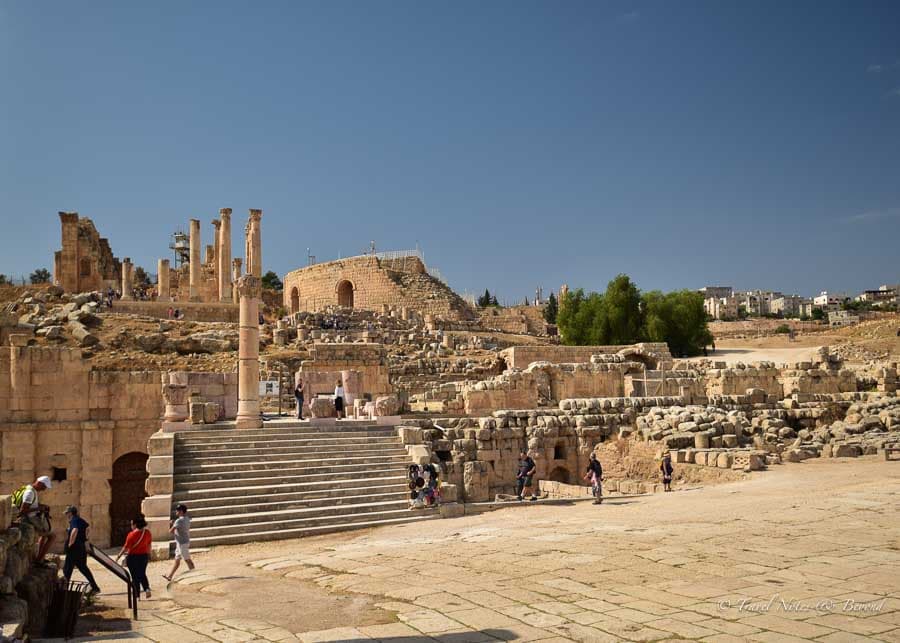
The city continued to thrive during the Byzantine era, when churches were added throughout Jerash. Several mosaics from this period can still be seen today. Jerash eventually declined after earthquakes, changing trade routes, and shifting political powers weakened the city. A major earthquake in 749 A.D. caused severe damage, and large sections of the city were gradually abandoned.
What makes Jerash special today is that much of the city remained buried under sand and soil for centuries, which helped preserve many of its structures.
Where is Jerash and How to Get There From Amman
Jerash is situated in the northwestern part of Jordan, in a quiet valley within the biblical hills of Gilead. Most visitors reach the archaeological site from Amman, which lies only 50 km (31 miles) away. There are several ways to get from Amman to ancient Roman city of Jerash:
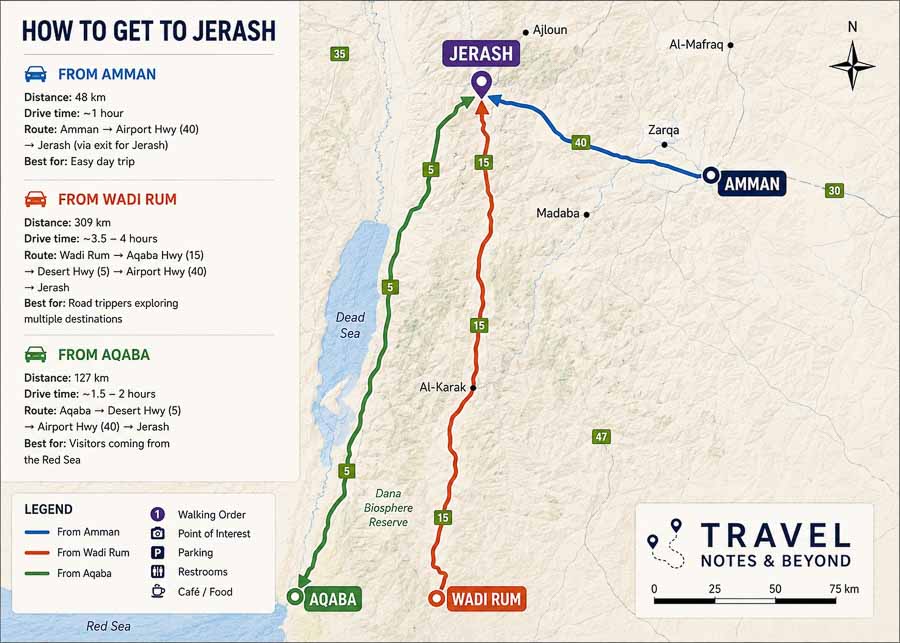
By Rental Car
Driving yourself is the easiest and most flexible option. Roads between Amman and Jerash are generally good, and parking near the site is straightforward. A rental car also makes it easier to combine Jerash with Ajloun Castle or Umm Qais.
By Taxi or Uber
This is one of the simplest options if you do not want to drive. The ride costs roughly 15-20 JOD one way from Amman, but expect to pay more if you want the driver to wait for you to visit the site. The best deal is to arrange a round-trip fare with waiting time included.
By JETT Bus
JETT operates tourist buses between Amman and Jerash on select schedules. This is the best public transportation option for independent travelers who do not want to drive. Schedules can change seasonally, so check the latest timetable before your trip.
By Local Bus
The cheapest option to get from Amman to Jerash are the local minibuses, which operate between Amman’s North Bus Station (Tabarbour) and the Jerash Archaeological Site. They run regularly but do not have a fixed schedule. The bus simply departs as soon as it’s full. The cost is 1 JOD (about $1.50 USD) for a one-way.
Are the Ruins at Jerash Worth Visiting?
Absolutely! Jerash is one of the few places in the world where you can walk through an entire Roman provincial city that still has its “bones” intact: the gates, the colonnaded main street, the forum, the temples, the theaters, the chariot track. Most ancient sites give you fragments and ask you to imagine the rest. Jerash hands you the city almost whole.
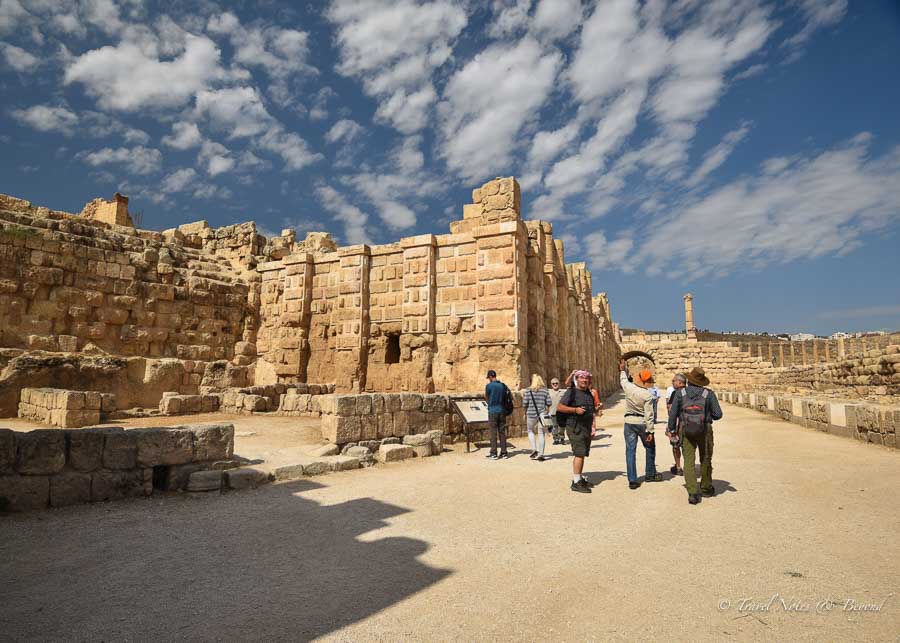
What surprised me most was how little of it feels staged. There are no glass cases, very few ropes, and almost no signs telling you what you can or cannot touch. You walk down the Cardo on the same paving stones Romans walked on, past columns still standing exactly where they were raised. You sit on the stone seats of the South Theatre, and if someone is standing on the stage humming a tune, you hear it as clearly as if they were next to you. That kind of unfiltered access to a 2,000-year-old city is rare, and it’s the single best reason to come.
It is also one of the easiest major sites in Jordan to visit, the site is fully covered by the Jordan Pass, and you do not need a guide to enjoy it.
Jerash is especially worth visiting if:
- You enjoy Roman history or archaeology
- You like photography
- You want an easy day trip from Amman
- You are visiting Jordan for more than 4–5 days
- You prefer historical sites that are less crowded than Petra
Jerash vs. Petra
Jerash is not Petra, and it does not try to be. If you only have time for one ancient site in Jordan, Petra wins by far. But that is a false choice for most travelers, because Jerash is not competing for that slot. It is competing with whatever else you might do on a free day in Amman, and on that comparison, it wins easily.
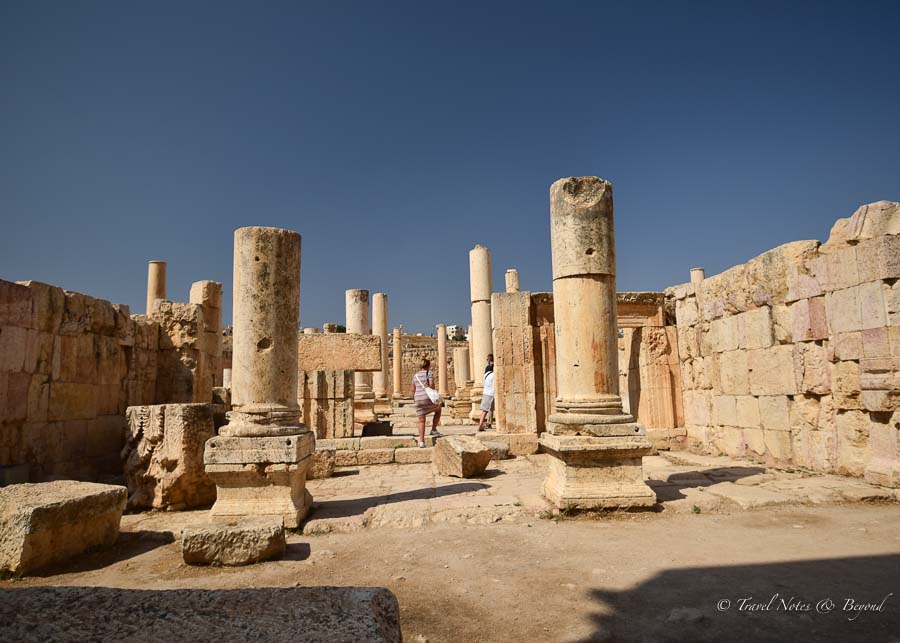
My advice, see them both if you can. Petra, for the wonder of what was carved out of stone. Jerash, for the wonder of what was built on top of it. They need to be treated as two different experiences rather than rivals.
How Long Do You Need at Jerash Archeological Ruins?
Most travelers should plan to spend about 3–4 hours visiting the ruins at Jerash. That is enough time to walk through the main ruins, take photos, climb the theaters, and explore at a comfortable pace. But if you have a passion for photography or archaeology, you could easily spend longer.
If you are visiting as part of a guided day tour from Amman, many tours only spend around 2 hours at the site, which honestly feels rushed.
Admission Fees and Opening Hours 2026
Visiting Jerash is straightforward and surprisingly affordable for a UNESCO-tier archaeological site. Here is what you need to know before you go.
Admission Fees
- Adults: 12 JOD per person
- Children under 12: free
- Payment: cash (Jordanian dinars) or card at the entrance
- Includes: full access to the archaeological site and the on-site Jerash Archaeological Museum
Jerash is fully covered by the Jordan Pass, which also waives your tourist visa fee and includes Petra, Wadi Rum, and 40+ other sites. If you’re visiting more than one major site, the Pass almost always pays for itself. For the full breakdown of tiers and savings, see my complete Jordan Pass guide.
Opening Hours
Opening hours change with the season, and last entry is typically 30–45 minutes before closing. Always double-check before you go, especially during Ramadan or public holidays.
- Winter (November–March): 8:00 AM – 4:00 PM
- Spring (April–May): 8:00 AM – 5:30 PM
- Summer (June–October): 8:00 AM – 6:30 PM
- Ramadan: 9:00 AM – 5:00 PM (dates shift each year)
April hours can flex earlier or later depending on daylight, and Friday or public-holiday hours occasionally vary, so it’s worth confirming directly with the Jordan Tourism Board before your visit.
When to Arrive
If possible try to arrive at opening. The site is largely unshaded, the tour buses from Amman start rolling in around 10:00 AM, and the light on the Cardo and the Oval Plaza is at its best in the first two hours of the day. Late afternoon is the second-best window, when the crowds clear out and the stone takes on a warmer color for photos.
Suggested Half-Day Jerash Itinerary From Amman
If you only have half a day, this is the rhythm I’d recommend. The single decision that makes it work is starting early.
8:00 AM — Leave Amman. The drive north takes 45–60 minutes. Leaving early gets you ahead of the tour buses and the heat. A round-trip taxi from Amman runs about 40–50 JOD with waiting time.
9:00 AM — Enter at Hadrian’s Arch. Buy your ticket or scan your Jordan Pass and head straight in — the first hour is when the Cardo is at its quietest and the light is best.
9:15 AM – 11:45 AM — Walk the 11-point route from Hadrian’s Arch through the Hippodrome, Oval Plaza, the west-hill detour to Zeus and the South Theatre, then up the Cardo to the Nymphaeum, Temple of Artemis, North Theatre, and out the North Gate. Two and a half hours is a comfortable pace.
12:00 PM — Lunch in Jerash. There are several local restaurants near the site serving mezze and grilled meats. Ask your driver or check Google Maps for current favorites. We had lunch at Lebanese House, a short drive from the site, and were very happy with their food and service.
1:30 PM — Drive back to Amman, arriving by 2:30 PM. With an extra hour, Ajloun Castle makes a worthwhile 30-minute detour on the way home.
Jerash Walking Route Map
I strongly recommend following a simple south-to-north walking route through the site. It makes the visit much easier and avoids unnecessary backtracking.
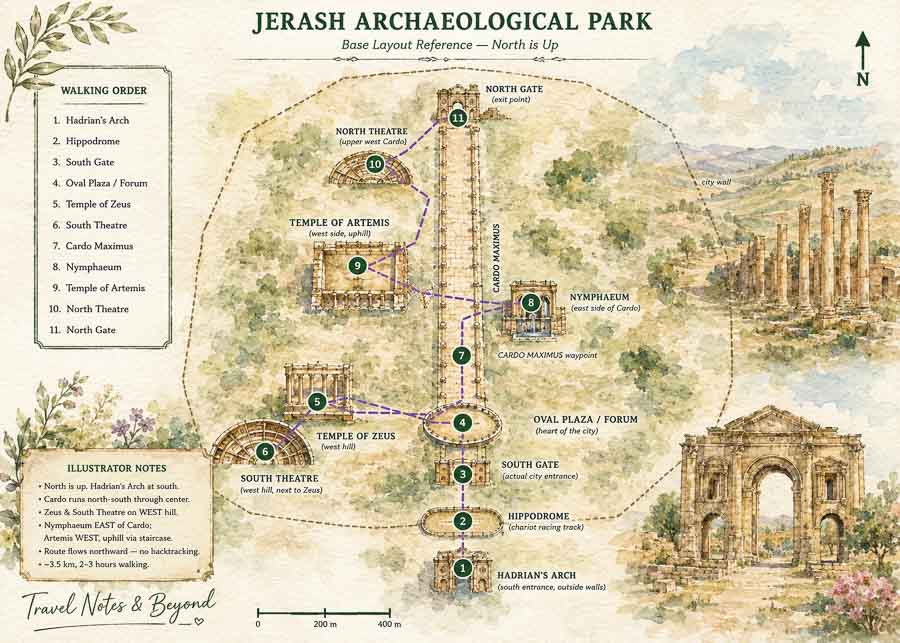
Map Tip: Save an offline map pin of the Jerash Archaeological Site before arriving. Mobile signal inside the ruins can sometimes be inconsistent.
Best Archeological Ruins to See at Jerash
Hadrian’s Arch
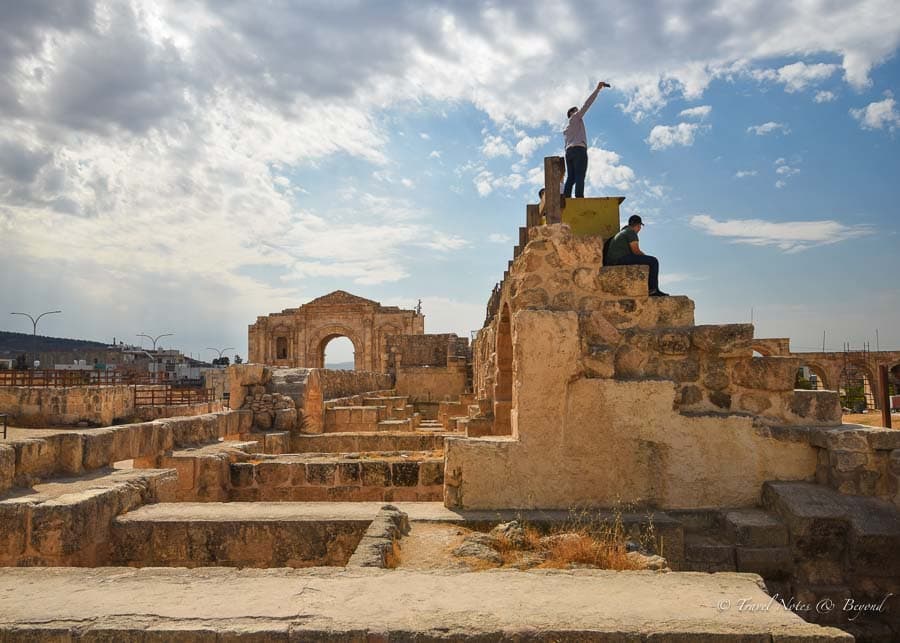
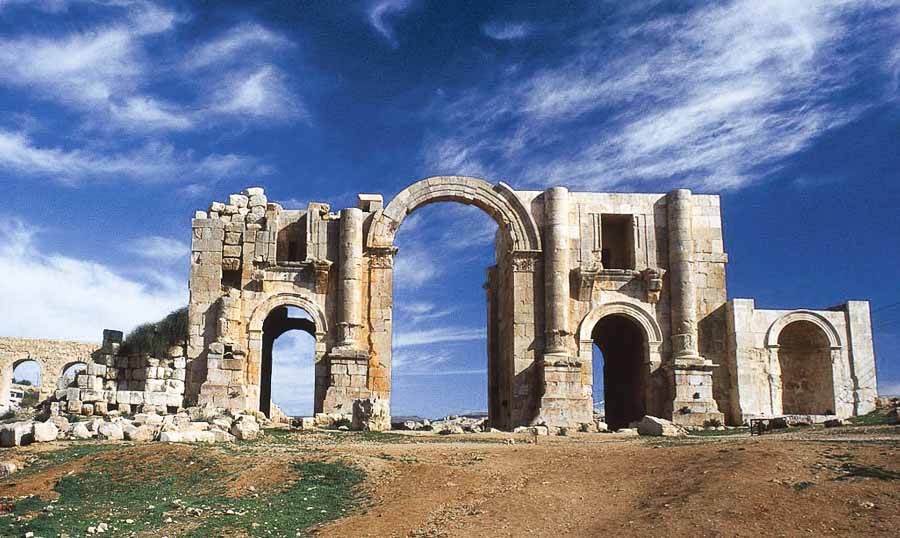
Your visit starts at Hadrian’s Arch, built in honor of Emperor Hadrian’s visit to Jerash in 129 AD. This massive triple-arched gateway was originally intended to become the new southern entrance to the city. Even though the expansion never fully happened, the structure still feels incredibly grand.
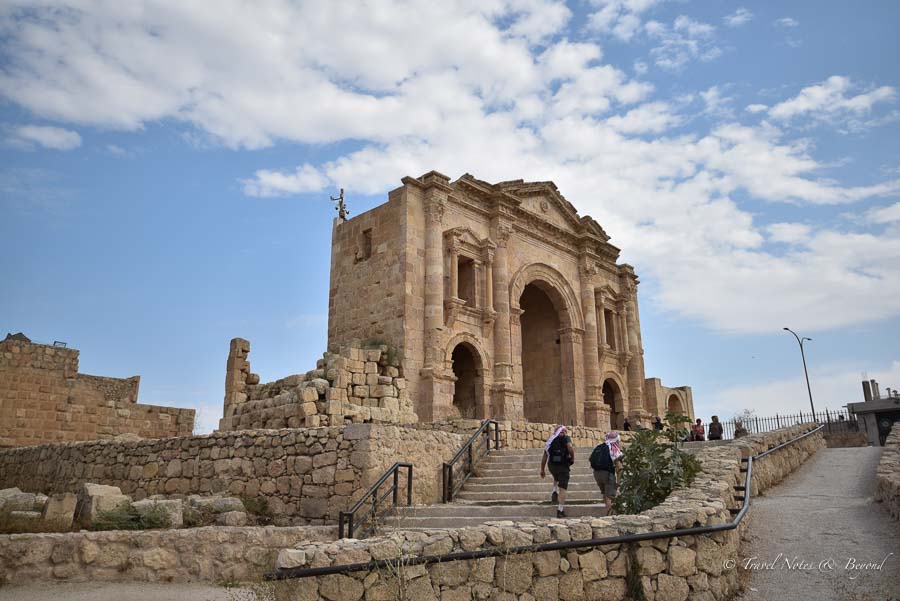
This is also one of the best places for wide-angle photos because you can capture the scale of the ruins before entering the main archaeological area.
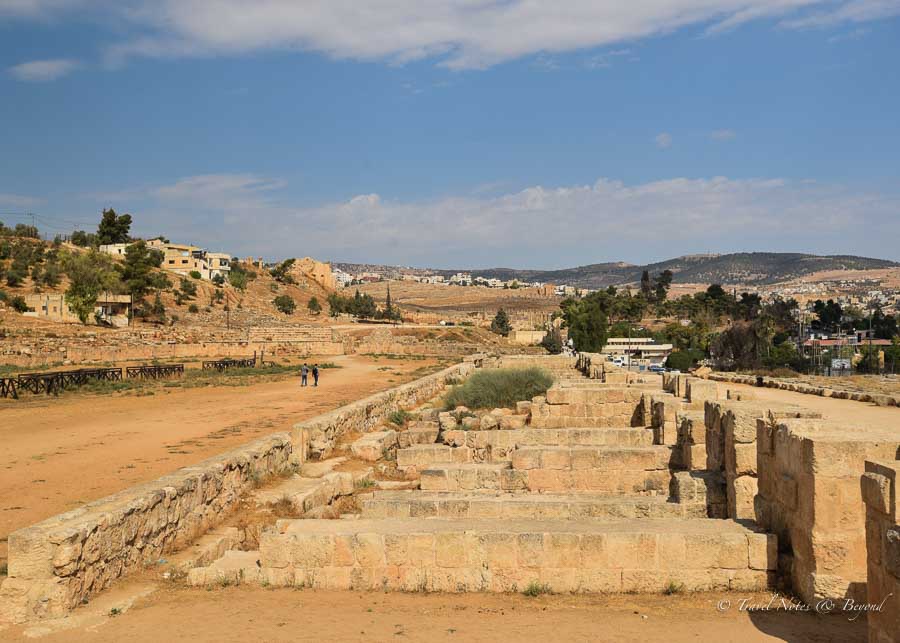
Hippodrome
Just beyond the arch is the Hippodrome, an ancient Roman stadium once used for chariot races and sporting events. The structure could reportedly hold thousands of spectators and gives a good sense of how large and sophisticated Jerash once was.
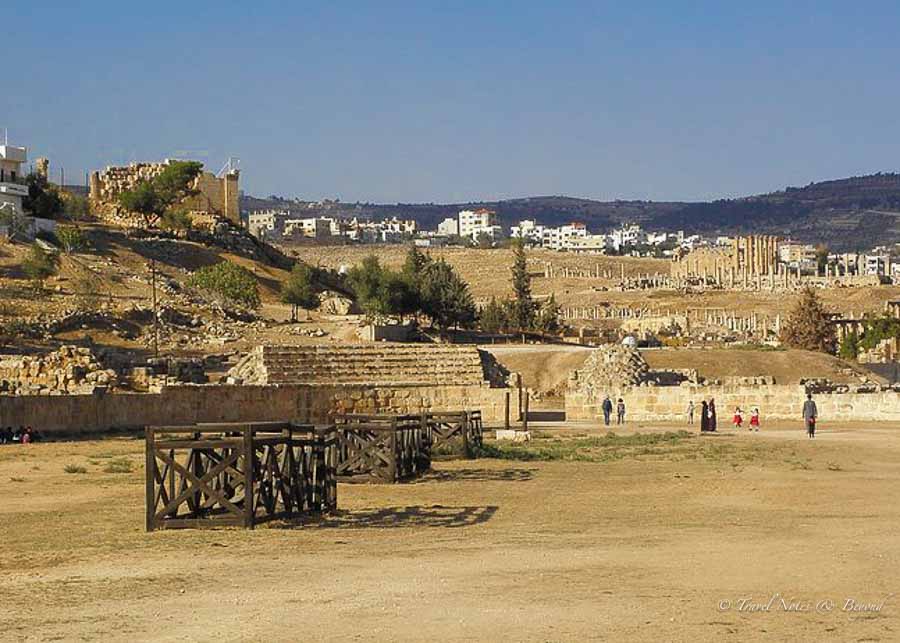
While not as visually dramatic as other parts of the site, it is worth a quick stop before entering the main city.
South Gate
The South Gate is where Jerash really begins to feel impressive. Once you pass through the towering stone entrance, you suddenly step directly into the ancient city. This transition from modern Jordan into Roman Jerash is one of the most memorable moments of the visit.
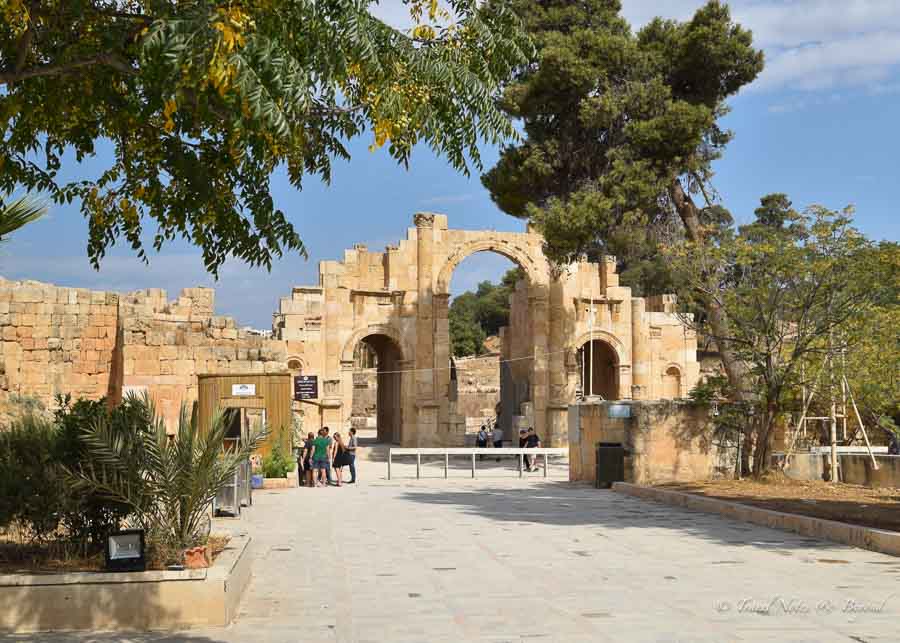
The gate itself dates back to the 2nd century AD and was modeled after Roman triumphal arches.
Oval Plaza (Forum)
The Oval Plaza is probably the most iconic place in Jerash. This huge open square is surrounded by elegant columns and connected directly to the Cardo Maximus, the city’s main street. The shape alone makes it unusual because most Roman forums were rectangular.
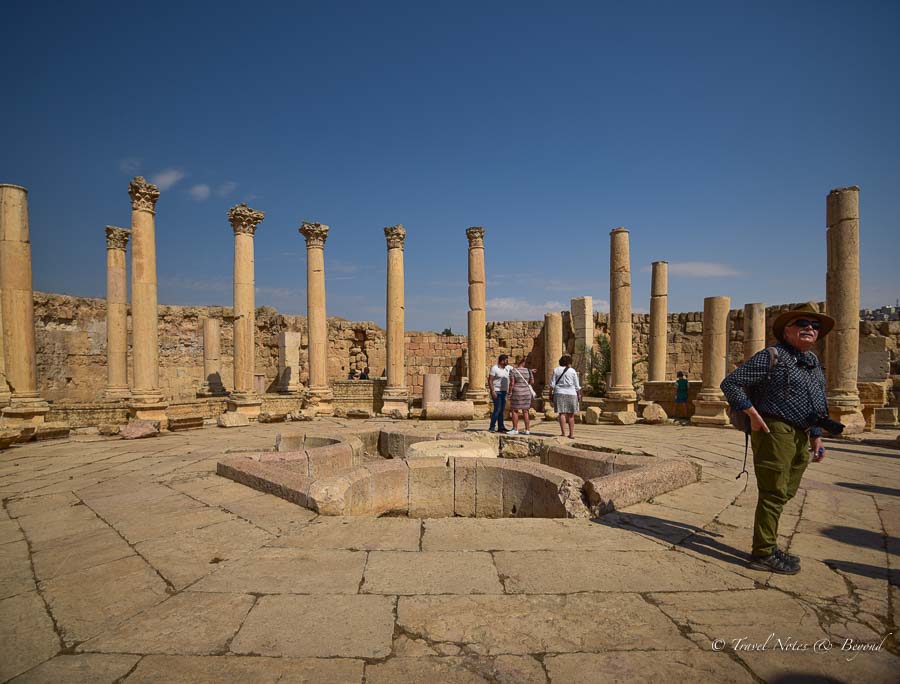
This is one of the best places to stop and really take in the scale of the city. If you arrive early, the plaza can feel almost empty, which makes photography much easier.
Photography Tip: A wide lens works best here because the plaza is much larger than it looks in photos.
Temple of Zeus
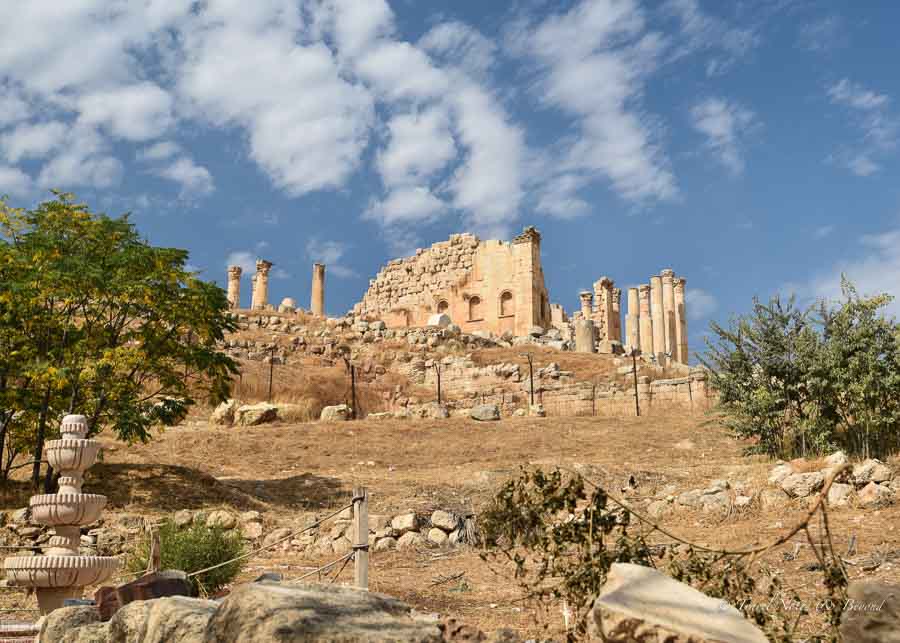
Just west of the Oval Plaza, a steep stone staircase takes you to the Temple of Zeus, one of the most important religious buildings in ancient Gerasa (the old Roman name of Jerash). This was erected in the 2nd century AD on the foundations of an earlier Hellenistic sanctuary. Earthquakes have toppled most of the structure, but there is enough left to give you a real sense of its original scale. Some of its impressive Corinthian columns still tower over the ancient city.
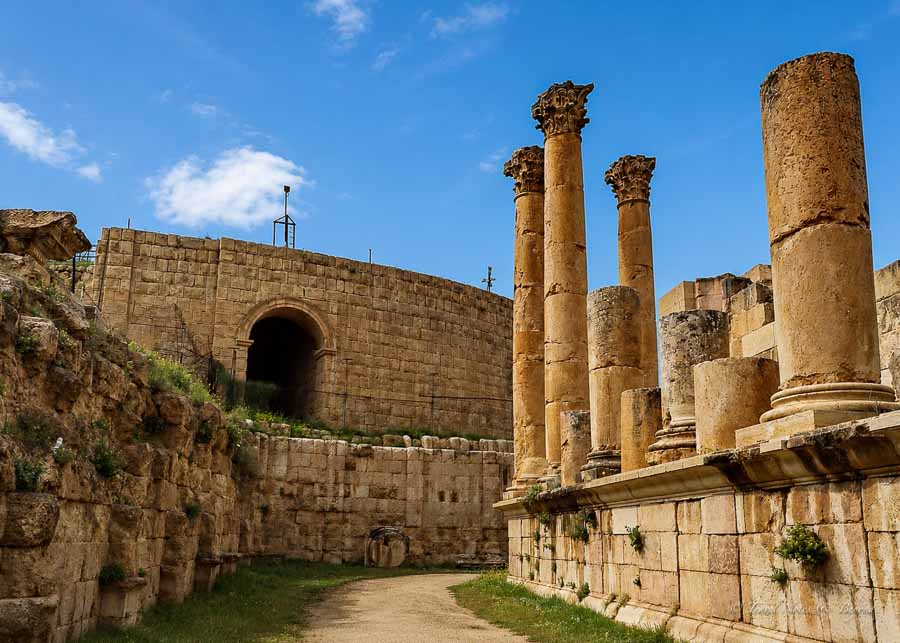
The climb takes only a few minutes and is well worth it for two reasons: the temple itself, and the view. From the platform of the Temple of Zeus, you get the best top-down perspective of the entire Oval Plaza below, with the full ring of columns curving around the forum. This is also the spot where you can capture the iconic overhead shot of the plaza.
Cardo Maximus (the Colonnaded Street)
From the Oval Plaza, continue north along the Cardo Maximus, the ancient Roman main street. This long colonnaded road is one of the highlights of Jerash. You can still see original paving stones and the grooves created by ancient chariot wheels.
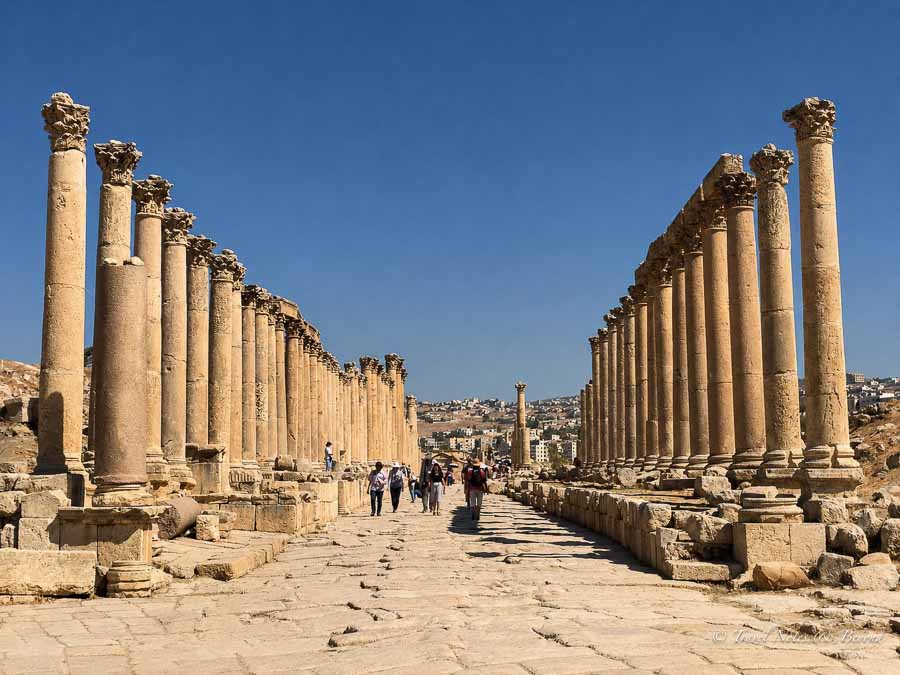
Walking along the Cardo gives you one of the clearest impressions of what daily life in Jerash might have looked like 2,000 years ago. Many of the city’s major buildings branch off from this central road.
Nymphaeum
The Nymphaeum was a large decorative Roman fountain built in the 2nd century. Even in ruins, you can still see detailed carvings, niches, and remnants of the elaborate decoration that once covered the structure.
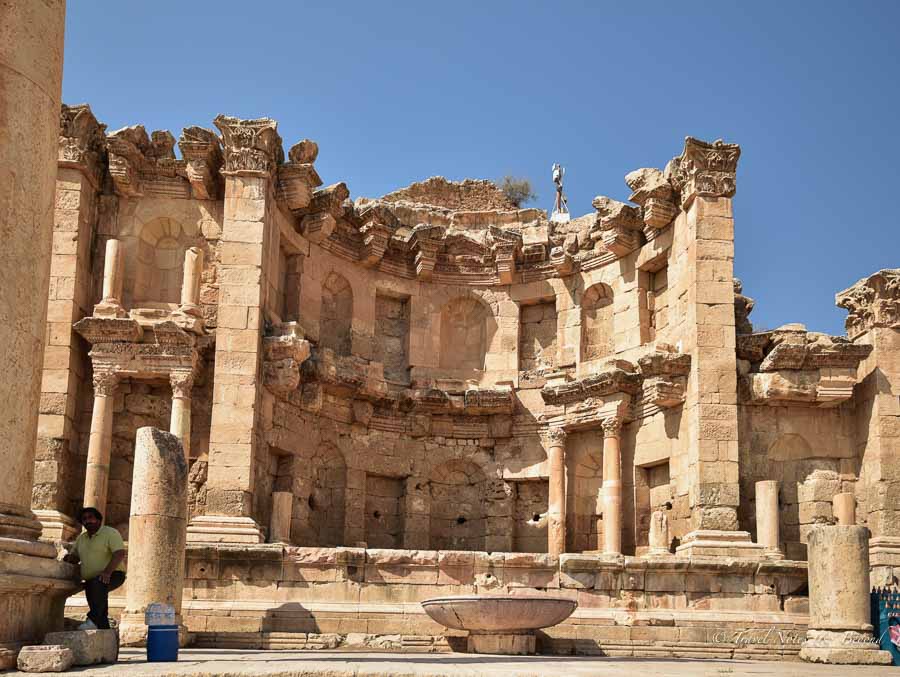
This stop is relatively quick, but it adds another layer to understanding how sophisticated Jerash once was.
Temple of Artemis
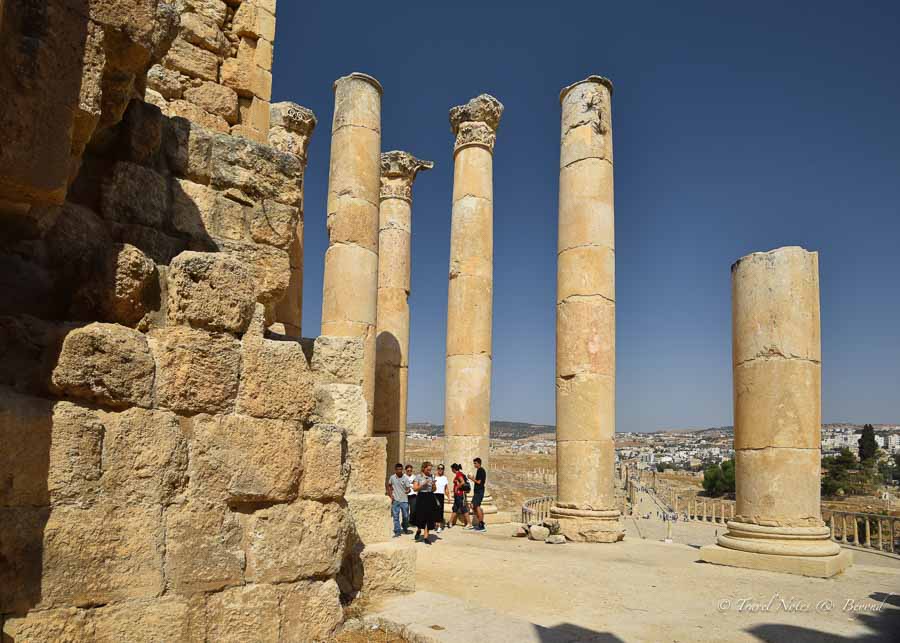
The Temple of Artemis is one of the most impressive structures in Jerash. Dedicated to the city’s patron goddess, the temple sits on elevated ground overlooking the ruins. Several enormous columns are still standing, and the site feels dramatically different from the lower city below.
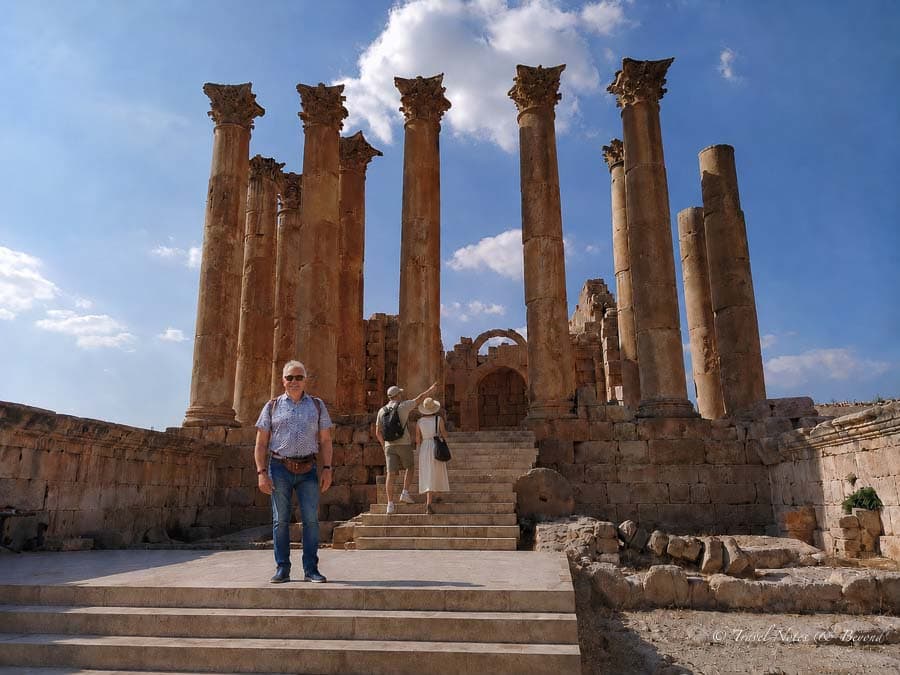
The climb uphill is short but tiring enough, especially during summer heat. From here, you also get some of the best panoramic views across Jerash.
South Theater
The South Theatre is one of the best-preserved theaters in Jordan. Built during the 1st century AD, it could hold several thousand spectators and still has excellent acoustics today.
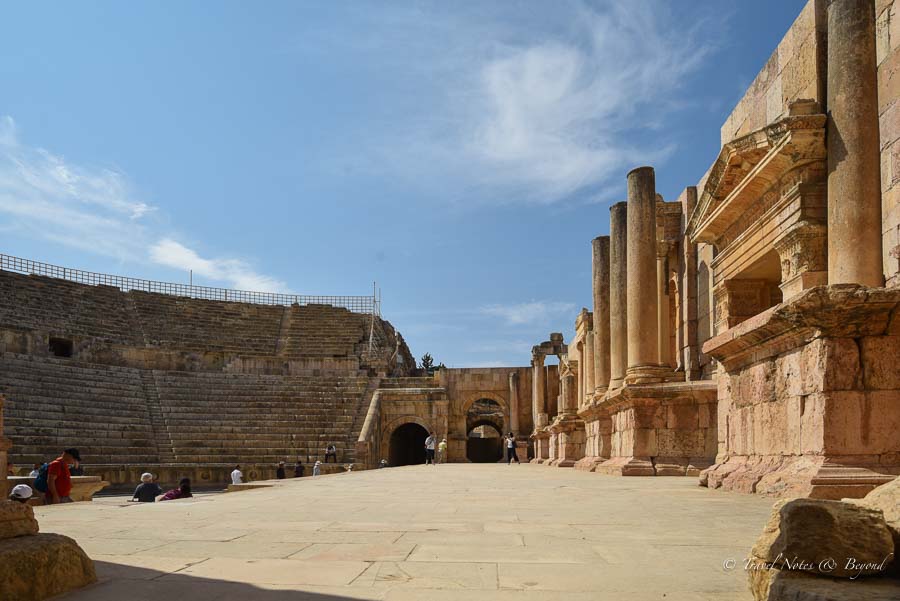
You can climb all the way to the upper rows for panoramic views over the Oval Plaza and surrounding ruins. This is one of the best places in Jerash to stop for a few minutes and simply take everything in.
North Theatre
Smaller and quieter than the South Theatre, the North Theatre feels less crowded and more atmospheric. It was likely used for political meetings and smaller performances rather than large public events.
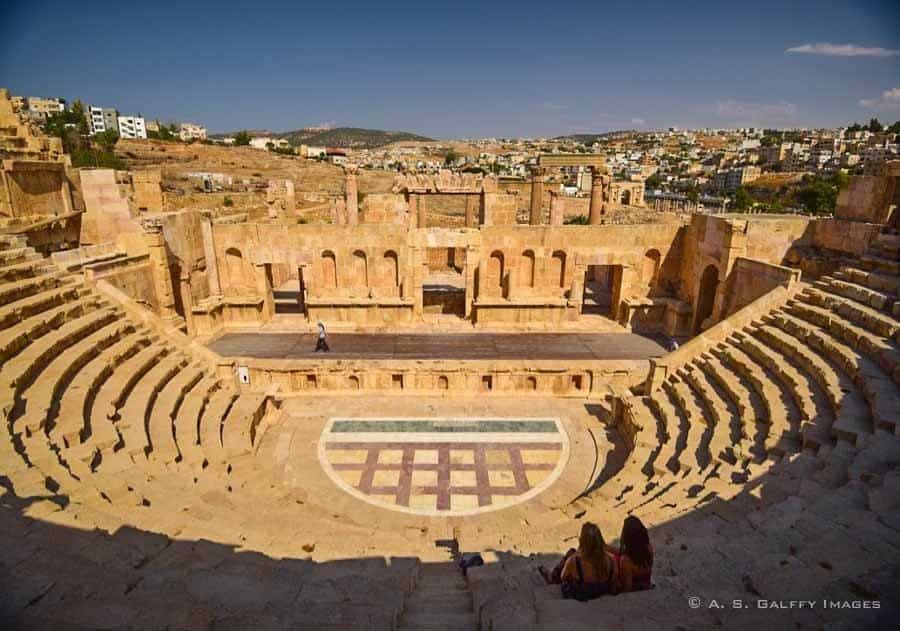
Many travelers rush through this section, but it is worth visiting if you want a calmer part of the site away from the busiest areas.
North Gate
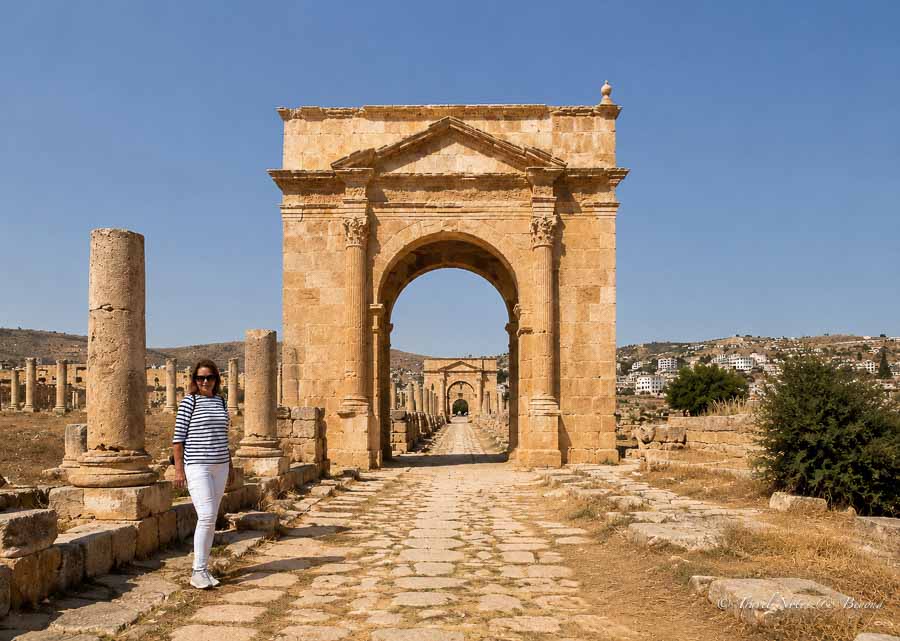
The North Gate marks the end of the main archaeological route. By this point, you will have walked through most of the ancient city, and the scale of Jerash becomes much easier to appreciate. Many travelers turn around here and slowly walk back through the Cardo toward the entrance.
What to Wear at Jerash
Exploring the ruins at Jerash involves a lot of walking on uneven stone surfaces, ancient stairs, and stretches of loose gravel. Therefore, footwear is the single most important choice. Closed-toe walking shoes or hiking trainers with real grip are the right call, especially if you’re visiting in winter, when the polished stones turn slick after rain. If you only packed sandals, make sure they have proper soles and ankle support. Flip-flops are a mistake.
Dress for sun, not for style. The site is almost entirely unshaded. In spring, summer, and early autumn, lightweight, breathable, long-sleeved layers protect you better than a tank top and sunscreen alone. A wide-brimmed hat and sunglasses are also a must from April through October.
Dress modestly out of respect. Jordan is a conservative country and Jerash is a working town, not a resort. Knees and shoulders covered is the standard for both men and women. It’s a small courtesy that makes a real difference in how you’re treated, especially around the site entrance and in the local cafés afterward.
Layer for winter. From December through February, mornings can be genuinely cold and windy on the exposed Cardo. A warm mid-layer, a light rain jacket, and gloves on the coldest days will keep you out longer than a single thick coat.
Best Time to Visit the Ruins at Jerash Archeological Site
The best time to visit Jerash is in spring (March–May) or autumn (September–early November), when temperatures are mild and the light is at its best. Autumn is my pick: drier air and thinner crowds.
Summer is hot and almost entirely unshaded, with midday temperatures often above 35°C. If you’re going between June and August, arrive at opening or visit in the late afternoon when the buses are gone.
Winter is quiet and atmospheric, but days are short (the site closes at 4:00 PM) and rain can make the paving slippery.
Whatever season you choose, time of day matters most. The first two hours after opening and the final 90 minutes before closing are when Jerash feels like yours — better light, fewer people, and the Cardo nearly empty
One date to flag is the Jerash Festival of Culture and Arts in July fills the South Theatre and Hippodrome with concerts. If your dates overlap, it’s a great way to see the ruins.
Photography Tips for Jerash
Jerash is one of the most photogenic ancient sites in the Middle East, but it’s not easy to photograph. The light is harsh through the middle of the day, the columns cast long competing shadows, and the modern city encroaches on the edges of nearly every wide frame. So here are a few quick tips that will make your Jerash photos better than most:
- Shoot early or late. The first hour after opening and the last 90 minutes before closing are when the light flatters the stone. Midday light flattens everything.
- Bring a wide lens and a longer one. Wide (16–35mm) for the Oval Plaza and Cardo; longer (70–200mm) to compress the colonnades into that dramatic repeating-column shot.
- The four shots worth planning for: the Oval Plaza from the Temple of Zeus steps, the Cardo Maximus straight down the colonnade, the South Theatre from the top tier, and the Temple of Artemis columns shot upward against the sky.
- Watch the modern city. Buildings and satellite dishes sneak into wide frames from elevated viewpoints, so compose tight or use the contrast deliberately.
- Pack a polarizer and a lens cloth. The light bounces off the limestone, and the dust at Jerash is constant.
Where to Stay for Visiting Jerash
Most travelers visit Jerash as a day trip from Amman, which is where I’d recommend basing yourself too. The drive is under an hour and Amman has a wider range of hotels and restaurants than Jerash. That said, there are two situations where staying closer to Jerash actually makes sense. So here are your options:
Stay in Amman (recommended for most travelers)
If Jerash is part of a wider Jordan itinerary, Amman is the obvious base. You can leave at 8:00 AM, be at Hadrian’s Arch by 9:00 AM, and be back in the capital by mid-afternoon with the rest of your day free. Neighborhoods worth looking at are Jabal Amman and Abdali for boutique hotels and walkability, or Abdoun for higher-end international chains.
Stay near Jerash (for early-morning photography or quieter trips)
If you want to be at the gate the moment it opens, for golden-hour photos or to beat the buses entirely, staying nearby is worth considering. The most reliable options are:
- Hadrian’s Arch Hotel and Jerash Hotel — simple, well-located, and within walking distance of the site
- Olive Branch Hotel — set between Jerash and Ajloun, a good base if you’re combining the two
- Full Panorama Hotel — guesthouse-style with views toward the ruins, popular with photographers
Stay in Ajloun (if you want a northern Jordan base)
If Jerash is part of a longer northern Jordan loop that includes Ajloun Castle and the Ajloun Forest Reserve, the RSCN cabins inside the forest reserve are a genuinely memorable place to spend a night and one of the few Jordan accommodations that pairs naturally with a visit to Jerash
FAQ About the Jerash Ruins in Jordan
Is Jerash safe to visit?
Yes, Jerash is very safe to visit. Jordan is one of the most stable and welcoming countries in the Middle East, and Jerash itself is a well-trafficked archaeological site with a visible tourist police presence near the entrance. The local town is conservative but friendly, and solo travelers, including women, regularly visit without issues.
Is Jerash suitable for kids?
Jerash works well for families with children old enough to walk for a couple of hours on uneven ground. Younger children will struggle with the distances, the heat, and the lack of shade, and strollers are not practical on the ancient paving.
Are there guided tours available at Jerash, and are they worth it?
Licensed guides are available at the Visitor Centre near the South Gate and typically cost around 25–40 JOD for a 1.5–2 hour private tour. Whether they’re worth it depends on you. If you enjoy reading interpretive signs and following a self-guided route (which is exactly what this post is built for), you can absolutely visit without one.
Is Jerash worth visiting?
Yes. Jerash is one of the best-preserved Roman archaeological sites in the world and one of the best day trips from Amman.
Can you visit Jerash and Ajloun Castle in the same day?
Yes, and it’s one of the best day-trip combinations in northern Jordan. Ajloun Castle sits about 25 kilometers west of Jerash — roughly a 30–40 minute drive through olive groves and rolling hills and pairs beautifully with a Roman-city morning.
Is Jerash included in the Jordan Pass?
Yes. Jerash entry is included with the Jordan Pass.
Final Thoughts on Visiting Jerash
Jerash completely exceeded my expectations. I expected a quick historical stop before heading back to Amman. Instead, it became one of my favorite places in Jordan.
What makes Jerash special is not just the size of the ruins, but also how intact and immersive the city still feels. Walking down the Cardo Maximus, climbing the theaters, and standing among the columns gives you a much stronger sense of the ancient world than many famous archaeological sites. If you enjoy ruins, photography, or simply exploring places that still feel connected to the past, you will probably end up liking Jerash even more than you expected.
YOU MAY ALSO LIKE:
 Is the Jordan Pass Worth It? A Comprehensive Review