
There is a reason why so many people have Jordan on their bucket list. The country has stunning natural landscapes, remarkable archeology, and world-renowned religious sites packed into a surprisingly small footprint. There are so many wonderful places to visit that it’s hard to include them all in one trip, but a week is enough for the highlights. This Jordan itinerary covers seven days, starting and ending in Amman, with stops in Jerash, the Dead Sea, Madaba and Mt. Nebo, two full days in Petra, and a night in a Bedouin camp in Wadi Rum.
You’ll find where to stay at each stop, what to eat, how to get around, and whether the Jordan Pass is worth buying (it almost always is). Jordan rewards travelers who slow down — the drives are long and the sites are vast, so plan for fewer stops, not more.
Jordan Itinerary at a Glance
| Duration | 7 days, 6 nights |
| Start / End | Amman (Queen Alia International Airport) |
| Total driving | ~900 km (560 miles) |
| Best season | March-May and September-November |
| Budget | Mid-range: $130-$180 per person per day |
| Visa | Included with Jordan Pass (40 JOD if purchased separately) |
| Currency | Jordanian Dinar (JOD); 1 JOD ≈ $1.41 USD |
| Must-buys | Jordan Pass, comfortable hiking shoes, sunscreen |
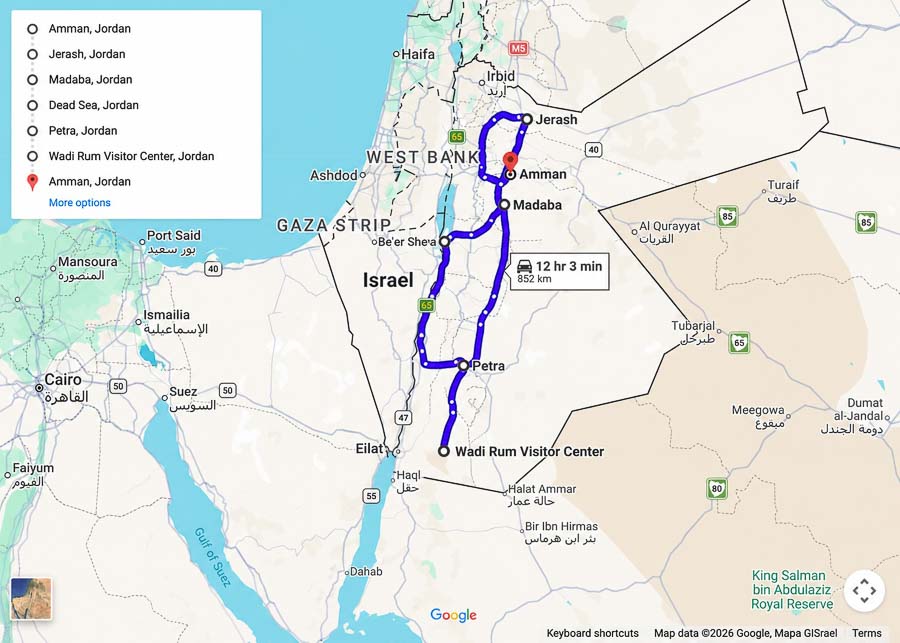
Route overview: Amman → Jerash (day trip) → Madaba & Mt. Nebo → Dead Sea → Petra (2 days) → Wadi Rum → back to Amman
Is One Week Enough for Jordan?
Yes, one week is enough to see Jordan’s main highlights — Petra, Wadi Rum, the Dead Sea, Jerash, Madaba, and Amman — but you’ll be moving at a steady pace. If you want to add Aqaba and the Red Sea, the Dana Biosphere Reserve, or Wadi Mujib, plan for 10 days instead.
To be honest, one week feels barely enough for a country with this much to offer. We came back wishing we had more time, and there are several places we’d love to return for. But if seven days is what you have, this itinerary makes the most of it.
Is the Jordan Pass Worth It?
For almost every traveler spending more than three nights in Jordan, the Jordan Pass pays for itself. It covers the 40 JOD tourist visa fee on arrival and includes entry to over 40 attractions, including Petra, Jerash, Wadi Rum, the Amman Citadel, and Ajloun Castle.
There are three tiers, all of which include the visa waiver:
| Pass | Petra Access | Price (JOD) | Best For |
|---|---|---|---|
| Jordan Wanderer | 1 day in Petra | 70 JOD | Quick trips |
| Jordan Explorer | 2 days in Petra | 75 JOD | This 7-day itinerary |
| Jordan Expert | 3 days in Petra | 80 JOD | Hikers and history buffs |
Buy it before you arrive at the official Jordan Pass website. Print the QR code or save it to your phone — you’ll need it at immigration and at every site entrance. The pass is only valid if you stay in Jordan for at least three nights.
A one-day Petra ticket alone costs 50 JOD at the gate, so the math works out fast.’
How to Get to Jordan and Visa Requirements
Most international travelers fly into Queen Alia International Airport (AMM) in Amman. Royal Jordanian, Turkish Airlines, Emirates, Lufthansa, and several budget carriers serve the airport from Europe, North America, and Asia. From the airport, a fixed-price taxi to central Amman costs 22 JOD (about $31 USD) and takes 40-50 minutes.
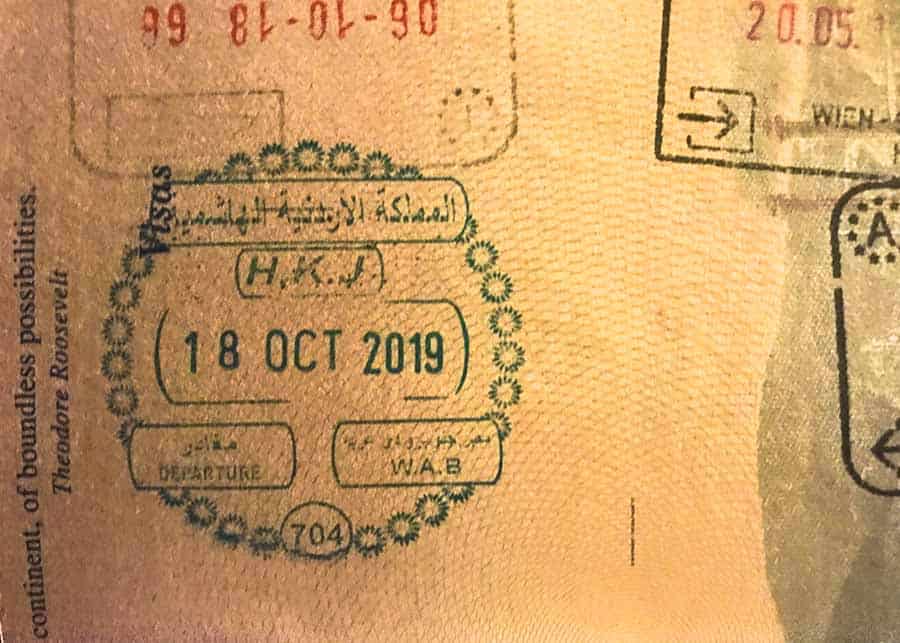
Visa: Citizens of the US, UK, EU, Canada, Australia, and most other Western countries can get a visa on arrival for 40 JOD. The Jordan Pass waives this fee entirely, which is one of the main reasons to buy it before you fly.
Alternative entry points: You can also enter Jordan overland from Israel via the Sheikh Hussein Bridge (north), the King Hussein/Allenby Bridge (near Jerusalem), or the Wadi Araba/Yitzhak Rabin crossing near Aqaba. The Jordan Pass visa waiver does not apply at land borders coming from Israel. If you cross by land you’ll pay the visa fee separately.
Best Time to Visit Jordan
Spring and autumn are the best times to travel to Jordan. The days are warm without being punishing, the nights are cool, and the light is beautiful for photography.
| Season | Months | Day Temp | Best For |
|---|---|---|---|
| Spring | March-May | 20-28°C / 68-82°F | Hiking, wildflowers, photography |
| Summer | June-August | 35-45°C / 95-113°F | Diving in Aqaba only |
| Autumn | September-November | 22-30°C / 72-86°F | All-around travel |
| Winter | December-February | 8-15°C / 46-59°F | Lower prices, occasional snow in Petra |
Late November and early March are the best months for hiking in the archeological parks, nature reserves and the deserts of Wadi Mujib and Wadi Rum. We visited at the end of October and the days were still pushing 30°C . That was comfortable in Petra around 8 a.m., but uncomfortable by noon.
Summers are brutal. Temperatures regularly climb above 40°C, and Petra and Wadi Rum become almost impossible to explore on foot. Skip July and August if you can.
How to Get Around Jordan
Jordan is a small country, but the main attractions are spread across long stretches of desert highway. Planning your trip requires a lot of preparation which involves not only planning your itinerary, but also informing yourself about what to expect when you get there. In terms of transportation, you have three realistic options for getting around.
Renting a Car in Jordan
Renting a car is the most flexible option and what we’d recommend for confident drivers. Roads between major sites are well maintained, signs are in English and Arabic, and rental prices start at about $35-$45 USD per day for a small car.
A few things to know:
- GPS can be outdated. Google Maps doesn’t always recognize newly built bypasses. Download offline maps and confirm routes with your hotel.
- Avoid driving at night. Animals on the road, poor lighting, and aggressive drivers make it risky.
- Fuel up before long drives. Gas stations are spaced far apart on the King’s Highway and Desert Highway.
Hiring a Private Driver
A private driver costs more, but hiring a driver removes all the logistical stress. Expect to pay $80-$150/day for a standard car and $100-$180/day for a van. The price also depends on the route. This is the option most first-time visitors prefer, especially if you want to combine sightseeing with stretches of the King’s Highway.
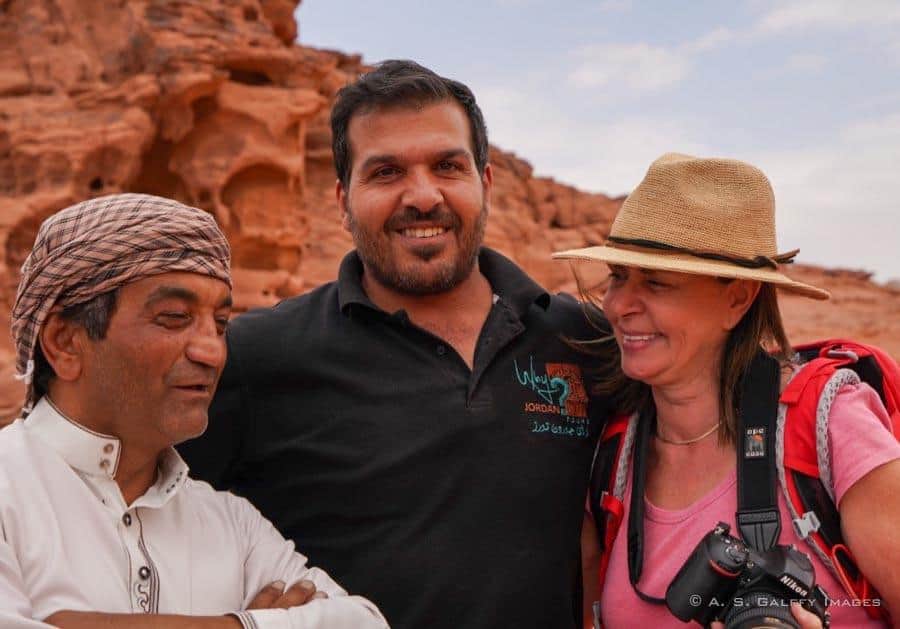
We hired a private tour through Desert Eco Tours, which arranged the driver, accommodations, and entrance fees for our whole itinerary. It was more expensive than going independently, but the peace of mind was worth it.
Public Transport and Taxis
JETT buses connect Amman to Petra, Aqaba, and a few other cities and cost just a few JOD per leg. They are reliable but infrequent, usually one or two departures per day. Local minibuses fill in the gaps but don’t run on fixed schedules.
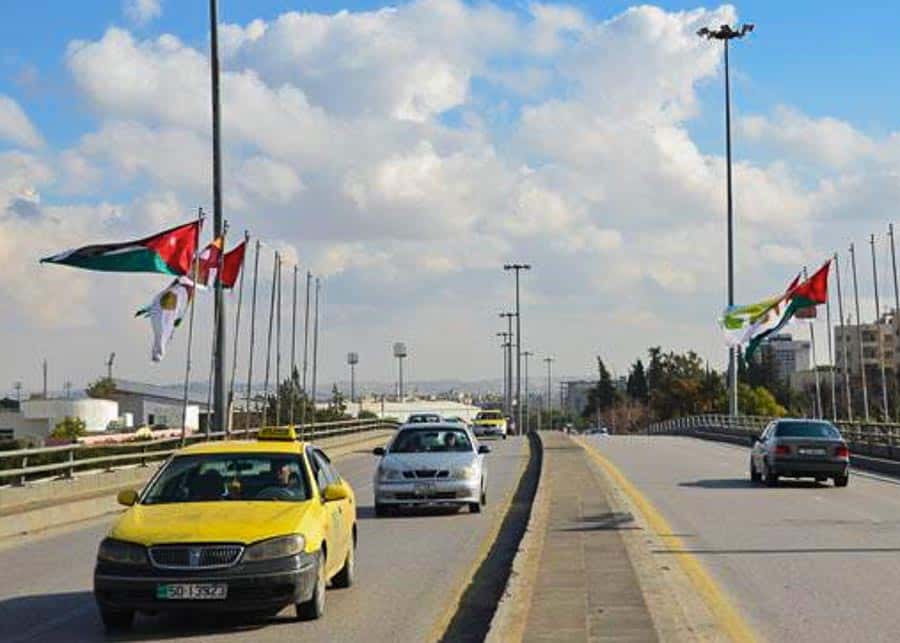
Within cities, Uber and Careem both work in Amman and are far cheaper than street taxis. Outside the capital, you’ll mostly rely on local taxis — agree on the price before you get in.
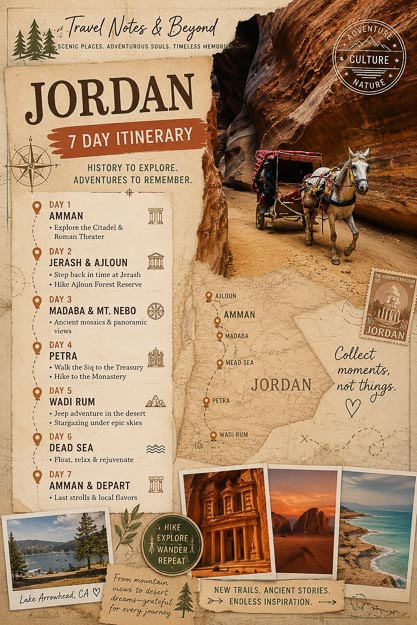
The Perfect 7-Day Jordan Itinerary
This itinerary starts and ends in Amman, follows a roughly clockwise loop through the country, and gives you two full days in Petra (the bare minimum, in my opinion). Every day includes where to stay, what to eat, and what the entry fees cover so you can plan or adjust as you go.
If you have eight or nine days, add a night in Aqaba for diving on the Red Sea, or a stop at the Dana Biosphere Reserve between the Dead Sea and Petra.
Jordan is an incredibly beautiful country, with so many interesting sights to see. One week will barely give you enough time to take note of some of them, but not to explore everything that’s out there. We would have like to liked to take a trip into the Wadi Mujib, but that wasn’t possible in such a short amount of time.
Day 1: Arrive in Amman
Most travelers land at Queen Alia International Airport in the afternoon or evening. After clearing immigration with your Jordan Pass, take a fixed-price taxi (22 JOD) into the city — the ride takes 40-50 minutes.
Spend your first evening easing into Jordanian rhythm rather than sightseeing. Head to Rainbow Street in Jabal Amman, a walkable stretch of cafés, boutiques, and rooftop restaurants. Stop at Sufra for a proper Jordanian dinner — the mansaf (lamb in fermented yogurt sauce, served over rice) is the national dish and worth ordering even if you’re not normally adventurous with food.
If you arrive earlier in the day and still have energy, the Amman Citadel (covered by the Jordan Pass) sits on the highest hill in the city and gives you a wide view at sunset, plus Roman, Byzantine, and Umayyad ruins on one site.
Where to stay in Amman
The Jabal Amman and Abdoun neighborhoods are central and safe.
- Budget: Jabal Amman Boutique Hotel (~$60/night)
- Mid-range: La Locanda Boutique Hotel (~$110/night), themed around Jordanian musicians
- Luxury: Four Seasons Amman (~$280/night)
Entry fees today: Citadel covered by Jordan Pass (3 JOD without it).
Day 2: Jerash and Ajloun Day Trip
Jerash is one of the best-preserved Roman cities anywhere in the world, and after experiencing the majesty of mythical Petra later in your trip, I think you’ll be surprised how much this site still impresses. It’s only 50 km north of Amman, making it an easy half-day or full-day trip.
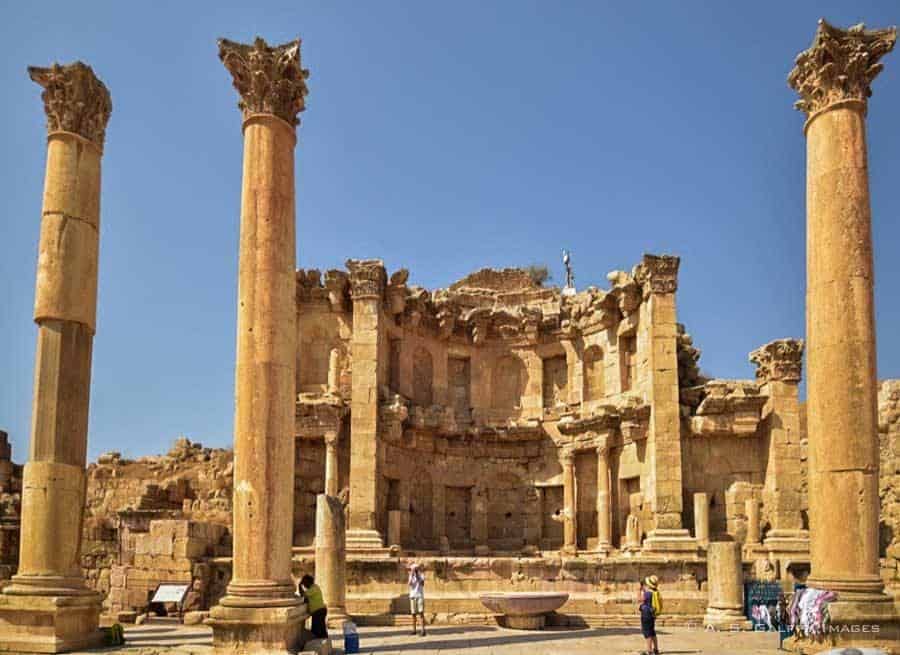
Leave Amman by 8:30 a.m. to beat the tour buses. The drive takes about an hour. Plan two to three hours at the site itself.
The archaeological park includes:
- Hadrian’s Arch: Originally built in honor of the emperor’s visit in 129 AD
- The Oval Forum: A massive limestone plaza surrounded by 56 Ionic columns
- Cardo Maximus: The colonnaded main street running 800 meters from the Forum to the North Gate
- Temple of Artemis: Built for the patron goddess of the city, with columns that still sway in the wind
- South Theater: Catch the daily bagpipe performance — yes, bagpipes, a holdover from the British Mandate
- Hippodrome: Where chariot races and gladiator fights were held
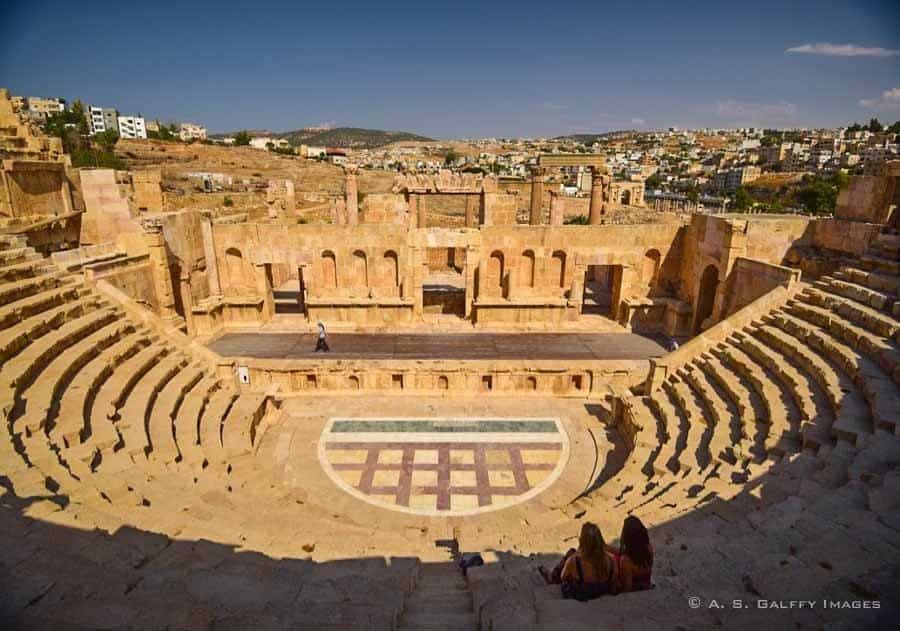
If you finish Jerash by early afternoon, add Ajloun Castle (built 1184 AD) on the drive back — a 12th-century Muslim fortress with sweeping views of the Jordan Valley. Both sites are covered by the Jordan Pass.
Return to Amman for the night.
Where to eat: Hashem Restaurant in downtown Amman is a Jordan institution — hummus, falafel, ful, and fresh bread for under 5 JOD per person. Royals have eaten there.
Entry fees today: Jerash (10 JOD) and Ajloun Castle (3 JOD) both covered by Jordan Pass.
Day 3: Madaba, Mt. Nebo, and the Dead Sea
Check out of your Amman hotel — today you’ll move south. The drive from Amman to the Dead Sea is short (about 60 km), but you’ll stop twice along the way.
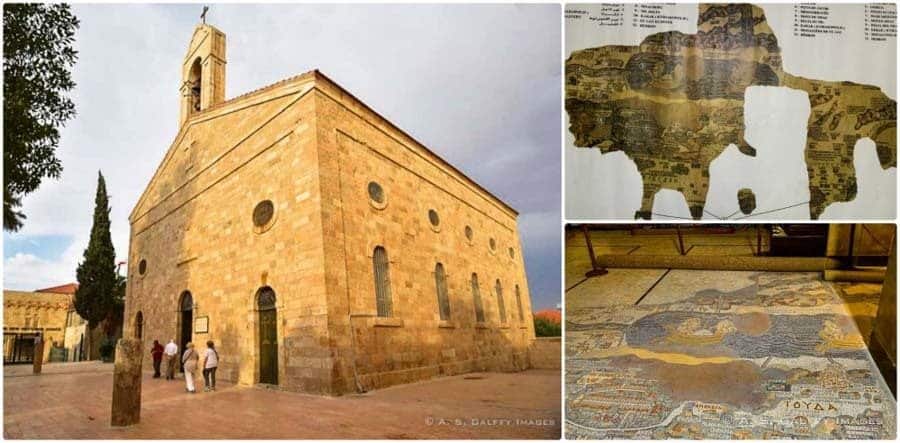
Madaba (45 minutes from Amman) is best known for The most famous is the 6th-century mosaic map of the Holy Land on the floor of St. George’s Church, created in exquisite detail and still studied by archaeologists. The church itself is small and plain, but the mosaic is unmissable. Allow an hour, and walk over to the Archaeological Park to see even more vibrant mosaic floors from Madaba’s villas and churches.
From Madaba, drive 10 minutes to Mt. Nebo, a very important biblical site. From this ridge, God allowed Moses to view the Promised Land before he died. On a clear day, you can see the Jordan Valley, the Dead Sea, Jericho, Bethlehem, and the distant hills of Jerusalem. A helpful sign points out exactly what you’re looking at.
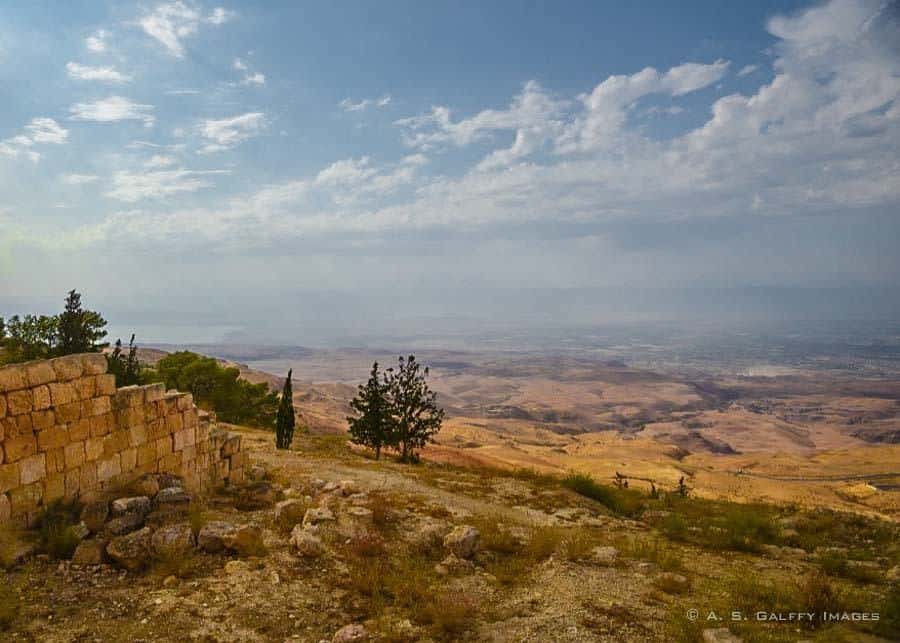
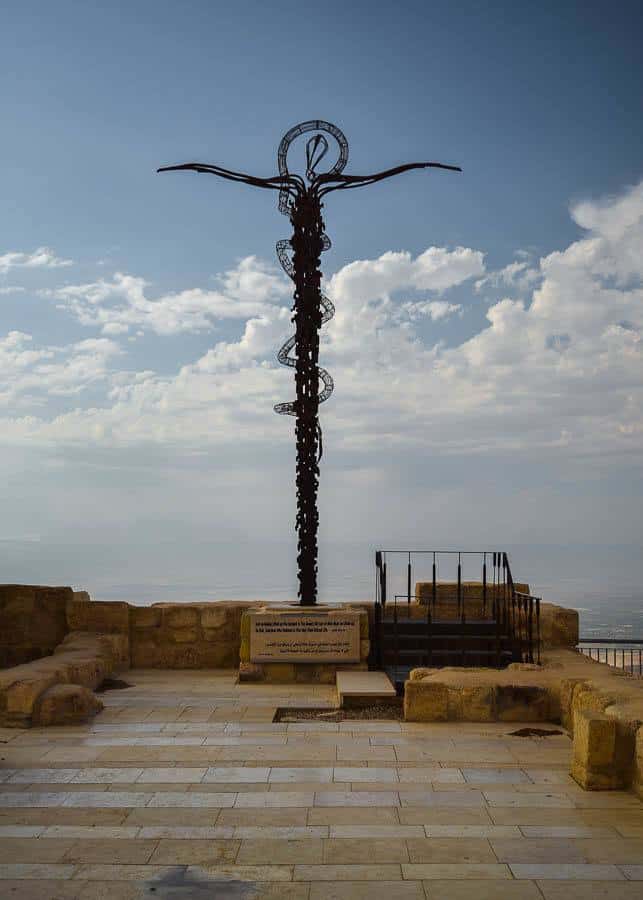
There is a lot to watch at Mt. Nebo besides the view. A very interesting piece is the renowned Brazen Serpent Monument, a representation of the bronze serpent lifted up by Moses in the wilderness.
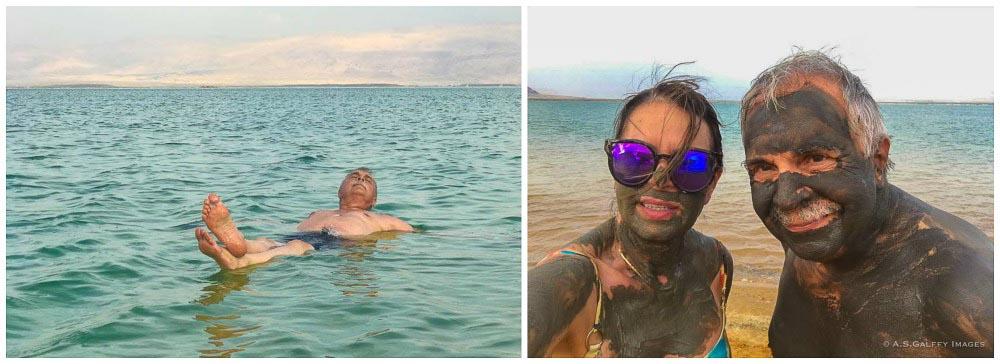
By mid-afternoon, descend to the Dead Sea — the lowest point on Earth at 430 meters below sea level. Float, slather yourself in the mineral mud, and let the salt water do its thing. Important tip: wear darker swimsuits (the mud stains light fabric permanently), avoid shaving for at least 24 hours before (the salt burns), and don’t get water in your eyes.
Where to stay at the Dead Sea
The public beach is fine for a quick float, but resort access is much more comfortable.
- Mid-range: Dead Sea Spa Hotel (~$140/night)
- Luxury: Kempinski Hotel Ishtar (~$280/night) or Mövenpick Resort & Spa Dead Sea (~$260/night)
Where to eat: Most travelers eat at their resort. If you want a local option in Madaba on the way, Haret Jdoudna serves traditional Jordanian dishes in a restored 19th-century stone house.
Entry fees today: Madaba mosaics (1 JOD), Mt. Nebo (3 JOD), Dead Sea public beach (15-25 JOD or free with resort). Madaba and Mt. Nebo are covered by Jordan Pass.
Day 4: Drive to Petra via the King’s Highway
Today is one of the most beautiful drives in the Middle East. Instead of taking the faster Desert Highway, route yourself along the King’s Highway (Route 35), an ancient road traveled by kings, pilgrims, and Crusaders for over 5,000 years. The drive from the Dead Sea to Petra takes about 4 hours with stops, versus 2.5 hours on the Desert Highway, but the scenery is worth every extra minute.
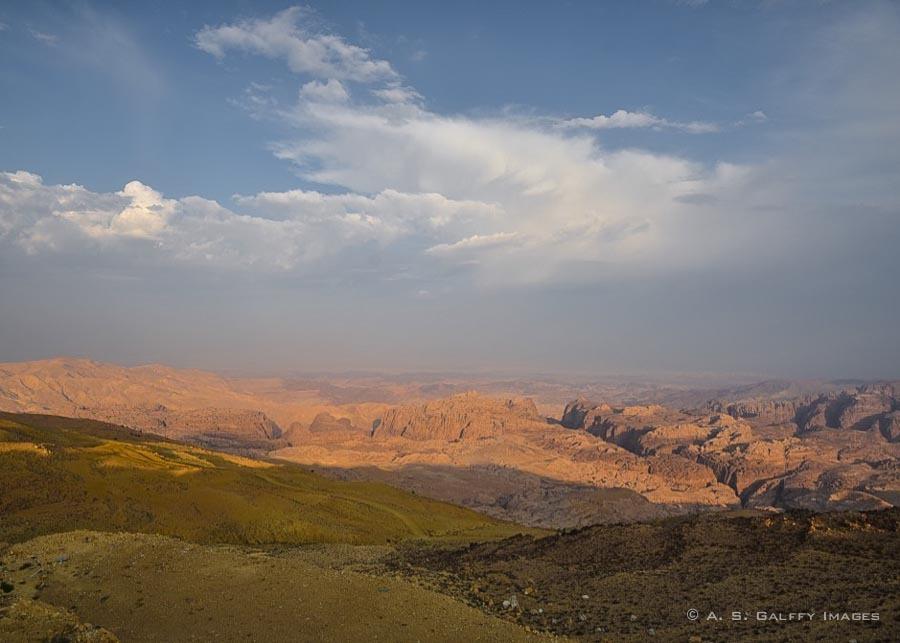
Leave the Dead Sea by 9 a.m. The road winds through rolling plains scattered with barren cliffs, mountain villages, and dramatic canyons. Two stops are worth making:
- Wadi Mujib viewpoint: Jordan’s version of the Grand Canyon. Pull over at the marked overlook and walk to the edge.
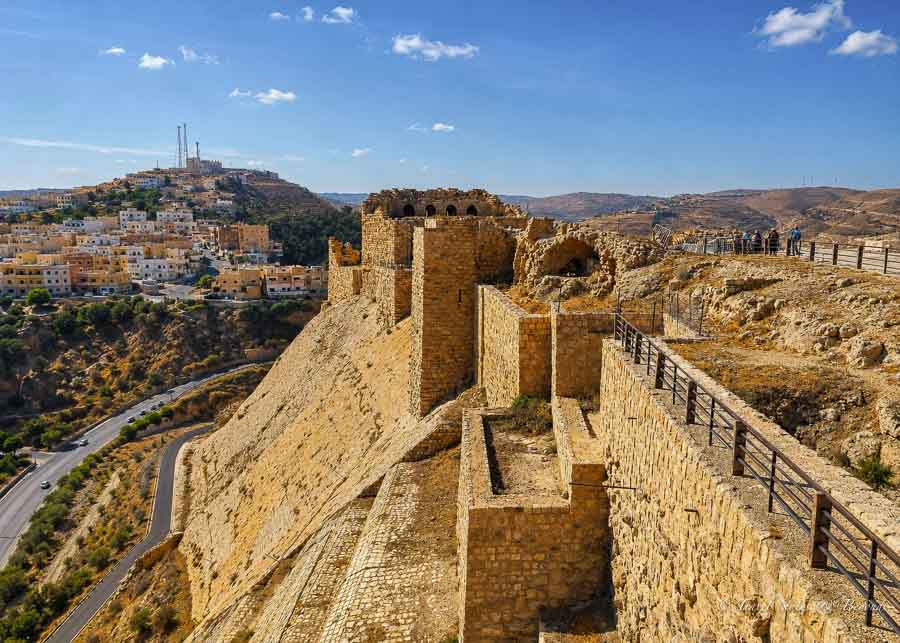
- Karak Castle: A massive Crusader fortress from 1142 AD, perched on a hill with views in every direction. Allow an hour to explore. Covered by the Jordan Pass.
You’ll arrive in Wadi Musa (the town at the entrance to Petra) by mid-afternoon. Check into your hotel, then spend the evening walking the village. It’s lively and colorful, with rooftop cafés that look down toward the Petra valley.
If you want a unique experience, book Petra by Night for tonight (Monday, Wednesday, or Thursday only, 8:30-10:30 p.m.). The Siq is lit by 1,500 candles and Bedouin musicians play in front of the Treasury. Tickets are 17 JOD and not covered by the Jordan Pass. Honest take: some travelers find it magical, others find it underwhelming and crowded. Skip it if you’re tired — your daytime visit will be far more impressive.
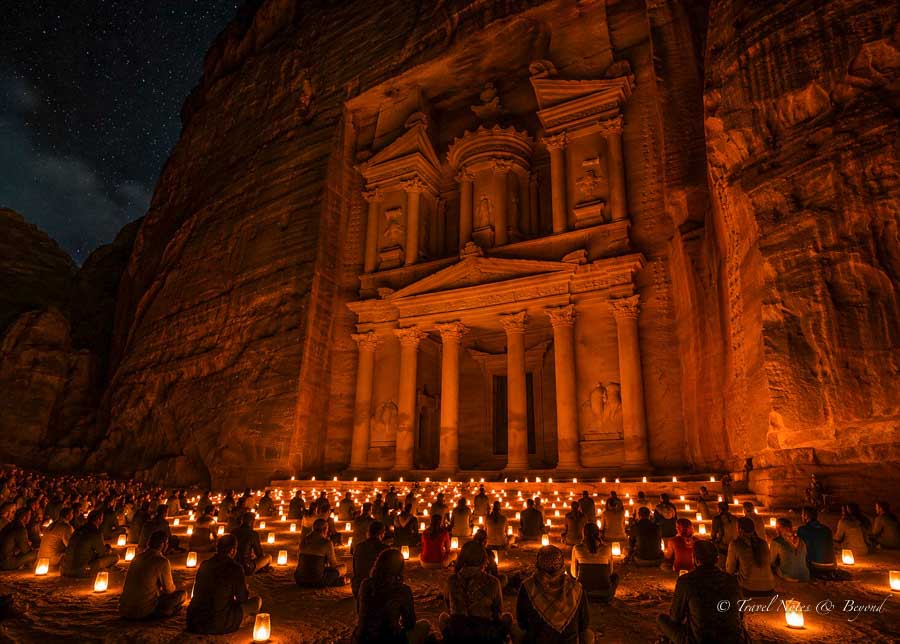
Where to stay in Wadi Musa
- Budget: Petra Gate Hostel (~$25/night)
- Mid-range: Petra Moon Hotel (~$95/night), 10 minutes’ walk to the entrance
- Luxury: Mövenpick Resort Petra (~$220/night), right at the entrance gate
Where to eat: My Mom’s Recipe Restaurant for home-style Jordanian cooking, or Al-Wadi Restaurant for traditional zarb (lamb and chicken cooked underground).
Entry fees today: Karak Castle (2 JOD) covered by Jordan Pass. Petra by Night (17 JOD) extra.
Day 5: A Full Day Exploring Petra
This is the highlight of your trip. Petra deserves a full day at minimum. And even then, you’ll only see a fraction of the 60-square-kilometer site. Built by the Nabataeans around 312 BC, this lost city served as the capital of a powerful trading empire that controlled the spice and incense routes between Arabia and the Mediterranean.
Be at the gate by 6 a.m. when it opens. Mornings are cooler, the light is golden, and you’ll have the Treasury nearly to yourself before the tour buses arrive around 8:30.
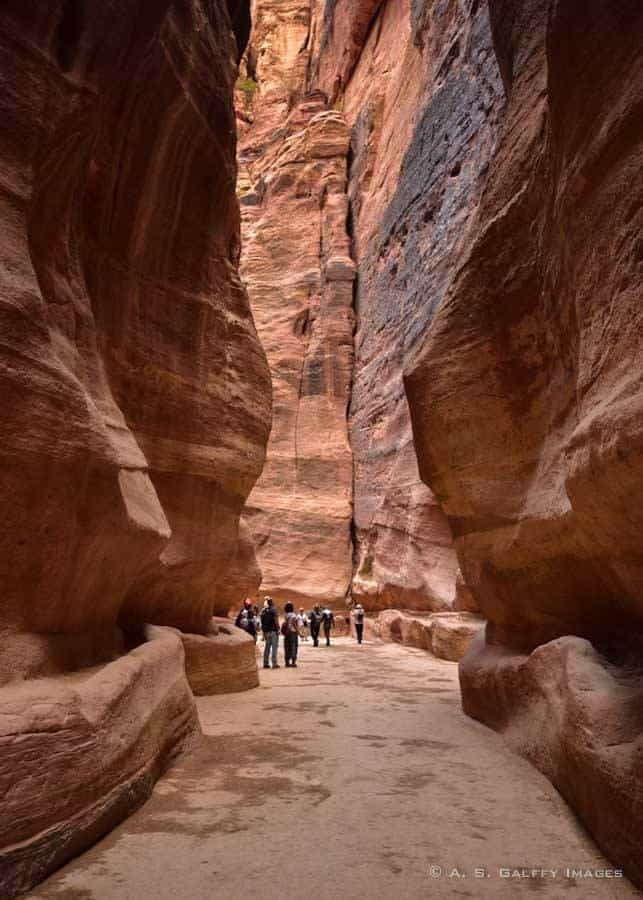
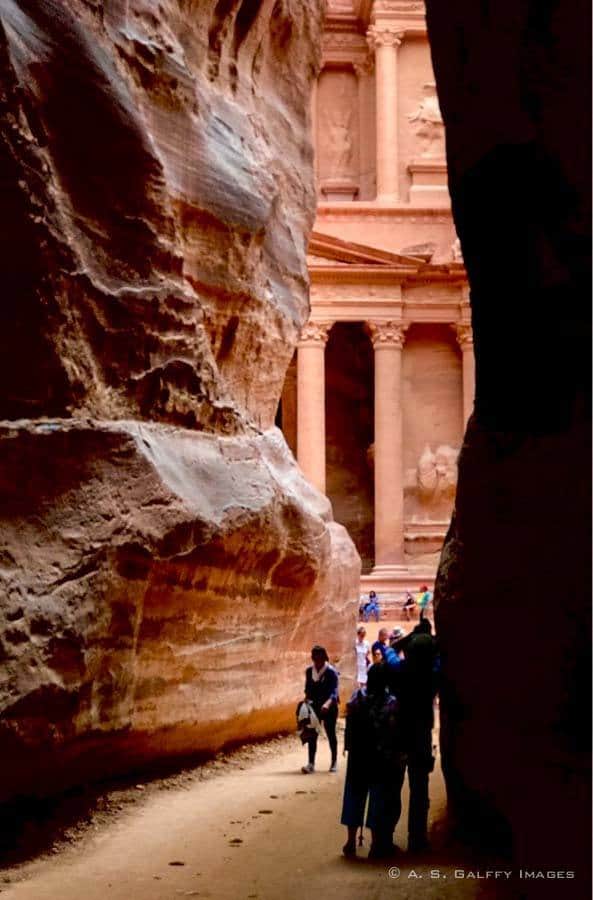
The entrance is a mile-long walk through the Siq, a narrow canyon with walls towering 80 meters above you. At the end, the Siq opens dramatically onto the Treasury (Al-Khazneh), Petra’s most iconic monument. That first glimpse through the narrow passage is a sight you’ll never forget.
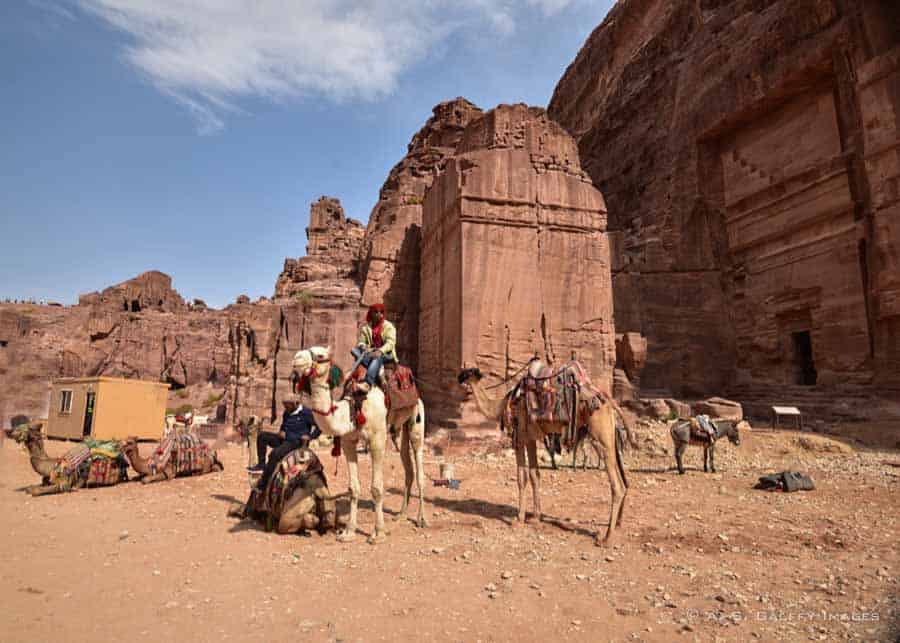
From the Treasury, walk along the main pathway past the Street of Façades and the Royal Tombs. This are the biggest and most elaborate tombs in Petra, carved into the eastern cliff and stunning when the morning sun hits them. The Theater (carved into the rock, capacity 8,500) and the Colonnaded Street sit at the heart of the ancient city. This area gets crowded by mid-morning, so move through it deliberately rather than lingering.
Three major hikes branch off from the main route:
| Hike | Time (round trip) | Difficulty | Reward |
|---|---|---|---|
| Monastery (Ad-Deir) | 2.5-3 hours | 800 steps, strenuous | Petra’s largest monument |
| High Place of Sacrifice | 1.5-2 hours | Steep, moderate | Panoramic valley view |
| Al-Khubtha Trail | 3-4 hours | Strenuous | Famous view of the Treasury from above |
If you only do one hike, make it the Monastery (Ad-Deir). The 800-step climb is no joke, so allow at least an hour going up. Even though is a tough hike, the reward is extraordinary. The Monastery is bigger than the Treasury (50 meters wide and 45 meters tall) and far less crowded.
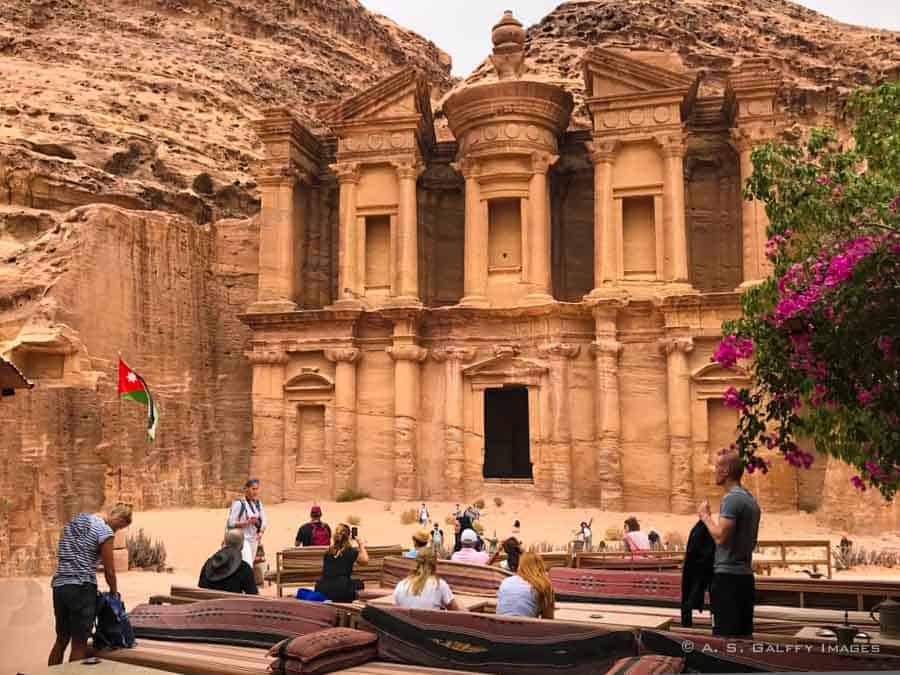
Bedouin tea stalls line parts of the trail, offering a cool spot to rest and a glass of cardamom tea for a few JOD. From the Monastery, follow the signs another 10 minutes to a cliff-edge viewpoint marked “Best View in the World.”
Practical tips
- Buy a hiking stick at the bazaar by the entrance (5-7 JOD). You’ll use it heavily on the way down.
- Bring at least 2 liters of water. There are vendors inside but prices climb the further in you go.
- Wear sturdy closed-toe shoes — the rocks are slippery, especially after rain.
- Stop for tea with the Bedouin vendors. They’re friendly, the tea is good, and supporting them keeps Petra culturally alive.
Return to Wadi Musa for dinner. Stay a second night.
Entry fees today: Covered by Jordan Pass Explorer (2-day Petra access). Without the pass, a 1-day ticket is 50 JOD, a 2-day is 55 JOD.
Day 6: Wadi Rum Desert
After breakfast, drive south to Wadi Rum — only 1.5 hours from Petra. Known as the Valley of the Moon, Wadi Rum surprised me with how unlike a “sandy desert” it actually is. It’s a landscape of soaring red cliffs, granite mountains, and narrow canyons, with sand dunes only in stretches. The light at sunrise and sunset turns everything copper and gold.
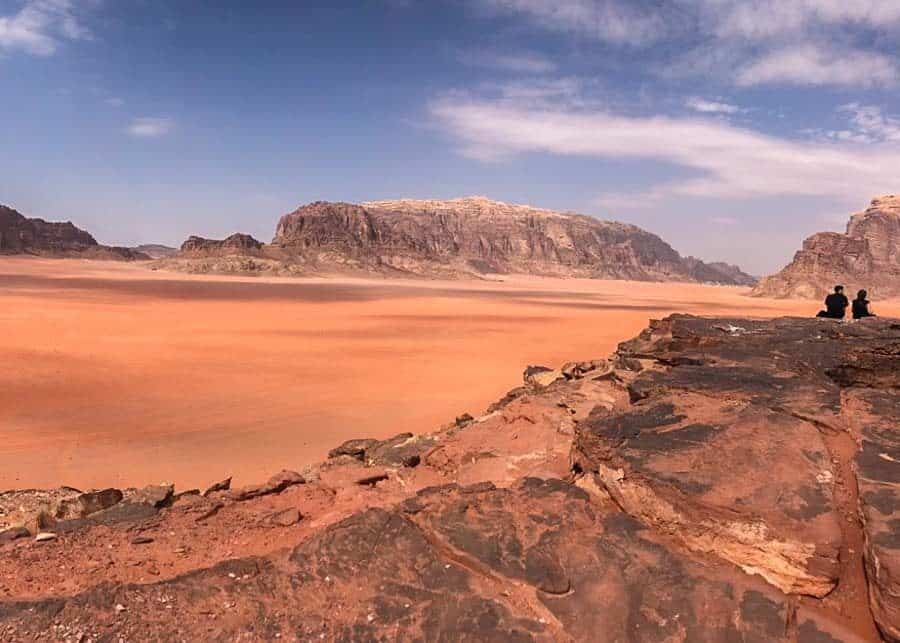
Arrange your 4×4 Jeep tour in advance through your Bedouin camp (most camps include a half-day tour with the overnight stay) or at the Wadi Rum Visitor Center. A typical 4-hour tour covers Lawrence’s Spring, the Khazali Canyon petroglyphs, the Um Frouth rock arch, and the red sand dunes. Groups are usually small (4-6 people), and the Bedouin guides will cook lunch on an open fire — grilled chicken with fresh salads and pita.
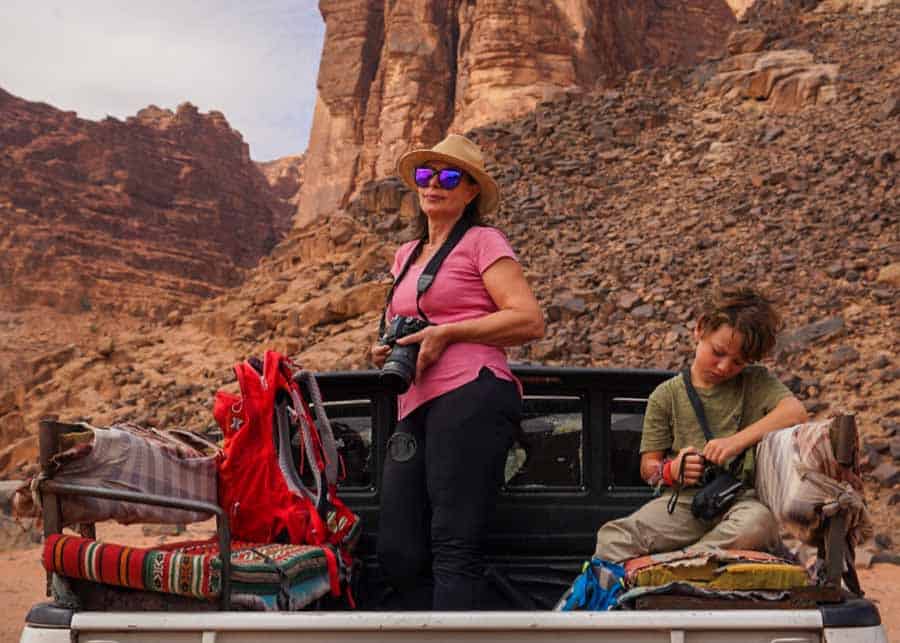
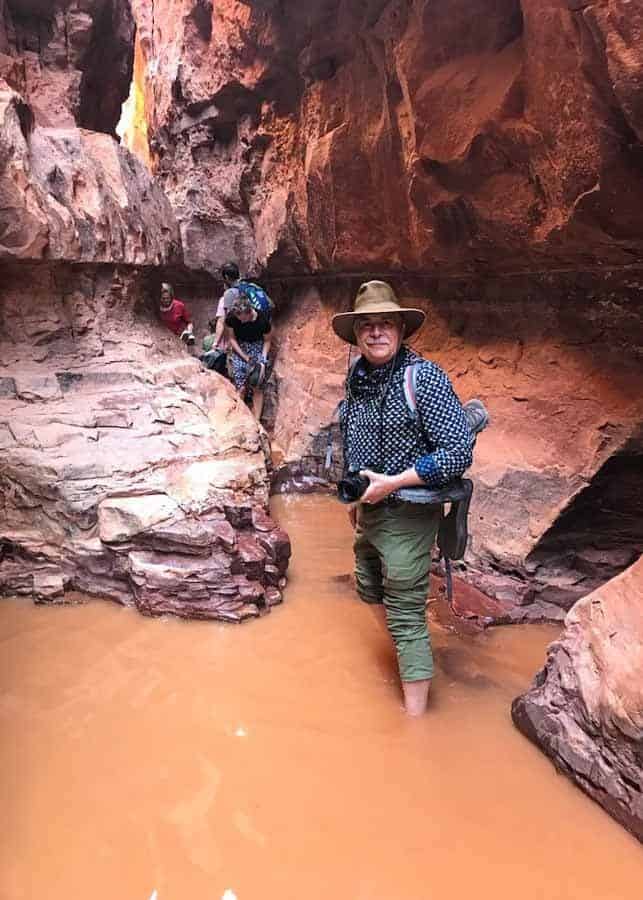
The tour is very instructive, I can’t recommend it enough! The guide also took us to Abu Khashaba Canyon which features a narrow gorge with a stunning floor that occasionally pools with water.
Wadi Rum has been a filming location for many movies because of its otherworldly beauty:
- Lawrence of Arabia (1962)
- The Martian (2015)
- Aladdin (2019)
- Dune and Dune: Part Two (2021, 2024)
- Star Wars: Rogue One (2016)
Spend the night in a Bedouin camp. This is a must! The night sky in Wadi Rum is one of the great experiences of any trip to Jordan. Book at least two months ahead, especially in spring and autumn. We made up our minds too late on our trip and couldn’t find a room. Don’t make the same mistake.
Where to stay in Wadi Rum
- Traditional Bedouin camp: Captain’s Desert Camp (~$80/night, includes dinner and breakfast)
- Mid-range: Wadi Rum Night Luxury Camp (~$120/night)
- Luxury bubble tent: Memories Aicha Luxury Camp (~$200/night) — transparent domes for stargazing from your bed
Dinner at the camp is usually zarb, the Bedouin specialty: lamb, chicken, and vegetables slow-cooked for hours in an underground sand oven. After dinner, gather around the fire for tea and music, then walk out into the desert to see the Milky Way — Wadi Rum is one of the darkest skies you’ll ever experience.
Entry fees today: Wadi Rum protected area (5 JOD) covered by Jordan Pass.
Day 7: Return to Amman
Wake up early — the sunrise in Wadi Rum is unforgettable, painting the cliffs in deep orange and pink. After breakfast at the camp, drive back to Amman via the Desert Highway (Route 15). The drive is about 4 hours, mostly straight desert road, so it goes faster than the King’s Highway.
If your flight isn’t until evening, spend a few hours on the way back at one of these stops:
- Aqaba (45 minutes south of Wadi Rum) for a quick lunch on the Red Sea before turning north. This adds about 2 hours to your day but lets you see all four of Jordan’s coasts and seas.
- Dana Biosphere Reserve turnoff for a short walk, if you skipped it earlier.
Otherwise, drive straight back. Drop your rental car at Queen Alia International Airport, or have your driver drop you at the terminal. Most international flights to Europe and North America leave Amman in the late evening, so you’ll have time for a final Jordanian meal at the airport (the food court has decent local options) before flying out.
A small reflection: after walking an average of 15 miles a day, hiking up and down Wadi Rum sand dunes, and climbing the endless steps of Petra, you’ll be tired — but the kind of tired that comes with a full trip.
Entry fees today: None.
READ NEXT: How to Get from Wadi Musa to Petra
Where to Stay in Jordan
Your hotel choices will define a lot of your Jordan experience. Here’s a quick summary of what to book at each stop along this itinerary.
| Stop | Budget | Mid-range | Luxury |
|---|---|---|---|
| Amman | Jabal Amman Boutique Hotel (~$60) | La Locanda Boutique Hotel (~$110) | Four Seasons Amman (~$280) |
| Dead Sea | Public beach + day pass | Dead Sea Spa Hotel (~$140) | Kempinski Ishtar (~$280) |
| Wadi Musa (Petra) | Petra Gate Hostel (~$25) | Petra Moon Hotel (~$95) | Mövenpick Petra (~$220) |
| Wadi Rum | Captain’s Desert Camp (~$80) | Wadi Rum Night Luxury Camp (~$120) | Memories Aicha Bubble Tent (~$200) |
A few notes from experience:
- Book the Wadi Rum camp at least two months ahead. Spring and autumn fill up fast, and you don’t want to settle for whatever’s left.
- Stay close to Petra’s entrance. A 10-minute walk vs. a 20-minute taxi makes a real difference when you’re going in at 6 a.m. and again in the afternoon.
- The Dead Sea resorts have private beaches with showers, freshwater pools, and shaded loungers. The public beach is fine for a quick float, but you’ll appreciate the resort access after the salt dries on your skin.
What to Eat in Jordan
Jordanian food is one of the trip’s quiet pleasures — fresh, generous, and built around shared plates. A few dishes you shouldn’t leave without trying:
- Mansaf — the national dish. Slow-cooked lamb served over rice and flatbread, topped with a fermented yogurt sauce called jameed. Traditionally eaten with your hands from a communal platter.
- Mezze — small plates that arrive before the main course: hummus, mutabbal (smoky eggplant), tabbouleh, labneh, stuffed grape leaves, fresh bread. A meal in itself.
- Zarb — Bedouin barbecue, where lamb, chicken, and vegetables are slow-cooked in an underground sand oven for hours. Best eaten at a Wadi Rum camp.
- Maqluba — “upside-down” rice dish with layered chicken or lamb, eggplant, and cauliflower, flipped onto a platter at the table.
- Falafel and ful — the standard Jordanian breakfast. Hashem Restaurant in downtown Amman serves the best, and royals have eaten there.
- Knafeh — sweet cheese pastry soaked in syrup, topped with crushed pistachios. Habibah Sweets in Amman is the local favorite.
- Arabic coffee and mint tea — offered everywhere, almost as a ritual. Accept when offered.
A note on alcohol: Jordan is Muslim-majority but not dry. You’ll find beer and wine in tourist hotels, in Amman’s nicer restaurants, and at Dead Sea and Wadi Rum resorts. Outside those, alcohol can be hard to find, and it’s not served in most local restaurants. Jordan even has its own winery — Jordan River wines are produced in the Madaba area and worth trying.
How Much Does a Trip to Jordan Cost?
Jordan is more expensive than most people expect for the Middle East, mostly because mid-range tourist infrastructure is limited. Here’s a realistic breakdown for one week, per person, based on this itinerary:
| Category | Budget | Mid-range | Luxury |
|---|
| Category | Budget | Mid-range | Luxury |
|---|---|---|---|
| Accommodation (6 nights) | $180 | $660 | $1,500 |
| Food (3 meals/day) | $140 | $245 | $420 |
| Transport (rental car + fuel) | $250 | $350 | $600 (private driver) |
| Jordan Pass Explorer | $106 (75 JOD) | $106 | $106 |
| Activities (4×4 in Wadi Rum, Petra by Night, etc.) | $80 | $150 | $280 |
| Total (per person) | ~$756 | ~$1,510 | ~$2,906 |
Add flights separately: roundtrip from the US runs $750-$1,500 depending on season and origin (October is cheapest, December and June peak), and from Europe $250-$550 (February is cheapest).
Ways to save:
- Travel as a couple or group — accommodation and a rental car split easily.
- Buy the Jordan Pass before arrival to skip the 40 JOD visa fee.
- Eat where locals eat — a falafel sandwich is 1 JOD, a full meal at Hashem is 5 JOD.
- Use JETT buses between cities if you have flexible timing — 8-10 JOD per leg vs. 60+ JOD for a private transfer.
Is Jordan Safe to Visit?
Yes — Jordan is one of the safest countries in the Middle East and one of the most welcoming places I’ve ever visited.
Most people I know assume traveling to Jordan is risky because they hear constantly about conflicts in the region. Those tensions are real, but they don’t apply to Jordan. The country has remained politically stable for decades, has good relations with both its neighbors and the West, and has a tourism industry built around treating visitors well.
After a week in Jordan, we left touched by the generosity and kindness of its people. We never felt at risk or had to watch our backs, even for a moment. Skipping Jordan because you think it’s unsafe would be a real shame.
A Few Practical Points
- Solo female travelers report feeling safe in Amman, Petra, and the major tourist sites. Dress respectfully (covered shoulders and knees), ignore the occasional unwanted attention, and you’ll be fine.
- Driving is safe but defensive. Roads are well maintained, but drivers can be aggressive, signage is inconsistent, and animals wander onto the road at night. Avoid driving after dark.
- Avoid the eastern border areas near Iraq and Syria — there’s no tourist reason to go there, and the US State Department advises against it.
- Check current travel advisories before booking, especially if regional tensions shift. Your government’s travel advisory site is the most reliable source.
What to Pack for Jordan
Pack for a country that’s hotter than you expect during the day, cooler than you expect at night, and more conservative than you might be used to — all at once.
Clothing:
- Lightweight long-sleeve shirts and long pants (cotton or linen)
- A few short-sleeve shirts for the Dead Sea and casual evenings
- Convertible hiking pants — useful for Petra and Wadi Rum
- A light jacket or fleece for cool desert nights
- A scarf or shawl (women — useful for entering mosques or covering up in conservative areas)
- One outfit you can dress up for nice restaurants in Amman
Shoes:
- Sturdy hiking shoes or trail runners — non-negotiable for Petra
- Sandals for the Dead Sea (the salt is rough on regular footwear)
- Comfortable walking shoes for cities
Other essentials:
- Sunscreen (SPF 30+) — the sun is relentless even in spring and autumn
- A wide-brimmed hat
- Sunglasses
- Reusable water bottle (tap water is not drinkable; refill from filtered sources)
- Portable phone charger
- Small daypack for Petra and Wadi Rum
- A darker swimsuit for the Dead Sea — the mud stains light fabrics permanently
- Hiking stick (or buy one for 5-7 JOD at the Petra entrance)
Don’t pack:
- Shorts above the knee or tank tops (they’re fine at Dead Sea resorts, but uncomfortable in public elsewhere)
- Anything you don’t want to get dusty
Tips for First-Time Visitors to Jordan
A few things I wish I’d known before my first trip:
- Buy the Jordan Pass before you fly. It pays for itself in two days and waives the 40 JOD visa fee. The official site is the only place to buy it.
- Carry small bills. Many entrance fees, taxis, and tips need to be paid in cash, and breaking a 50 JOD note can be hard.
- Tip generously but reasonably. 10% at restaurants if service isn’t included, a few JOD for tour guides and drivers per day.
- Learn a few Arabic phrases. Marhaba (hello), shukran (thank you), and afwan (you’re welcome) go a long way.
- Drink only bottled or filtered water. Tap water is treated but not recommended for tourists. Many hotels have filtered refill stations.
- Bring toilet paper or tissues. Public restrooms — even at major sites — often run out.
- Pace yourself in Petra. Don’t try to see everything in one day. Two days lets you cover the main sites without exhausting yourself.
- Book Wadi Rum early. Two months ahead minimum for spring and autumn. The good camps sell out.
- Bring a power adapter. Jordan uses Type C, D, F, G, and J plugs — a universal adapter is your safest bet.
- Don’t rush. Jordan’s drives are long and the sites are vast. Plan for fewer stops, not more. The country rewards travelers who slow down.
Pin this for later:
YOU MAY ALSO LIKE:
 How to Visit to Israel Like a Pro: 20 Essential Travel Tips



Jeremy
Few things beat the awe of walking through the canyon and seeing the treasury open out in from of you. Being able to visit Jordan was one of the greatest trips we have ever done. The people were so friendly. We visited some 5+ years ago.
Nisha
Your post made me nostalgic! Every place that you have visited, we visited them too! And each one of them has its own charm and as your itinerary mentions, you just can’t leave any of them for lack of time.
The open theatre in Jerash had some locals playing music for us and wanted us to click them. Madaba, Wadi rum and unforgettable Petra! The only we didn’t do was Hiking the canyon in the Wadi Rum desert.
Thanks for sharing this gem. 🙂
Anda Galffy
Thanks for your comment, Nisha. We enjoyed Jordan a lot!
Francesca
Wow, I didn’t realize how big Petra was! That would take about a week to fully explore in itself. Good to know that Jordan can be explored on my own as I’m a pretty independent traveler. Thanks for all the tips!
sherianne
I have wanted to visit Petra for a very long time but did not realize how large the area is. I also did not realize Moses is buried at Mt. Nebo in Jordan. Wadi Rum is also on my list, I don’t think I would stay the night though. Aqaba beach looks gorgeous and a great way to end the trip
Anda Galffy
You can visit the Wadi Rum desert on a day trip. No need to spend the night in the desert, although people who did say it’s unbelievably beautiful.
Stevo
Thank you for the extensive itinerary. Jordan is always a place I’ve wanted to visit, to see Petra and the like, but I had no idea where to start. Thanks to your guide, now I do. Sorry to hear that you weren’t able to stay out with the Bedouin guides and sleep under the stars. That just means there are more fun and new adventures for next time! Thanks for sharing!
Anda Galffy
Yet, sleeping under the stars would have been nice…
Patricia
Petra continues to be one of the places I most want to see in the world. It does sound like I’ll need to get in better shape to see it because all of that hiking and walking sounds necessary to really experience it. Mt. Nebo sounds fascinating. Even the mosaics in the small basilica look intriguing. Jerash and its Roman theater and surrounding ruins look incredible. So much to see! And thank you for mentioning the safety issue — I had wondered, and it’s good to know that you felt safe traveling there.
Anda Galffy
Jordan is a pretty safe country to visit for now. Of course, this can change at any time, so better hurry up and visit Petra.
Adonis A Villanueva
Quite a detailed Itinerary! I’m definitely taking notes to maximize my time in Jordan when it comes time to visit. I’ll make sure to take your advise and go in Spring or Autumn. I’m not a big fan of heat even if it’s dry heat in the desert.
Rosemary
What an amazing trip. You covered quite a bit of ground in 5 days. Love your shots of the Wadi Rum desert. There is something so peaceful about the place. Good tip to book ahead and stay at a Bedouin camp. Thank you for addressing the practical aspects of traveling to Jordan. It is on my bucket list. Good to know you felt safe and the people exuded warmth.
Anda Galffy
Thanks, Rosemary.
Jenn and Ed Coleman
Sounds like there are some good lessons learned here. Getting to Petra before the tour busses arrive sounds like it’s worth the early start. I would definitely want to camp in a Bedouin camp. We’re hoping to make it to Jordan in the next year or two and check these spots out for ourselves.
Anda Galffy
Hope you’ll get to see Jordan soon.
Danik
Jordan looks like it has more than the capital and Petra (as well as the Dead Sea) to explore and would love to do an intense trip here, probably more than five days, so I can get a great insight into the country, culture and the people. Would love to hiking here in the cooler months.
Anda Galffy
Jordan is actually pretty small, so you ca see a lot in 5 days.
Danijela
I had an opportunity to visit Jordan several times, even spent some time in Amman as a correspondent from the Middle East years back. So, this is all familiar, but I love your tips. The one regarding the best time to visit Petra, for instance, is very useful since we all know how popular Jordan got during recent years. It’s often crowded.
Jerash is also a must, Amman too, Wadi Rum, etc. Thank you for reminding me of this Middle Eastern treasure. 🙂
Rhonda Albom
This is still the top of my bucket list. I am so happy you got to go here. This information will help when I finally get my chance to go to Jordan. I am a little bit jealous.
Anda Galffy
Jordan is definitely worth the effort. It’s not an easy trip, but it’s very rewarding.