
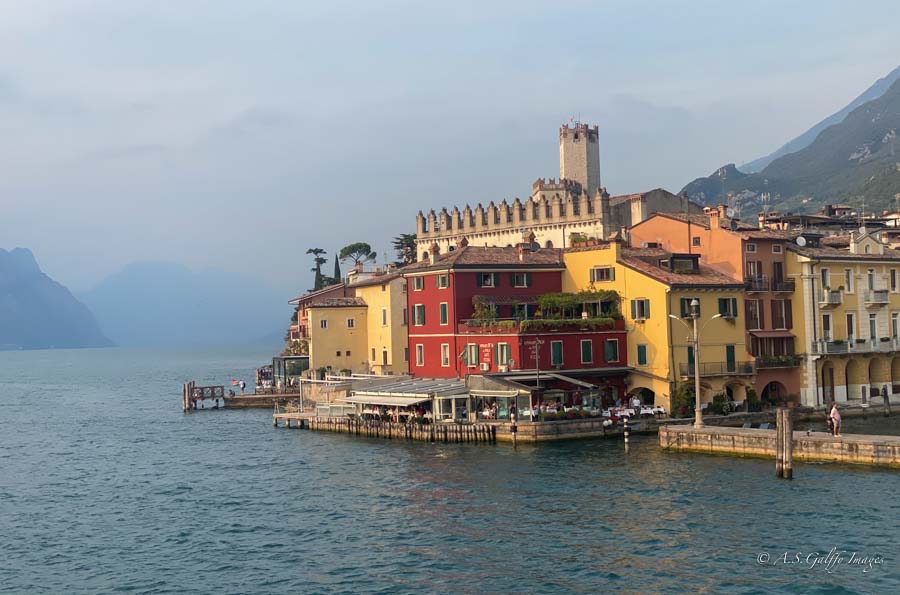
If you are headed to Lake Garda for a visit, the most important decision you’ll have to make is choosing a good town to explore the area. Lake Garda is the largest and arguably most beautiful lake in Italy, but it’s precisely because of its size that it’s important to choose the right place to stay. There are about 9 distinct towns around Lake Garda that serve as excellent bases, depending on your travel style and itinerary. Choosing the right one depends on whether you want to explore the mountainous north, the vineyard-covered east, or the transit-friendly south. So if you are wondering where to stay in Lake Garda, here are 9 towns I found not only lovely, but also very convenient for exploring the lake.
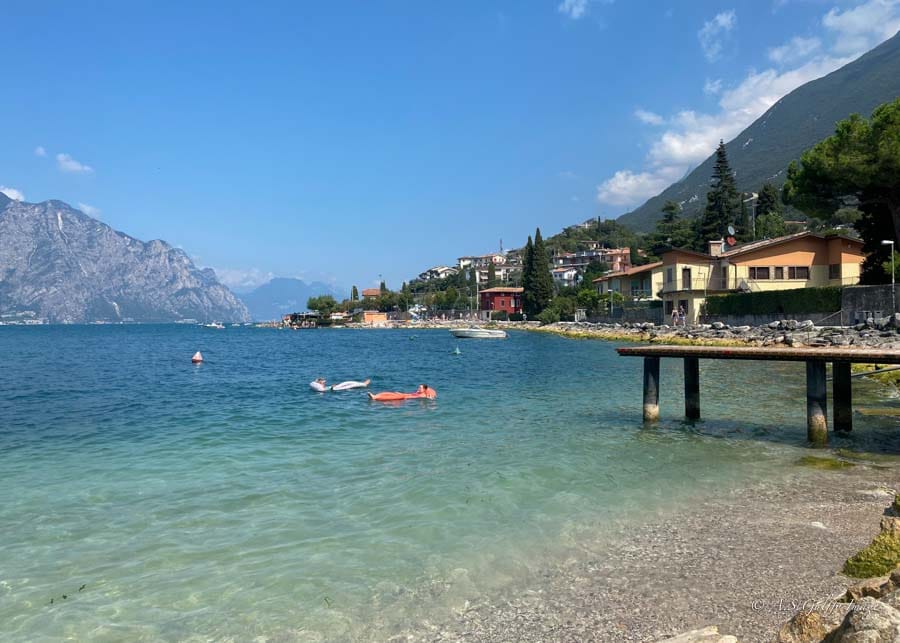
All the towns mentioned in this post are situated on the shoreline and feature picturesque scenery, colorful houses, historic landmarks and stunning water views. They are also small enough to be explored on foot, with pedestrian centers and paths that follow the shore. But they are not all alike, each one has its own appeal, cultural identity, and traditions.
Understanding Lake Garda’s Geography
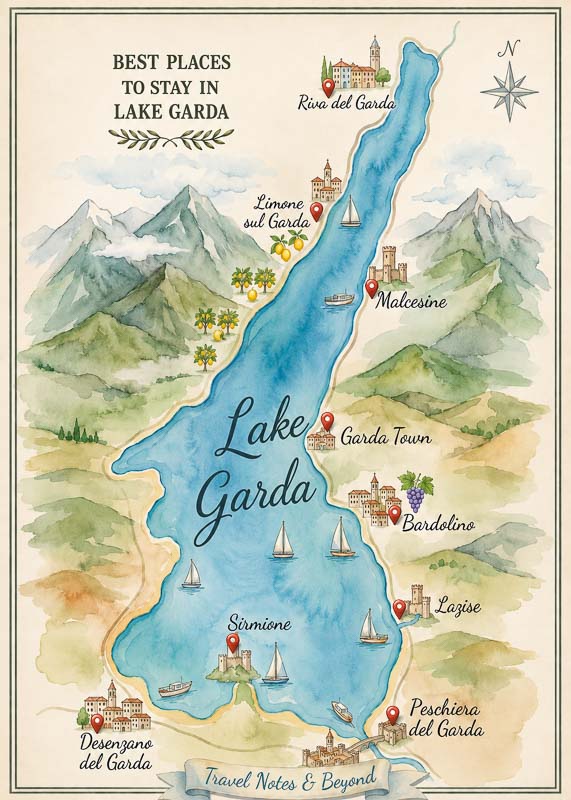
Lake Garda is shaped a bit like an upside-down funnel — long and narrow in the north, then widening out into a broad, almost circular basin in the south. It stretches about 32 miles from top to bottom and sits at the foot of the Alps, which makes for some dramatic shifts in scenery depending on which part of the lake you choose. Before picking a town, it helps to understand what each side of the lake is like, because the north and the south almost feel like two different places.
The Northern Shore
The northern end of Lake Garda is the most dramatic. This is where you’ll find Riva del Garda, Limone sul Garda, and Malcesine. It’s the best area to stay if you love hiking, windsurfing, sailing, or simply waking up to mountain views. The trade-off is that the north is harder to reach without a car, and the weather can be more temperamental than in the south.
The Southern Shore
The southern end of the lake is flat, wide, and noticeably warmer.The towns on this side –– Sirmione, Desenzano, and Peschiera del Garda — are the easiest to reach. They are also on the Milan–Venice train line, which makes the south the most convenient base if you’re traveling without a car.
The Eastern Shore
The eastern shore is the lake’s wine and olive oil country. This side also gets the warm afternoon and evening sun on the water, which makes for some of the best sunset views on the lake.
The Western Shore
The western shore is quieter and a bit more dramatic, with cliffs dropping into the water and citrus groves clinging to the slopes. Limone sul Garda and Gardone Riviera are the most notable stops. The west catches the morning sun, which is something to keep in mind if you prefer to wake up to a sunlit view.
Which Side Should You Choose?
If you want adventure and mountain scenery, head north. For easy logistics, beaches, and family-friendly towns, stay south. If you’re after wine, food, and golden-hour views, the east is your best bet. And if you want quiet, dramatic scenery away from the busiest crowds, the west is the place to be.
Choosing one town over another will also depend on the kind of trip you have in mind. Are you traveling with kids and need easy beaches and theme parks nearby? Or are you arriving by train and want to skip renting a car? Prefer quiet vineyard walks, or do you want windsurfing and hiking right outside your hotel? The answer to these questions will point you toward the right base.
Lake Garda Towns at a Glance
| Town | Area on the Lake | Good For |
|---|---|---|
| Sirmione | South | Couples, first-time visitors, thermal spas |
| Desenzano del Garda | South | Travelers without a car, nightlife, day trips |
| Peschiera del Garda | Southeast | Families, travelers without a car, theme parks |
| Lazise | East | Families, easy beaches, casual lakeside stays |
| Bardolino | East | Wine lovers, foodies, slow lakeside walks |
| Garda town | East | A classic, balanced lakeside experience |
| Malcesine | Northeast | Dramatic scenery, Monte Baldo cable car, couples |
| Riva del Garda | North | Active travelers, watersports, hikers |
| Limone sul Garda | Northwest | Quiet stays, scenic views, romantic getaways |
Best Time to Visit Lake Garda
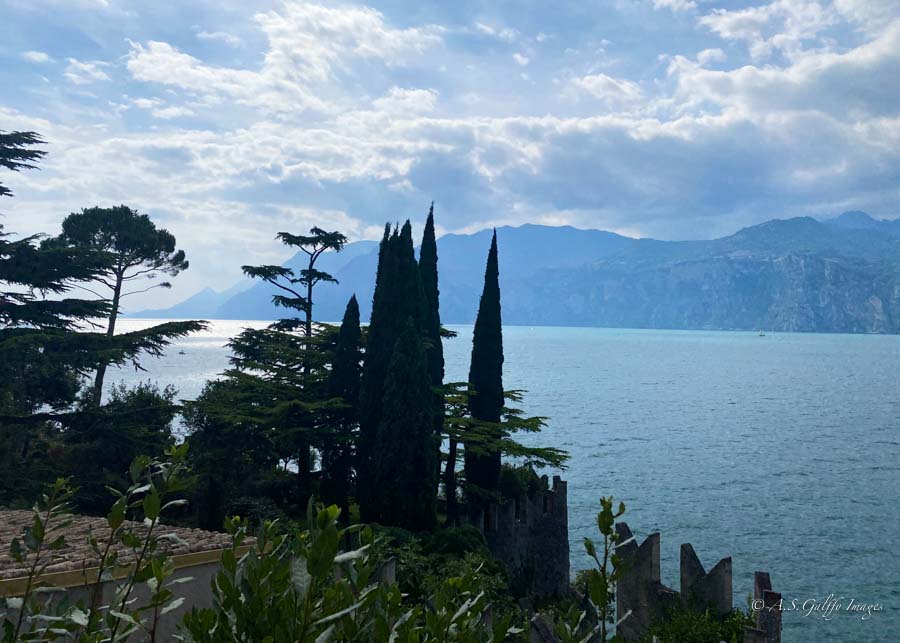
Lake Garda is a year-round destination, but the best time to visit depends on what you’re looking for. The high season runs from mid-June to early September. This is when the weather is warm, water is pleasant, ferries run frequently, and every town is at its liveliest. It’s also the most crowded and most expensive time, with hotel prices nearly doubling and parking becoming difficult in the smaller towns.
My favorite time to visit is the shoulder season — late spring (April, May) and fall (mid-September to mid-October.) Last year we visited Lake Garda in September and the weather was perfect: mild temperatures, the lake was warm enough for swimming, and the towns were not too crowded. Prices are lower in the shoulder season, ferries still run on a near-full schedule, and you can actually find a table at the best lakeside restaurants without booking days in advance.
Winter (November through March) is the quietest time on the lake. Many hotels, restaurants, and ferries shut down between November and Easter, especially in the northern towns. The southern towns, like Sirmione, Desenzano, and Peschiera, stay more active and can be a peaceful, atmospheric choice for a low-key getaway. If you don’t mind cooler weather and shorter days, you’ll have the lake almost to yourself.
An important thing to mention is the lake’s microclimate, which means temperatures can vary significantly between the north and south. The southern shore is noticeably warmer and feels almost Mediterranean, while the north can be cooler and windier, especially in the spring and fall.
How Many Days to Spend in Lake Garda
One important consideration in choosing where to stay in Lake Garda is how much time you can spend here. If you only have 2-3 days, base yourself in Sirmione, Desenzano, or Peschiera and focus on the southern half of the lake. For a longer stay of 5-6 days, Malcesine or Riva del Garda will give you easier access to the northern towns and outdoor activities. A full week is enough to truly explore the lake from end to end, with time for day trips to Verona, Venice, or the Dolomites.
The 9 Most Beautiful Towns to Stay When Visiting Lake Garda
Below are the 9 most beautiful towns to choose from when visiting Lake Garda, listed from south to north as they appear around the lake. The order has nothing to do with my personal preference, each town has something special to offer, and the best one for you will depend on the kind of trip you have in mind.
Sirmione
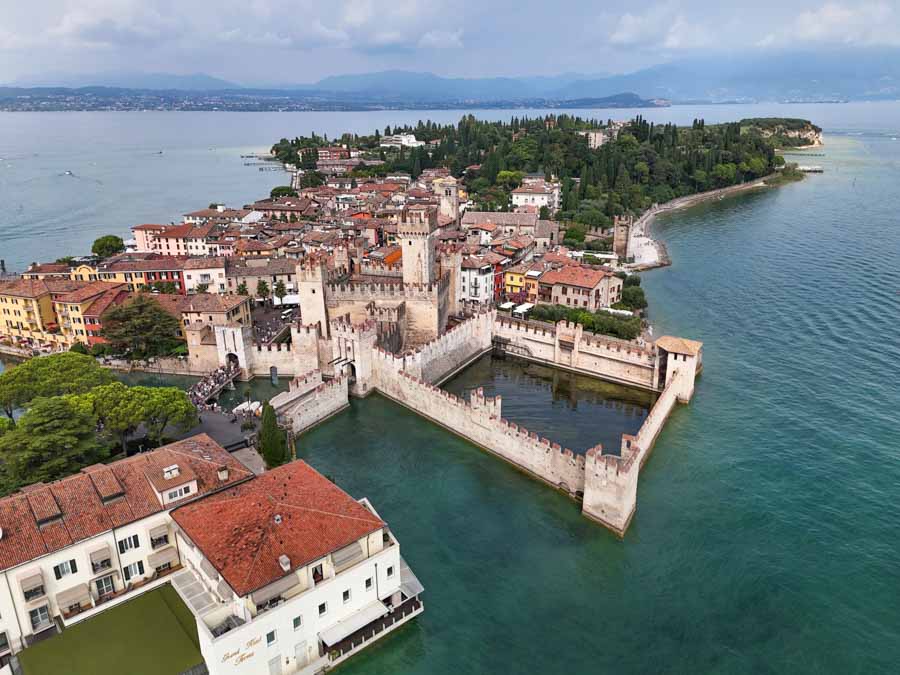
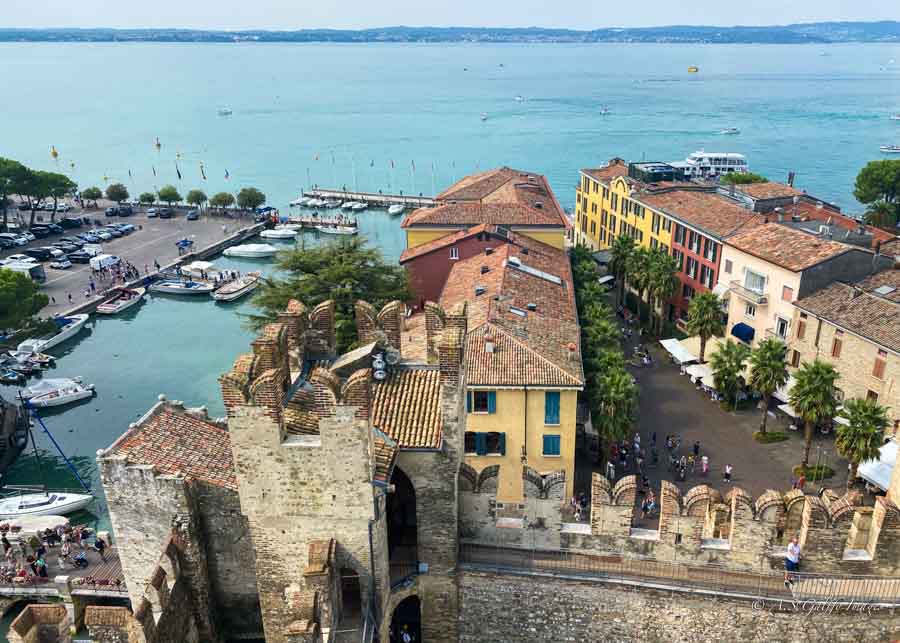
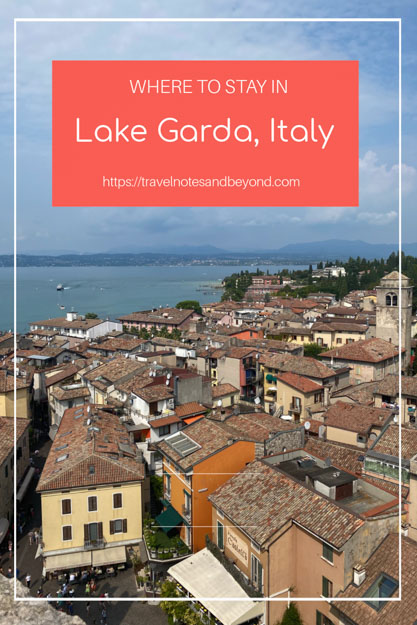
We loved Sirmione! Located at the tip of a long, narrow peninsula that juts into the southern part of Lake Garda, the town is simply idyllic. If you are into medieval village vibes and looking for a small, scenic place to explore, you will probably fall in love with Sirmione.
That being said, as much as we enjoyed visiting the town, we don’t think it makes an ideal base for exploring the rest of the lake. Of all the towns on this list, Sirmione is the trickiest one to recommend because of its location on a narrow peninsula, which makes it more difficult to get around. Here is when Sirmione works as a home base, and when it doesn’t.
Consider Sirmione If:
- You have a car and you don’t mind longer drives. Its location on a peninsula makes access to the train line difficult for exploring other areas like the north of the lake. Therefore visiting towns like Riva, Limone, or Malcesine will require driving a car.
- You plan to stay primarily in the southern parts of the lake. Public transportation to Sirmione is rather difficult. There is no train or direct bus from the other towns around the lake. There are however direct ferry lines to/from various towns on the southern end of the lake, such as Lazise, Desenzano, and Peschiera del Garda.
- You want to experience a “magical” and picturesque town: with historic sites like a castle and Roman ruins, especially in the evenings and mornings after day-trippers leave.
- You are a single woman and prefer to stay in a smaller, self-contained area. Sirmione feels super safe. If you are a woman traveling alone in Italy, Sirmione is a peaceful and secure choice.
Don’t Use Sirmione as a Home Base If:
- You do not have a car. The only way to reach the towns in the north is by car. And even with a car, the drive from Sirmione to any of these towns is pretty long.
- You are looking for lots to do and want to visit the entire area. Sirmione is small (although very beautiful!), but there is not enough to do there to keep you occupied for more than two-three days.
- You want a lively scene. Sirmione feels a little too quiet. There is not much nightlife, so if you are looking for bars, music, or lively restaurants, this probably is not the best fit.
Attractions in Sirmione
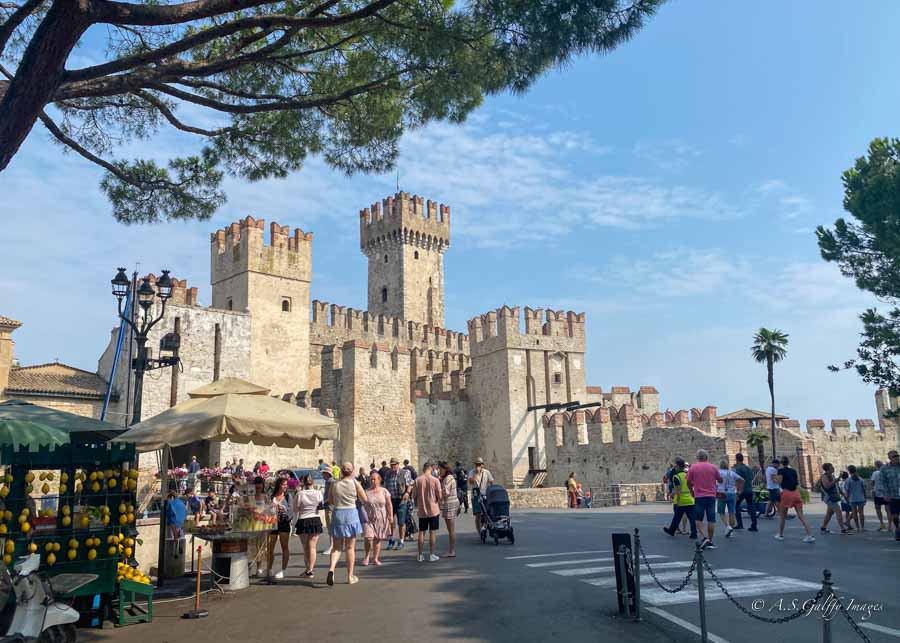
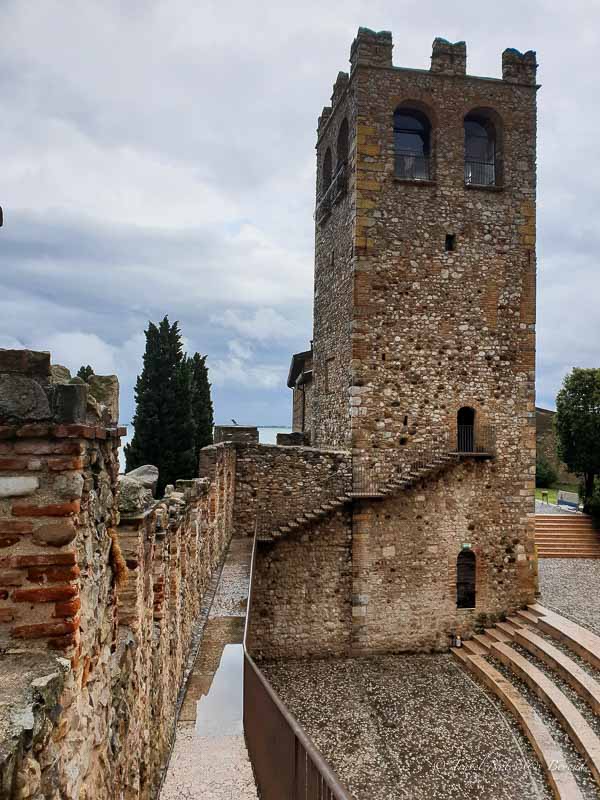
The landmark of Sirmione is the Scaligero Castle, a fortification built after the middle of the 14th century on the waters of the lake.
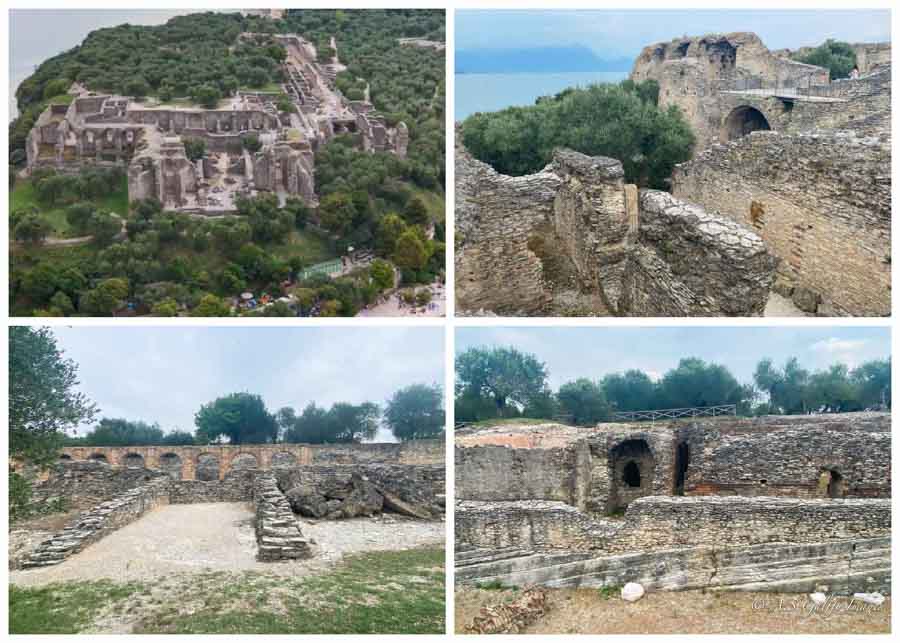
The other must-see attraction in Sirmione is the Roman villa ruins at the Grottoes of Catullus, dating back to the 2nd century AD. This is a very interesting archeological site. Initially the ruins were mistaken for natural caves or grottoes, because they were overgrown with vegetation.
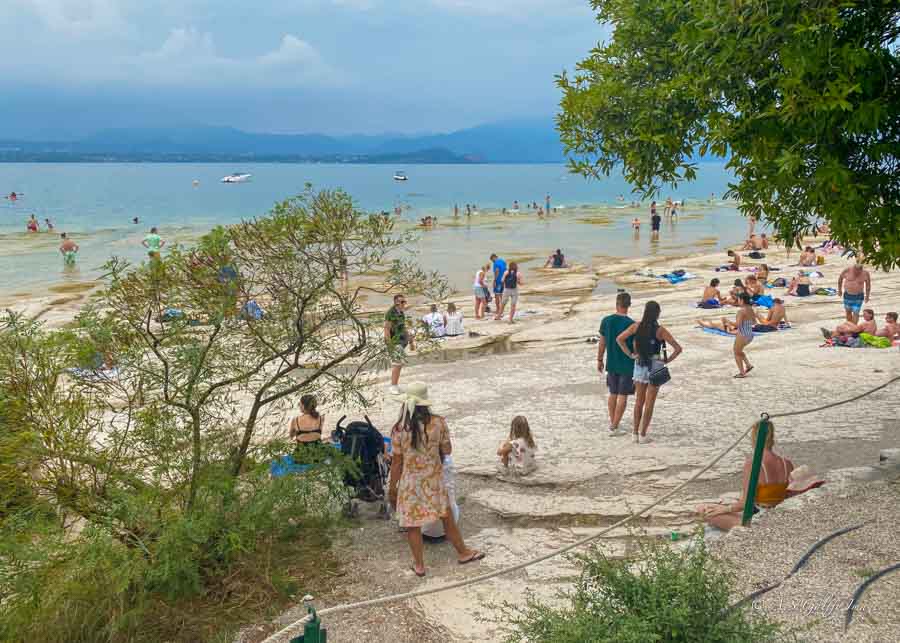
Also, don’t miss the unique Jamaica Beach, located below the Grottoes of Catullus. The beach is famous for its flat, white, rocky shelves.
If you have time, you should visit the Aquaria Thermal Spa which features sulfurous hot springs.
Where to Stay in Sirmione
- Budget: Hotel Marconi — a friendly 3-star hotel in the historic center, with a small private beach and lake views at a reasonable price.
- Mid-range: Hotel Olivi Thermae & Natural Spa — a peaceful 4-star hotel with thermal pools, just a short walk from the medieval center.
- Luxury: Villa Cortine Palace Hotel — a 5-star historic villa set in a private park on the peninsula, one of the most romantic stays on the lake.
Desenzano del Garda
Desenzano is the largest town on Lake Garda and one of the most popular bases for first-time visitors. Located on the southwestern shore, it has a lively old town, an elegant lakeside promenade, and the best train connections on the lake. While it doesn’t have the village feel of Sirmione or Malcesine, it makes up for it with convenience and a wide range of restaurants, hotels, and nightlife.
Pros:
- Best Train Connections. Desenzano sits directly on the Milan–Venice line, so you can arrive from either city without renting a car. It’s the most convenient base on the lake for travelers without a vehicle.
- Excellent Ferry Hub. The town has frequent ferry connections to Sirmione, Peschiera, Salò, and other towns around the lake, which makes day trips easy.
- Lively Atmosphere. Desenzano has the busiest nightlife on Lake Garda, with plenty of bars, clubs, and restaurants along the lakefront.
- Great for Day Trips. Beyond the lake, you can easily day-trip to Verona, Milan, Brescia, and even Venice by train.
- Plenty of Accommodations. Because it’s a larger town, Desenzano offers a wide range of hotels and apartments for every budget.
Cons:
- Less Village Charm. Desenzano feels more like a small city than a picturesque lakeside village, so if you’re after the postcard-perfect look, you may prefer Sirmione or Malcesine.
- Can Be Busy and Noisy. The lively atmosphere comes with traffic, crowds, and nightlife noise, especially in the summer months.
- Beaches Are Average. The beaches here are pleasant but not as scenic as those further north.
Attractions in Desenzano
The landmark of Desenzano is the medieval Desenzano Castle, perched on a hill above the old town and offering panoramic views over the lake.
Another must-see is the Roman Villa of Desenzano, a 4th-century AD residence with remarkably well-preserved mosaic floors — one of the most important archaeological sites in northern Italy.
The town also has a beautiful 16th-century old harbor, Porto Vecchio, lined with restaurants and cafés. It’s a lovely place to watch the boats come in at sunset.
Where to Stay in Desenzano del Garda
- Budget: B&B Borgo San Giovanni — a simple, well-rated B&B a short walk from the lakefront and train station, great for travelers without a car.
- Mid-range: Hotel Piroscafo — a charming family-run hotel right on the old harbor, with lake views and easy access to everything.
- Luxury: Park Hotel — a refined 4-star hotel surrounded by gardens, with a pool and elegant lakeside setting just outside the old town.
Peschiera del Garda
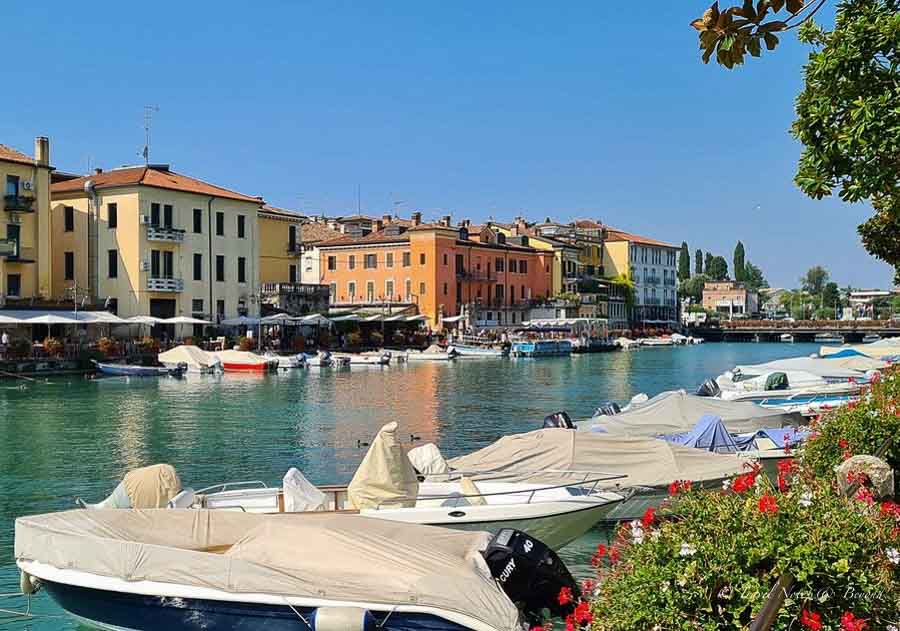
Peschiera del Garda sits at the southeastern corner of the lake and is one of the easiest towns to reach by train. A UNESCO World Heritage Site since 2017 for its impressive Venetian fortifications, Peschiera combines history, convenience, and family-friendly attractions in one compact package. It’s an excellent choice for families and travelers without a car.
Pros:
- Direct Train Access. Like Desenzano, Peschiera sits on the Milan–Venice line, making it very easy to reach without a car.
- Family-Friendly. Peschiera is the closest town to Gardaland, Movieland, the SEA LIFE aquarium, and Caneva Aquapark — all within a short drive or shuttle ride.
- UNESCO-Listed Old Town. The fortified historic center, surrounded by canals and Venetian walls, is a beautiful place to wander and feels different from the other towns on the lake.
- Good Ferry Connections. Regular ferries connect Peschiera with Sirmione, Garda, Bardolino, and Lazise.
- Plenty of Restaurants and Cafés. The old town and lakefront are full of casual restaurants, gelaterias, and family-friendly spots.
Cons:
- Very Touristy in Summer. Because of the theme parks and train access, Peschiera draws large crowds in peak season.
- Lacks the Village Charm of Smaller Towns. While the fortifications are impressive, the town itself feels busier and more commercial than places like Garda or Limone.
- Limited Lake Views from the Old Town. Most of the historic center sits behind the walls, so direct lake views from accommodations can be harder to find.
Attractions in Peschiera del Garda
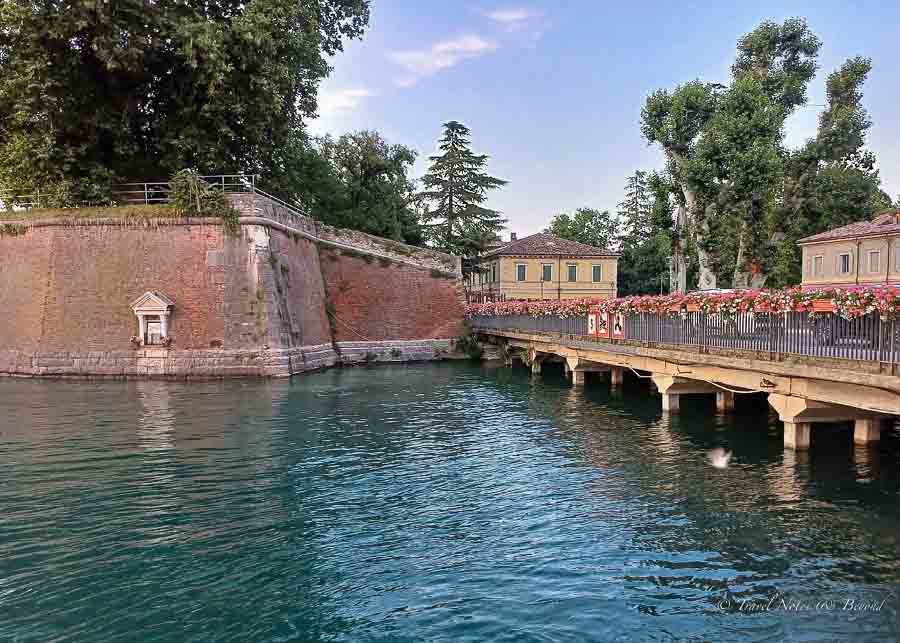
The main attraction in Peschiera is its impressive Venetian fortifications, a UNESCO World Heritage Site since 2017. The pentagonal fortress, with its bastions, canals, and gates, is one of the best-preserved examples of Renaissance military architecture in Italy.
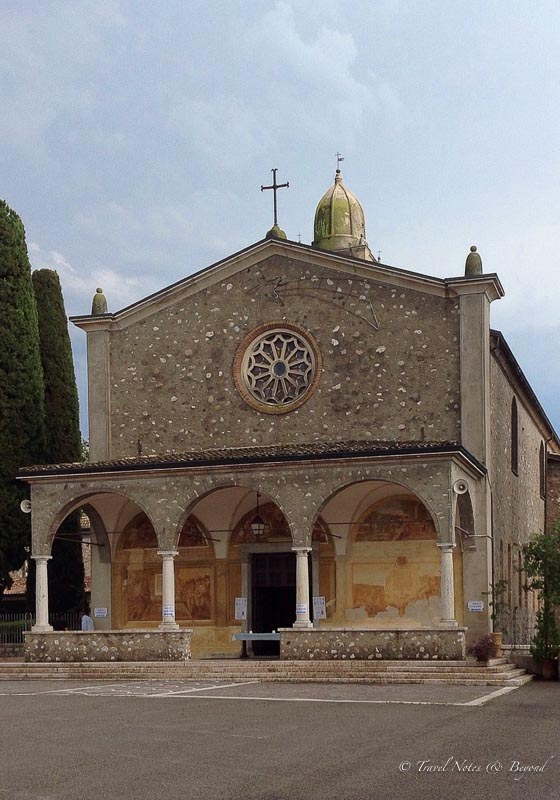
Just outside the town you’ll find the Sanctuary of the Madonna del Frassino, a peaceful 16th-century church surrounded by olive groves.
Families won’t want to miss Gardaland, Italy’s largest theme park, just minutes away. Nearby you’ll also find Movieland, the SEA LIFE aquarium, and Caneva Aquapark.
Where to Stay in Peschiera del Garda
- Budget: Hotel Puccini — a comfortable, well-rated 3-star hotel close to the train station and the old town, ideal for families and car-free travelers.
- Mid-range: Hotel Bell’Arrivo — a boutique hotel inside Peschiera’s historic walls, on one of the canals — quiet, central, and walkable.
- Luxury: Villa Cordevigo — a large 5-star resort just outside town with multiple pools, perfect for families visiting Gardaland.
Lazise
Lazise is a small, walled medieval town on the eastern shore, just north of Peschiera. It’s one of the oldest towns on the lake and the first commune in Italy to gain free-town status from the Holy Roman Empire in the 10th century. With its preserved Scaliger walls, lakeside castle, and laid-back atmosphere, Lazise is a great choice for families and travelers looking for a quieter base.
Pros:
- Walled Historic Center. Lazise still has its medieval walls and gates intact, which gives the town a distinctive look and a relaxed pedestrian atmosphere.
- Family-Friendly. The town is close to Gardaland, Movieland, and the Caneva theme parks, but it feels much quieter than Peschiera. It also has a thermal park (Parco Termale del Garda) that’s popular with families.
- Beautiful Lakefront. The lakeside promenade, with the Scaliger Castle and the old harbor, is one of the most picturesque on the lake.
- Less Crowded Than Peschiera. While still popular, Lazise feels more low-key than its larger neighbor to the south.
- Good Ferry Connections. Regular ferries link Lazise with Bardolino, Garda, Sirmione, and Peschiera.
- Wine Country Nearby. Lazise sits in the same wine region as Bardolino, with vineyards and wineries just outside the town.
Cons:
- No Train Station. Like Bardolino, you’ll need to transfer through Peschiera if you’re arriving by train.
- Limited Nightlife. Lazise is quiet in the evenings, which is a plus for some travelers but a downside if you’re after a livelier scene.
- Can Get Busy on Weekends. Because it’s a popular day-trip destination from Verona, the town can fill up on summer weekends.
Attractions in Lazise
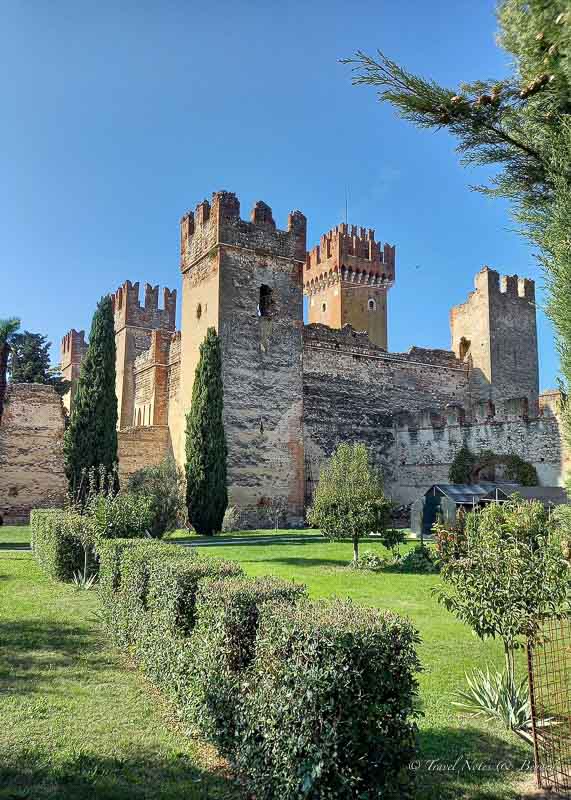
The landmark of Lazise is the Scaliger Castle, a 13th-century fortress sitting right on the lakefront, with its original walls and towers still intact.
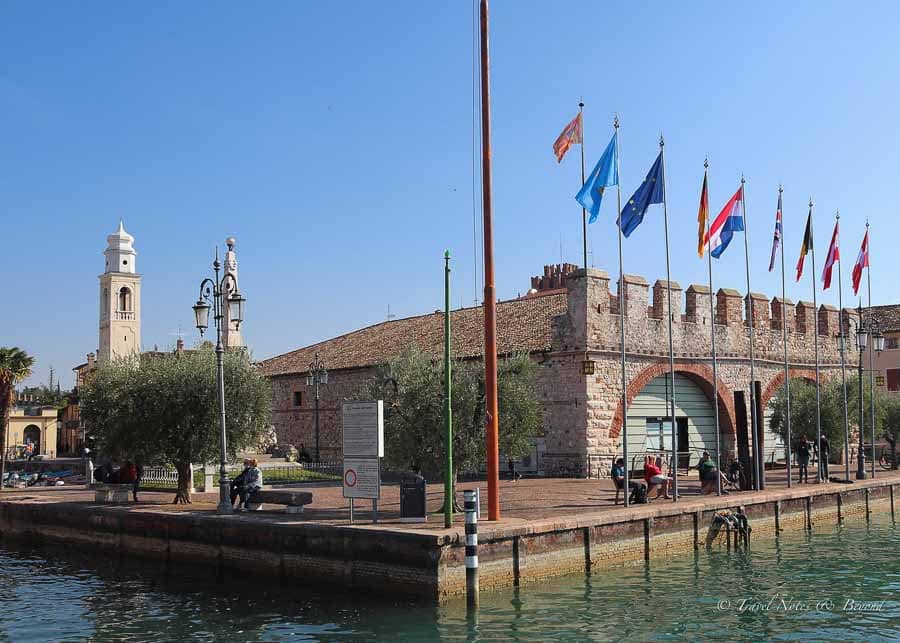
Another must-see is the Customs House (Dogana Veneta), a 14th-century building that once served the Venetian Republic and now hosts events and exhibitions.
For families, Parco Termale del Garda is a beautiful thermal park with natural hot springs and swimming pools, set in a 13-hectare estate just outside the town.
Where to Stay in Lazise
- Budget: Hotel Alla Fassa — a friendly, well-located hotel just a short walk from the lakefront and the medieval walls.
- Mid-range: Hotel Lazise — a comfortable hotel with a pool, set in a quiet area within easy reach of both the lake and the old town.
- Luxury: Hotel Quellenhof Luxury Resort Lazise — a 5-star resort known for its exceptional food, spa, and lakeside grounds.
Bardolino
Bardolino is one of Lake Garda’s most charming wine towns, sitting on the eastern shore among rolling hills covered with vineyards and olive groves. It’s famous for its light red Bardolino DOC wines and excellent local olive oil, and it has a relaxed, refined atmosphere that appeals to couples and food lovers. The lakefront promenade is one of the prettiest on the lake.
Pros:
- Wine and Olive Oil Country. Bardolino is the heart of the lake’s wine region, with dozens of wineries and tasting rooms within easy reach. The town also has an Olive Oil Museum that’s worth a visit.
- Beautiful Lakeside Promenade. The long waterfront promenade is lined with cafés, gelaterias, and shaded benches — a lovely place for an evening passeggiata.
- Good Ferry Connections. Regular ferries link Bardolino with Garda, Lazise, Sirmione, and beyond.
- Relaxed Atmosphere. Bardolino feels more refined and less hectic than Peschiera or Desenzano, while still offering plenty to do.
- Beautiful Beaches. The town has several pleasant beaches with clear water and easy access.
Cons:
- No Train Station. To reach Bardolino without a car, you’ll need to take a train to Peschiera and then transfer to a bus or ferry.
- Limited Activities for Kids. Compared to Peschiera or Lazise, there’s less here specifically aimed at families with young children.
- Can Be Crowded in Summer. The promenade and wine festivals draw big crowds in July and August.
Attractions in Bardolino
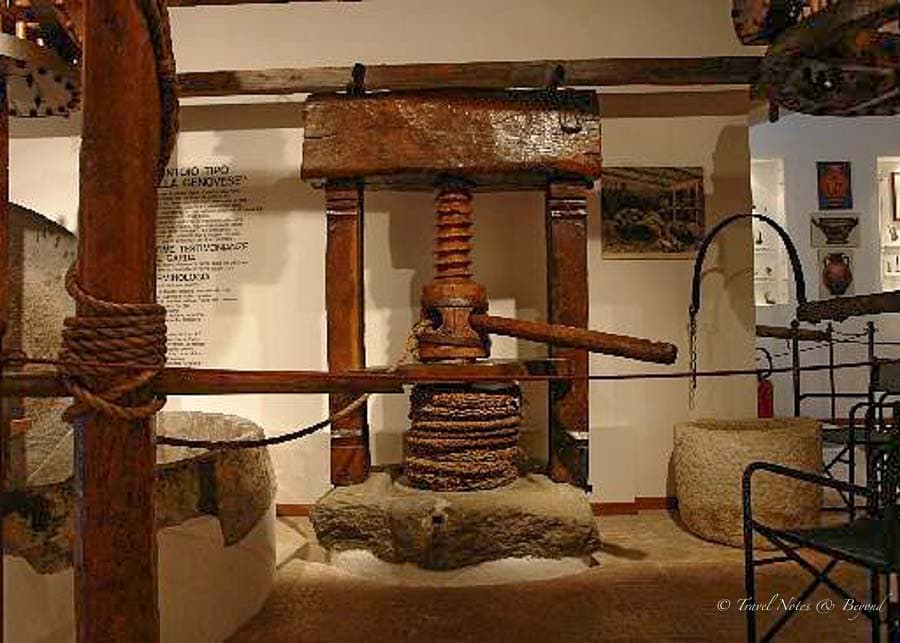
Bardolino’s main appeal lies in its wine and olive oil heritage. The Olive Oil Museum (Museo dell’Olio) offers a look at the history of olive cultivation around the lake, with free tastings of local oils.
The Wine Museum (Museo del Vino), located at the Zeni winery just outside town, is another worthwhile stop, with free admission and tastings of the local Bardolino DOC wine.
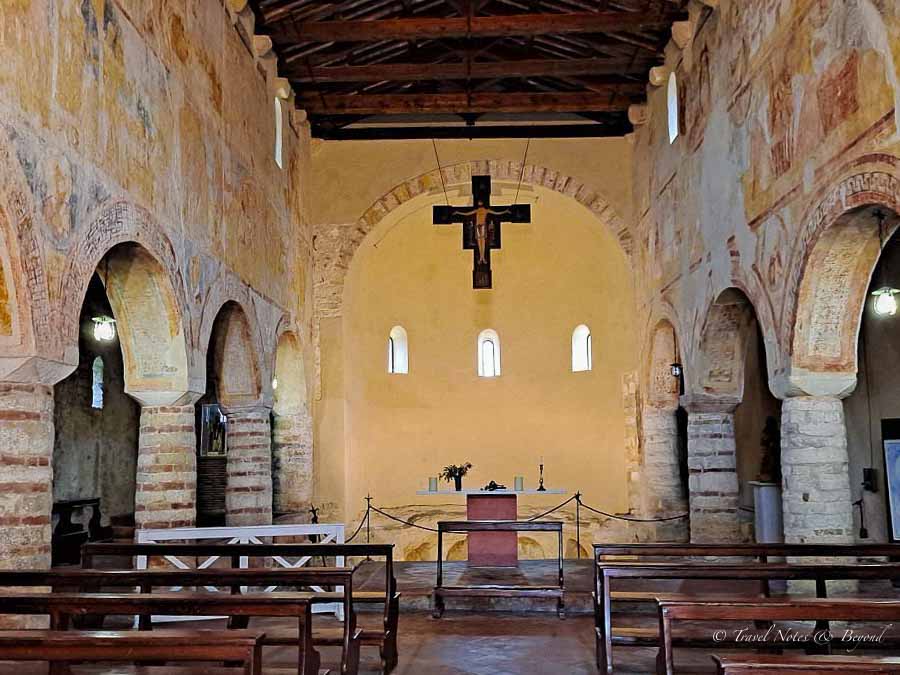
In the historic center, don’t miss the Romanesque Church of San Severo from the 9th century, known for its 12th-century frescoes.
Where to Stay in Bardolino
- Budget: Hotel Du Lac — a simple 3-star hotel right on the lakefront promenade, with lovely views and walking distance to everything.
- Mid-range: Hotel Caesius Thermae & Spa Resort — a 4-star wellness hotel with thermal pools, set on the lake just outside the historic center.
- Luxury: Aqualux Hotel Spa & Suite — a modern 4-star design hotel with multiple pools, a full spa, and a quiet residential setting near the old town.
Garda Town
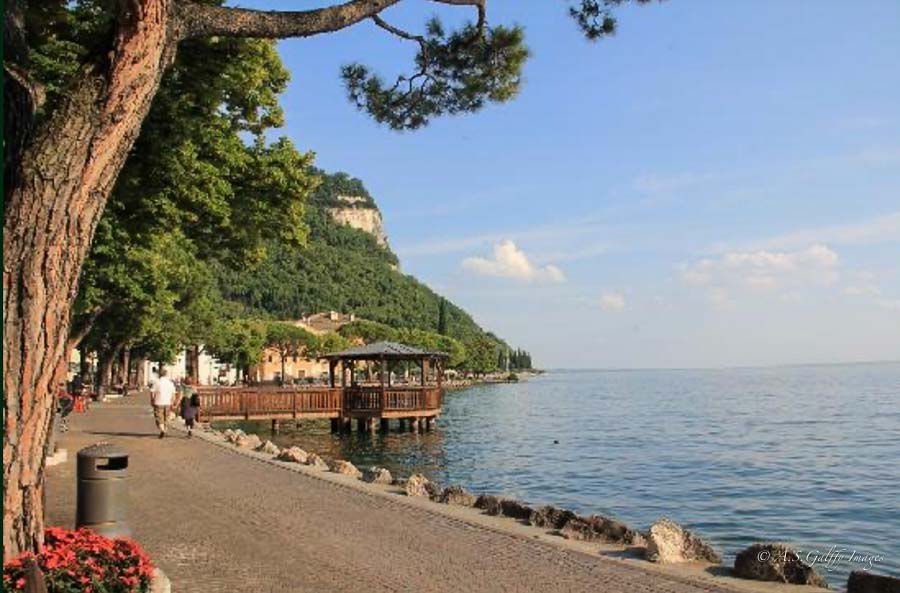
Garda is an excellent base to explore Lake Garda and the surrounding area, including Verona. The town is spread along a wide horseshoe bay lined with cafés, shops and restaurants. Just pick one, have a drink and watch the sun go down.
Pros:
- Convenient Location and Accessibility. The town is in a central position on Lake Garda, making it an ideal base for visiting other towns and attractions. It also has excellent ferry connections to many larger and smaller towns around the lake.
- Lively Atmosphere: It is particularly well-suited for families, couples, and visitors who prefer a lively resort setting with easy access to amenities and attractions.
- Proximity to Theme Parks. Because it is just a short drive away from popular amusement parks like Gardaland and Movieland, Garda is an ideal home base for families with children.
- Nearby Wineries. Garda Town is also close to Bardolino, which is also a beautiful town and it’s famous known for its excellent local wines.
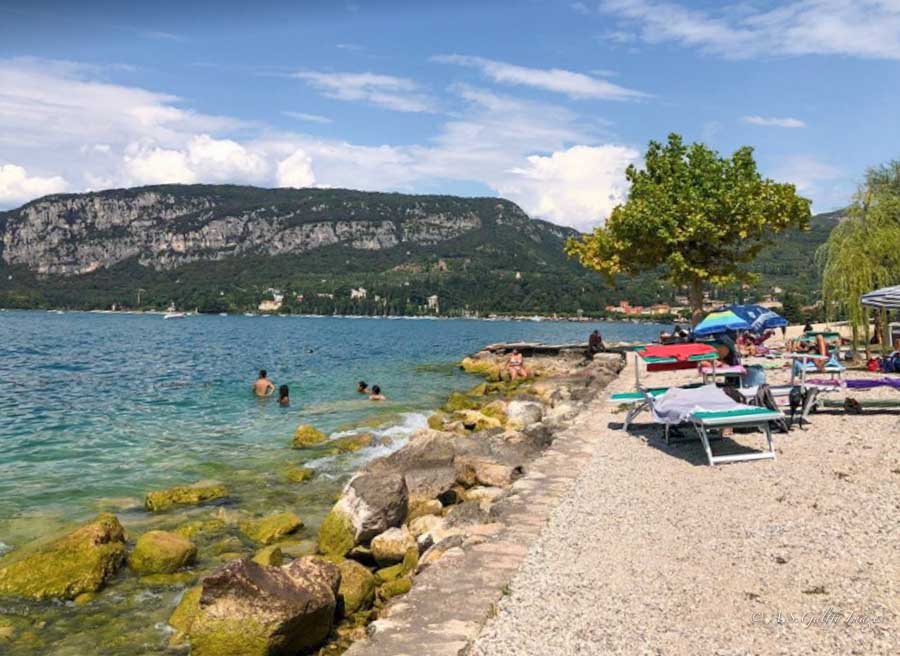
- Beaches and nature. There are many beautiful beaches around, including the private Mermaids’ Bay (Baia delle Sirene) at Punta San Vigilio, known for its romantic and scenic setting.
Cons:
- Heavy Tourism: Garda can become very busy, especially during the summer months. That means crowded streets and an atmosphere that can feel overwhelming.
- Limited Direct Lake Views. Due to the town’s layout, it can be challenging to find accommodations with direct, unobstructed views of the lake.
- Limited Bus Service. Garda is not a major bus hub, which means that you won’t find a good network of routes connecting you with the rest of the region. This makes it difficult to travel to northern parts of the lake.
- Evening Chills. Because of the town’s position the sun sets behind it, which can make the evenings feel chilly. This also means there’s less sunlight during the late afternoon and early evening.
Attractions in Garda Town
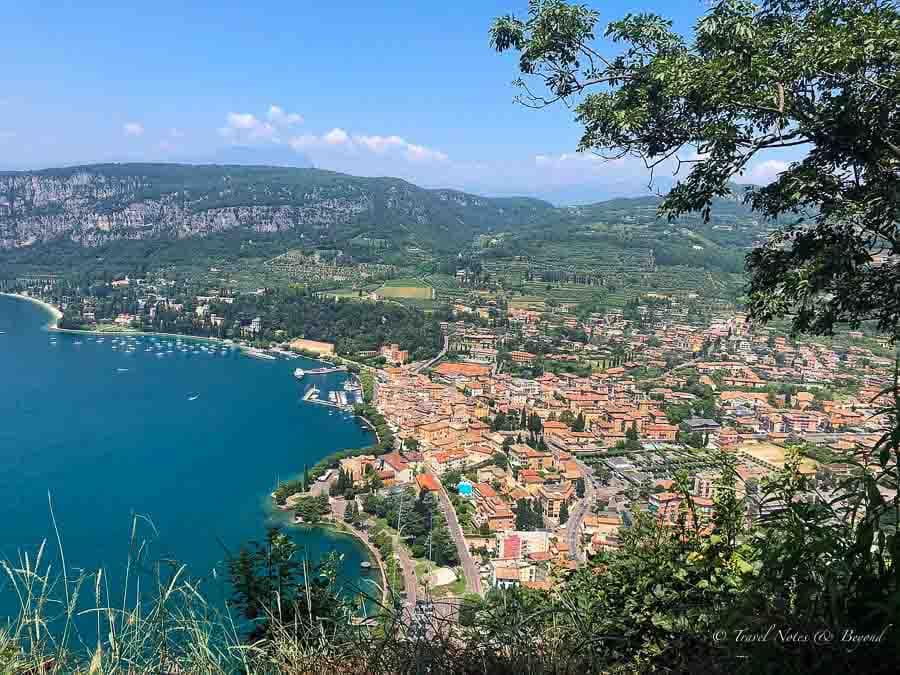
The most picturesque part of Garda is its wide horseshoe-shaped bay, lined with cafés, shops, and restaurants — perfect for an evening stroll along the lakefront.
A short walk above town leads to the Rocca di Garda, the rocky promontory where a medieval fortress once stood. The hike is short but steep, and the panoramic views over the lake are well worth it.
Just outside Garda, at Punta San Vigilio, you’ll find one of the most romantic spots on the lake — a 16th-century villa, a small harbor, and the private Mermaids’ Bay (Baia delle Sirene) beach.

Where to Stay in Garda Town
- Budget: Hotel Antico Monastero — a simple, well-rated B&B in the historic center, a short walk from the lakefront.
- Mid-range: Hotel Regina Adelaide Hotel & Spa — an elegant 4-star hotel with a spa and excellent restaurant, just steps from the promenade.
- Luxury: Hotel Du Parc — a refined 4-star hotel with beautiful lakeside gardens and a relaxed, classic atmosphere.
Malcesine
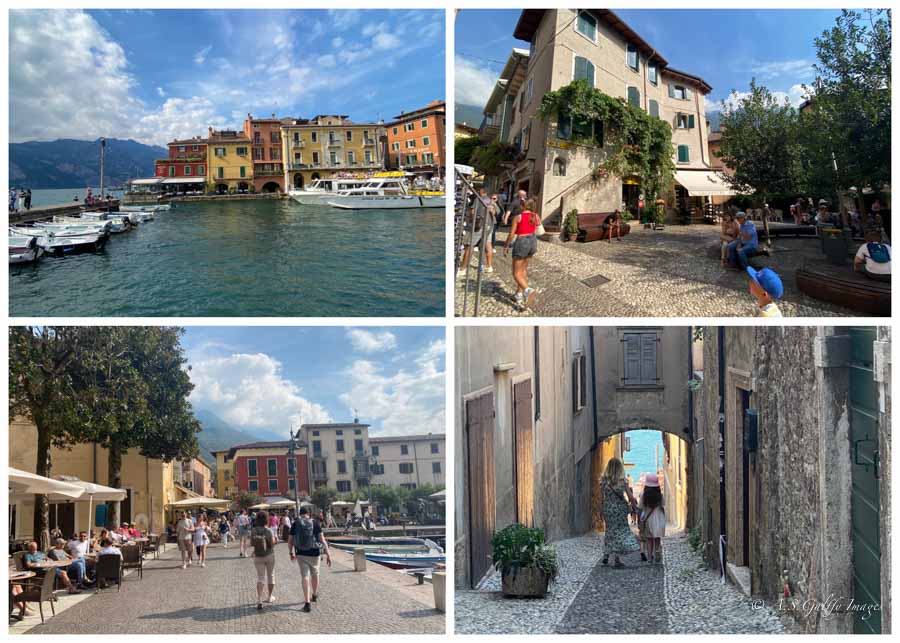
Situated at the northern end of the lake, Malcesine is our top choice for staying in Lake Garda. This vibrant medieval town provides the perfect combination of natural beauty and vintage charm. It is also wonderful for outdoor enthusiasts who like to hike up the mountain or do water sports.
Pros:
- Good Transportation Hub. While there is no train station in Malcesine, the town has excellent bus connections that allow you to reach other towns on the lake.
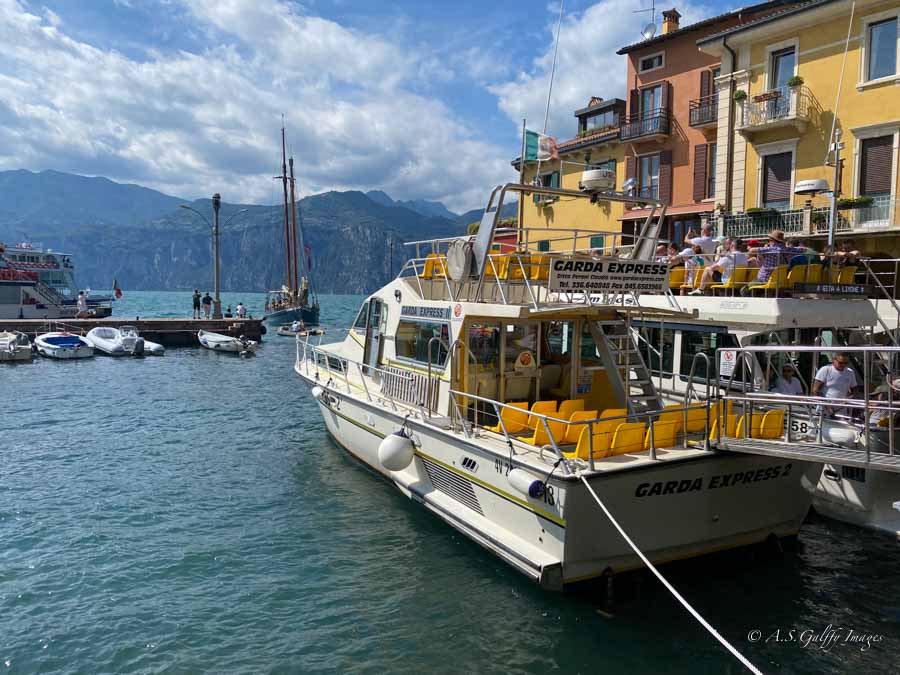
- Good Ferry Connections. The great advantage of staying here is that you’ll have good ferry connections, which makes it easy to reach other towns around the lake.
- Good Parking. Malcesine has two paid parking areas one of which is the large, two-level covered car park at the cable car station. This makes it a very convenient home base for those traveling by car.
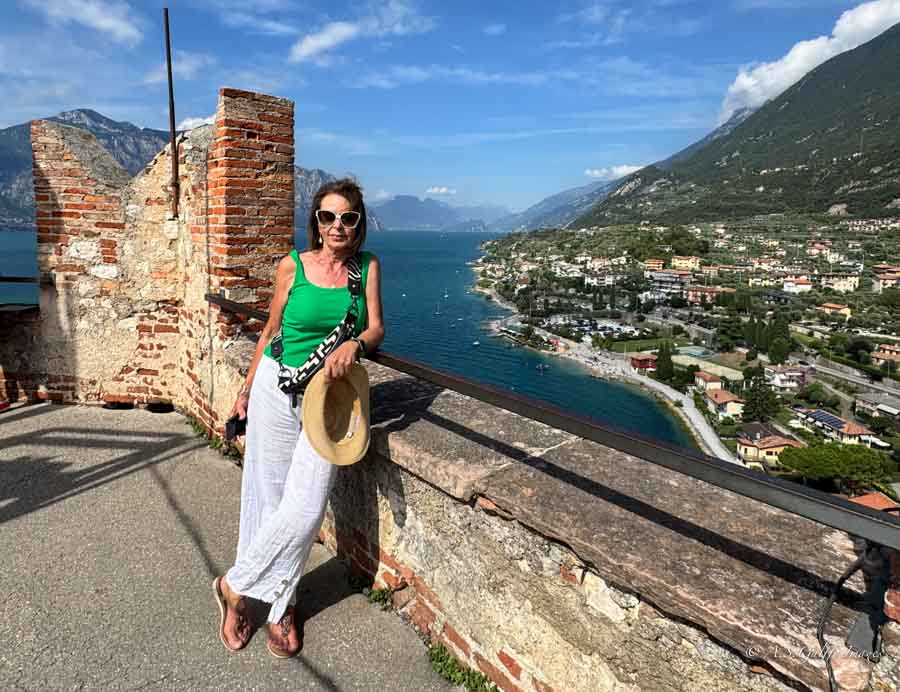
- Beautiful Scenery. Malcesine is pressed between the lake’s waters, at the base of the towering Monte Baldo. This creates a picturesque setting with a combination of lake and mountain scenery.
- Lively Atmosphere. Malcesine is known for its lively and “Italian” feeling. This is especially obvious in its many restaurants and cafés that offer a variety of cuisines as well as traditional Italian dishes.
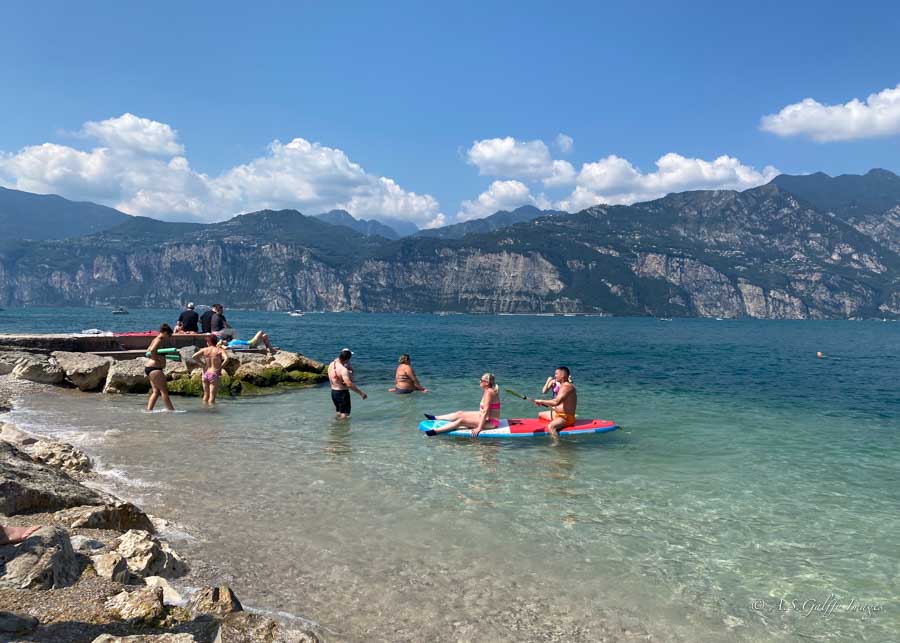
- Beautiful Beaches. Malcesine has several public (or “free”) beaches. These include the popular Baia di Val di Sogno and Posterna Beach, which is located directly below the castle.
Cons:
- Steep, Narrow Streets. The old town’s cobblestone alleys can be steep and uneven in places, which may be challenging for travelers with mobility issues or strollers.
- Expensive in High Season. Hotel prices in Malcesine rise sharply between June and August, more than in some of the other towns on the lake.
- Long Drive to Southern Towns. Reaching Sirmione, Desenzano, or Peschiera by car takes well over an hour due to winding lakeside roads and speed limits. Ferries are an option, but they’re slow.
- Can Get Overcrowded. Because of its compact layout as well as its many attractions, Malcesine tends to become very busy, attracting many day trippers who arrive here by ferry.
- Not Very Quiet. Compared to some other lakeside towns, Malcesine can feel more noisy. That’s partly due to the presence of bars, restaurants and clubs, but also to the general activity of a bustling town.
Attractions in Malcesine
The town of Malcesine is an attraction in itself, with its narrow cobblestone streets lined with boutiques, souvenir shops and lively cafés.
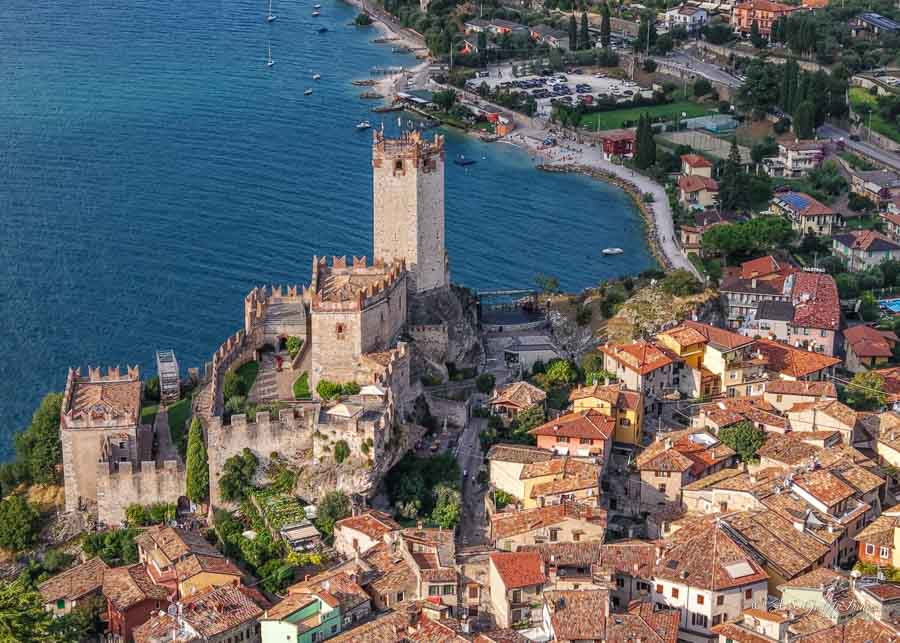
The most interesting attraction in Malcesine is Scaligero Castle, a medieval fortress that was initially built by the Lombards in the 6th century AD. Over the centuries the castle was destroyed by the Franks and subsequently rebuilt by the Scaliger Family who gave the castle its current name.
Another beautiful landmark is Palazzo dei Capitani which served as the residence of the captains of Lake Garda. Its Gothic-Venetian architecture, well preserved interior and beautiful waterfront garden are also worth a short visit.
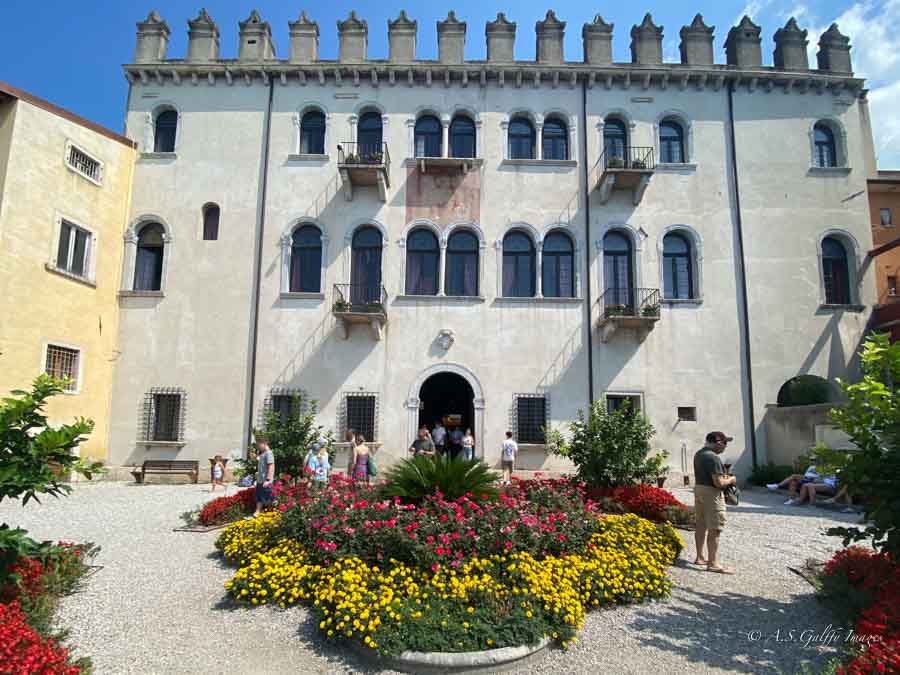
There is also a cable car that takes visitors up to Monte Baldo, from where they get to admire some stunning panoramic views of the lake and the area around.
Where to Stay in Malcesine
- Budget: Hotel Malcesine — a clean, well-located 3-star hotel within walking distance of the castle and lakefront, with great value for the area.
- Mid-range: Hotel Castello Lake Front — a beautifully located hotel right at the foot of the Scaligero Castle, with direct lake views and its own small beach.
- Luxury: Park Hotel Querceto — a tranquil 4-star hotel set above the lake with panoramic views, a pool, and a quiet, romantic atmosphere.
Riva del Garda
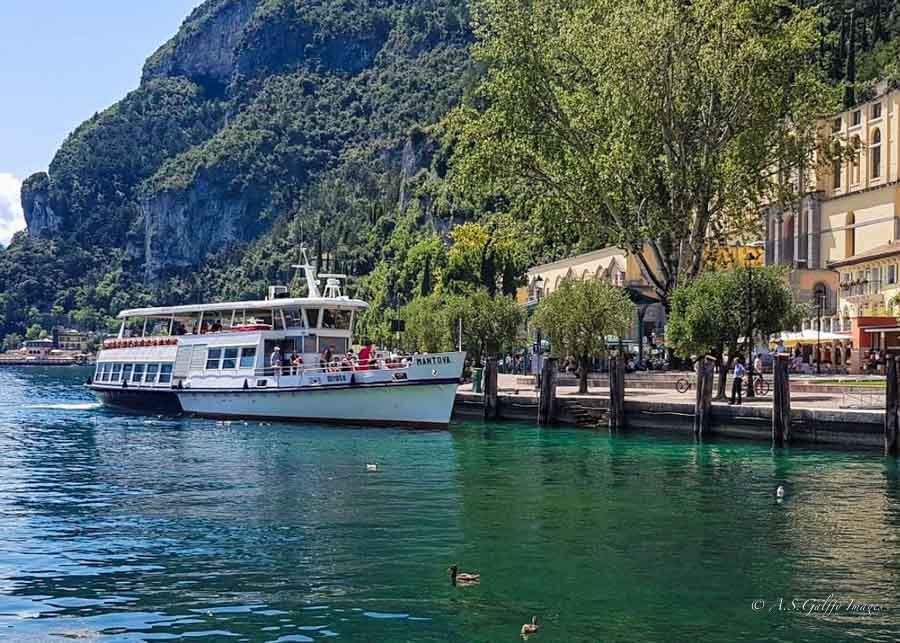
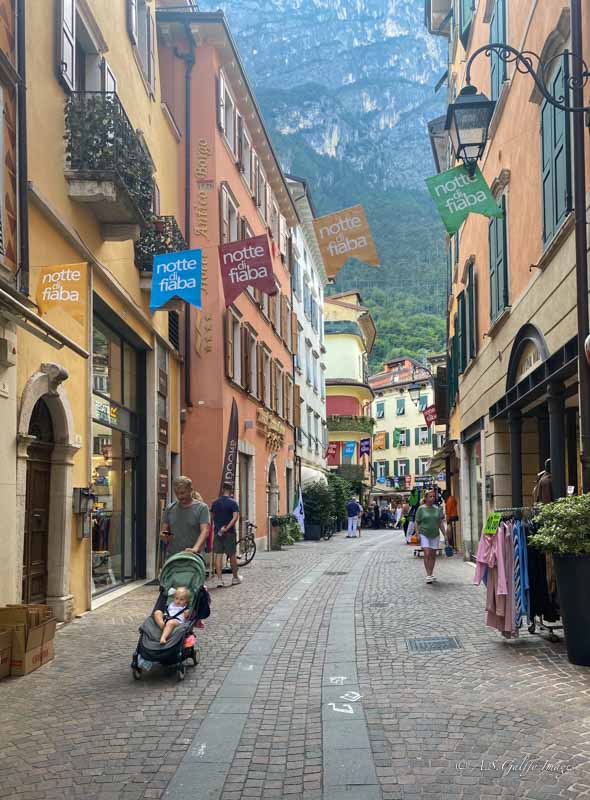
Located on the northern tip of Lake Garda, with the dramatic Garda Mountains at its back, Riva del Garda has a lot of historic charm. The old town’s center is a delight to explore, with its cobbled streets, colorful pastel buildings, and attractive piazzas.
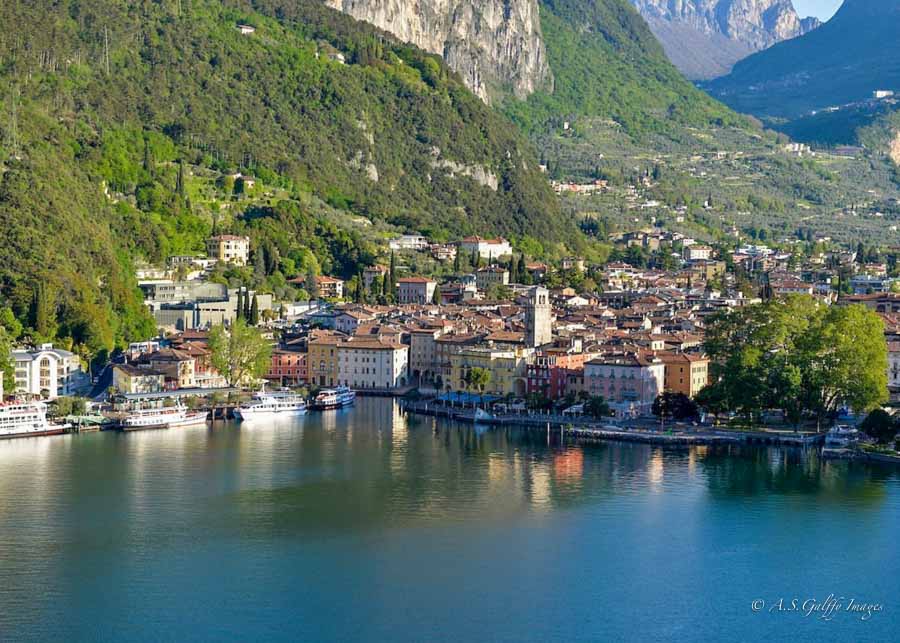
Pros:
- Accessibility. Riva del Garda is generally flat and offers more space than other towns around the lake, which makes it a good choice for those with mobility challenges. It also has a mix of free and paid parking options, which is a big convenience for those traveling by car.
- Excellent Hiking Options to Scenic Viewpoints. It offers many trails with spectacular views. Like the path to the Bastione, an old fortress overlooking the town, or the climb to the Santa Barbara Chapel.
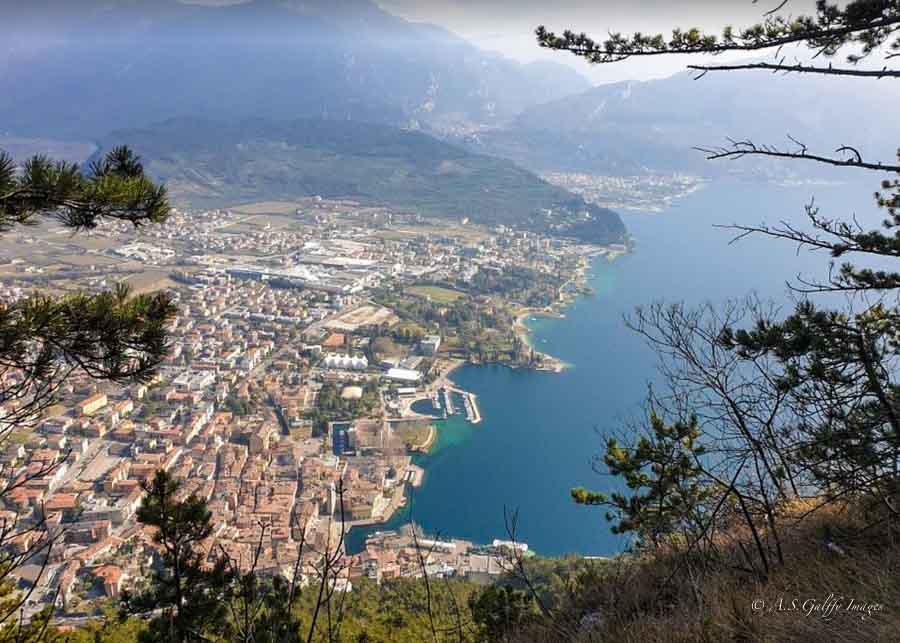
- Hub for Water Sports. Riva del Garda is famous for its excellent access to numerous outdoor activities, especially water sports. Consistent and strong winds in this region create the ideal conditions for windsurfing and kitesurfing.
- Dynamic Atmosphere. The town is both vibrant and laid back at the same time, which creates a dynamic and varied atmosphere.
- Lakeside Promenade. The town has a picturesque “lungolago” waterfront lined with cafés and beautiful villas that offers visitors a place to stroll and relax.
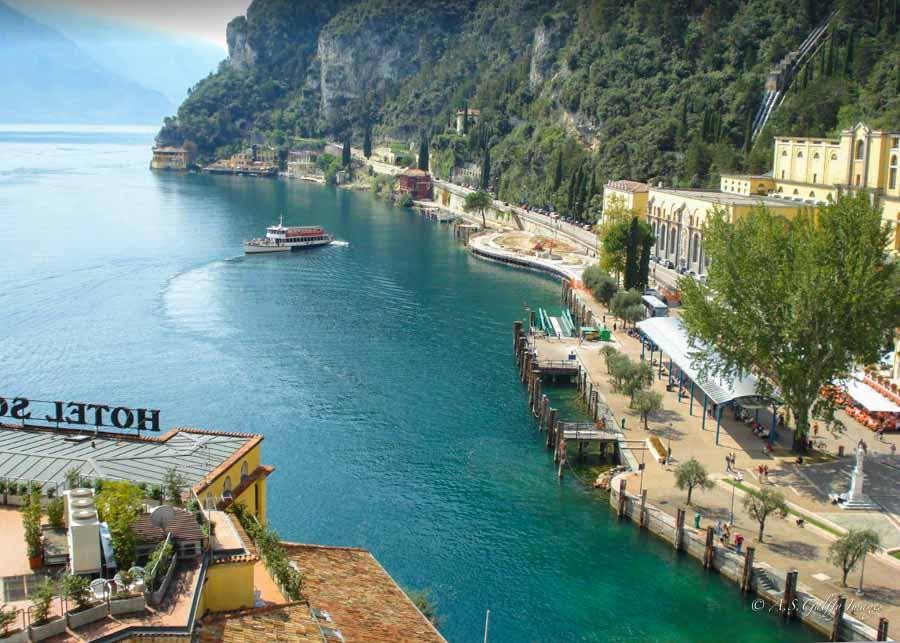
- Rich History and Culture. Riva’s old town is a delight to explore, with its cobbled streets, colorful pastel buildings, and attractive piazzas.
- Good Ferry Service. Regular ferry connections make it easy to visit other charming lakeside towns like Limone sul Garda and Malcesine.
Cons:
- Too Dark. This is just my opinion, but I think Riva gets too dark. The sun disappears behind the mountains in the early afternoon, leaving the entire town in the shade. You also won’t be able to see the sunset from here.
- A Little Out of the Way. Riva feels somewhat isolated from the other towns along the lake, and it takes much longer to reach the ones further south. The advantage of being more isolated is that you’ll see fewer crowds in Riva than in Malcesine or Limone.
- More Windy. Because it’s located under the mountain, Riva gets more wind than other towns around Lake Garda.
Attractions in Riva del Garda
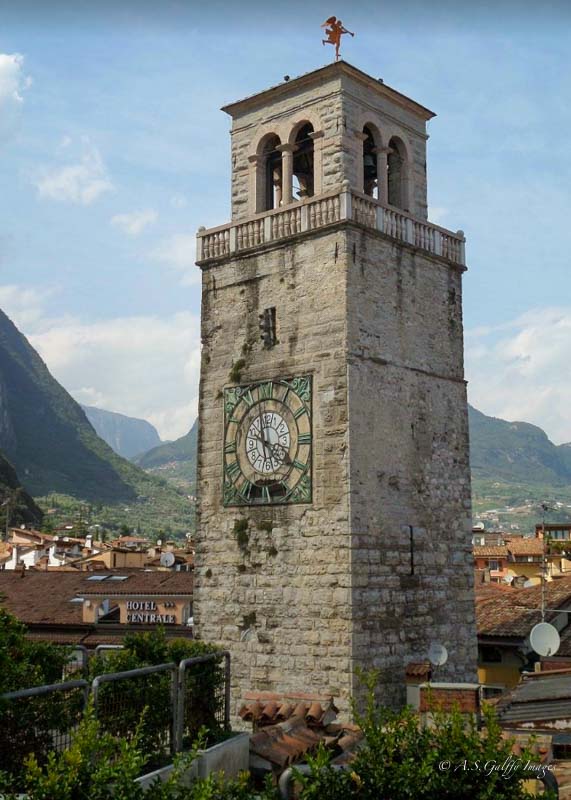
The town’s landmark is Torre Apponale, a 13th-century clock tower in Piazza III Novembre famous for its stunning 360-degree views.
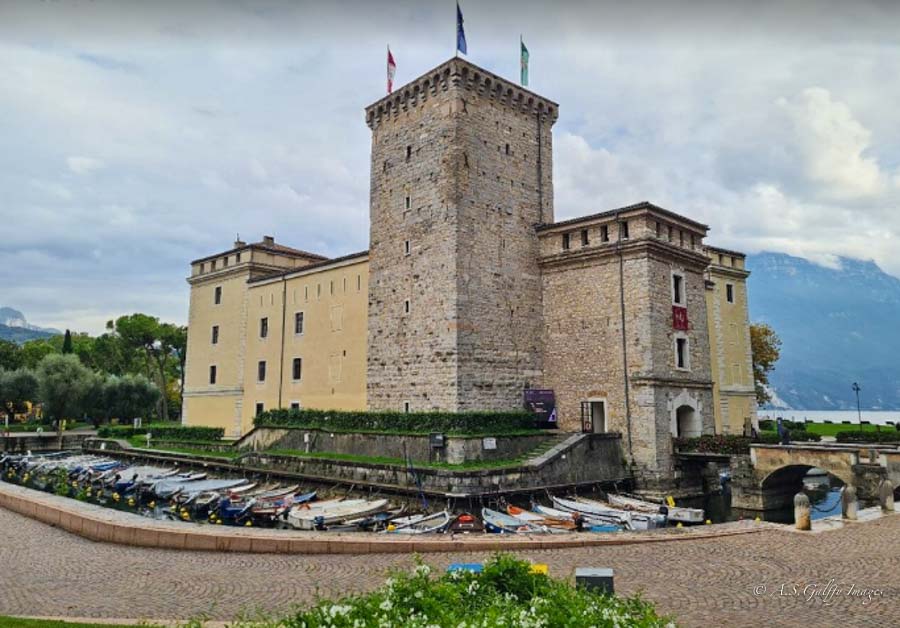
Another attraction is Rocca di Riva, a medieval fortress dating back to the 12th century, which now houses the town’s civic museum.
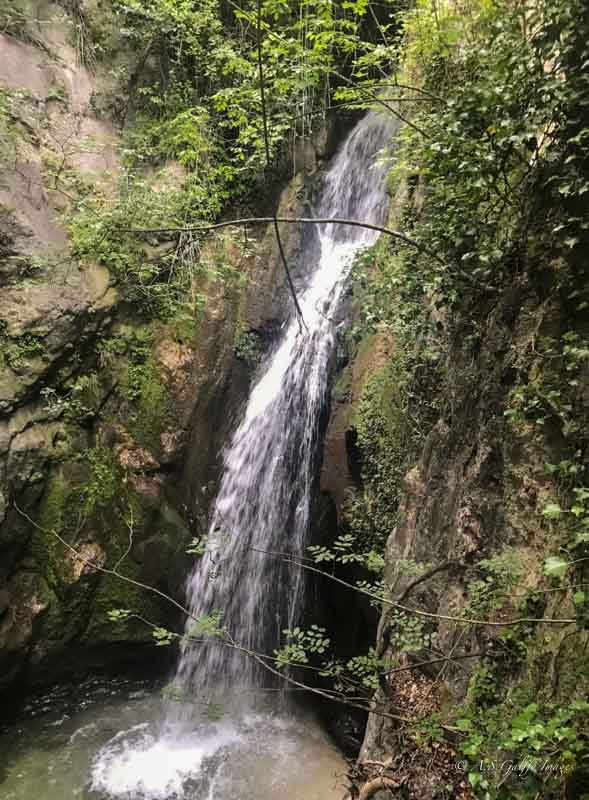
For those who love hiking, the Varone Waterfall Cave Park, just a short distance away from Riva, offer an incredible waterfall and stream.
Where to Stay in Riva del Garda
- Budget: Hotel Brione — a comfortable 3-star hotel a short walk from the lakefront, with a pool and good value for Riva.
- Mid-range: Hotel Sole Relax & Panorama — a stylish hotel on the main square, with rooftop pool and views over the lake and mountains.
- Luxury: Lido Palace — a historic 5-star hotel directly on the lake, with elegant rooms, a spa, and one of the best fine-dining restaurants in town.
Limone sul Garda
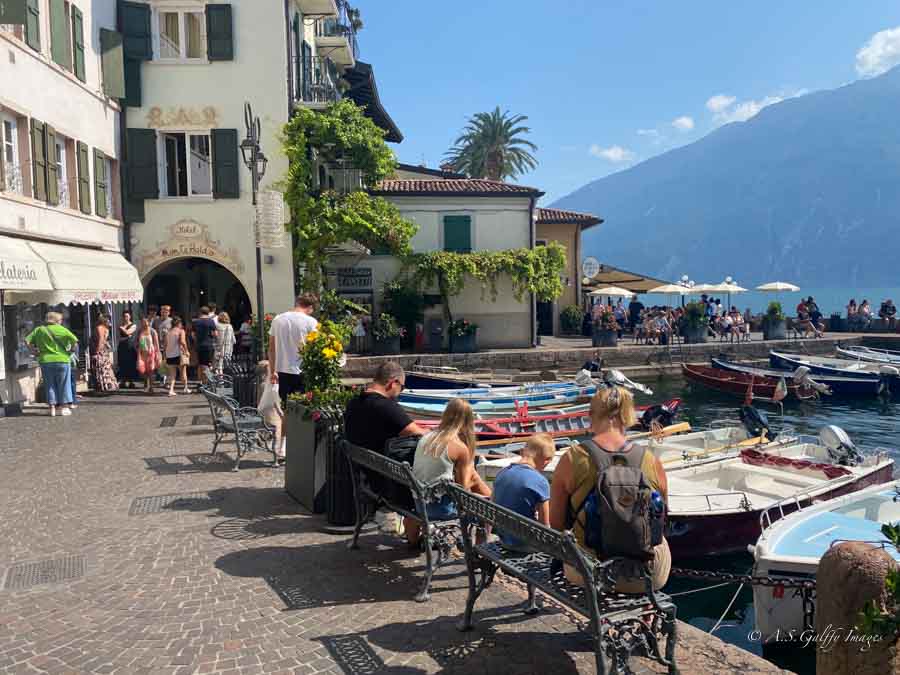
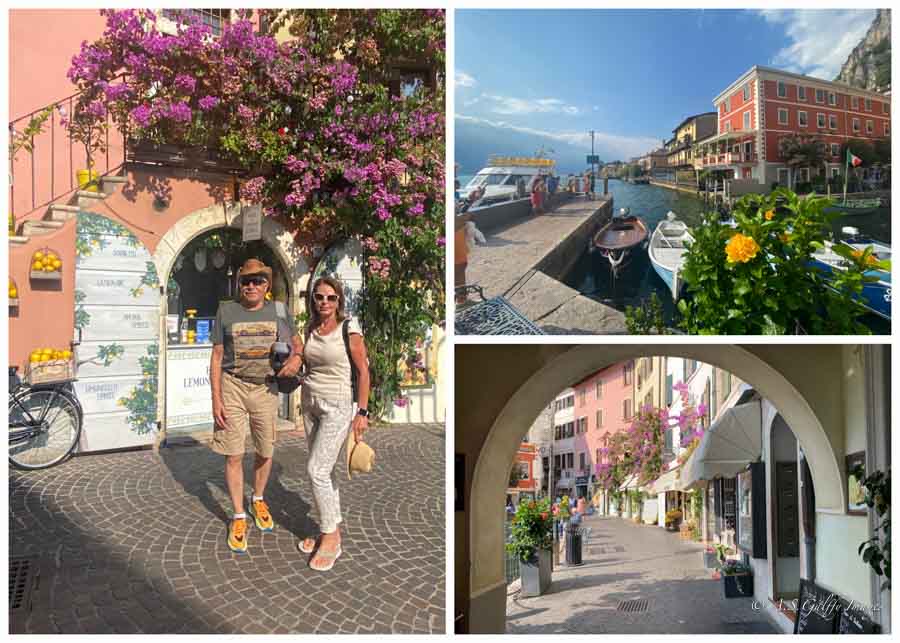
The colorful buildings, narrow cobblestone streets, traditional lemon groves and breathtaking views of the lake and mountains earned Limone the reputation of being the most picturesque town in the region. The combination of its unique setting, cultural heritage, and vibrant atmosphere make it a very desirable place to stay in Lake Garda for some people. However, there are a few things you should consider before deciding if Limone is the ideal place for you.
Pros:
- Stunning Natural Beauty. The town is famous for its picturesque landscapes, with dramatic cliffs, beautiful lake views, and nearby mountains.
- Historic Charm. Limone’s historic narrow alleys, traditional lemon houses (Limonaie) and the overall unique atmosphere make it a very appealing place for visitors. The town offers a peaceful and relaxed vibe, especially outside the peak tourist season.
- Excellent Italian Cuisine. Visitors can savor authentic Italian food at local restaurants and enjoy delicious meals with stunning lake views.
- Family-Friendly. Limone sul Garda is good place for family vacations, offering playgrounds, wide beaches, and hotels with pools.
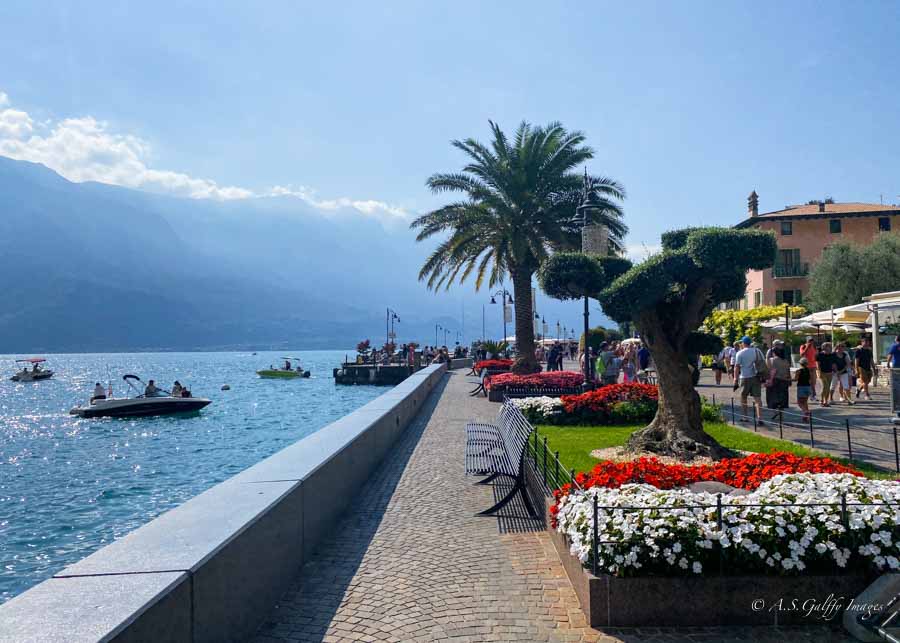
- Long Promenade. One of the town’s big attractions is the beautiful waterfront promenade, which often hosts an open market.
- Romantic sunsets. Unlike Riva that sits in the shade of the mountain, in Limone you can enjoy breathtaking sunsets. You definitely need to watch a sunset when visiting Lake Garda!
Cons:
- Hilly and Steep. Limone sits on a very hilly terrain and most of its streets are extremely steep and hard to navigate. That can be difficult for visitors with limited mobility or those who prefer less strenuous walks.
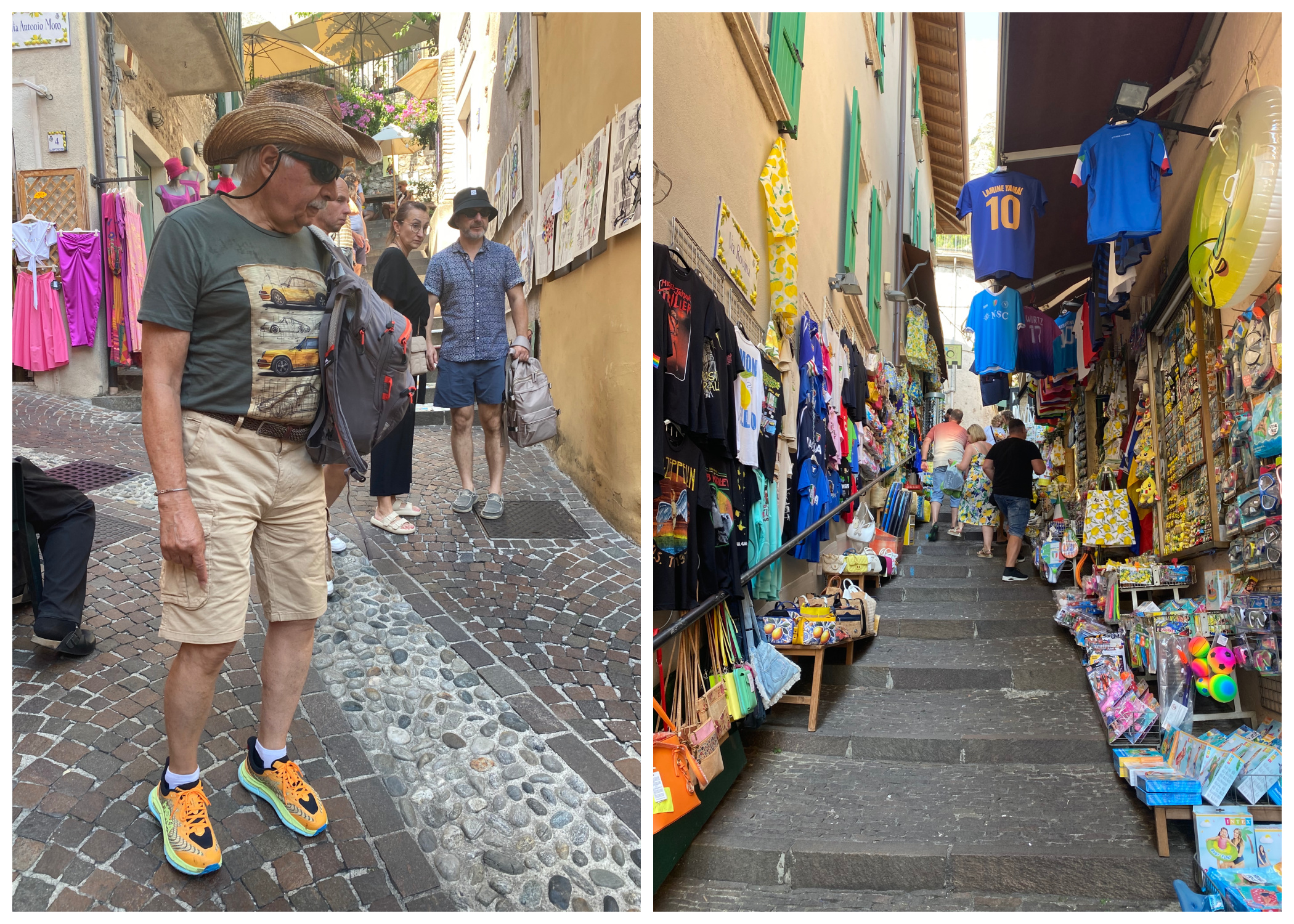
- Difficult Parking. Parking is a significant challenge in Limone. Because of the steep terrain there are very limited and expensive parking options available.
- Harder to Reach. Because of its location on the western side of the like, it is generally more difficult to drive to Limone because of the winding, narrow roads, tunnels and steep lakeside drop-offs.
- Quiet Nightlife. If you enjoy late-night bars and entertainment, you might prefer a different base town. Limone is lively during the day, but not so at night.
- Not Ideal in Bad Weather. There is not a great deal to do in Limone if the weather is bad. There are no museums, spas, or wine tasting rooms, like in Riva, Malcesine, or Sirmione.
- Overcrowded. During peak season, Limone can become very crowded with day-trippers. This leads to cramped conditions both on the streets, but especially on ferries.
Attractions in Limone sul Garda
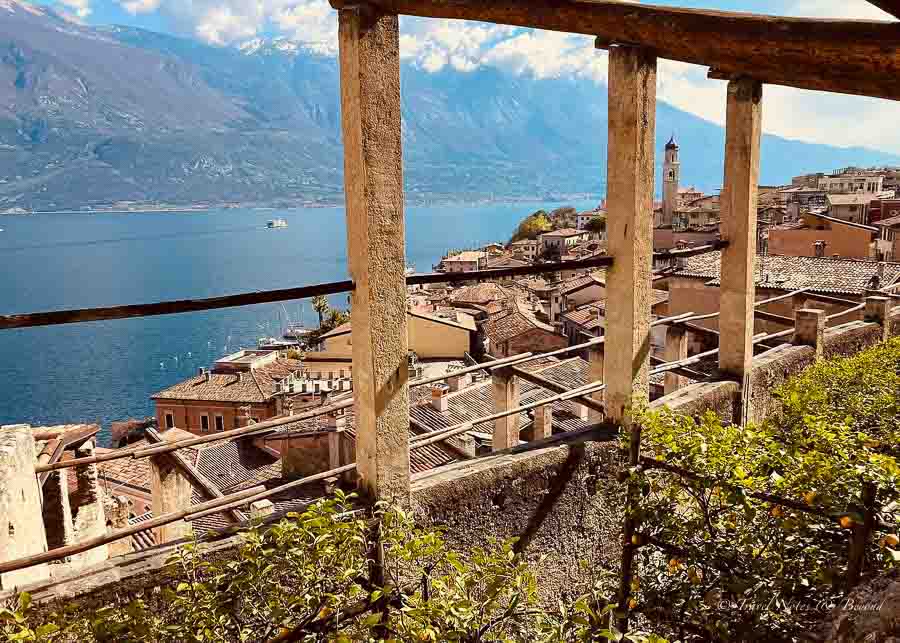
The most iconic attraction in Limone is the Limonaia del Castèl, a restored historic lemon house that shows how the town once supplied lemons to half of Europe. It’s a small but fascinating glimpse into local heritage.
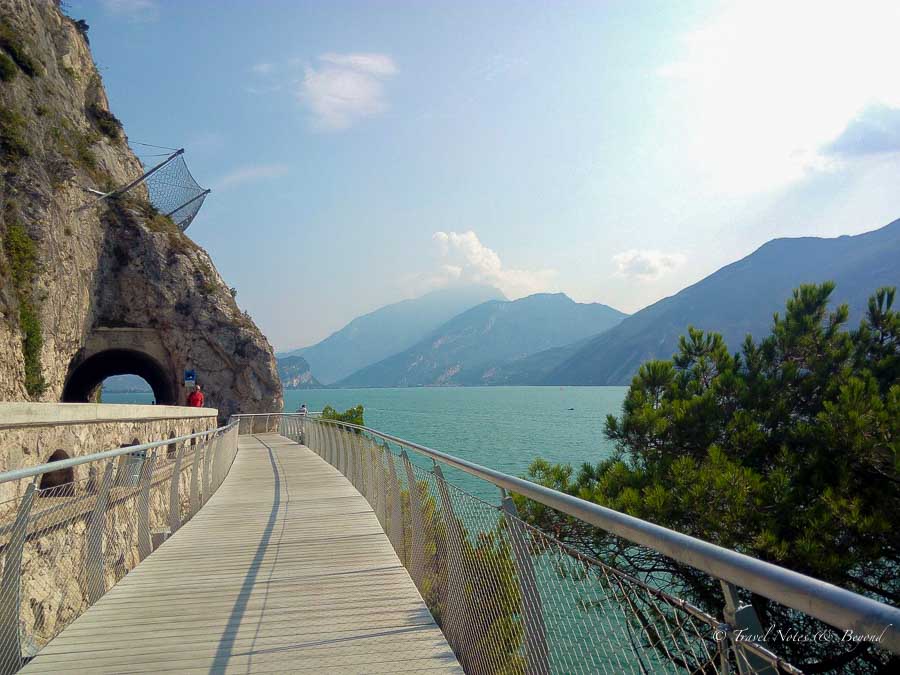
Another must-see is the Ciclovia del Garda, a spectacular 3 km cycle path suspended above the water. Whether you walk or bike it, the views are unforgettable.
In the historic center, the Church of San Benedetto is a beautiful Baroque church worth a quick stop for its frescoed ceilings and elegant interior.
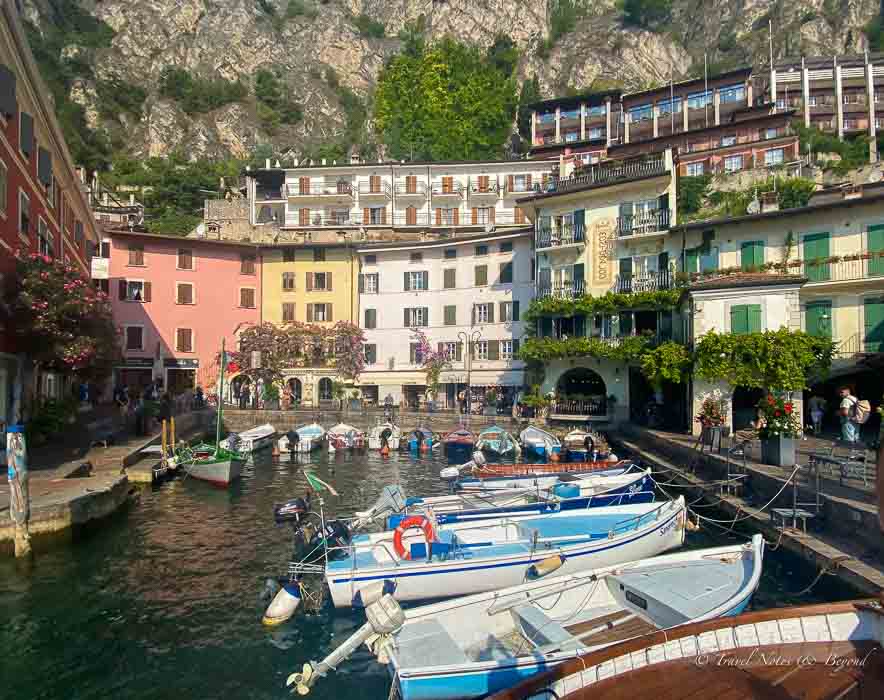
The Old Harbor is the heart of Limone, lined with cafés and restaurants. It’s the perfect spot for a sunset drink and one of the most photographed places in town.
Where to Stay in Limone sul Garda
- Budget: Hotel Cristina — a family-run 3-star hotel close to the lakefront, with lake views and a pool, at a fair price.
- Mid-range: Hotel Splendid Palace — a well-rated lakefront hotel with a panoramic terrace, pool, and easy access to the historic center.
- Luxury: Park Hotel Imperial — a 5-star wellness resort just outside the center, with thermal pools, a spa, and breathtaking views over the lake.
Where to Stay in Lake Garda by Type of Traveler
With 9 different towns to choose from, the right base really depends on the kind of trip you have in mind. Below are my picks for the most common types of travelers.
Best for Couples
Malcesine and Sirmione are the most romantic bases on the lake. Both are small, pedestrian-friendly, and full of waterfront restaurants made for slow sunset dinners. Malcesine has the dramatic mountain backdrop and the cable car up to Monte Baldo, while Sirmione has the medieval castle, thermal spas, and Roman ruins. Limone sul Garda is another lovely choice if you’re after sunset views and a quieter atmosphere.
Best for Families
The southeastern shore between Peschiera del Garda and Lazise is the easiest choice if you’re traveling with kids. Gardaland, Movieland, the SEA LIFE aquarium, and several waterparks are all within a short drive. Both towns have shallow beaches, walkable promenades, and plenty of casual restaurants where children are genuinely welcome.
Best for Active Travelers
Riva del Garda is the top pick for anyone who wants windsurfing, sailing, paddleboarding, hiking, or mountain biking right from town. The consistent winds and dramatic mountain setting make it the lake’s adventure capital. Malcesine is a strong second choice, especially if you like the idea of hiking or paragliding from Monte Baldo.
Best for Foodies and Wine Lovers
Bardolino is the heart of Lake Garda’s wine and olive oil country, surrounded by vineyards and family-run wineries that welcome visitors for tastings. Lazise and Garda town are equally good bases for exploring the eastern shore’s food scene, with plenty of trattorias serving fresh lake fish, handmade pasta, and local Bardolino DOC wines.
Where to Stay in Lake Garda Without a Car
If you’re arriving by train or simply prefer not to drive, your choice of base becomes much more important. Only two towns on Lake Garda have direct train stations on the Milan–Venice line: Desenzano del Garda and Peschiera del Garda. Both are excellent choices if you want to skip renting a car, and from either one you can easily reach the rest of the lake by ferry or bus.
Desenzano del Garda
Desenzano is the most convenient base on the lake for travelers without a car. The train station is just a short walk from the lakefront, and from here you can catch direct trains to Verona (25 minutes), Milan (about 1 hour), and even Venice (under 2 hours). The town also has the busiest ferry hub on Lake Garda, with regular departures to Sirmione, Salò, Limone, and Riva del Garda in the high season.
Peschiera del Garda
Peschiera is the second-best choice for car-free travelers. It sits on the same Milan–Venice train line, and the station is right at the edge of the historic center. From here, ferries connect to Sirmione, Garda, Bardolino, and Lazise, and a local bus links you to Gardaland and the theme parks nearby.
Getting Around the Lake Without a Car
Once you’re based in Desenzano or Peschiera, the lake’s extensive ferry network does most of the work. Navigazione Lago di Garda operates regular services connecting nearly every lakeside town, with faster hydrofoils available for longer routes. In the high season, you can comfortably day-trip to Malcesine, Limone, or Riva del Garda by ferry. Buses are slower and less scenic, but they fill in the gaps where ferries don’t run.
Practical Tip: if you plan to use ferries often, the daily or weekly ferry pass is much cheaper than paying per ride.
A Final Thought
I hope that after reading this guide you’ll have a better idea what to expect when visiting Lake Garda and thus make a more informed decision about where to stay. Because there are quite a few beautiful places to visit in Lake Garda, you should plan on spending at least 4-5 days here. We visited the lake in early fall as part of a bigger European itinerary and truly loved our time here.
 Best Things to Do in San Marino, Europe’s Oldest Republic