
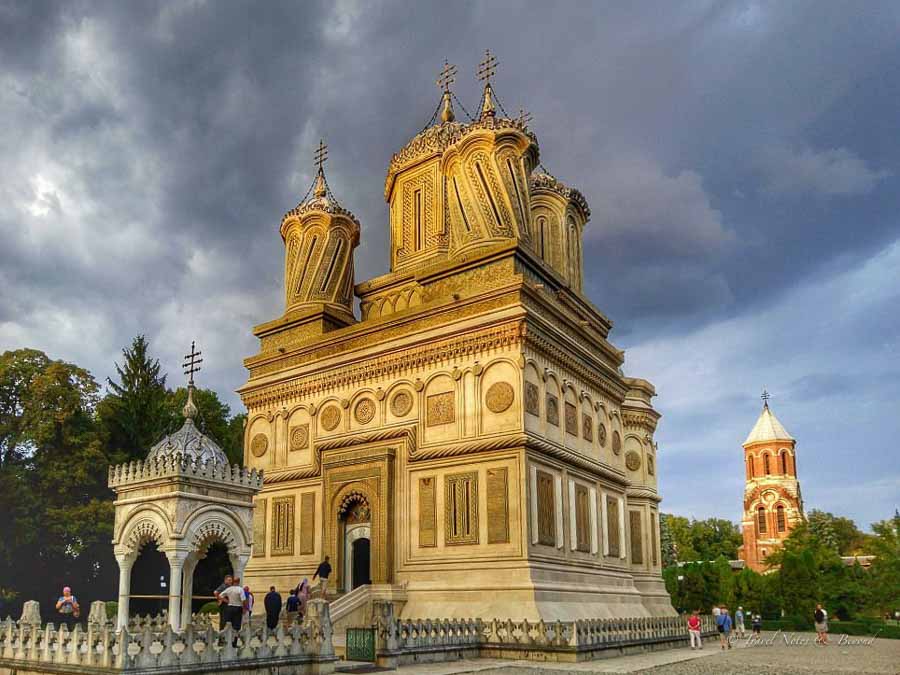
Curtea de Arges Monastery is one of Romania’s most important landmarks, not only for its unique blend of architectural styles, but also for being the royal necropolis of the Romanian monarchy. Its enduring cultural significance is also tied to a tragic national folktale, the Legend of Master Manole.
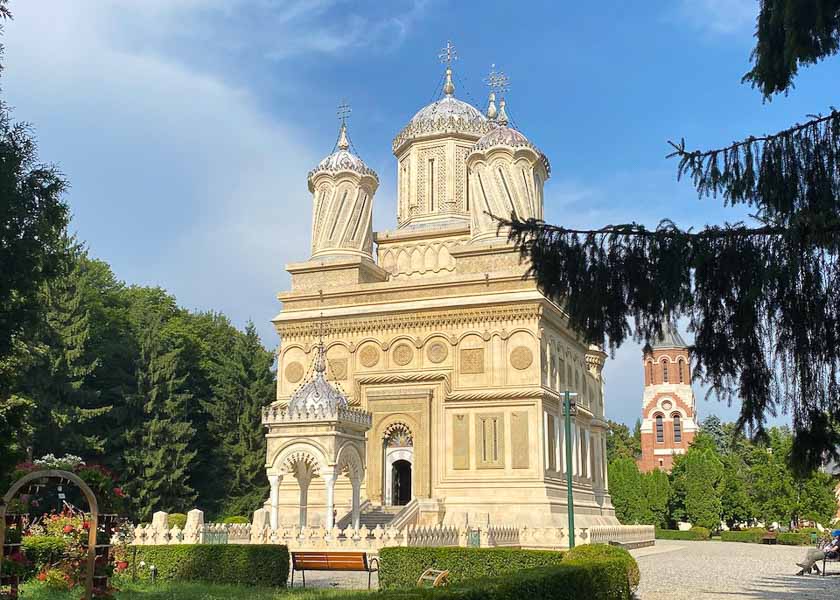
The monastery, which is also one of Romania’s most beautiful churches, is located in the southern part of Romania, in the small city of Curtea de Arges. The city was once the capital of feudal Wallachia. My grandparents were from Curtea de Arges, so I grew up visiting the monastery quite often as a child, without realizing what I am looking at. But years later, after moving to California, when I returned to revisit some of my childhood places, I was amazed at how beautiful this cathedral really is.
How to Reach Curtea de Arges Monastery
There are several ways to reach Curtea de Argeș Monastery, depending on your budget and travel style.
By Car: This is the easiest and most flexible option. Curtea de Argeș is about 150 km (93 miles) northwest of Bucharest, and the drive takes around 2.5 hours. Coming from Bucharest, you should take the Autostrada București-Pitești (A1/E81), then follow DN7C to DN73C to Curtea de Arges.
Coming from Râmnicu Vâlcea, start on road DN7/E81, then move on road DN73C to Curtea de Argeș. The drive is short, roughly 45 minutes (37 km).
From Brasov ,the most scenic route is over the Transfăgărășan Highway (DN7C), which is only open from roughly July through October, weather permitting.
By Train: Direct trains run from Bucharest to Curtea de Argeș several times a day. The journey takes about 3 to 3.5 hours. From the train station, the monastery is a short taxi ride or a manageable walk.
By Bus: Buses and minibuses connect Curtea de Argeș with Bucharest and other cities in southern Romania. Travel times are similar to those by train, although schedules can be less convenient.
By Organized Tour: If you’re short on time, several day tours from Bucharest include Curtea de Argeș together with other attractions, such as the Transfăgărășan Highway, Brasov, or Sibiu.
Once you arrive in Curtea de Argeș, the monastery is easy to reach and has ample parking for visitors arriving by car.
A Brief History of Curtea de Arges Monastery
The original cathedral in Curtea de Arges was erected between 1515 and 1517 by Neagoe Basarab, the ruler of Wallachia, on the ruins of an old Orthodox church from the 14th century. The consecration took place on August 15, 1517 (on the Feast of the Assumption) in the presence of Prince Neagoe Basarab and his family, the courtiers and boyars, as well as the Patriarch of Constantinople and the Bishop of Wallachia.
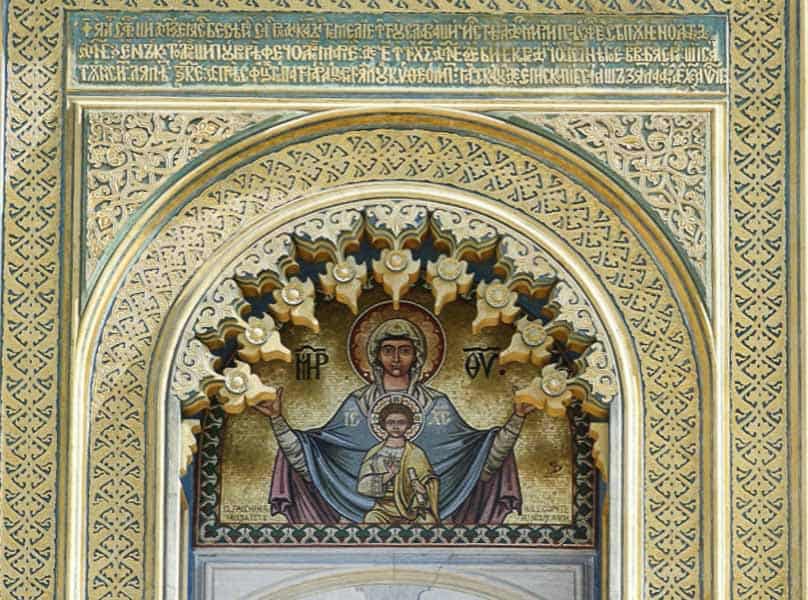
The story of this monastery hasn’t always been a peaceful one. In 1610, the troops of Transylvanian prince Gabriel Báthory stormed Curtea de Argeș, and what followed was brutal: the invaders looted the monastery’s treasures, desecrated the graves, and even melted down the cathedral’s tin roof to cast it into guns.
The centuries that followed brought wave after wave of damage and repair. Prince Matei Basarab (1632–1654) was the first to rebuild and richly endow the cathedral, and Prince Șerban Cantacuzino later added his own restoration work in the 1770s. But peace never lasted long — during the wars between the Russians and the Turks, the monastery was once again robbed and ravaged.
The cathedral you see today owes its look to 1875, when King Carol I of Romania brought in a celebrated French architect to restore it. The same architect designed the episcopal palace next door, which the king went on to use as his summer residence.
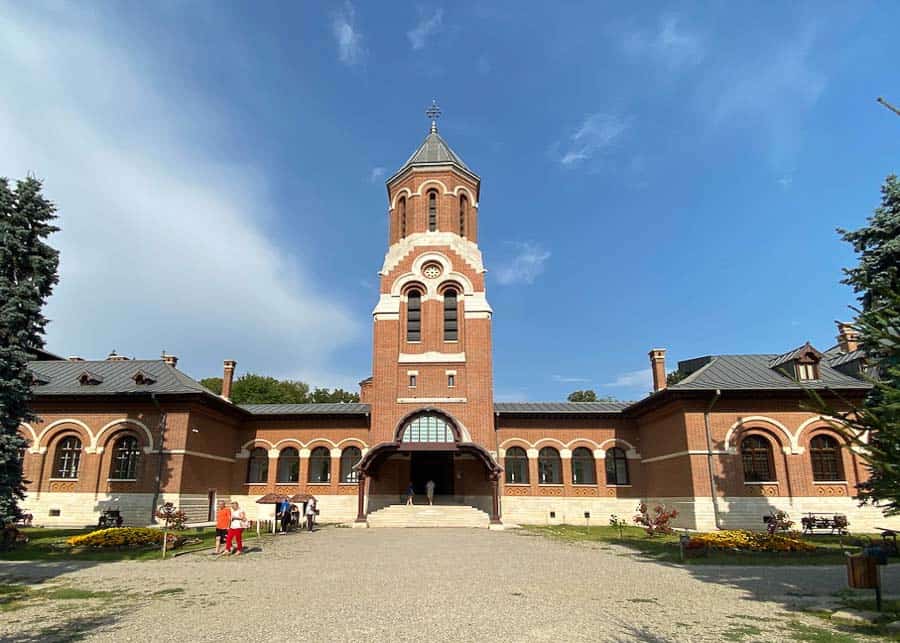
From a Princely Monastery to a Royal Cathedral and Necropolis
Before becoming monarch of Romania, Carol I of Hohenzollern-Sigmaringen toured the whole country on horseback. He chose Sinaia, in the Prahova Valley, as his summer residence, where he later built Peleș Castle, one of the most beautiful castles in Romania, and Curtea de Argeș as his burial place. As a result, he restored the cathedral at Curtea de Argeș and transformed it into a necropolis for the royal family.
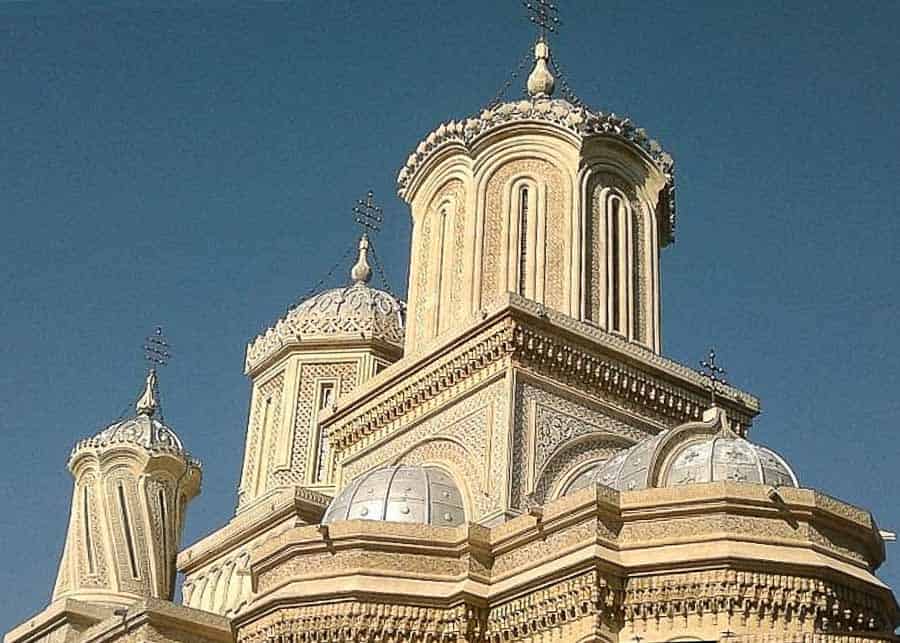
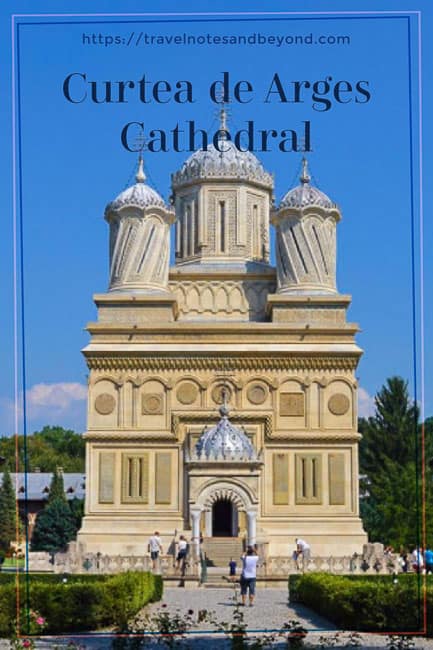
The cathedral, which resembles a very large mausoleum, sits upon a raised platform above the ground. The architectural style is Byzantine, with Moorish arabesques and fancy trimmings. The shape is oblong, with a central dome fronted by two smaller cupolas and a secondary dome that springs from the annex.
In the narthex of the cathedral are the tombs of the founders: Neagoe Basarab, his wife – Stana (Sofronia) and their daughters. Also here are the tombstones his sons-in-law: Stefanitā Vodā, and Radu de la Afumati.
On the other side of the narthex are the tombs of the kings of Romania: Carol I (1914) and Queen Elisabeta (1916), who after her husband’s death retired to Curtea de Arges Monastery; King Ferdinand (1927) and Queen Maria (1938); King Charles II and his son, King Michael I.
Also buried at the Curtea de Argeș Cathedral are the remains of King Carol II and his wife, Magda Lupescu. The King initial tomb was in the National Pantheon, in Lisbon, where he actually died. However, in 2003 his remains were moved to Curtea de Arges.
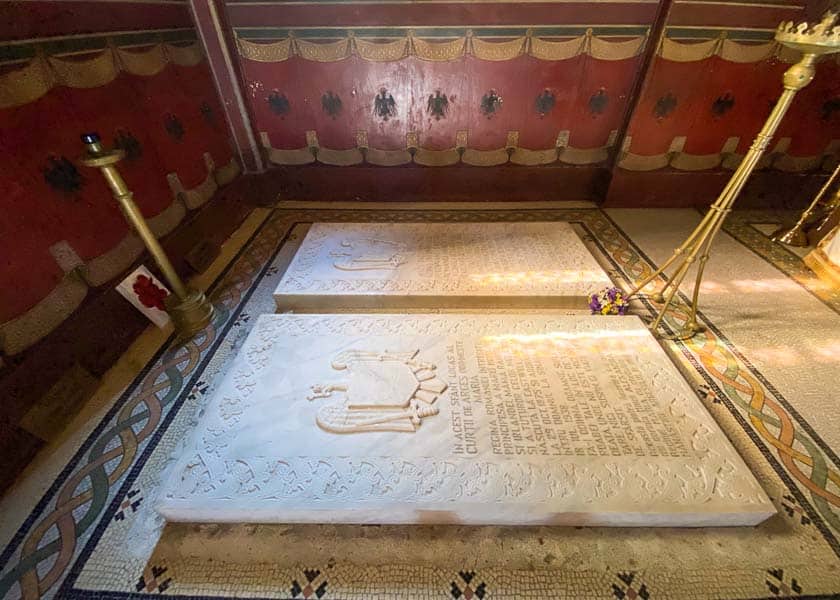
Queen Maria‘s body was buried at the Curtea de Arges Cathedral, but as per own request, her heart was laid in the Chapel of Stella Maris in Balchik. In 1940, when Romania surrendered Balchik to Bulgaria, the queen’s heart was temporarily buried near Bran Castle. However, in 2015 her grandson King Michael I of Romania requested that her heart be moved in the Pelisor Castle where it is even today.
The New Royal Cathedral
Just steps from the famous 16th-century church, at the very entrance to the monastery grounds, stands a far younger landmark that many visitors miss: the New Archbishopric and Royal Cathedral. Built between 2009 and 2018, it was conceived as both the new seat of the Archdiocese of Argeș and Muscel and a fresh resting place for Romania’s royal family — because the old cathedral’s narthex had simply run out of room for burials.
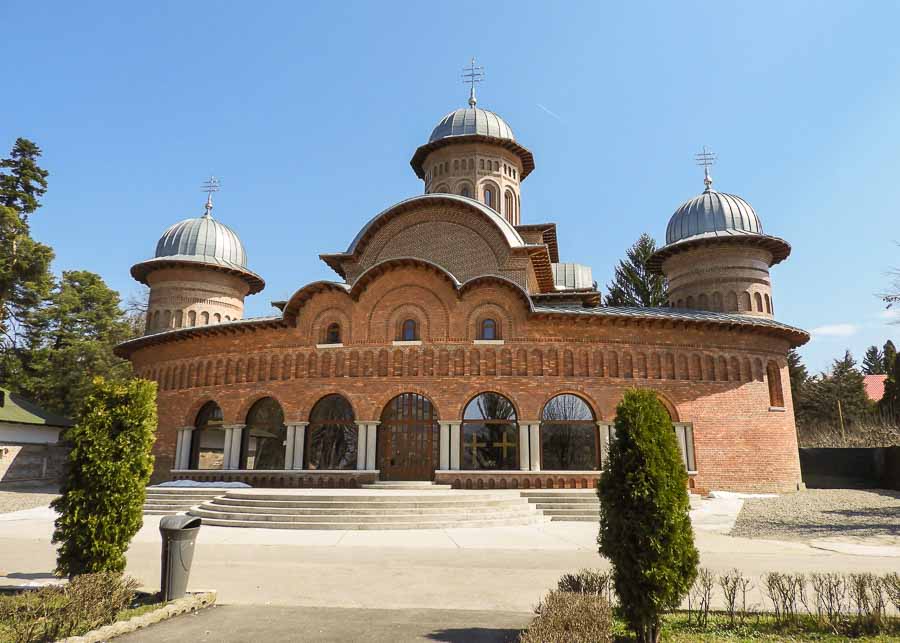
The project was a joint endeavor of the Archdiocese and the Royal House of Romania, fulfilling King Mihai’s own wish to one day rest alongside his ancestors and to gather the scattered members of his family in a single place. On May 10, 2009, the foundation stone was laid in the presence of Princess Margareta, the Custodian of the Crown, and her husband Prince Radu.
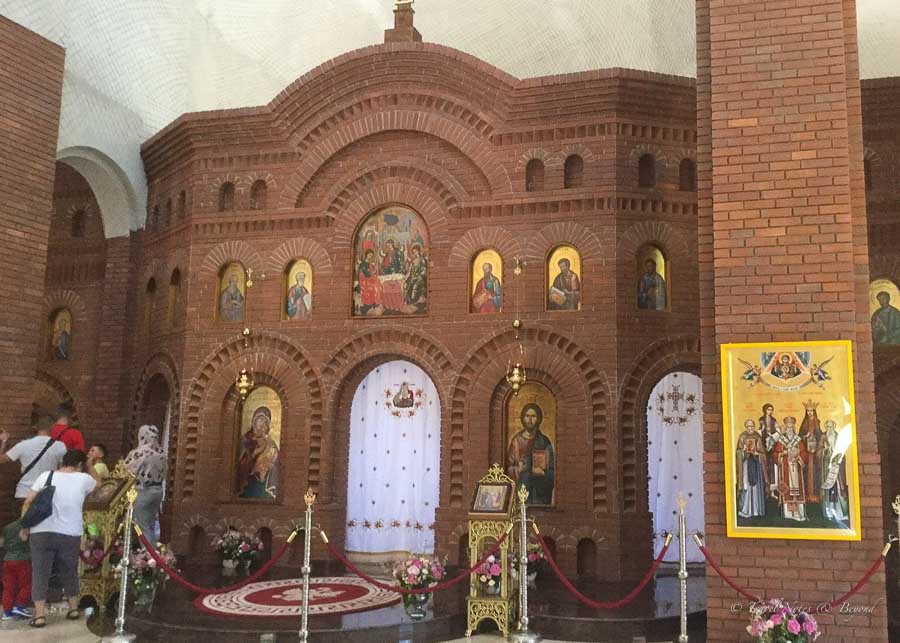
Architect Augustin Ioan designed the new cathedral in a Byzantine style that deliberately mirrors its famous neighbor. Look closely and you’ll see the connection everywhere: in the stone exterior, in the mosaics glinting inside, in the little echoes that make the new church feel less like a fresh start and more like the next chapter of a story already five centuries in the making.
The most striking part of the New Royal Cathedral is the burial chamber. Tradition asks that graves face east, but sixteen tombs could not all be aligned that way, so the architect arranged them as a circular arcaded portico with the altar at its center. As he explained it, the altar represents the mystical east of the church, where the living and the dead wait together for the Resurrection. Visitors enter this chamber across a structural glass bridge lit from below, crossing a literal and symbolic threshold of light.
The cathedral was consecrated on December 7, 2018, and dedicated to the Archangels Michael and Gabriel and to the child martyr Saint Filofteia.
Myths and Legends of Curtea de Arges
The beautiful cathedral at Curtea de Arges has inspired many legends. But perhaps the most beloved one of all is the legend of Manole, the chief mason who built the monastery. This ballad is an example of a folkloric myth that has at its core the belief that nothing durable and unique can be built without sacrifices.
The Legend of Master Manole
This is one of the saddest folk tales that I ever heard and it always made me cry as a little girl. The story has it that Negru Vodā (the Black Prince) – one of the rulers of Wallachia – wanted to built the greatest monastery that anyone has ever seen. He hired a group of 10 skilled masons whose leader was Manole, and promised to make them very rich if they succeeded. But if they failed, he threatened to execute them all.
The masons started to work, but the place seemed to be cursed. Whatever the workers built during the day, fell apart during the night. Tired and discouraged, the masons began fearing for their lives.
One night master Manole had a dream showing him that the church would not stand until they immure a human being within the walls. Since the site for the monastery was very remote, the only people coming by were the workers’ wives and sisters. So they decided that the first woman to appear the next day will be the one they will sacrifice.
Manole prayed the whole night for rain and wind and hail that would keep his wife from coming. And God listened to his prayers and send down the most terrible of storms. But nothing could keep Ana, his pregnant wife, from showing up next day to bring her husband’s lunch. Horrified and devastated, Manole had no choice but to keep his promise.
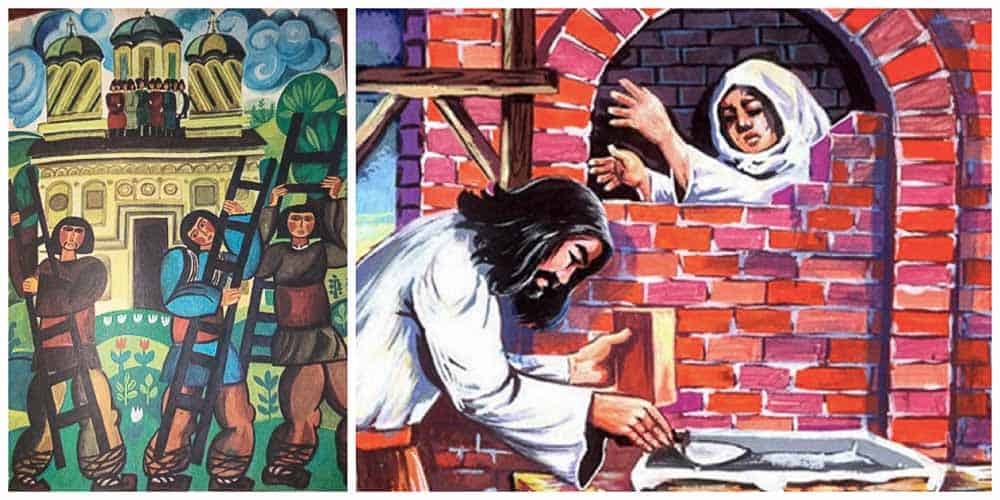
When the masons finished the church, Negru Vodā asked them if they could ever make a similarly marvelous construction. Manole and his masons answered they could easily build an even greater building. Fearing the workers would build a more beautiful cathedral for someone else, the Prince let them all stranded on the roof to perish.
The masons fashioned themselves wooden wings and tried to fly off the roof. But, one by one, they all fell to the ground and died.
NOTE: One of the salons in the Episcopal palace displays a series of mural paintings depicting the legend of Manole. The salon is currently closed to the public, but it may reopen in the future, so check at the entrance.
Manole’s Fountain
According to the local legend, a natural spring emerged from the ground at the exact spot where the master builder fell to his death after attempting to fly off the church roof. Today, that natural spring is enclosed and known as Manole’s Fountain, located in a small park just outside the Curtea de Argeș Monastery.
The Legend of Saint Filofteea (The Maid from Arges)
Another legend refers to Saint Filofteea, a 12-year old girl whose relics are in the chapel of the Curtea de Arges monastery. The story says that the girl used to carry food to her father who was working out in the field. But one day she gave the food to some beggars she encountered along the way, so she had no food left for her father.
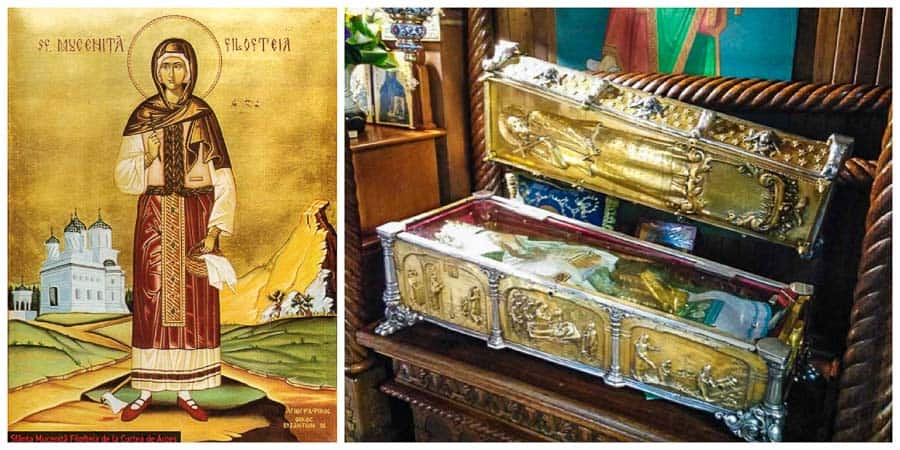
Hungry and upset, the father wanted to punish her, but Filofteea ran away. That made the father even more mad, so he threw his axe towards her and killed her with one hit. Realizing what he did, the father tried to save the girl, but her lifeless body became miraculously so heavy that nobody was able to move it.
Hearing the story, the Archbishop of Trnovo came to see that for himself and decided to canonize the girl and move her relics to a church or monastery. So he began listing the names of the nearby churches, but the corpse didn’t get any lighter until he mentioned the name of Curtea de Arges Monastery. And thus Saint Filofteea’s remains ended up in the Chapel of the Curtea de Arges Monastery, where they still rest today.
Secrets of the Curtea de Arges Cathedral
The Secret of the Marble
One thing to notice when visiting the cathedral is that in addition to limestone, a lot of good quality marble used in the construction. What’s interesting this fact is that there are no marble quarries in Curtea de Arges, or nearby. So where did this marble come from?
As it appears, Neagoe Basarab, the cunning Wallachian ruler who built the Monastery, brought marble from the Greek archipelago. But this wasn’t easy to do, as Wallachia and the Greek islands were under Ottoman control.
The sultan forbade the use of marble in churches, precisely to prevent Christian places of worship from overshadowing the mosques. So Neagoe asked the sultan to approve his import, lying to him about the destination of the marble.
The Mystery of Allah’s Name on the Keystone
Another hard-to-believe mystery of the Curtea de Arges is the presence of Allah’s name on the cathedral’s keystone. The name – which was written in Ottoman characters – was first discovered by the Romanian historian, archeologist and folklorist Grigore Tocilescu.
However, after the restoration done by King Carol I, the keystone in question disappeared. Unfortunately, there are no images of this keystone and nobody knows what happened to it after the reconstruction.
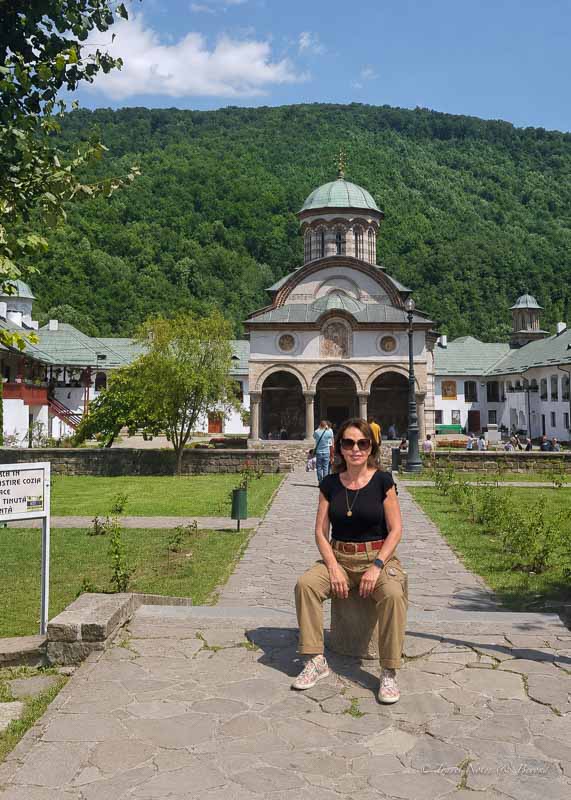
The Old Princely Church (Biserica Domnească Sf. Nicolae)
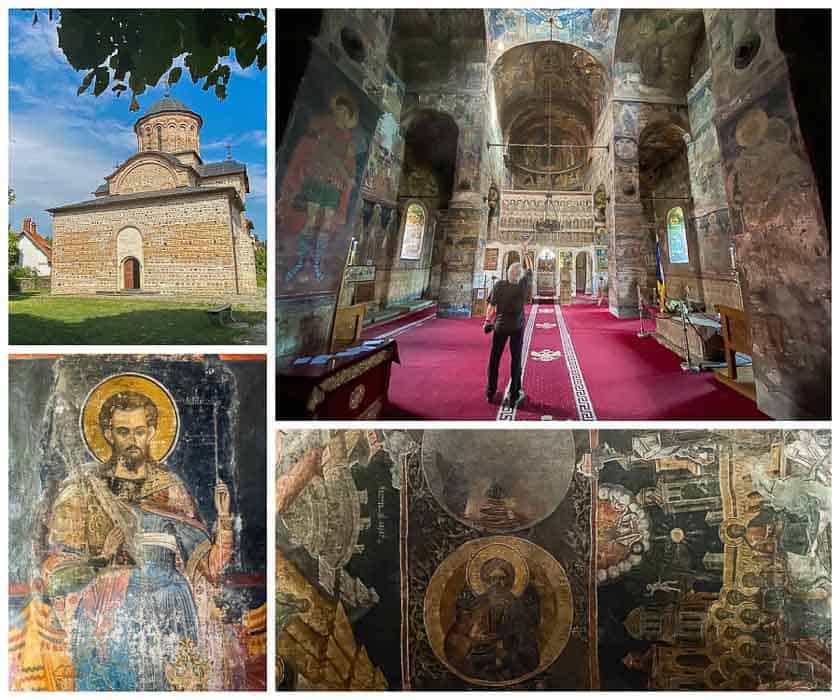
Long before the sumptuous Cathedral of Curtea de Arges was built, the Royal Church of the State of Wallachia was St. Nicholas Church. This beautiful monument dating from the 14th century marks the spot where the old court once stood.
Although not as impressive in size as the Curtea de Arges Cathedral, St. Nicholas Church has a greater historic significance, being the first princely church of Wallachia. For a long time the church served as a burial place for the rulers of Muntenia. Among them are Voivodes Vlaicu and Basarab I, the founder of the state of Muntenia.
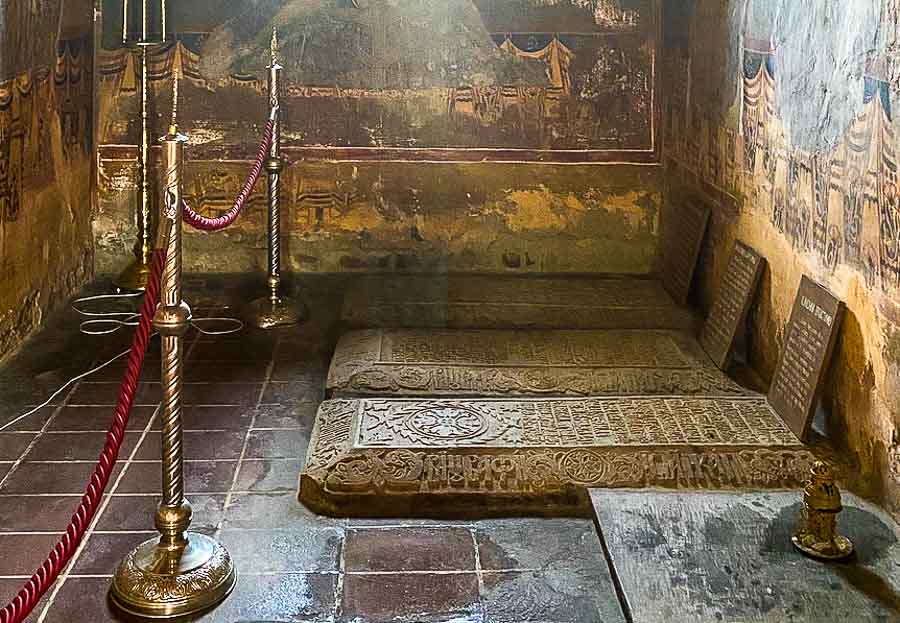
St. Nicholas Church was built in Byzantine style, in the shape of a cross. The outside look of the building is not particularly impressive, but the interior frescos are amazingly beautiful. There are about 130 mural paintings in all, most of which date from 1364.
Practical Information for Visiting Curtea de Argeș Monastery
Address: Bulevardul Basarabilor, nr. 1, Curtea de Argeș 115300, Romania
Phone: +40 248 722 223 (answered in Romanian and English)
Visiting times: the monastery is open daily, including weekends
- Summer: 8:00 AM – 8:00 PM
- Winter: 9:00 AM – 5:00 PM
Entry to the Curtea de Argeș Monastery in Romania is free. While there are generally no mandatory admission tickets for the main grounds or the cathedral, donations are welcome to support the monastery’s upkeep.
YOU MAY ALSO LIKE:
 The Art of Egg Painting in Romania – Lucia Condrea Egg Museum





Debra Schroeder
You have peaked my curiosity. But how horrible for Manole to have to intern his pregnant wife! We might have to swing by here and make a detour on our trip to Slovenia.
Anda
Romania is worth a trip, Debra, so if you are in Slovenia you should definitely make a detour.
Trisha Velarmino
Thanks for exploring the history of this magnificent building and sharing it with us. I love how it became an integral part of Romanian life for centuries to come. And the legends surrounding the site makes it all the more attractive and appealing.
Linda (LD Holland)
Curtea de Arges looks like a great spot to visit. The architecture of the Cathedral is stunning. Fascinating that each dome is so different. How fun that there is more than one story tied to this church. We would definitely spend time admiring the 130 mural paintings in St Nicholas Church. Amazing how much colour remains.
Agnes
I hadn’t been to Curtea de Arges when I visited Romania. But I’m going to see this part of Romania, and for sure, I add Curtea de Arges Monastery to my road trip itinerary. It’s a magnificent landmark. The architecture is stunning. I did not know that it was built in the 16th century on the ruins of an orthodox church. It’s great to see that it is a necropolis for the royal family with tombs. St. Nicholas Church with 130 mural paintings is stunning as well. It’s great that you also provide tips about opening hours and prices!
Paul Healy
There is so much in Eastern Europe I’m yet to see and Curtea de Arges looks like one of those places. I loved reading your interesting history of the cathedral. So weird to think of places like Transylvania that no longer exist. It’s such interesting architecture and I guess bringing the marble from so far away shows how important it was at the time.
Natascha
Curtea de Arges Monastery looks stunning indeed! First time I read about it. The Byzantine and Moorish influences are very captivating. If I go back to Romania, I will try to visit this gem for sure.
Renee
What incredible architecture this church has. Better yet, are the stories and legends. I wonder how these legends change over time. The one that stuck out to me was Saint Filofteea (The Maid from Arges).
Anda
The legends don’t change over time, Renee.
Alice Mola
I love hearing the history of how and why old buildings were built. Out of all the myths and legends, the story of Saint Filofteaa was the one that intrigued me. Though a bit sad to read, it was interesting. All these myths and legends are such an important part of history.
Jennifer Prince
The legend is so interesting! It reminds me of a similar story in the Bible of Jephthah’s daughter, who was actually sacrificed b/c she was the first one to come out of his house after a battle. I wonder if this story is some rendition of that one. Anyway, it’s a lovely building, and I need to get to this part of the world!
Anda
Legends like these are really old and common to many cultures.