
Romania is home to many beautiful castles, palaces, and medieval fortresses. Some of them are famous throughout Europe. Others are less known but equally impressive. Unfortunately, most of these properties suffered tremendous neglect over the centuries and remained in a dismal state until the fall of Communism. But in more recent years, Romanians began rebuilding and restoring many of these historical buildings. Today there are quite a few castles worth visiting in Romania — far more than most travelers realize.
If you have only a few days, a Transylvania road trip will get you to the most famous ones. But if you have a week or more, you can easily put together an itinerary that takes you to royal residences, fairytale fortresses, eccentric folly castles, and aristocratic estates that are slowly being rescued from ruin.
Which Castle Should You Visit?
| Looking for… | Visit |
|---|---|
| The most famous castle in Romania | Bran Castle (Dracula’s) |
| The most beautiful royal castle | Peleș |
| Best castle near Bucharest | Mogoșoaia Palace |
| Best fairytale castle | Corvin |
| Best castle for an Instagram photo | Corvin or Peleș |
| Most unusual / spookiest | Iulia Hasdeu |
| Best for nature lovers | Cantacuzino |
| Best off-the-beaten-path | Sturdza or Banffy |
| Best fortresses to visit | Alba Iulia, Râșnov |
MOST BEAUTIFUL ROYAL & ARISTOCRATIC CASTLES IN ROMANIA
There are many reasons to visit Romania and touring the medieval castles and fortresses rank pretty high up on this list. Here are the 12 most beautiful castles in Romania you should add to your list:
Castles Near Bucharest and the Carpathians
1. Peles Castle
Peleș is undisputedly recognized as the most beautiful castles in Europe. Located in Sinaia, less than two hours from Bucharest, Peleș was the royal hunting retreat of Carol I of Hohenzollern, the first King of Romania.
But raising such a marvel was no easy or inexpensive task. The construction took over 40 years (1873–1914) and the cost was 16,000,000 Romanian lei in gold. That’s the equivalent of US$120 million in today’s money. Peleș Castle remained in the royal family’s possession until 1947, when the communists seized all the royal property and forced King Michael of Romania to abdicate.
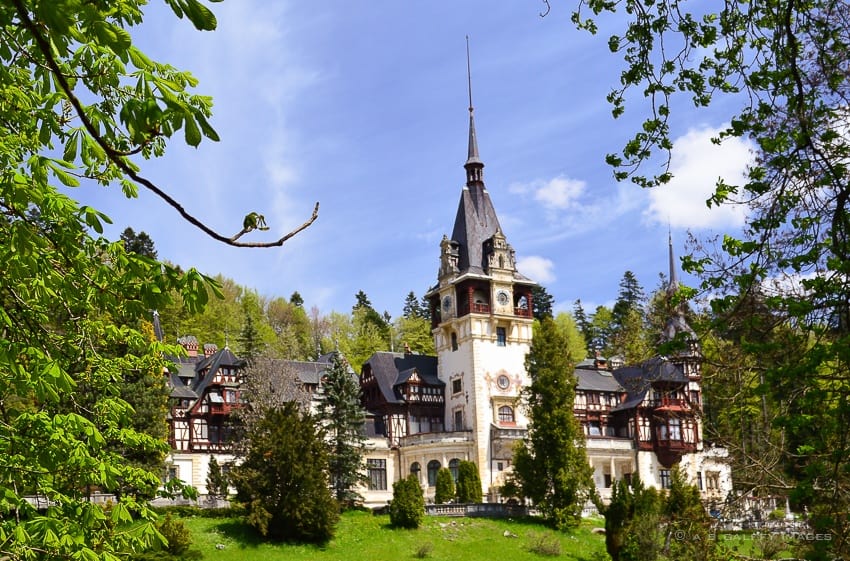
The communist regime closed the entire Peleș estate and declared it a “State Protocol Interest Area.” Only high-level officials, foreign dignitaries, military personnel and maintenance workers were allowed on the property. In the 1990s, after the fall of Communism, the castle reopened to the public as a museum.
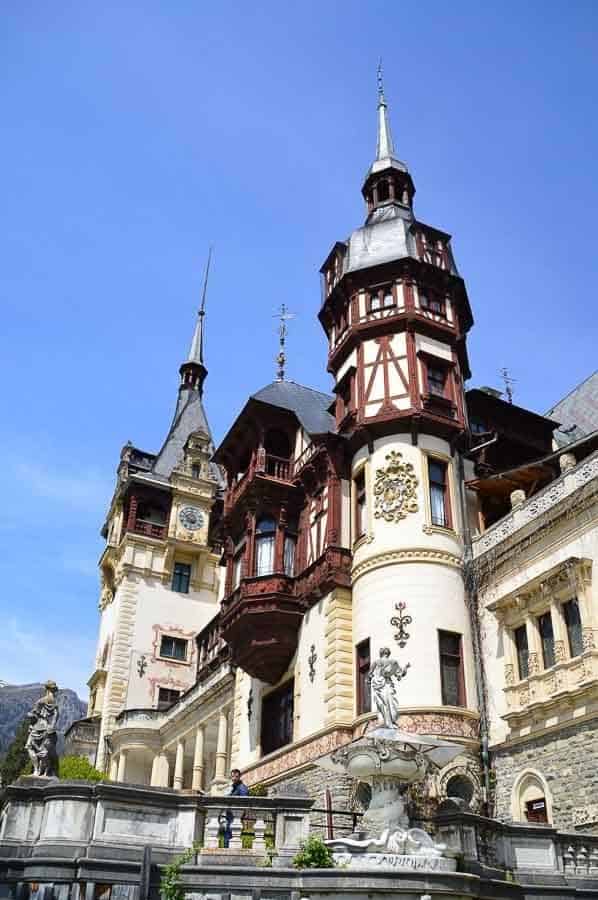
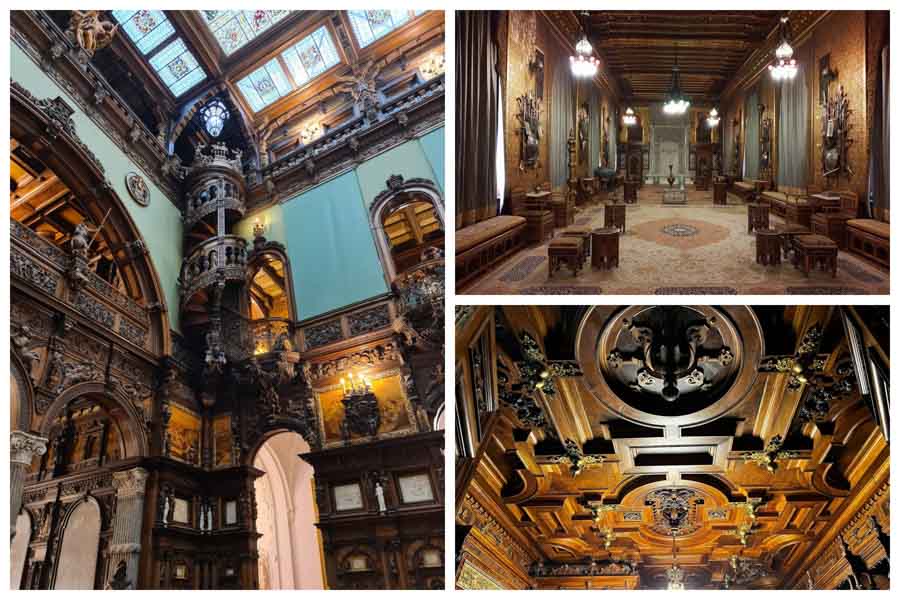
What makes Peleș so spectacular is the interior. Every room is more elaborate than the next: the Florentine Hall with its ebony doors, the Moorish Hall, the Music Room gifted by the Maharajah of Kapurthala, the weapons collection of over 4,000 pieces. Don’t rush through it — give yourself at least two hours.
Practical info: Closed on Mondays and Tuesdays. Entry is around 50 lei for the standard tour. Photography inside requires an extra fee.
2. Pelișor Castle
Right next to Peleș, almost hidden by the trees, sits its smaller and more intimate sibling: Pelișor (literally “little Peleș”). King Carol I built it between 1899 and 1903 as a gift for his nephew and successor, the future King Ferdinand, and Ferdinand’s wife, Queen Marie.
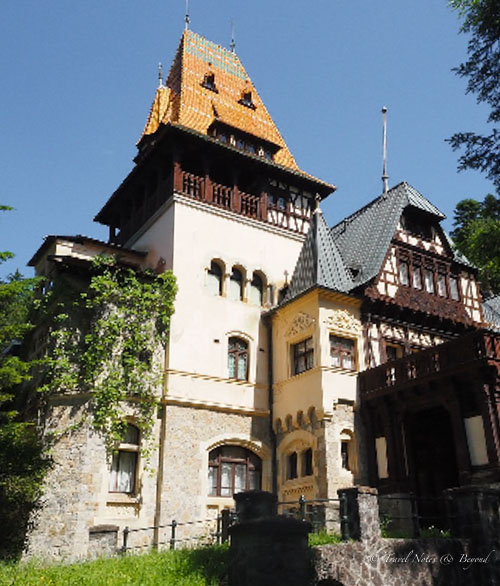
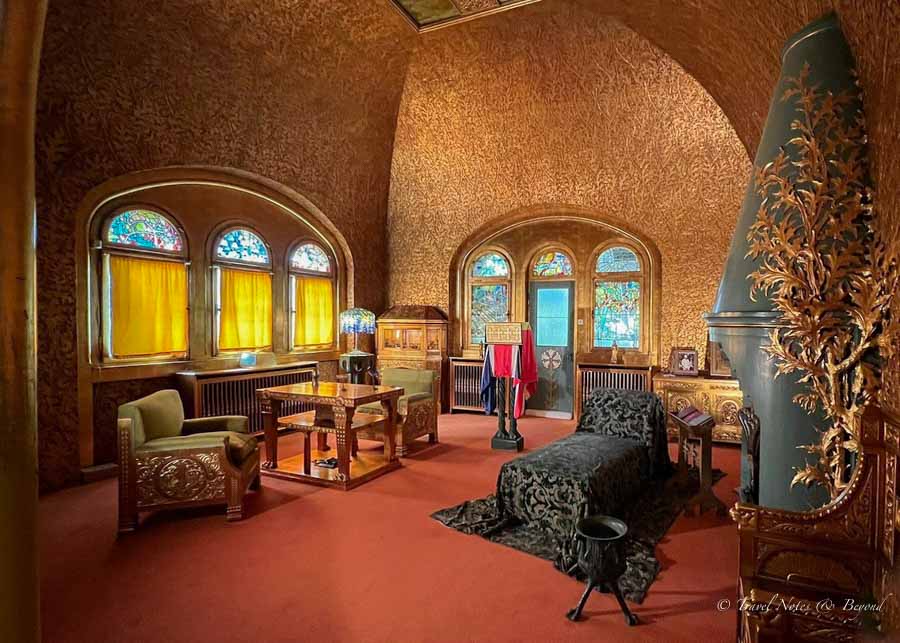
If Peleș is German Renaissance grandeur, Pelișor is Art Nouveau elegance. Queen Marie, the granddaughter of Queen Victoria and a remarkable woman in her own right, decorated most of the castle herself. She had a particular fondness for the Celtic and Byzantine styles, both of which appear in her famous Golden Bedroom — a room entirely covered in gilded oak with a heavy religious symbolism.
Marie died at Pelișor in 1938, and her heart was famously kept in the chapel of the castle in a casket of gold and silver — a final wish she left to the Romanian people.
Practical info: Same site as Peleș. You can visit both with a combined ticket and you absolutely should. It would be a shame to come all the way to Sinaia and skip Pelișor.
3. Cantacuzino Castle
Cantacuzino Castle in Bușteni was built between 1901 and 1911 as the summer residence of Prince Gheorghe Grigore Cantacuzino — nicknamed “The Nabob” because he was supposedly the wealthiest man in Romania at the time. The Cantacuzino family traced its lineage all the way back to the Byzantine emperors, and the prince wanted a residence worthy of that pedigree. Therefore they hired one of the most renowned architect at the time, Grigore Cerchez, who designed the castle in the Neo-Romanian and Neo-Brâncovenesc styles. The castle is set in a very beautiful location, at the foot of the Bucegi mountains, enjoying one of the most spectacular natural backdrops of any castle in Romania.
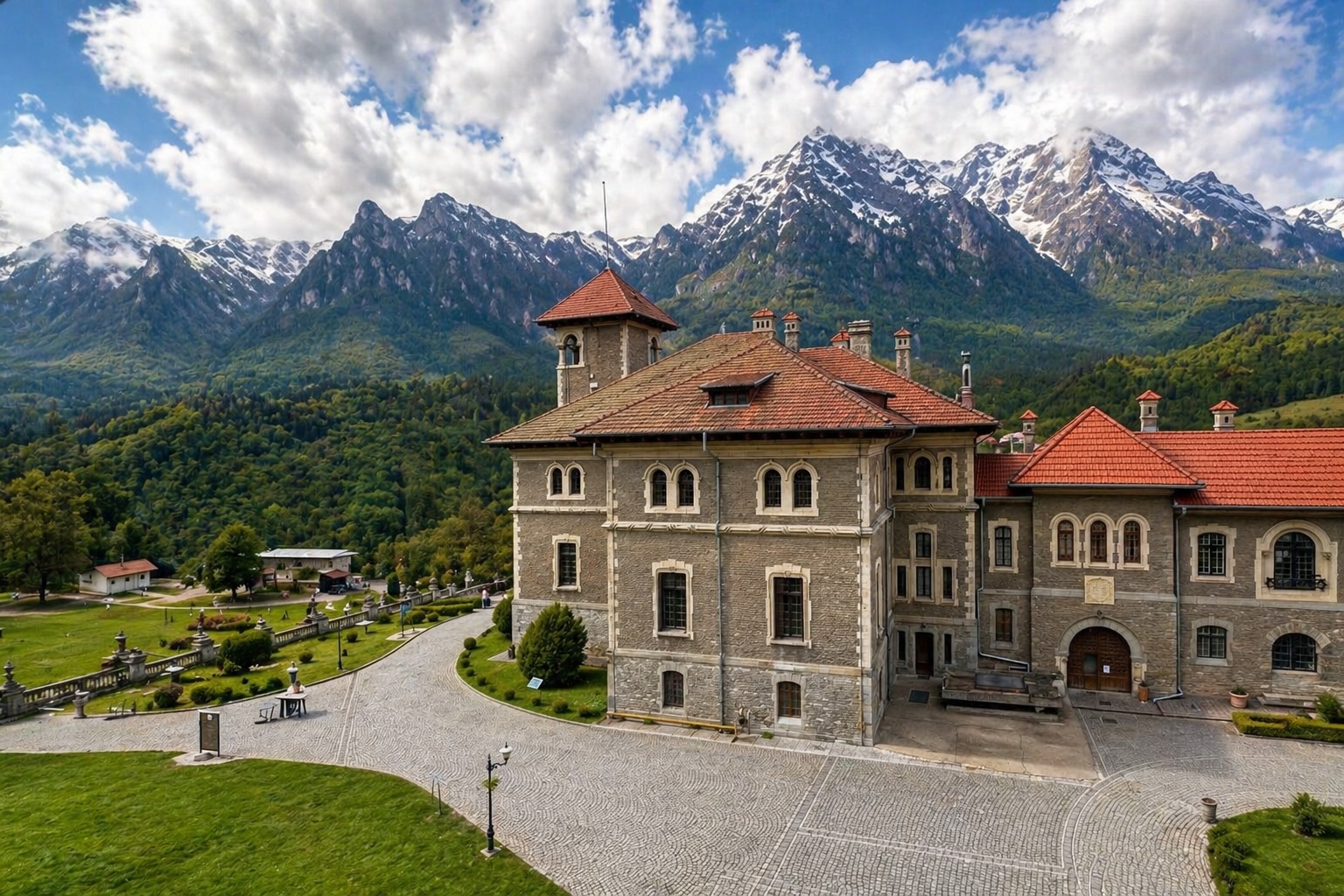
Sadly, after the communist regime took power in Romania in 1948, the castle suffered the same fate as countless other estates, seized by the communist authorities. The original furniture was stolen and quietly redistributed among the Party members, while the building was turned into a sanatorium. Today the Cantacuzino Castle is privately owned again and has been fully restored. The art gallery on the ground floor includes many valuable works of art and paintings.
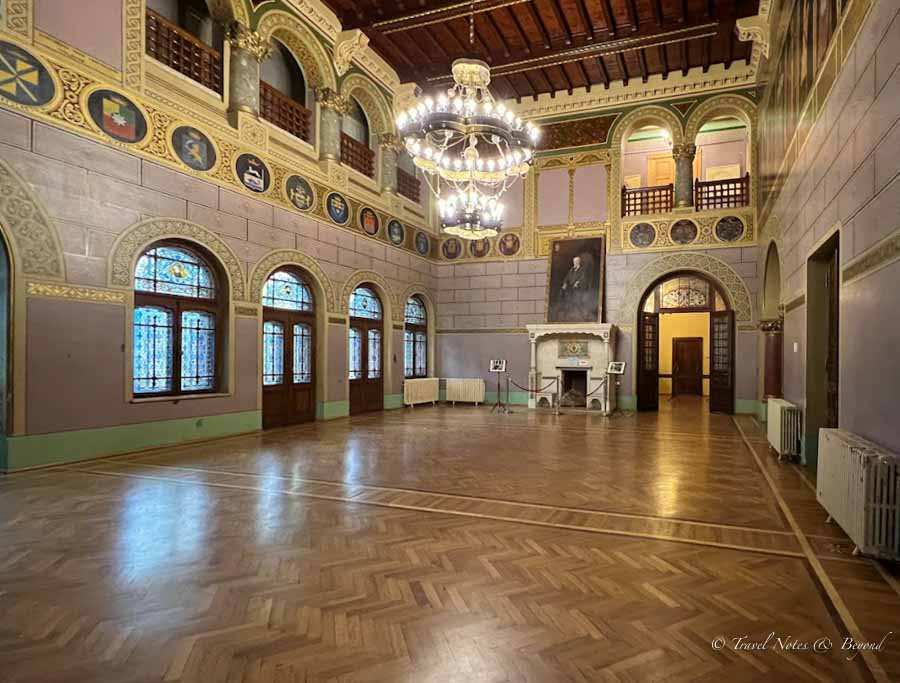
If the place looks oddly familiar, it’s because it was used as filming location for the Murder Castle in season 1 of Netflix’s “Wednesday.”
Practical info: Open daily. Allow 1.5 hours for the castle and gardens. There is also a small terrace café with a great view.
4. Iulia Hasdeu Castle
Of all the castles in Romania, this is the strangest and the most moving. The story of Iulia Hasdeu Castle begins with a tragedy.
In 1888, the brilliant young scholar Iulia Hasdeu died of tuberculosis at the age of 18. Her father, Bogdan Petriceicu Hasdeu — one of the great Romanian intellectuals of the 19th century — never recovered from the loss. He turned to spiritualism and began holding regular séances during which, he claimed, his daughter spoke to him from beyond the grave.
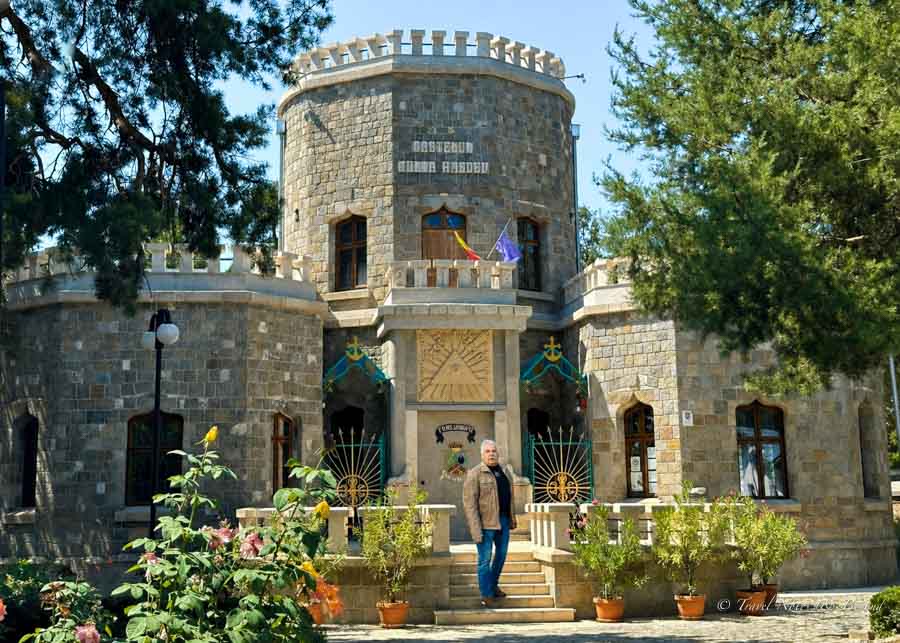
In 1893, guided (or so he insisted) by Iulia’s spirit, Hasdeu began building a small castle in Câmpina as a memorial to her. The numbers three and seven, which Iulia had told him were sacred, appear everywhere. There are three towers, three underground rooms, seven steps in every staircase. Above the entrance is the Eye of Providence, flanked by stone thrones and sphinxes.
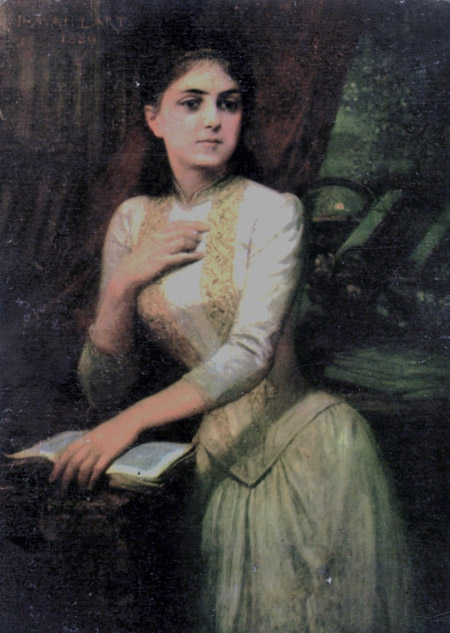
Inside, you’ll find Iulia’s personal belongings on display, original transcripts from her father’s séances, and the small “communication room” Hasdeu built specifically for contacting her spirit. Mirrors line every doorway and window — Hasdeu believed they would trap any spirits that tried to escape.
It is eerie, beautiful, and unlike any other castle in Romania.
Practical info: A short trip from Bucharest or Brașov, easy by car or train. Closed Mondays. Tours are offered only in Romanian, but the staff are usually happy to translate the highlights into English.
5. Mogoșoaia Palace
The beautiful palace of Mogoșoaia is just a short distance from Bucharest, Romania’s capital. It was built in the 17th century by Constantin Brâncoveanu, prince of Wallachia. The palace has a beautiful setting alongside the lake that bears the same name.
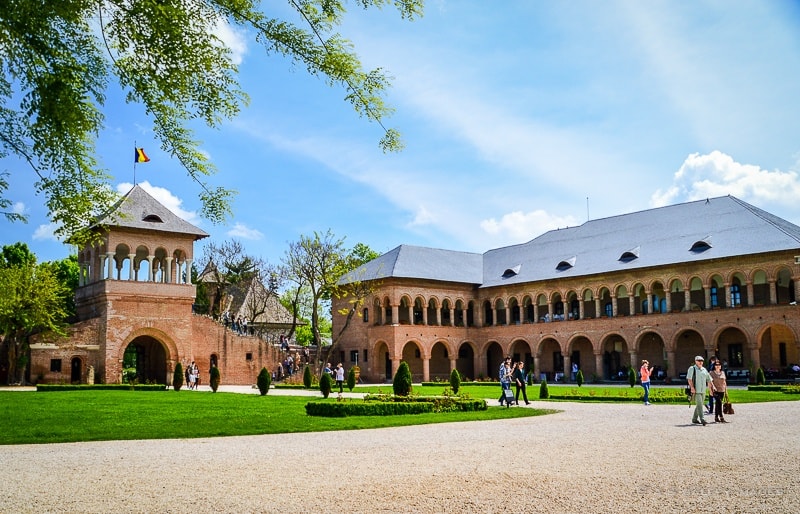
Built in Romanian Renaissance style (or Brâncovenesc style), Mogoșoaia Palace had a troubled history. In 1714, the Ottomans summoned Constantin Brâncoveanu and his family to Constantinople and asked him to convert to Islam. As Brâncoveanu refused, they executed him along with his four sons and confiscated his fortune.
During the Russo-Turkish War of 1768–1774, Mogoșoaia Palace suffered again at the hands of the Ottomans. In the following years the castle underwent restoration, but the Germans bombed it again in 1916.
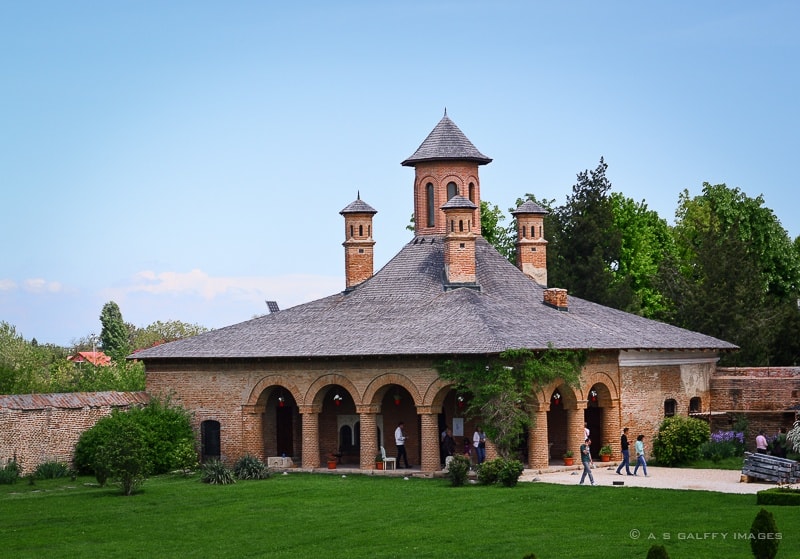
In the 1920s, Princess Martha Bibescu purchased the palace and spent her private fortune on its reconstruction. After 1945, the communist authorities forcibly nationalized the castle and arrested the owners. During that arrest, a great part of the valuable art collection of the palace mysteriously “disappeared.” In 1957 Mogoșoaia Palace became a museum.
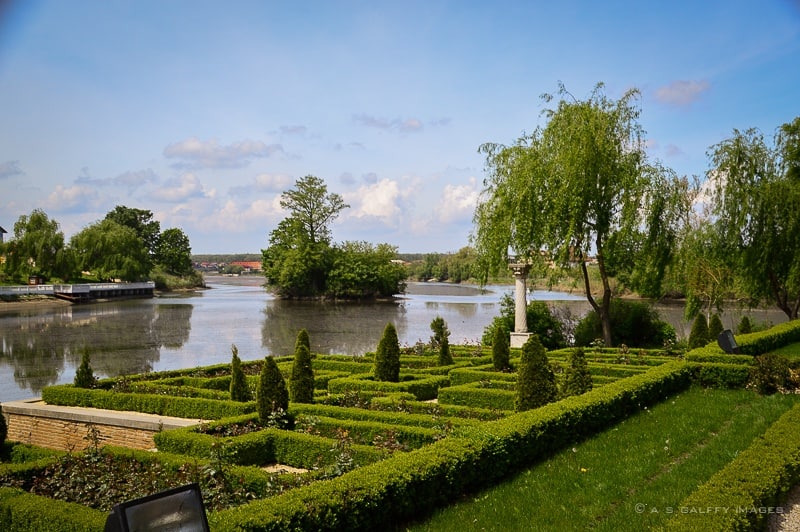
Practical info: Open Tuesday to Sunday. The grounds are free to walk; the palace interior requires a ticket. A perfect half-day trip from Bucharest.
MOST BEAUTIFUL CASTLES IN THE REGION OF TRANSYLVANIA
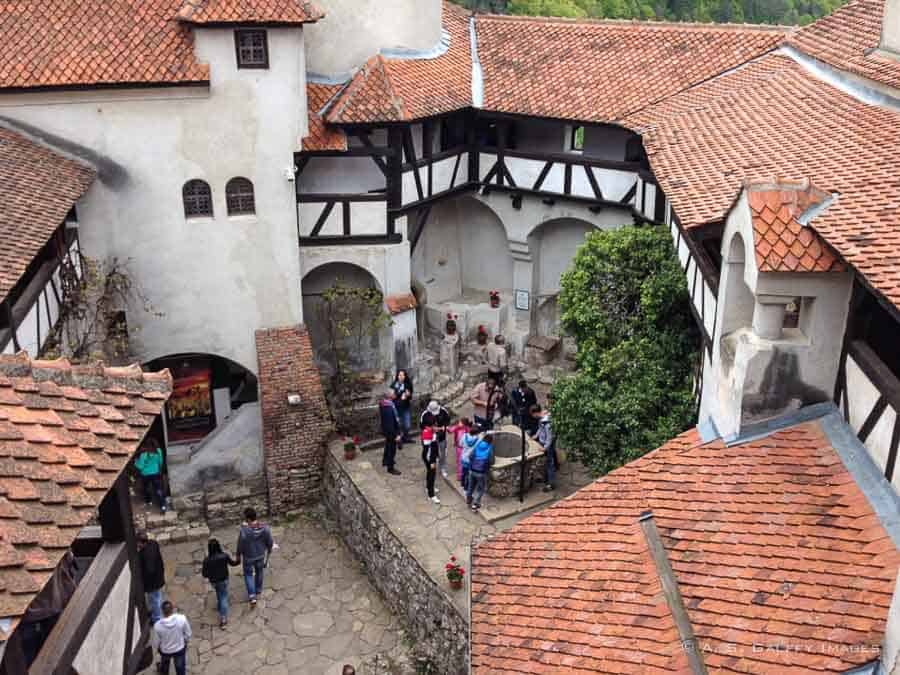
6. Bran Castle
Bran Castle was established as a fortress by the Teutonic Knights, as part of a defense system against the Mongolian invasions. The castle sits in a strategic location: up on a cliff, on the passageway between Transylvania and Wallachia (in old Romania).
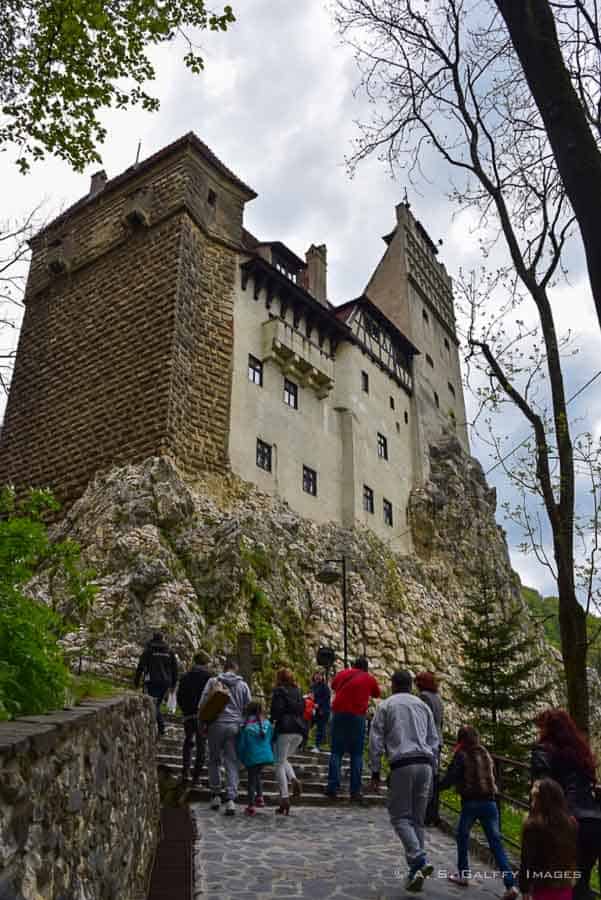
The castle was a gift to Prince Mircea the Elder from his ally, King Sigismund of Hungary. After the death of the Romanian Prince in 1419, Sigismund gave the castle to the Princes of Transylvania.
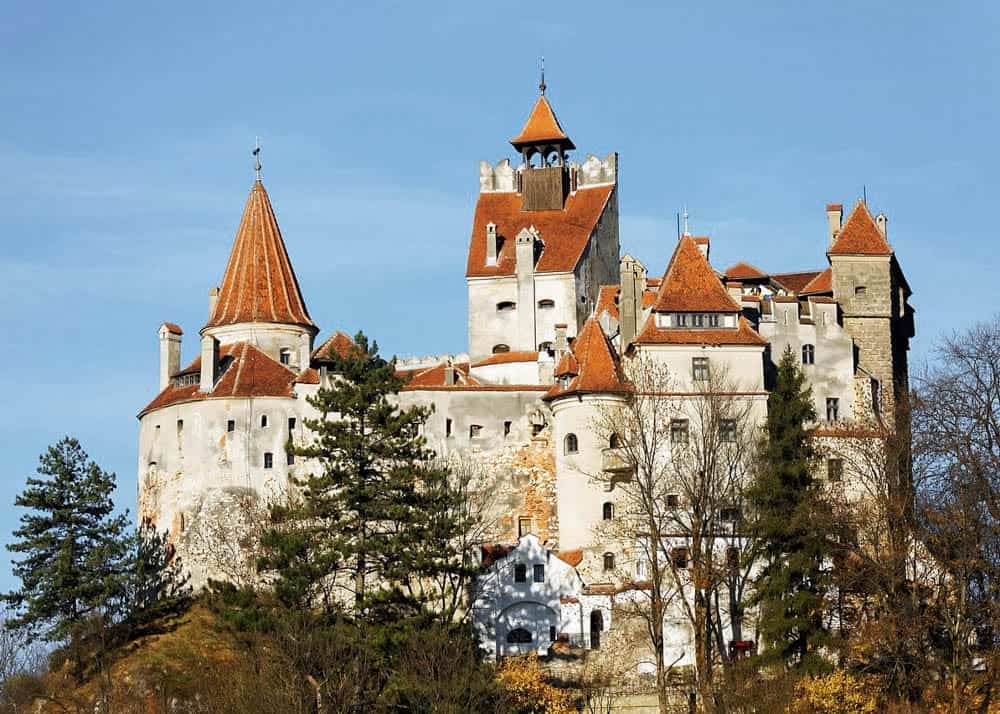
Contrary to the popular belief, Bram Stoker’s character Dracula did not have any connection with Bran Castle. Nonetheless, this castle is still one of the most popular places to visit in Romania. Vlad The Impaler’s only connection with Bran was through an alliance that he did during his first reign with the Princes of Transylvania. They asked him to handle the anti-Ottoman resistance at the border.
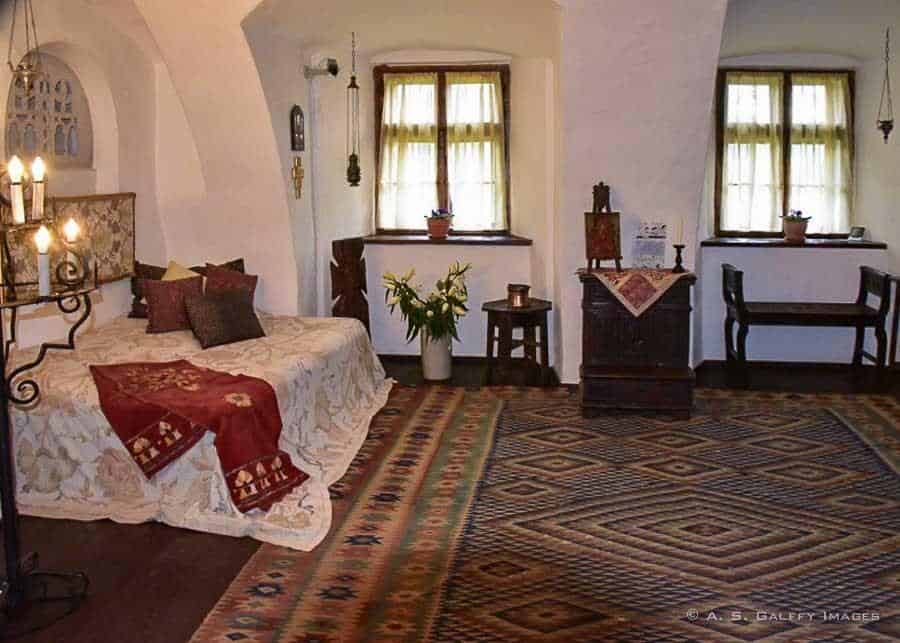
In more modern times, Bran Castle became the summer residence of Queen Marie of Romania. She did a lot of remodeling and renovations to the old fortress, transforming it into the beautiful castle that we see today.
READ NEXT: Bran Castle – The Real Truth Behind the Legend of Dracula
Practical info: Open daily, with extended hours in summer. Expect crowds, especially around Halloween. Buy tickets online to skip the long queues.
7. Corvin Castle (a.k.a. Hunedoara Castle)
This fairytale castle in the heart of Transylvania is one of the largest and most impressive ones in Eastern Europe. It is without a doubt one of the most instagramable places in Romania.
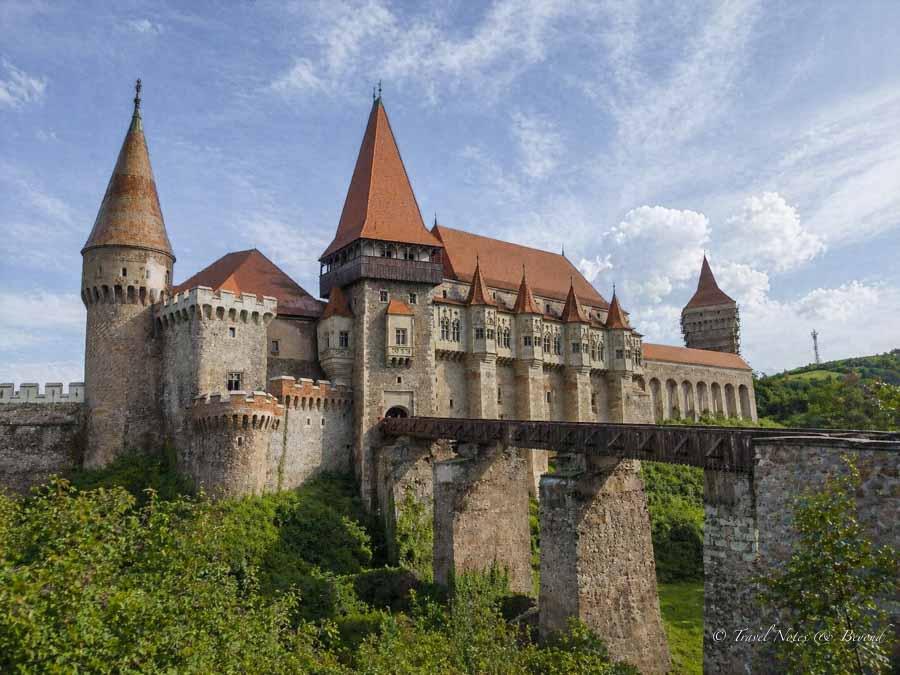
The grandiose castle was built in the 14th century by John Hunyadi (Ioan of Hunedoara) on the site of an old fortress which his father received from King Sigismund of Hungary.
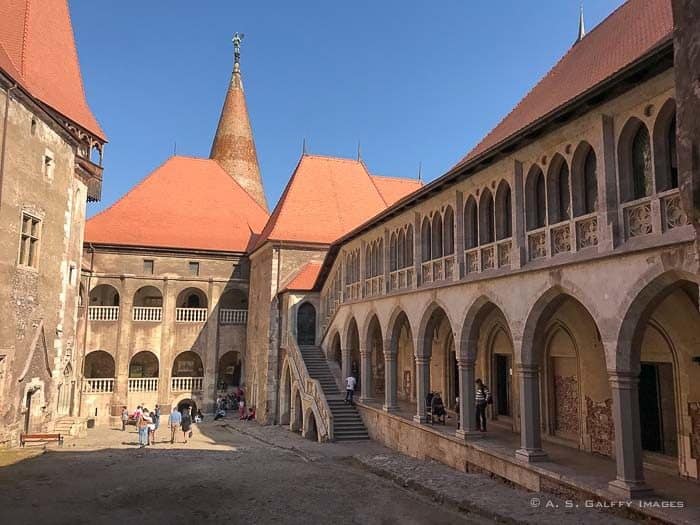
The Castle is a real medieval architectural gem with pointed turrets, an imposing entrance bridge, scary gargoyles, beautiful fountains and many rooms. Despite the ugly industrial area that surrounds it, the Corvin Castle is one of the most beautiful fortresses I have ever seen. In 2003 the castle underwent lots of renovations and is today in a very good shape.
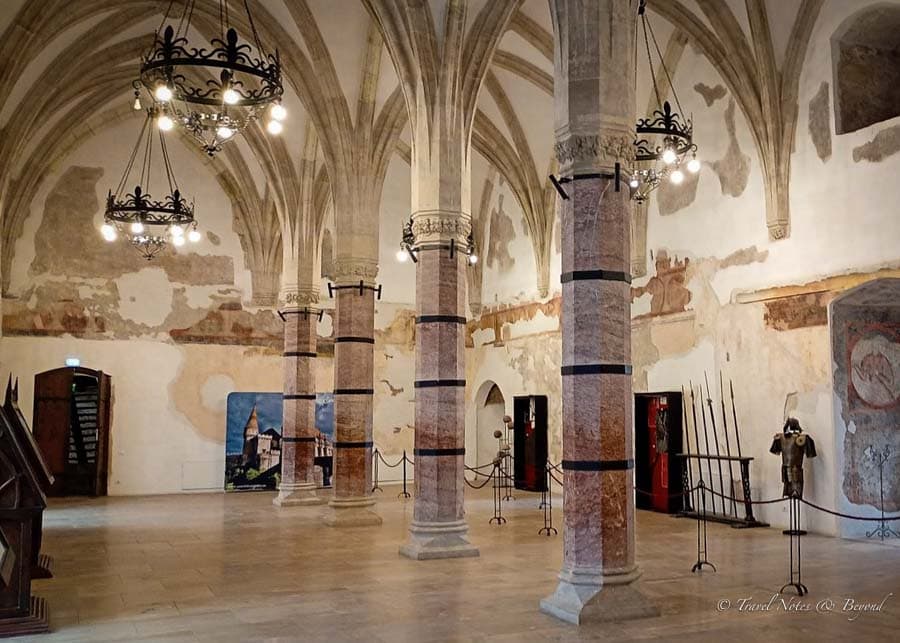
There is also a legend attached to the Corvin castle. It is said that Vlad the Impaler was held prisoner here for seven years and that his madness began during that captivity. Whether or not it’s true, it certainly adds to the castle’s atmosphere.
Practical info: Open daily except Mondays. Allow 2 hours. The castle is in the city of Hunedoara, about 1.5 hours by car from Sibiu.
8. Banffy Castle (Bonțida)
Once known as the “Versailles of Transylvania,” Banffy Castle in Bonțida is one of the most ambitious castle restoration projects in Europe today. The castle was built and expanded by the Banffy family between the 15th and 19th centuries. The estate combines Renaissance, Baroque, and Neo-Gothic architecture in a single sprawling complex.
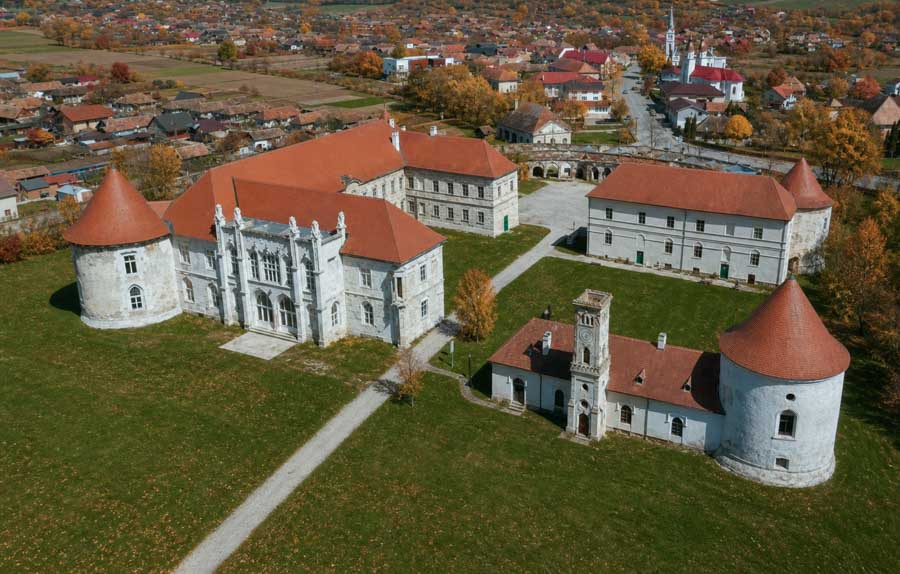
Banffy Castle had a very sad history. It barely survived the 20th century. German troops looted and burned it during World War II as they retreated, and the communist regime that followed used the ruins for everything, from a tractor station to a co-operative farm. By the 1990s, Banffy was on the World Monuments Fund’s list of the 100 Most Endangered Monuments.
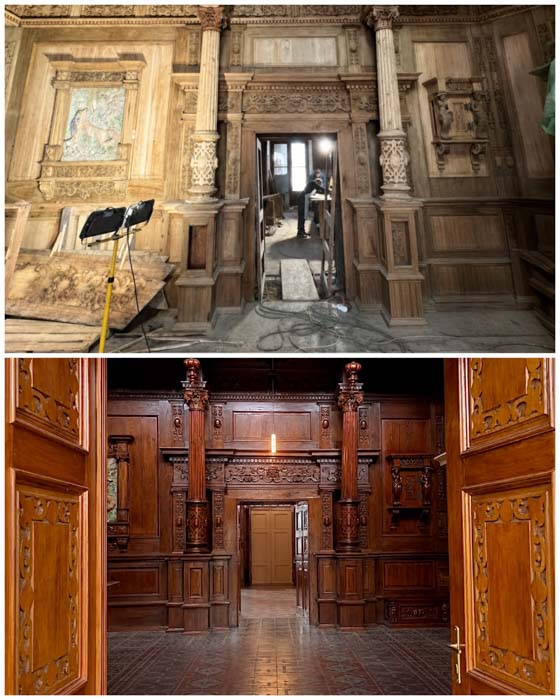
Since 2001, however, the Transylvania Trust has been slowly bringing it back to life as an international heritage conservation training center. As a result, walking through Banffy today is a strange experience: some restored parts are immaculate, while others remain raw ruins with trees growing through the floors.
Practical info: About 30 km from Cluj-Napoca. The castle hosts the famous Electric Castle music festival every July, but during the rest of the year it’s quiet and uncrowded.
9. Bethlen-Haller Castle (Cetatea de Baltă)
Tucked into a small Transylvanian village halfway between Târnăveni and Blaj, Bethlen-Haller Castle is one of the rare surviving examples of French Renaissance architecture in Romania. It was built between 1622 and 1625 by István Bethlen, who was the brother of the Transylvanian prince Gábor Bethlen. The design has a compact rectangular layout with no inner courtyard, anchored by four cylindrical towers at each corner.
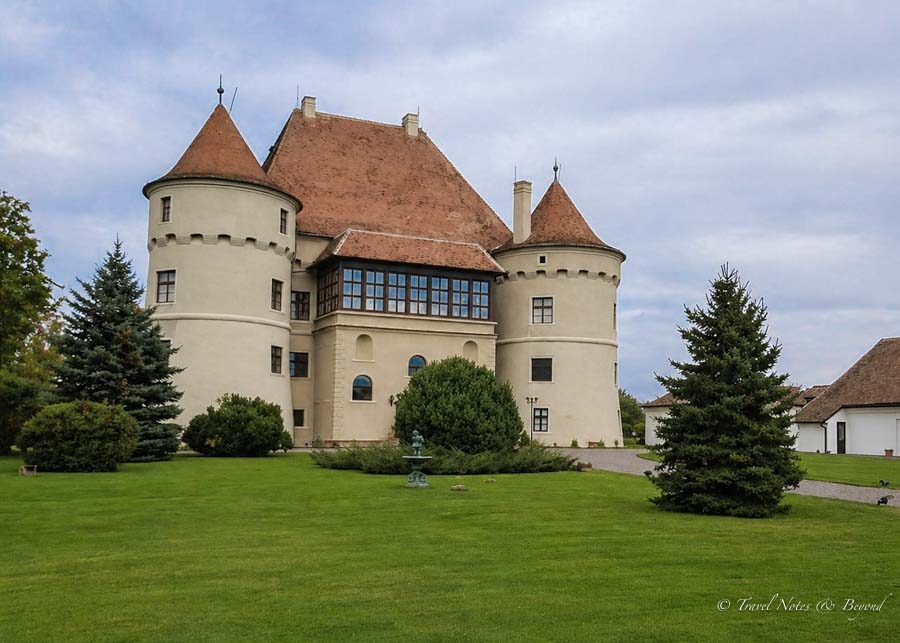
What makes the building unusual is its scale. Five full levels rise above the ground floor — an exceptional height for a Transylvanian noble residence, recalling the medieval donjons that came before it. The cellars served as storerooms and dungeons, while the family apartments occupied the first and second floors. The top level served for defense and is complete with loopholes and a machicolated cornice. In the late 18th century, Miklós Bethlen carried out a Baroque renovation that added a vaulted chapel and the formal entrance you see today.
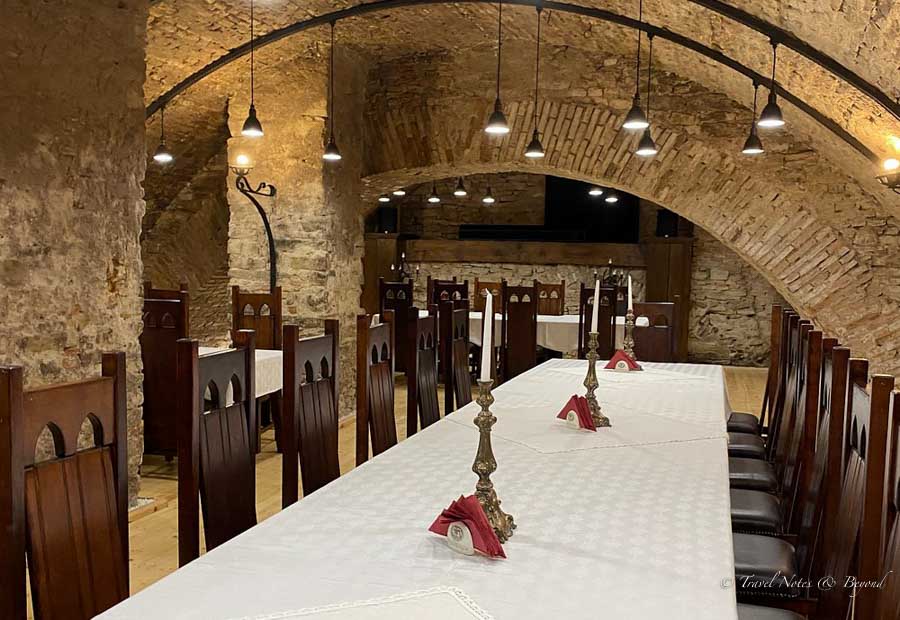
Over the centuries, the castle changed hands many times before Count Jenő Haller finally bought it in 1885. Then, after the 1949 communist nationalization, it served first as a grain warehouse. Later, from the 1970s onward, it became the headquarters of the Jidvei sparkling wine company — and that, ultimately, is what saved it. Unlike most Transylvanian castles, Bethlen-Haller survived communism in good condition precisely because the wine company maintained it throughout. Today, it operates as a boutique hotel surrounded by the Jidvei vineyards, one of Romania’s top wine-producing estates.
Practical info: Located in Cetatea de Baltă (Alba county), about 15 miles east of Blaj. Open for organized tours and overnight stays. A visit pairs beautifully with a tasting at the adjacent Jidvei winery.
BEST CASTLES TO VISIT IN THE REGION OF MOLDAVIA
10. Sturdza Castle (Miclăușeni)
Often overlooked because it sits far from Romania’s main tourist routes, Sturdza Castle in Miclăușeni is one of the country’s hidden architectural treasures. The current Neo-Gothic structure was built between 1880 and 1904 by Georges A. Sturdza and his wife Maria, on the site of a 17th-century manor that belonged to one of Moldavia’s most important boyar families.
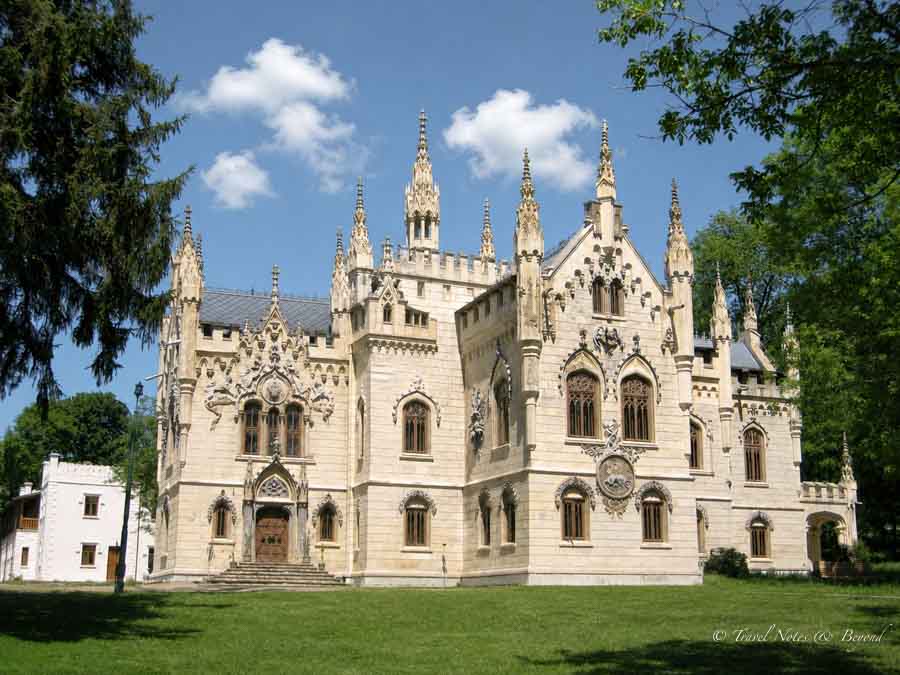
The castle’s interiors were once legendary: a library of more than 60,000 volumes, walls covered in coats of arms, ornately carved oak ceilings, and a private chapel filled with icons collected by Maria Sturdza, who was deeply religious.
After 1944, Soviet troops looted the castle and burned much of the library. The communists later used the building as a warehouse, an asylum, and a children’s home. Today the castle belongs to the Romanian Orthodox Church, which partially restored it. Part of is is used as a monastery and part as a museum.
Practical info: Located between Iași and Roman, in eastern Romania. Best reached by car. Allow about 1.5 hours.
11. Suceava Fortress (Cetatea de Scaun a Sucevei)
Older and far more historically important than any other castle on this list, the Suceava Fortress was the seat of Moldavia’s princes for nearly two centuries. It was built in the late 1300s by Petru Mușat, who moved Moldavia’s capital from Siret to Suceava and needed a fortified residence. The fortress was shaped most of all by Stephen the Great, whose reign from 1457 to 1504 is still remembered as Moldavia’s golden age.
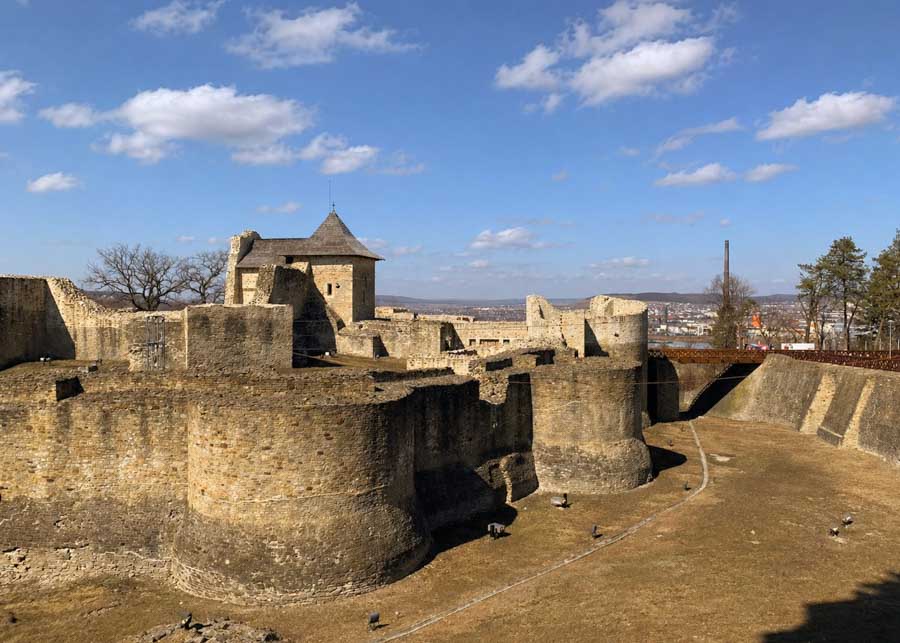
Stephen turned Suceava into a defensive masterpiece. After Ottoman sultan Mehmed the Conqueror failed to take the fortress in 1476, Stephen thickened the walls to three meters, replaced the square towers with semicircular bastions, and added a drawbridge with a trap hatch over the entrance. The Ottomans tried again in 1485 and 1497, but they never got in. That is why, for Romanians, Stephen is something close to what King Arthur is to the British — a defender of Christendom whose memory is inseparable from this fortress.
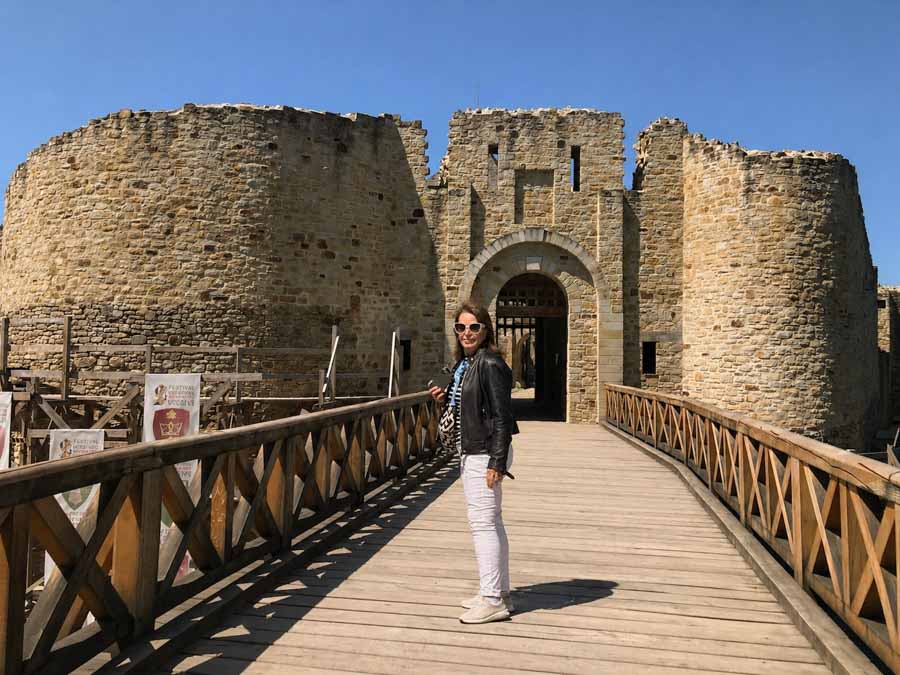
After Stephen’s death in 1504 the fortress declined, was destroyed by a 1684 earthquake, and lay in ruins for two centuries. Restoration began in the early 1900s, with major reconstruction in the 1960s and a final EU-funded restoration completed in 2015. Today it’s one of Moldavia’s most-visited sites, with exhibitions of medieval weaponry, the voivodes’ hall lined with the thrones of Moldavia’s ruling princes, and sweeping views over the Suceava River.
Practical info: Located in the city of Suceava, in northeastern Romania (Bucovina region). Easily walkable from the city center. Pair your visit with the nearby painted monasteries of Bucovina — Voroneț, Sucevița, and Humor — which are UNESCO World Heritage Sites.
12. Ruginoasa Palace (Cuza’s Royal Residence)
Just 60 km west of Iași, Ruginoasa Palace has the kind of layered history that turns a building into a national symbol. It was built between 1804 and 1811 by Săndulache Sturdza as a Neoclassical residence.
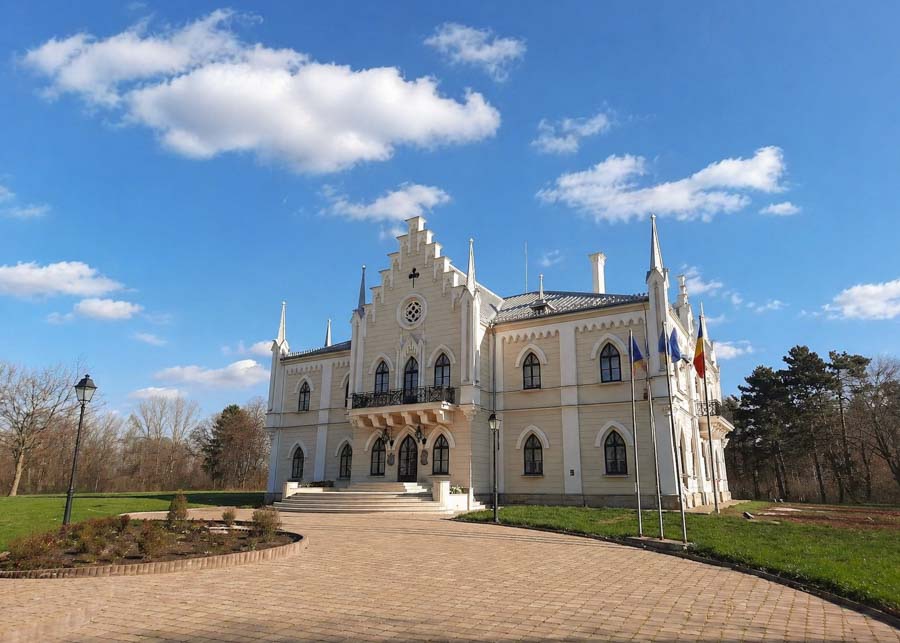
What makes Ruginoasa unforgettable is who lived here next. In 1862 Alexandru Ioan Cuza, the first ruler of the United Romanian Principalities, bought the palace for his summer residence. His wife Elena Cuza furnished it from Paris with Sèvres porcelain, Baccarat crystal, Venetian mirrors, and Louis XV salons. In 1866 Cuza had to abdicate and he died in exile. However, his body was later returned to Ruginoasa and buried in the Royal Church beside the palace.
At the beginning of 20th century the estate became a children’s hospital, then a tuberculosis sanatorium. Then, after the World War II, it began deteriorating and remained in ruins. In 1982, the palace became Alexandru Ioan Cuza Memorial Museum. It was only in 2019 that Ruginoasa Palace received a final restoration that returned it close to its 19th-century glory.
Practical info: Located in Ruginoasa village, between Târgu Frumos and Pașcani, about 60 km from Iași. Open Tuesday through Sunday. Pair with a visit to nearby Sturdza Castle in Miclăușeni. The two were built by the same family and tell two halves of the same Moldavian story.
Most Beautiful Fortresses and Citadels to Visit in Romania
Romania’s fortresses may not be as famous as Bran or Peleș castles, but they tell some of the country’s most fascinating stories. Built by Saxon villagers, Transylvanian princes, and Habsburg emperors between the 13th and 18th centuries, they were the last line of defense against Ottoman, Tatar, and Hungarian invasions. They also offer a slower and more personal way to experience Romania’s history.
13. The Citadel of Alba Iulia
The Citadel of Alba Iulia is a textbook example of Vauban-style military architecture and one of the largest fortifications in Romania. Its history stretches back to the Roman period, when the city was a major settlement known Apulum.
In the Middle Ages Alba Iulia served as the capital of the independent Principality of Transylvania and the residence of the Transylvanian princes. The fortress that you see today was erected by Charles VI of Habsburg in the 18th century, replacing the old medieval walls.
In the second part of the 19th century, the municipality demolished most of the fortress’s walls and bastions in order to make room for the modern city. During the communist era, the fortress fell into complete neglect because of the lack of funds for repairs.
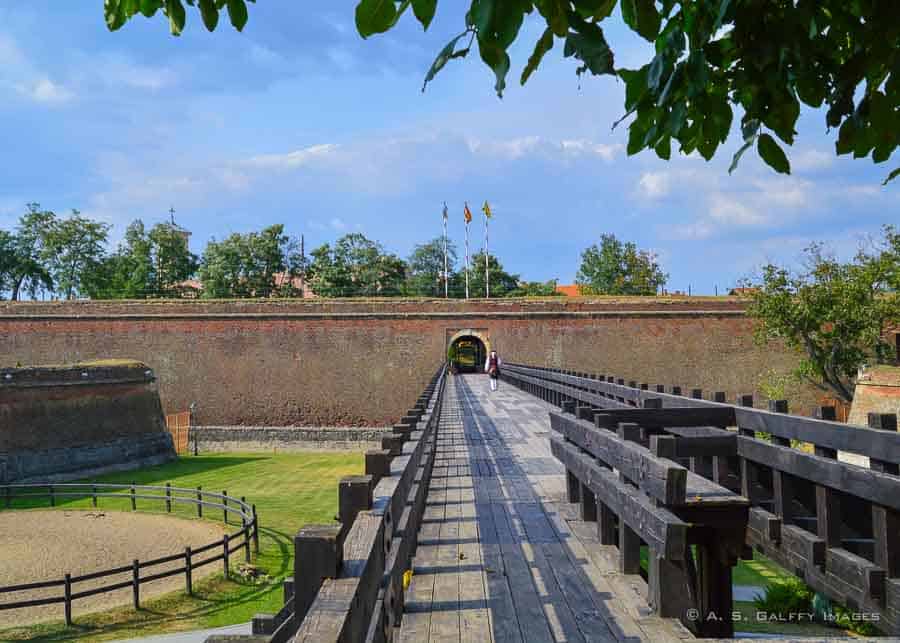
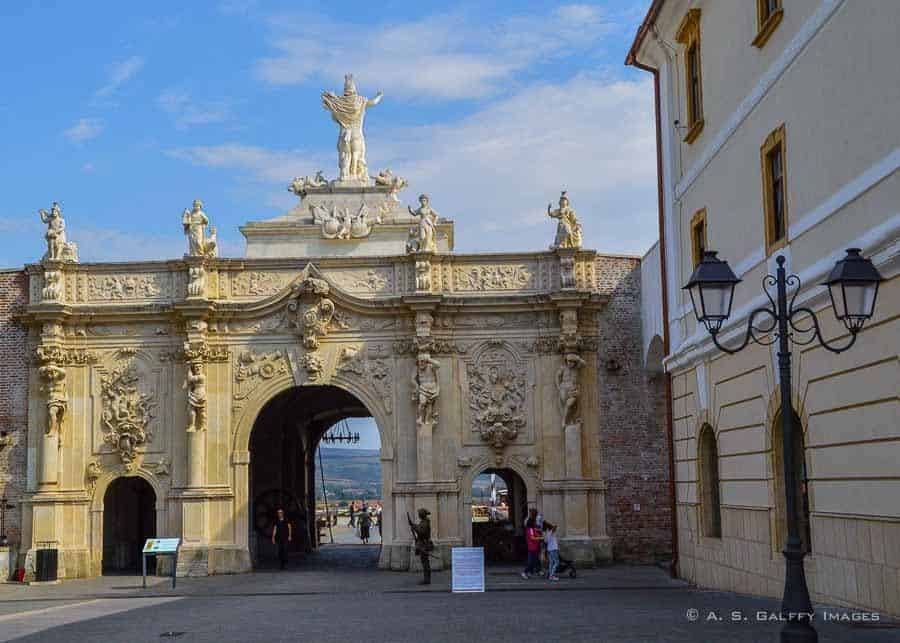
The citadel restoration you see today is relatively recent, but due to it Alba Iulia became one of the most visited fortresses in Romania. Three of the original six early Baroque gates are still standing, each one richly ornate and worth seeing.
Practical info: The citadel grounds are open day and night and free to walk. The museums inside (Union Museum, Principia Museum, Coronation Cathedral Tower) keep separate hours, generally Tuesday to Sunday, 10:00–18:00 in summer and 10:00–17:00 in winter. Don’t miss the changing of the guard ceremony at noon between May and September.
14. The Fortress of Râsnov
Just outside the city of Brașov sits one of the best-preserved medieval fortifications in Romania: the Fortress of Râsnov. Built in the 13th century, it originally belonged to the Teutonic Knights, who were brought here to defend the southeastern border of Transylvania.
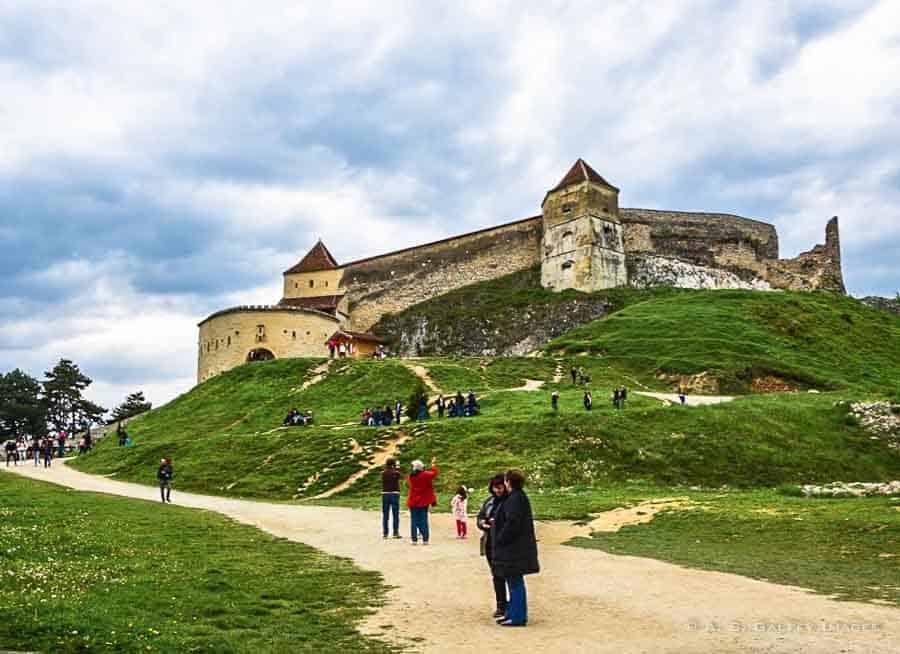
One of Râsnov’s most enduring legends tells of a long siege during which the citizens asked two Turkish prisoners to dig a well in the center of the fortress. Because the work was so tedious, they promised the prisoners their freedom once they finished the job.
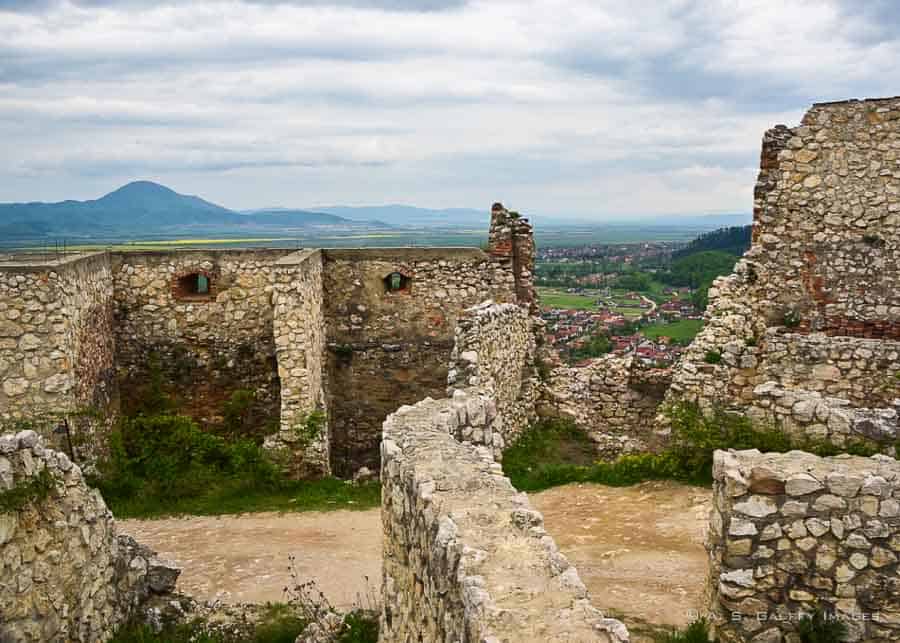
Finally, after 17 years, the two Turkish prisoners managed to finish the well. But unfortunately the citizens of Râsnov didn’t keep their word. Not only they did not release the prisoners, but in the end they killed them. The famous 146 meter deep well still sits in the center of the fortress, as a symbol of betrayal.
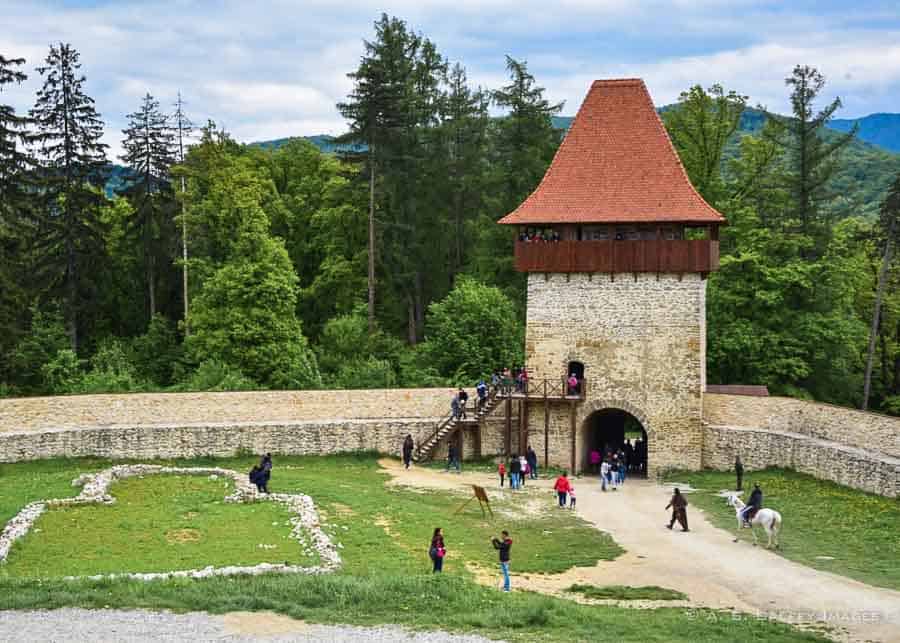
Râsnov has been beautifully restored over the past two decades, and a small museum inside displays artifacts from the fortress’s long history. The views from the upper walls over the surrounding valley are worth the climb on their own.
Practical info: Open daily, with longer hours in summer. The adult ticket is around 30 lei. Râsnov sits only 15 minutes from Bran Castle, making the two an easy and popular pairing for a single day from Brașov.
15. The Fortress of Slimnic
Completed in the 14th century, the Fortress of Slimnic served as a refuge for the Saxon communities of the surrounding region. To build it, the Saxons reused bricks from an older fortification, raising first a Gothic chapel and the bell tower that still stands today.
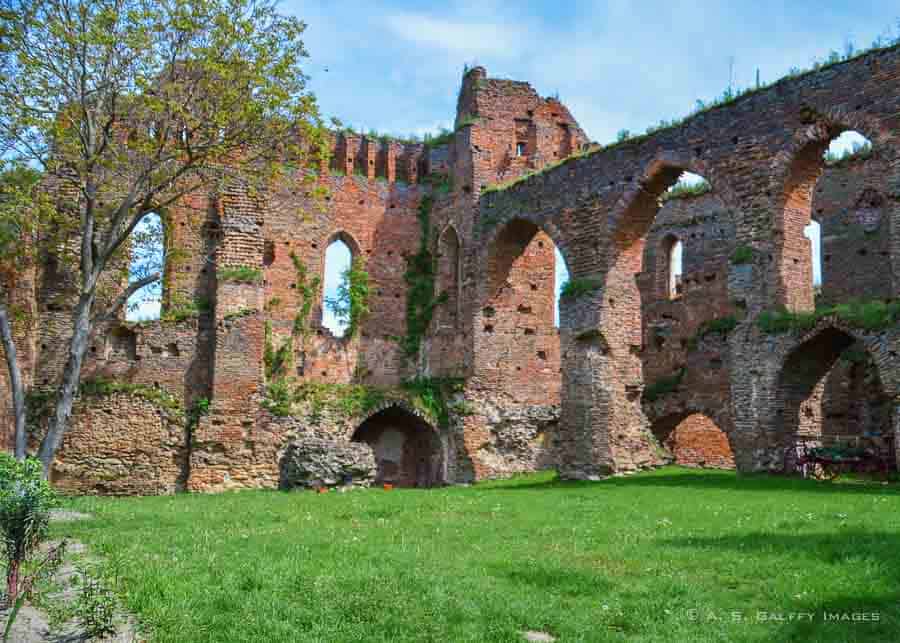
The western wall, with its crenels and loopholes, dates from the 15th century. During the 16th century the fortress was extended and reinforced again to better resist the increasingly frequent attacks from the south.
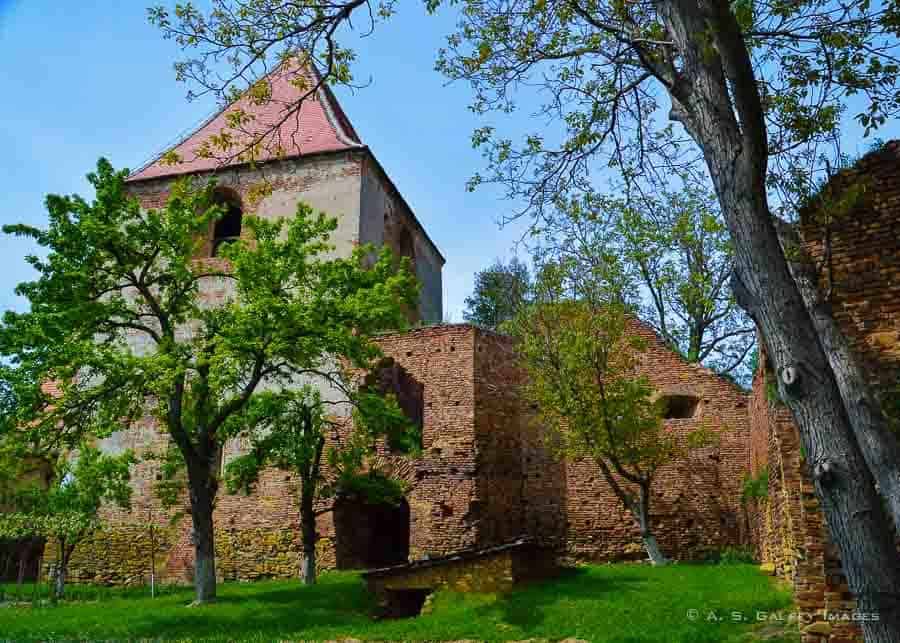
Over the centuries Slimnic was besieged repeatedly, first by the Ottomans and later by the Hungarians. The repeated attacks destroyed most of the second ring wall that surrounded the parish church. In the 18th century, after the rebels of Francis II Rákóczi set it on fire, the fortress was abandoned for good.
Practical info: Located only 10 kilometers north of Sibiu, off the main road to Mediaș. The entrance fee is just a few lei, and the fortress can be reached on foot from the village center or by car. Allow about an hour for the visit, including the climb up the bell tower for the view.
YOU MAY ALSO LIKE: 10 Spectacular Castles to Visit on the Loire Valley
16. The Fortress of Rupea
Established by the Saxons in the 13th century, the Fortress of Rupea is one of the oldest medieval sites in Transylvania. The Hungarians called it Köhalom, meaning “mound of rocks,” a name that perfectly captures its setting on a basalt outcrop above the surrounding plain.
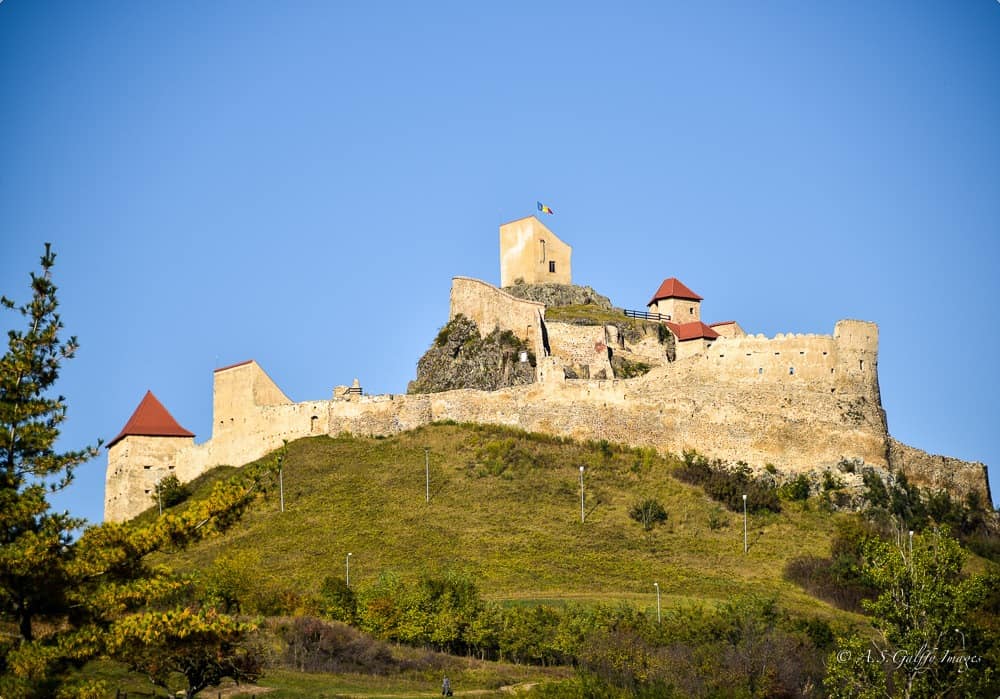
At its height, almost 400 people lived self-sufficiently inside the walls of Rupea. They had everything they needed to survive a siege: a market, a fountain, a parish, a chapel, and even a so-called “bacon tower” where they stored their meat reserves.
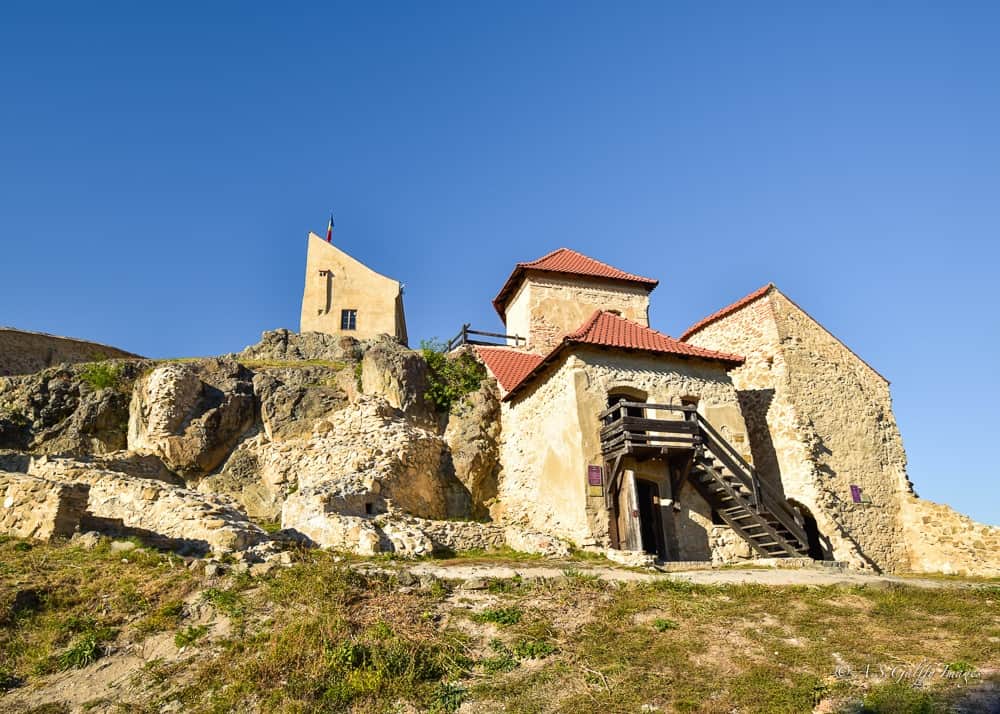
The fortress also served as a refuge for the inhabitants of the surrounding villages whenever attackers approached. Despite once being one of Transylvania’s most important citadels, Rupea was slowly abandoned, and by the end of the 19th century it had crumbled into a pile of rocks.
During the Communist era the ruins barely escaped total demolition. After 1990, local authorities tried several times to restore the site, but the lack of funds delayed the work for more than two decades. Finally, in 2013, Rupea reopened after extensive renovations, and today it is one of the most visited landmarks in Brașov county.
Practical info: Open daily year-round, with extended hours in spring and summer. The adult ticket is around 15 lei, and parking at the base of the hill is free. Rupea makes a perfect stop on the road between Brașov and Sighișoara.
17. The Church-Fortress of Biertan
Located in Sibiu County, Biertan is a typical Saxon village and home to one of the most imposing fortified churches in Transylvania. The fortress-church of Biertan was first mentioned in a 1486 document of King Matthias Corvinus and is today a UNESCO World Heritage Site.
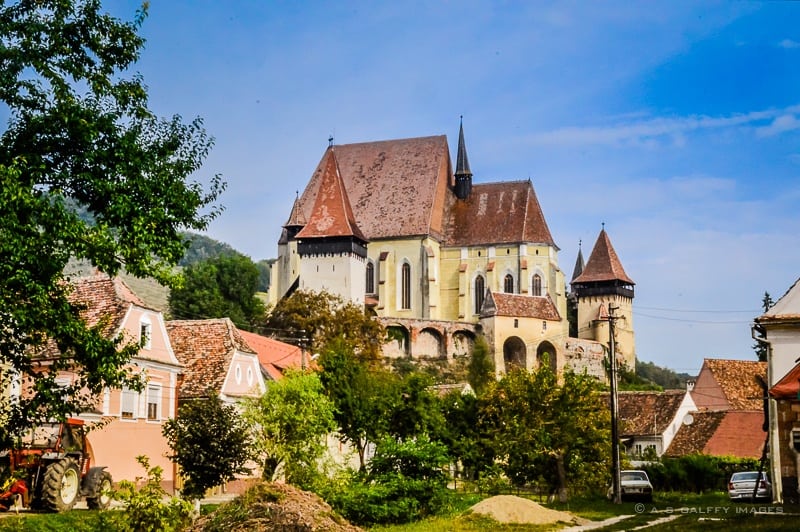
Fortified churches like Biertan were the spiritual and defensive heart of their villages, where the inhabitants would retreat whenever an attack threatened. Because the thick stone walls stayed cool year-round, the villagers also stored dry food such as flour and bacon inside the church and used it during long sieges.
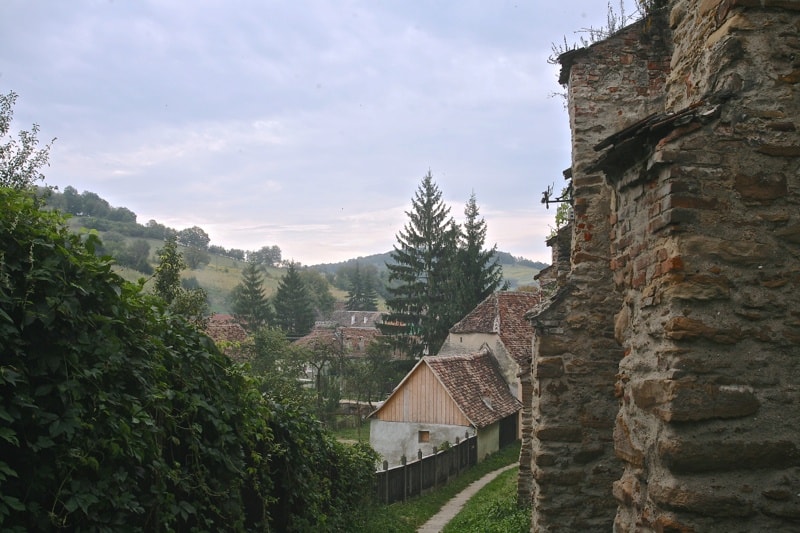
The fortress has three exterior walls and five towers, each one with its own story and purpose. The bacon tower, the prison tower, and the mausoleum tower are among the most fascinating to explore.
Practical info: Open from April through October, Tuesday to Sunday, with a midday closure between 13:00 and 14:00. The entrance fee is around 15 lei. The church is closed to visitors from November through March.
READ NEXT: Curtea de Arges Cathedral – From Legend to History and Back
18. The Ruins of the Fortress of Saschiz
The village of Saschiz is best known for its medieval fortress and fortified church, both built by the Saxons — a population of German origin who settled in Transylvania when the region was part of Hungary. The ruins of the 14th-century fortress sit atop a hill overlooking the village, and although much of it has crumbled, you can still walk along a good portion of the old walls.
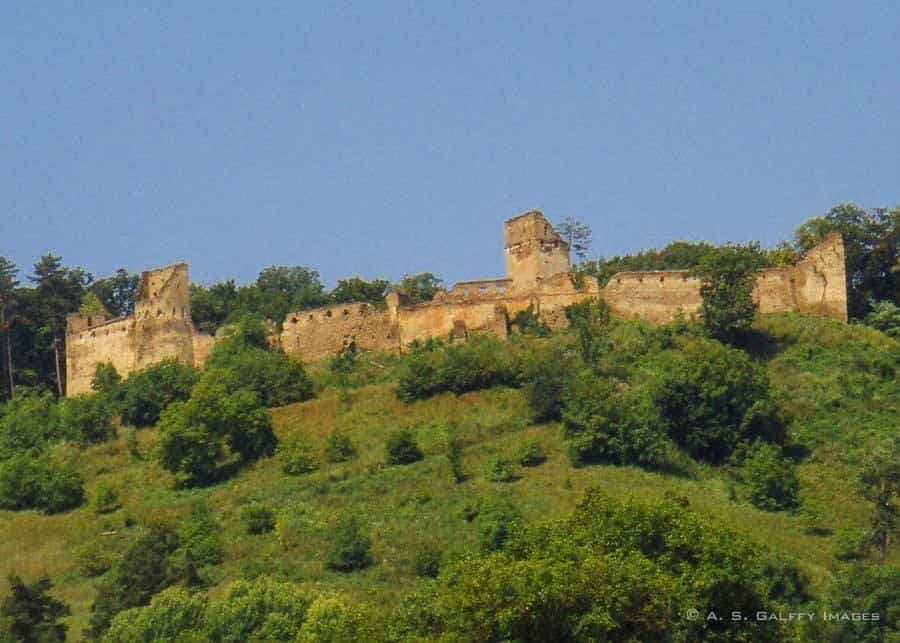
Few visitors to Romania ever make it up to these ghostly ruins, partly because the access is unmarked and the path is unsigned. For travelers willing to seek it out, however, Saschiz offers one of the most atmospheric and unspoiled experiences in the region.
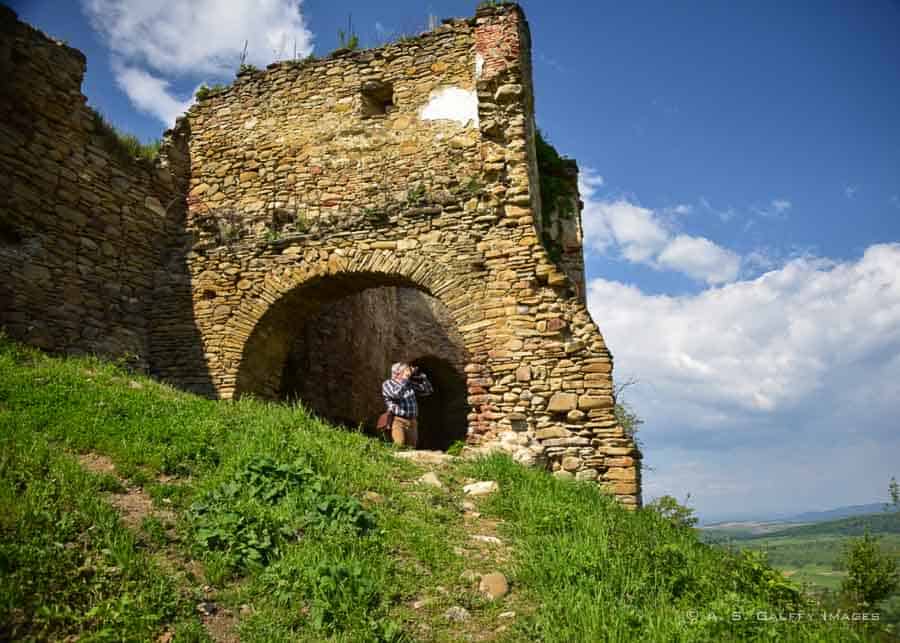
A small dirt road leads out of the village center toward the fortress. Part of it is drivable, and the rest is a gentle 15-minute walk through the forest. The path is easy to follow and the climb is well worth the effort.
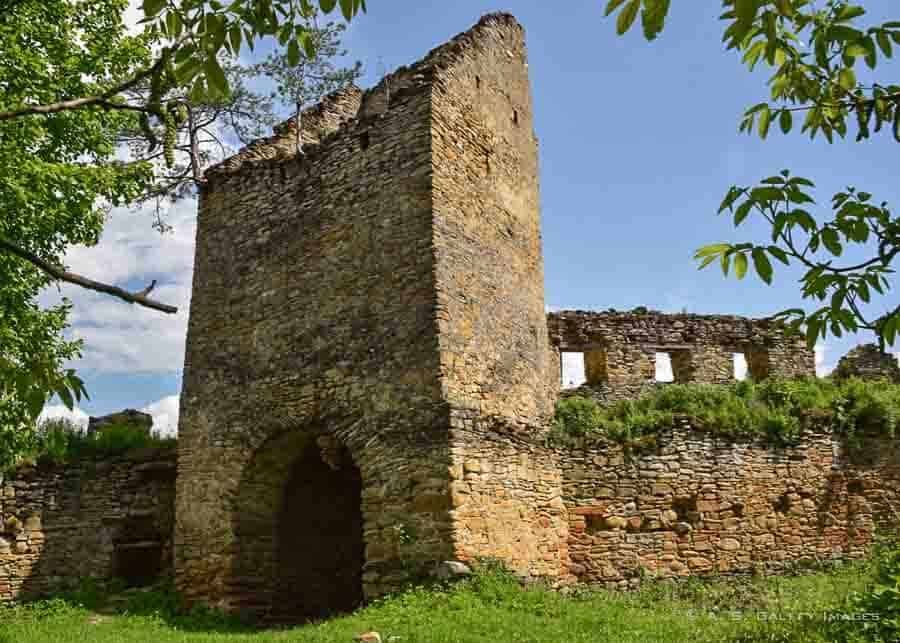
From the top, you have a sweeping view of the village below and the elegant clock tower of the Saschiz fortified church. You can also spot the tower from the European road (E60) that runs through the center of the village.
Practical info: The fortress is freely accessible year-round but is currently being restored and may be closed inside the walls. Wear sturdy shoes for the forest path. Saschiz village itself is on the UNESCO World Heritage list and sits about 20 minutes from Sighișoara on the main Brașov road.
Final Thoughts
Romania’s castles and fortresses are more than beautiful buildings, they are echoes of a turbulent, fascinating history written in stone. From the fairytale turrets of Peleș and the legend-shrouded walls of Bran, to the proud medieval fortresses of Râsnov and Slimnic standing guard over Transylvania, each one tells its own story of the kings, defenders, and dreamers who shaped this land.
Whether you have a single day for a Transylvania road trip or a full week to wander the royal residences and hilltop ruins, you’ll find that these places stay with you long after you leave. Pick the ones that speak to you, take your time, and let Romania’s castles surprise you, because they surely will.
YOU MAY ALSO LIKE:
 How to Plan a Perfect Day Trip to Toledo from Madrid





Muzz
Very inspiring medieval architecture. I love the list you have compiled. I’ve never really thought about Romania but after reading this and going through your photos I would love to go to Romania one day.
Rob+Ann @TravelLatte(.net)
Ooooh my gosh. Corvin Castle! #swoon That really is a fairy tale setting. We have never been to Romania, but we definitely feel the country calling us. And when we go, we’re taking this list so we don’t miss these awesome castles! Great list Anda – we really enjoyed it!
Anda Galffy
Thanks, Rob.
Bryna - Dotted Line Travels
They’re all so beautiful, I wouldn’t even know which ones I would pick to visit if I ever got the chance. Of course, I hope to visit them all!
David
What a great list Anda! I’ve been to Bran, Peles, Corvin and Rasnov and each really impressed me. I was quite disappointed that I didn’t see Biertan, so its definitely my most anticipated for next time. I wasn’t familiar with Saschiz so that has gone on my list.
Anda Galffy
Thanks for your comment, David. Romania is pretty close to you, so it’s easy to go back and visit more of these castles.
Mary {The World Is A Book}
I never realized there were these many beautiful castles and fortresses in Romania. I have such a fascination with European castles and I’d love to visit these someday. I really love how Hunyadi looks. Straight out of a fairytale book. WHat a great and interesting post and beautiful photos, Anda.
Anna
I´ve really wanted to visit the Peleș for so long since I saw somewhere its gorgeous interiors!!! I didn´t realize there were so many beautiful medieval castles and fortresses. I guess most of the people only know the Bran Castle and of course, the Transylvanian area is famous because of Dracula, but Romania really has much more to offer. Hope to visit soon!
Janice & George (SandInMySuitcase)
We love exploring old castles and palaces, especially if they’re furnished to show you how lavishly the inhabitants lived! Peles Castle looks particularly beautiful :-).
Anda Galffy
Yes, indeed, Janice. Peles Castle is one of those where furniture was still left intact after all these years.
Alice V
Wow, Romania looks so beautiful! And so rich in history, it’s been on my bucket list since I was a teenager.
California Globetrotter
You’ve put together a wonderful list! We were quite lucky enough to manage to see 3 of them in our short time in Romania. I had wanted to visit Mogosoaia Palace while we were there but couldn’t fit it in! Next time though! Some of these though I haven’t heard of yet and will be adding them to my list!
Anda Galffy
It’s great that you could see some of these castles, Lolo.
Esther
Oh wow, I love this article. Over the years I have read so many great things about Romania and seen so many wonderful photos. This article, too, proves that it is a destination I simply must get to!
Anda Galffy
Glad to know you liked my article, Esther.
Victoria
Anda, we just came back from our Romanian trip! we only had a week and included two of the castles on your list. We also visited some medieval towns, Bucharest, the mountains and a sea break. There is so much diverse beauty!
Anda Galffy
I’m glad you had a good trip to Romania, Victoria. I’m going to go there too in October.
Paul
This is a great post. The history is very interesting. We were in Istanbul recently and the whole Ottoman backstory is so fascinating.
Anisa
I have to admit I don’t know much about Romania. I have heard of Bran’s Castle but the rest of these are new to me. They all look amazing. Hopefully, I can make it to Romania at some point.
Emese
Isn’t it amazing how beautiful these castles are, restored? Other than the Mogosoaia, I’ve visited them all over the years, some of them before they were reconstructed. Last time I took my family to Risnov and Rupea, I barely recognized them. I’m disappointed by the way they turned Bran into this huge tourist trap though, but I guess it was inevitable. I’m glad though that the other castles, once lesser-known, are reconstructed and enjoyed. So much history there! Love your photos, they are gorgeous!
Anda Galffy
Thanks, Emese. I like revisiting some of these castles once in a while.
Lorri
Lovely post! Did you drive in Romania? How are the roads? I’ve not yet driven in eastern Europe and hope to change that in the near future! This post certainly has whetted my appetite to visit Romania. Beautiful!
Anda Galffy
The roads are OK, Lorri. Romania has highways and even a couple of freeways, but unfortunately the highways go through villages where the speed is reduced and where you can encounter bicycles and sometimes horse-drawn carts.
Photo(Geo)grapher
Fascinating post! These castles look extraordinary.
Linda Bibb
Well, I must hand it to the people who market Bran Castle to tourists, because it’s certainly got the Dracula market cornered. 🙂 My cousin has always been an aficionado of the book and could probably write a tome about all the facts and legends surrounding Vlad III, who inspired Bram Stoker’s famous character.
I’m guessing you’ve not visited Poenari Castle, Vlad’s home (it’s in Arges County). It’s just ruins now, but even if it were restored it is hard to imagine that it could ever have been as beautiful as the stunning castles you shared in this post. Until now I’ve wanted to visit Romania simply for the Transylvanian scenery, Roma culture and the painted churches. I can see there’s so much more to appreciate than even that. I guess we’ll need to plan to spend even more time there.
Anda Galffy
Now is the best time to plan a trip to Romania, Linda, while it’s still cheap. It’s a beautiful country and I’m sure you’ll enjoy it a lot.
Suze - Luxury Columnist
I visited Romania before starting my blog and this has really made me want to return. Like you, Anda, I was impressed by those amazing castles and the sense of time having stood still
Anda Galffy
Romania has come a long way from the time I’ve been there, Suze. I see surprisingly good changes every year, which are a sign that the country is on its way to recovery from the scars of Communism.
Jeremy
Looking forward to seeing these forts and castles when I get to seeing Eastern Europe … next summer perhaps!
Rhonda Albom
I remember that perfect 10, and yes, it probably was all I knew about Romania (other than Dracula) as a child. I love medieval castles and fortresses, and these are all beautiful and interesting. So much history. My youngest daughter has Romania high on her list, so we will probably get there before she is grown.
Anda Galffy
Make sure you do, Rhonda. You’ll love Romania, especially the northern part of the country.
Clare (Suitcases and Sandcastles)
These castles look extraordinary. Romania will no doubt get a huge influx of tourists if you keep writing posts like this and the one you wrote about the monastery last week. I particularly like the look of that village, Sashchiz. So pretty!
Anda Galffy
Ha,ha,ha! I may be driving some tourists to Romania with these posts, but I don’t think they will be sorry. Tourism is just beginning there and Romania is still very cheap. Really worth going now.
Maggie
Really enjoyed reading about the history of Romania. I had no idea the that the scenery was so beautiful or the towns, fortresses and villages were so fascinating.
Anda Galffy
It really is beautiful. And these are not even the most beautiful castles that Romania has. There are many more.
Ahila
I have been quite interested in visiting Romania for several years now ever since seeing beautiful photos from my friends’ visits. Your informative post on castles and fortresses, especially the photos of Castle Bran and Saschiz, makes me want to plan for a trip in the near future. Thanks for hosting #TheWeeklyPostcard.
Anda Galffy
Thank you, Ahila. I’m glad to hear that my post and photos convinced you to go visit Romania.
Sally@Toddlers on Tour
I’m a sucker for castles, just love the medieval mystery about them.
I had no idea there were so many castles in Romania.
Debbra Dunning Brouillette
Fascinating post, Anda! Until reading your recent posts, I had no idea now beautiful Romania is! It looks like you had wonderful weather when you were there, and your photos are, as usual, wonderful!
Anda Galffy
I’m glad you liked it, Debbra. Romania has so many castles and fortresses that you can’t imagine. These are just a few of them and not even the most beautiful ones.
Michelle | michwanderlust
Wow, this is incredible. Medieval castles and fortresses have always fascinated me, seeing as we don’t have any of that in Singapore. Especially intriguing? The multipurpose fortified church. It doesn’t really look like a fortress! I have to confess that for the longest time whenever I heard “Transylvania”, I thought “Dracula”. My boyfriend went to Transylvania a few years back. He had some interesting stories about getting lost miles away from anywhere after dark. All ended well though. Great read, thank you!
Anda Galffy
Hope your boyfriend didn’t come with bad impressions from Romania, Michelle. Getting lost is not fun anywhere in the world, though…
Lydia C. Lee
This looks stunning – I’ve never really thought about Romania but it definitely looks worth checking out!! I hadn’t realised how ‘intact’ it was, historically. Fab photos and fab post! You’ve sold me!
Anda Galffy
Well, thank you Lydia! I think Romania should thank me for advertising it so much. I was actually born there and love going back once in a while.
Jessica @ Independent Travel Cats
Romania always seem to look so green and beautiful! I went to graduate school with someone from Transylvania who has since moved back and tells me I need to come visit. Romania is definitely one of those places I look forward to exploring in the future!
Anda Galffy
You should take advantage of your friend being in Transylvania, Jessica. She could show you the beautiful sites in Romania.