

Sustainable travel has become the magic phrase that’s supposed to make us feel better about seeing the world. National Geographic has a clear overview of what sustainable travel is supposed to mean. We book “eco” hotels, reuse our towels, buy a carbon offset, and tell ourselves we’re traveling responsibly. Yet if you look a little closer at how tourism actually works, most of this feels more like theater than real change.
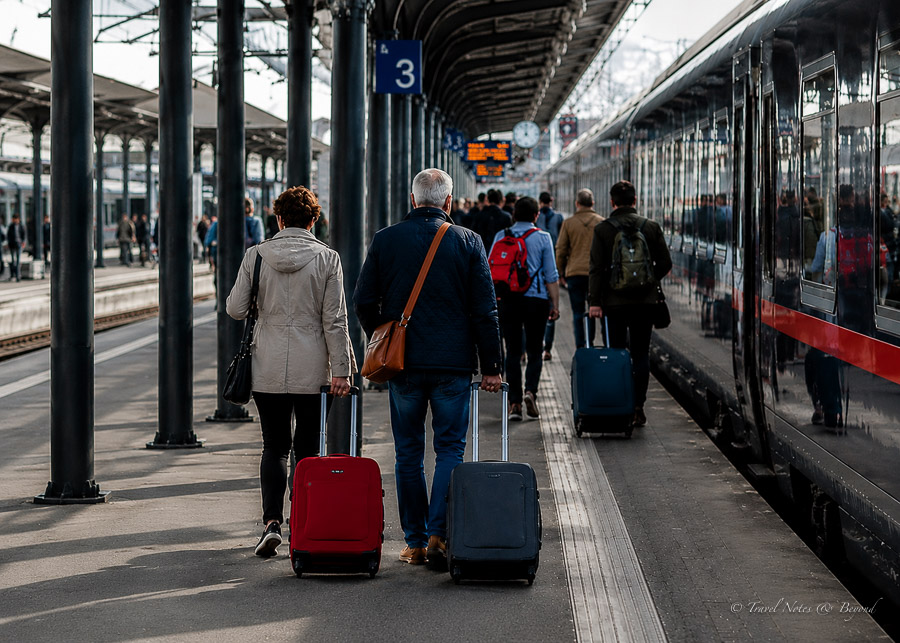
Over the past decade, I’ve watched the travel industry put a green label on just about everything. Airlines promote “climate-friendly” flights, resorts talk about their sustainability efforts, and tour companies add a few feel-good projects to their itineraries. But when you look past the marketing, not much has really changed. We still fly, we still use resources, and we still expect destinations to handle more and more visitors every year.
In this post, I want to look at what’s real and what’s just for show. I’m not arguing that we should stop traveling. I’m arguing that we should stop pretending our vacations are saving the planet and see what may actually be a “less harmful” way of traveling.
Why the “Sustainable Travel” Story Feels Off
When you strip away the marketing, travel is still built on the same foundation: more people flying more often, staying in energy-consuming accommodation, and visiting destinations that measure success in visitor numbers. Recent research shows that tourism emissions grow faster than the global economy. And a big share of that comes from aviation alone. So believe me, no hotel towel card or bamboo straw can balance that out!

At the same time, sustainability has become a sales tool. We are offered “eco” resorts and “responsible” tours without much explanation of what those words mean in practice. Many businesses highlight a few visible gestures, like refillable water stations, or a beach clean-up photo. But they completely leave out harder questions about visitor limits, land use, and who actually benefits from tourism.
As travelers, we mostly hear the positive story. We are told that our trip supports local communities, protects nature, or helps fight climate change, as long as we book the right kind of experience. What we rarely hear is the other side: the emissions from our flights, the strain on water and housing, or the pressure destinations feel to keep growing even when they are already too crowded. That gap between the comforting story and the full picture is where the “sustainable travel” label starts to feel more like theater to me, than truth.
When “Eco” Is Mostly for Show
I don’t know about you, but I’m a little fed up with how often the words “sustainable travel” and “eco” are used as a label rather than a real change. One of the things that bothers me most is the towel story. You arrive at a hotel where the towels are already worn and thin, and you’re kindly reminded to reuse them in order to “save the planet.” After one use they look more like cleaning rags, but you’re supposed to feel virtuous for hanging them back up.
If I’m in a four- or five‑star hotel with thick, clean towels, I don’t mind using them two or three times. That feels normal. What bothers me is seeing the same “sustainable” message in cheaper hotels, where the towels already feel tired and barely fresh after one use. In those rooms, “help the planet” sounds less like a real concern and more like a way to cut laundry costs while you are encouraged to feel good about it.

And all this show, for what? Does it really save the planet, or make your stay cheaper? If anything, it saves the hotel some work and laundry costs while room prices keep climbing. The slogan sounds good, but it’s hard to see how this kind of “eco” gesture does much more than reduce the housekeeping schedule.
Over the years, this kind of messaging has started to irritate me so much that I often do just the opposite. Instead of feeling inspired to “help the environment,” I end up changing towels every day just because I’m annoyed by the performative tone. When “eco” is used as pressure on the guest while the bigger decisions stay the same, it often has the opposite effect from what it claims to seek.
What Would Actually Make a Trip Less Harmful
If I’m honest, the things that really lower a trip’s impact aren’t the ones hotels print on their bathroom cards. They’re the bigger decisions: how often we fly, how far we go, and how we get around once we’re there.
Over the years, I’ve noticed that the trips where I stayed longer and flew less often felt better on every level. A single long-haul flight has a big footprint, and stacking several short trips in a year adds up fast. When I choose one longer stay instead of three quick getaways, I’m not turning my trip into a climate solution, but I am cutting the number of flights and the back-and-forth. That’s a small step toward more sustainable travel.
The same goes for timing. In an ideal world we’d all visit popular places outside the busiest weeks, but that’s not always possible. Many families travel in peak season because that’s when school holidays fall, even though prices are higher, the weather hotter, and the crowds worse. For a lot of people, that window is the only time they can go.
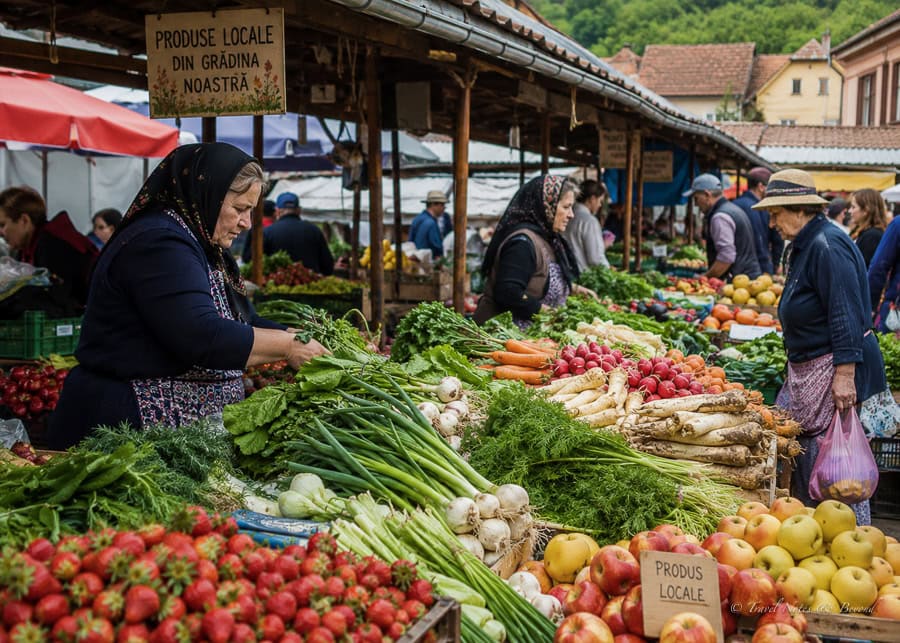
Day-to-day choices matter too. I try to stay in locally owned places, book tours that clearly explain how they pay and who they support, and skip crowded spots for underrated ones instead of adding one more body.
What “Sustainable Travel” Looks Like in Real Life
On paper, “sustainable tourism” makes you feel like you’re joining a noble mission, not just going on holiday. It tells you you’re helping fix the planet while you sip your drink and watch the sunset, but the reality is far from it!
Last summer, when we traveled to Mykonos and Santorini, I saw what “sustainability” looks like in real life. The brochures speak about careful development and eco‑friendly choices, but these small islands felt more like theme parks on a Sunday. For a quieter alternative, the Ionian Islands still feel like the Greece, but with fewer crowds and more room to breathe.
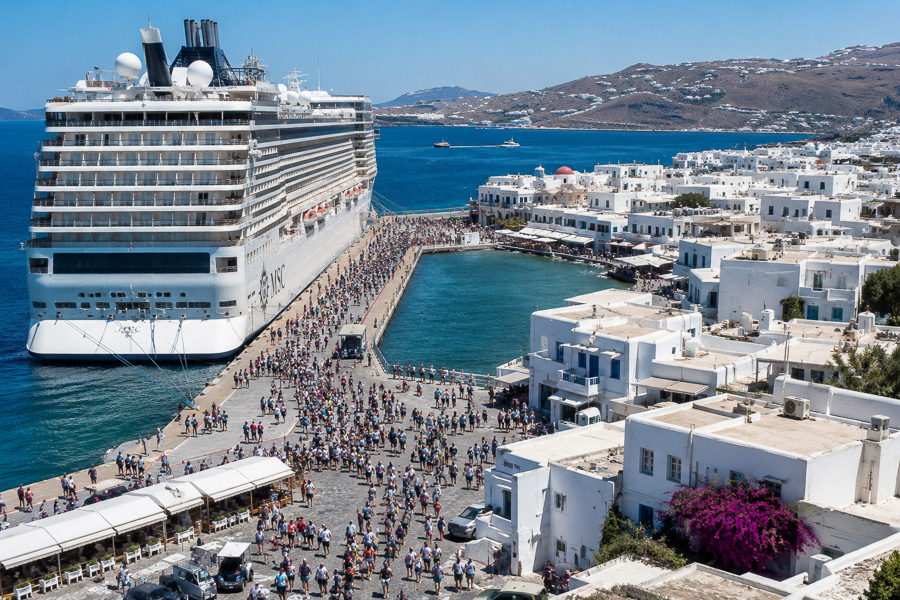
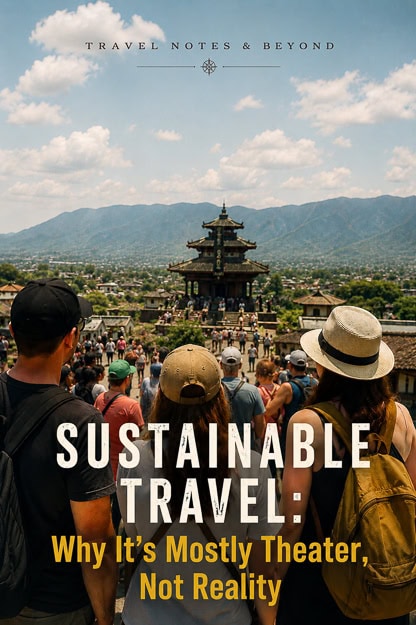
Cruise ships unloaded thousands of people every single day. Tour buses poured hundreds more into the same few streets, the same sunset spots, the same beaches. Any idea of quiet or “low‑impact” travel vanished the moment you tried to walk through town or find a place to swim.
So when I hear “eco tourism” used in the same breath as these islands, I struggle to see where it fits. If this is the model, then “sustainable travel” sits very close to overtourism. Or maybe it’s just a story we tell ourselves about the trip, not a fair description of what happens on the ground.
And this is just one small corner of the map. The language is similar in many “must‑see” places that sell themselves as “sustainable” or “responsible.” The brochures promise growth with lower impact. The reality looks more like bigger numbers pushed through the same narrow streets and fragile landscapes. You still get the sunsets, the photos, and the feeling that you did something good for the planet. But in reality, the planet mostly gets more planes, more ships, and more pressure.
When the Numbers Don’t Match the Story
The story says that travel can keep growing, as long as people make “better” choices, but the numbers sound less hopeful. In the past years, tourism emissions have grown faster than emissions from the wider economy. So, travel got bigger much quicker than it got cleaner.
We hear about greener hotels and more efficient planes. What we mainly built instead is more trips, more routes, and more seats to fill. It’s hard to call that progress. It looks more like business as usual with a new ‘sustainable’ label slapped on it.

A big part of that volume game happens in the sky. Once you fly long‑haul for a short break, most “eco” gestures become insignificant. Yes, you can reuse towels, carry a metal bottle, and pick the “green” hotel. But the flight will still do most of the work for your footprint. We rarely say this out loud, because it doesn’t fit the upbeat travel story. It does fit the math.
What Might Actually Help, a Little
If there is any “eco” in how we travel, it probably starts with distance and pace. Fewer flights, closer trips, and longer stays in fewer places do more than another “green” sticker on a hotel. Choosing trains or buses when you can, and skipping one or two weekend hops each year, cuts more than towel reuse ever will.
It also helps when more of your money stays with smaller, local businesses instead of global chains built to extract as much as possible. Truth is though, none of this saves travel, or the planet. It just nudges things a bit away from the worst version of the story.
Reconciling This Advice With Real Life
I don’t think the answer is to stay home forever. Most of us need a break, a change of scene, a few days when life doesn’t look like the usual routine. The point isn’t to cancel joy; it’s to be more honest about the cost of how we chase it.
We should still travel. The shift I’m arguing for is to travel less frantically, less often, and with a bit more purpose about how and where. The solution to this “pollution” is not dilution; it’s reduction: fewer, slower trips instead of more, faster ones. The planet gets fewer flights, fewer rushed weekends, and a little less pressure from our need to escape.
Where Our Money Goes Matters Too
If we are going to spend money somewhere, we can at least notice where it lands. It’s one of the few parts of a trip we still control. Picking places owned by locals instead of big global brands means more of your visit pays for actual lives there, not just shareholders’ pockets.
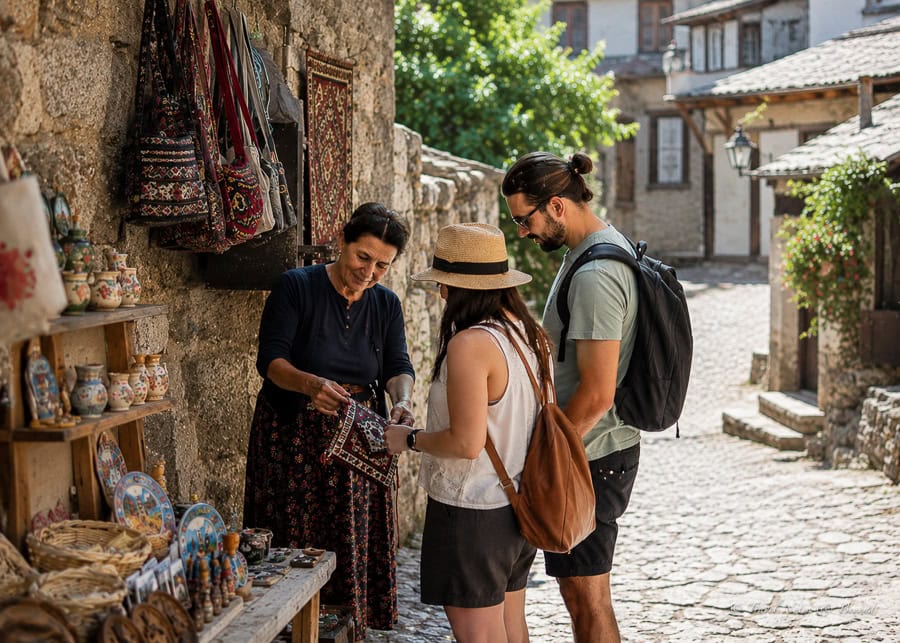
Buying food, tours, and everyday things from small shops and independent guides does the same.
It also means skipping the stuff that exists mainly for social media and visibly strains a place: animal shows, staged “traditions,” overcrowded viewpoints.
None of this turns a holiday into a moral triumph. It just means our money backs the place we are visiting more than the machinery that wears it down.

Final Thoughts
Maybe one day travel will become genuinely sustainable. I hope it does. But we are not there yet, and pretending otherwise doesn’t help anyone. Not travelers, not destinations, and certainly not the planet.
Until then, I’d rather look at travel honestly than pretend it’s something it isn’t. I’d rather hear that my flight has a cost than hear that a recycled key card somehow makes a difference. I’d rather see fewer marketing slogans and more honest conversations about what tourism gives, what it takes away, and what each of us can realistically do.
Travel doesn’t have to be perfect to be worthwhile. Just approach it with open eyes. Because in the end, honesty is a far better compass than any “green” label.
YOU MAY ALSO LIKE:
 Overtourism: Are You Really Part of the Problem?





Ali
Totally agree. For me, sustainable travel is more about traveling slower, staying longer, and making sure local communities actually benefit. Trekking in places like the Karakoram really makes you think about the impact of tourism and why responsible local operators matter.