
If you traveled through Europe you surely must have heard church bells ringing at noon. It’s something you can’t miss, whether it’s the glorious sound of the huge cast bells of the cathedrals, or the less imposing ding-dong ringing of the smaller churches.
Most travelers assume that bell tolling in Europe simply marks the hour, or calls people to church. But it’s not so. That midday peal is the echo of an order given more than 560 years ago by Pope Callixtus III , who commanded every church in Europe to ring at noon and pray, as the Ottoman army stood at the gates of Belgrade. In Hungary, people may know the reason better than most, because the victory that followed was theirs. But across the rest of Europe, although the bells still ring, few who hear them really know the meaning.
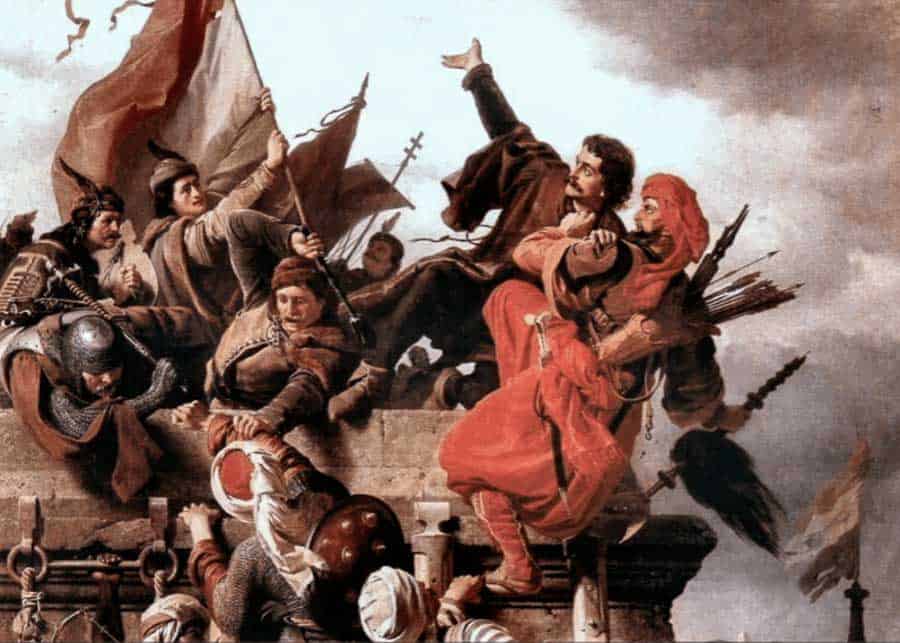
Of course, the bells toll for a variety of liturgical purposes. Like weddings, baptisms, or funerals. They also ring for the purpose of calling the people to prayer. But did you ever wonder why do the church bells toll every day at noon in ALL the churches of Europe?
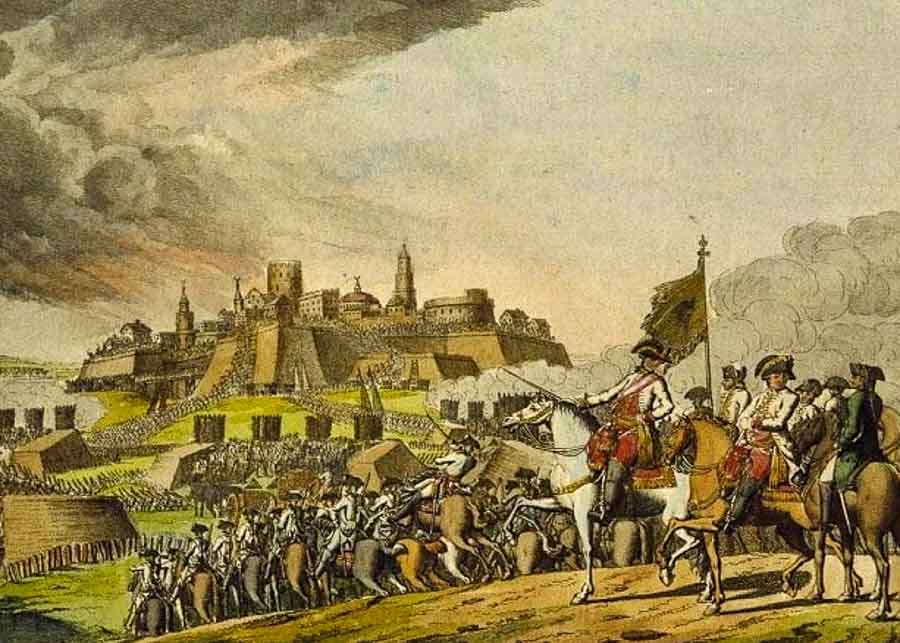
Why Do Church Bells Ring at Noon in Europe?
The noon church bell tolling has a specific historical significance that not many people know about. For those of you less acquainted with the history of Europe, I will have to bring up the Siege of Belgrade, a military blockade that occurred in 1456. During the siege, the Ottoman Sultan Mehmed II mobilized his armies in an attempt to crush the Kingdom of Hungary.
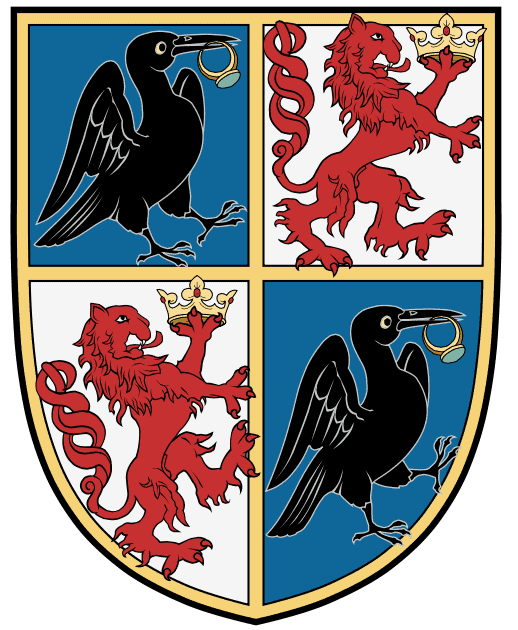
The Siege of Belgrade
The Siege of Belgrade was a major issue for the entire Europe, especially after the fall of Constantinople in 1453. The fall of the fortress city of Belgrade would have opened the gates of Europe to the Turks and that would have certainly changed the history of the world.
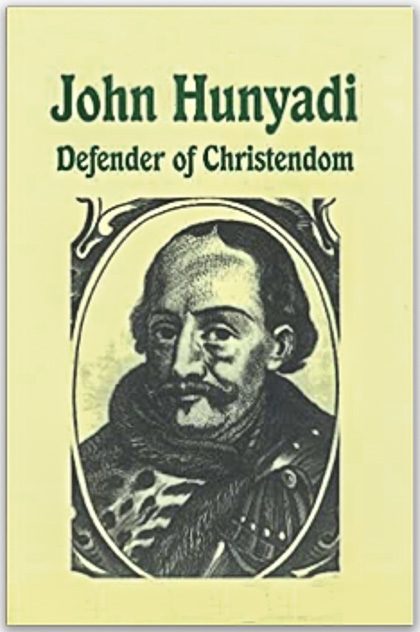
In 1453 Hungary was in a difficult situation, as it had no strong centralized kingship. The Kingdom had been torn by rivalries in the years preceding the battle. The most powerful of these leaders was János Hunyadi, the Voivode of Transylvania, who had fought many battles against the Ottomans before.
Seeing the fall of Constantinople and the imminent invasion of the Turks, Hunyadi quickly tried to make peace with his enemies and united the Hungarians against the aggressor.
But none of his rivals was willing to assist him in the battle. Thus, Hunyadi stood alone against the Ottomans at Belgrade. His main support came not from his fellow nobles but from an unlikely source: a fiery Franciscan friar named John of Capistrano, who rallied a ragtag army of peasants, armed with little more than farm tools and faith, to march to the city’s defense.
The siege turned into a major battle, during which Hunyadi led a sudden attack that overran the Ottoman camp. Sultan Mehmed the Conqueror received a severe wound during that battle that forced him to retreat. The Turkish advance came to a halt that lasted for the next 70 years.
The victory came at a terrible cost. Within weeks, plague swept through the exhausted defenders’ camp. Hunyadi died of it in August 1456, only weeks after his triumph, and John of Capistrano followed him to the grave that same autumn. The two men who had saved Belgrade — and arguably Europe — did not live to see the year out.
Commemorating the Victory Against the Turks
Now you may wonder what can be the connection between the Siege of Belgrade and the church bells ringing at noon.
Well, history says that during the siege Pope Callixtus III asked all Catholic kingdoms in Europe to pray for the victory of the defenders. On 29 June 1456, he issued a papal bull known as Cum his superioribus annis (‘The Prayer Bull’), ordering every church to toll its bells at noon as a daily call to prayer for Hunyadi and his troops. After the Turks have been defeated, prayers of thanksgiving were sung in churches all over Europe. This was a great victory for Christianity, so church bells sounded in celebration.
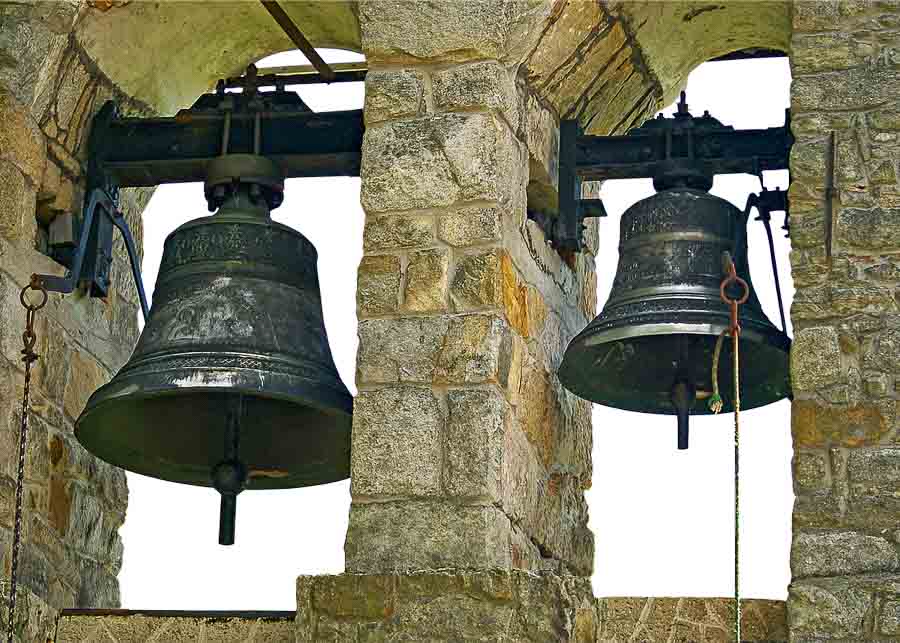
Initially the noon bell ringing ordered by Pope Callixtus III was a call to prayer for the defenders of Belgrade. But in many European countries the news of victory arrived before the Pope’s order for prayer, so the ringing of the church bells was believed to be in celebration of the victory. To this day, the significance of the noon bell is widely understood as a commemoration of Hunyadi’s victory against the Turks.
In fact, when news of the triumph reached Rome on 6 August, Callixtus III did not cancel his order; he reinterpreted it. The bells that had called Europe to pray for Belgrade would now also ring in thanksgiving for its deliverance. The prayer became a celebration, and the noon bell has rung ever since.
Although Belgrade eventually fell to the Turks in 1521, the Battle of Belgrade deserves to be remembered. Hungarians played a key role in the defense of Europe against the invasion of the Turks in the 15th century.
The Noon Bell and the Angelus Bell: Are They the Same?
If you have spent time in a Catholic country, you may have noticed that church bells also ring at noon time, but not only then. They also ring in the early morning, and again in the evening. This is the “Angelus bell,” a centuries-old Catholic devotion in which the faithful pause to pray three times a day: at roughly 6 a.m., noon, and 6 p.m.
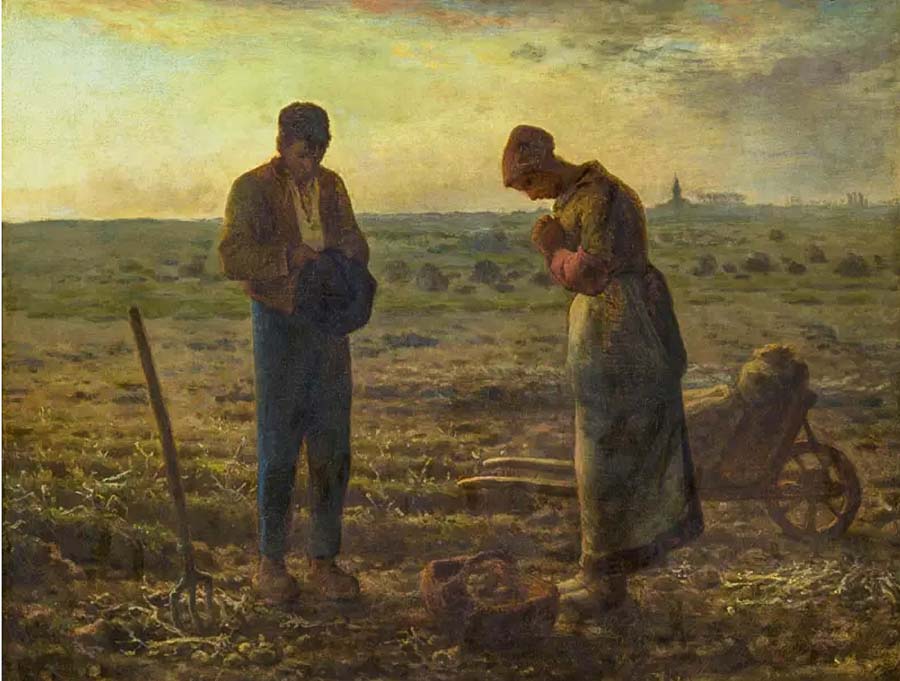
So is the famous noon bell you hear in the European churches the same thing as the Angelus bell, or is it the commemoration of the victory at Belgrade? The two are closely intertwined, but not identical. The Angelus tradition predates 1456 and was already established as a daily prayer. What Pope Callixtus III did with his 1456 bull was give the midday ringing a powerful new meaning: folding the call to pray for Belgrade into the existing rhythm of the noon bell. Over time, the two blended together in the popular memory.
This is why the noon bell carries a double identity: it is at the same time a call to the Angelus prayer and a centuries-old echo of the day Christian Europe held the line at Belgrade. And here lies the irony: very few people know its true meaning. Now, to be fair, in the United States you would not expect people to know because the bells rarely ring at all here. Besides, the Belgrade victory didn’t concern them.
But in Europe, where the noon bell sounds over the rooftops every single day, you would expect everybody to know. And yet, most people who hear it couldn’t tell you its meaning. The sound has become so familiar that it has turned into background noise. A daily echo of one of the most decisive moments in European history, ringing to an audience that has largely forgotten what it means.
Why I Started Asking About the Bells
Living in Los Angeles, I cannot remember the last time I heard a church bell ring at noon. So when the question first came to me, I did what any curious traveler would do — I started asking the people who hear them every day.
And I kept asking, everywhere my travels took me across Europe: in Italy, in Spain, in Romania, in big cities and quiet villages alike. The answer was almost always the same: it’s a call to worship. I asked people back home in the United States, too. Same reply. Not one person connected the noon bell to a battle, a pope, or the year 1456. Except for the Hungarians.
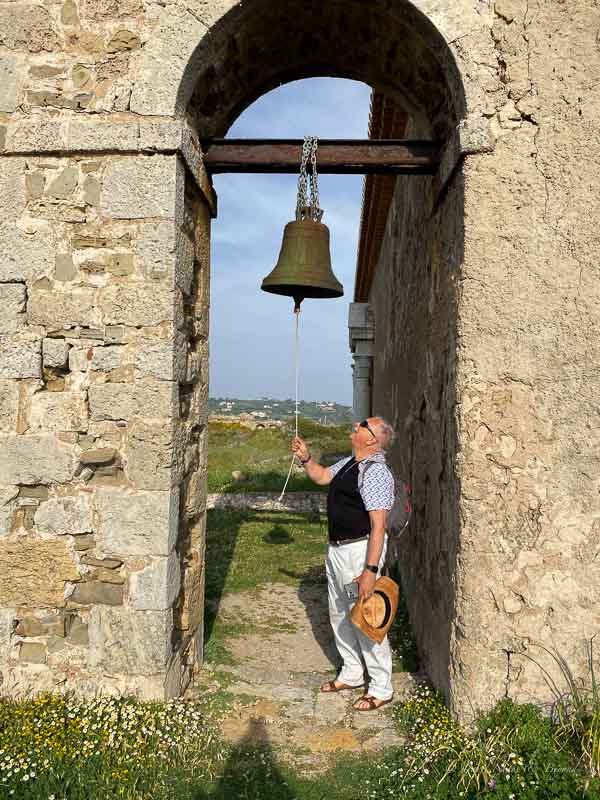
The only ones who truly knew the meaning were my husband’s relatives in Hungary. For them it’s not trivia. It’s their history. The victory at Belgrade is woven into their national story, and they learn it as schoolchildren. Outside Hungary, though, the name Belgrade stirs nothing, and the bells ring on to ears that no longer recognize them.
And that, in the end, is why I wrote this. The noon bell is not simply a call to prayer. It is a living echo of the day Europe stood at a crossroads, and almost everyone who hears it has forgotten the story it carries. The next time you are traveling through a European town and the bells ring out at midday, stop for a moment. You are hearing something that has been ringing, unbroken, for more than 500 years.
Frequently Asked Questions
Do Protestant churches also ring the noon bell?
Yes, but usually for their own reasons rather than the 1456 papal tradition. Protestant churches ring bells to call worshippers to Sunday service, during the Lord’s Prayer in some denominations, and for weddings and funerals. The daily noon bell tied to Belgrade is mainly a Catholic custom.
How many times a day do church bells ring in Europe?
Traditionally three times: at roughly 6 a.m., noon, and 6 p.m., marking the Angelus prayer. Many churches now delay the morning ring to about 8 a.m. On top of that, some toll the hours, and ring separately for Mass, weddings, and funerals.
What is the difference between the noon bell and the Angelus bell?
They overlap but aren’t the same. The Angelus is a three-times-daily prayer with its own bell pattern, established long before 1456. The noon bell is the specific midday ringing Pope Callixtus III ordered during the Siege of Belgrade, which folded into the existing noon Angelus over time.
Where can you still hear the noon bell today?
Almost anywhere in Europe where there is a working church or cathedral — Italy, Hungary, Austria, Poland, and beyond. The sound is most noticeable in town squares and smaller villages, where the bells still carry over the rooftops at midday largely undisturbed by traffic.
 How to Take a Perfect Day Trip to Siena From Florence





Claudiu
Look man . Just one problem . The main character in this story was a romanian Iancu de Hunedoara ,
Anda
Yea, I know, we fought this ‘battle’ before. Read through the previous comments if you need more proof that he actually wasn’t Romanian.
Dan
He was neither Romanian, nor Hungarian. His ancestry was Cuman.
Both nations sadly present their own version of history full of inaccuracies.
Gyula
His mother had a Hungarian last name do you even think before commenting?
Irene C Vamos
And that name translates to Hunyadi Janos, a Hungarian patriot. Give up trinng to change history which is consistently being done in Romania especially if it has to do with Hungarians & their history.
Erik
Man xD he had Hungarian parents and born in Hungary. Thank you, you can sit down.
Adrian Ionita
Well, almost true. Except that János Hunyadi, was in fact Iancu of Hunedoara who was Vlach (Romanian) and the Belgrade was defended by an army of serbs and vlachs (orthodx both of them)
So Hungary was just in theory there. The important army was that of Transylvania not of Hungary, which was an autonomous region, and the army was composed in majority of Romanians (Vlachs).
This is also why when in 1927 Hungary was occupied, Transylvania was not.
Janos (or Iancu in romanian) was the Transylvanian ruler at that point in time and because there was no Hungarian king at age, he was also the current regent of Hungary.
His son is Mathias and he will become king of Hungary. I cannot say that Matthias was Romanian because he did not consider himself so. Iancu was the uncle of Stefan III (the great) of Moldova, one of the most important rulers of Moldova and also the uncle of Vlad the Impaler (the one taht created the vampire). Vlad and Stefan were cousins. The families were very much related.
Anda
Hahaha, it seems the fight over Hunyadi’s nationality isn’t over yet. It’s true that back in Romania they taught us in school that he was Vlach (Romanian), but if you do a little research you’ll easily find out that was not. Even Britanica considers him “a Hungarian general and governor of the kingdom of Hungary.”
As of his origins, his grandfather Serba and his father Vajk/Voyk, were likely Cumans, as most of the ruling families in Valachia in the XIV-th century. They were also catholics, not Eastern Orthodox, as the Vlachs.
The army had indeed peasants in its composition, but few data regarding their ethnicity remained. Most likely they were Hungarians and Serbs. Either way, the winners of the battle were the knights and not these auxiliary troops. Hungary was occupied by the Turks after the battle of Mohács in 1526-1527, not in 1927.
Miczi Nagy
The great Hungarian Hunyadi János to whom the bells are ringing!! Although the pope wanted the victory for himself by ” praying”.
But Hunyadi ‘ s army who won and beat the turks out of Europe
Miczi Nagy
ha ha ha
Romania took Transylvania 100 years ago after the romanians betrayed their allies in WW1.like they always did when they see the allies are loosing. Therefore they ” asked Transylvania fas a present” for their “heroic sacrafice”
Miodrag
And where was the Serbs in that time?
Who lived in Belgrade, Hungarians, Romanians or the Serbs majority?
Tlt
“That of Transylvania not of Hungary” could you remind me how Transylvania paid its taxes to the crown of Hungary and had its official documents written in Hungarian ?
Michele {Malaysian Meanders}
That’s fascinating. I had know idea that tradition had such a rich history. I will have to share this story with my husband as he’ll be headed to Hungary in a few months.
mario
Belgarde is capital Of Serbia. That time under austro-hungary empire…
Adrian Ionita
Nope. That time it was almost independent. The Austro Hungary did not exist yet at that time
Serbia was destroyed at Kosovopoljie some years back and since then they were under a semi occupation by Otomans. They were independent with name but practically occupied.
This is why they allied themselves with the Vlachs ( lower part of Romania) the Vidin tarate (actual north west Bulgaria) and Transylvania (which was an autonomous entity inside Hungary and had a very serious army – in transylvania there were germans which knew how to make modern arms, that combined with romanians which were always good at fighting and a geographical position inside a mountainous regios made Transylvania a very safe place difficult to conquer)
This coalition was usually led by the Transilvanian ruler because they had the important army and money. It was not the first time this coalition existed. Same was done in 1396-97 which did not end well at Nicopole.
After the fall of Hungary in 1527 the coalition went into defence since most of the regions were occupied and Vlachia and Moldova were having rulers in line with Ottoman policy (usually – from time to time there were some that tried again but the frequency decreased).
corinne
Anda, This is proof that you learn something new every day. Thanks.
Anda Galffy
I agree, Corinne. Especially when you travel.
Rhonda Albom
Thanks for the interesting history. I thought it was just a convenience to let all know that it was noon.
Anda Galffy
Ha,ha,ha, I thought the same thing, Rhonda. Well, it proves there is more to it than that.
Christina
I haven’t been to Europe very much and I can’t say I noticed the bell ringing. I probably just presumed it was a call to church. How interesting to find out the true reason!
mark wyld
Very interesting, no i didn’t know this but thanks for telling i always love knowing little bits of history.
natasha
I have to admit I have been traveling Europe for a year and had no idea why the chuch bells rang at noon. This is very enlightening about the Siege of Belgrade, thank you for sharing.
Natalie
That is interesting that churches today commemorate something that happened so many years ago and still on a daily basis! Lovely history lesson. I don’t live close enough to a church to hear any bells at all. One of the churches I used to drive past would be playing music.
Natalie
I LOVE history, so it’s always fun to learn something new. 🙂 I always thought that the bell tolling had more to do with the workday or eating (as another commenter suggested)–the reality is so much more interesting! (And, you’ll have to forgive me for including this decidedly nerdy tidbit, but Hemingway’s book title is actually taken from a John Donne poem of the same name. One an English major, always an English major! Hahahaha!)
Anda Galffy
Ha,ha,ha, I didn’t know that, Natalie. Thanks for telling me.
eileen g
Nice historical footnote! thanks!.
Diana West
How interesting! There are so many customs that have a rich history that has been forgotten. It’s up to writers to pursue and explain that history so the custom can be better understood. Thanks for that well-written article.
Anda Galffy
Thank you, Diana. I’m glad you could learn something new from my post.
budget jan
I thought they rang to let people know it was lunch time, lol.
Anda Galffy
Ha, ha, ha, most Europeans probably think the same thing!
Linda Bibb
What a cool story! I had never heard about the siege before, maybe because the 20th century wars have received so much attention. I think it’s time to brush up with that era; the Turk-Christian conflict has obviously had a far greater influence on European culture than I had thought.
Anda Galffy
Thank you, Linda. The idea of writing about this subject came to me in Siena, as our guide was asking the group about the bell tolling at noon and nobody knew the significance. Everybody was thinking it’s a call for the worship service.
Elaine J. Masters
There’s a wonderful documentary about the bells of Europe. I think it’s from the 1980’s and ends with many being silenced to be melted into arms for war. Church bells pealing is so compelling and too rare in America.
Anda Galffy
I agree, Elaine. I miss the church bell ringing.
Melodie K
Have always history in general and, of late, that of Christian church in particular ~ so found this a fascinating story, Anda. Looking forward more than ever to visiting Hungary, Romania, and now, Serbia as well.
Anda Galffy
Well,thank you Melodie. So glad you found this piece of history interesting.
Laz
I am always fascinated by the sound of church bells. It is amazing to find out that such important events are commemorated even today. Too bad we have the habit to forget our past!
Anda Galffy
I so agree with you. It’s pretty sad that so many Europeans don’t know the significance of the church bells ringing at noon.