
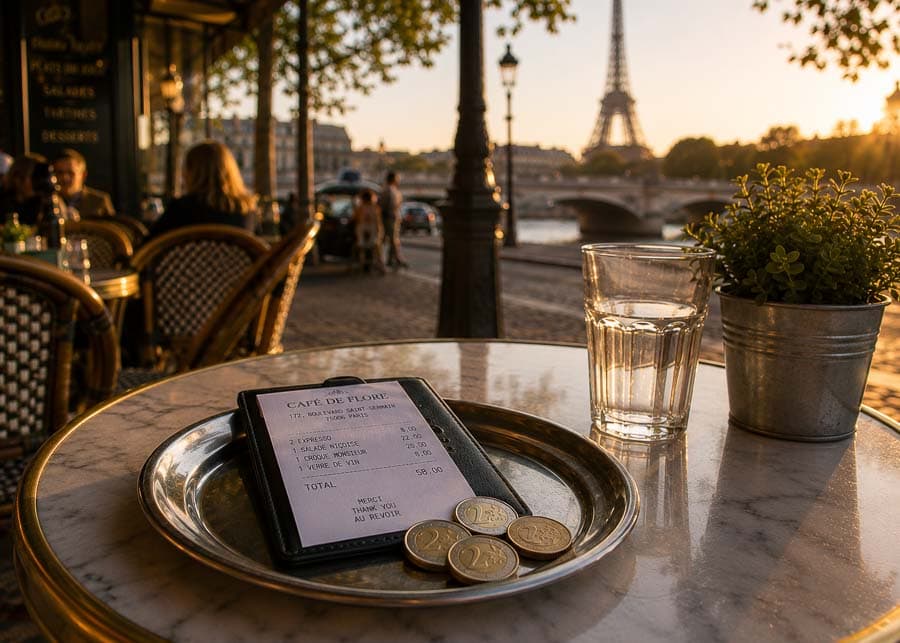
Tipping in Europe used to be simple: round up, leave a coin, move on. Not anymore, and Americans are part of the reason why.
I was born and raised in Europe but lived most of my adult life in the US, so when the subject of tipping comes up, I’ll admit that my opinion is somewhat biased. In what sense, you may ask? In the sense that tipping in America got out of hand a long time ago—and now our distorted perception of what’s “normal” is starting to penetrate and reshape the tipping culture in other countries, too. That’s especially true in Europe. So in this guide I’ll tackle the much-debated question: how much should you actually tip in most European countries, what has quietly changed, and why your American instincts might be doing more harm than good.
The Real Difference Between American and European Tipping
For most of my life, tipping in Europe was almost an afterthought. Servers were paid a living wage, the service charge was often baked right into the bill—in France, by law—and a tip was a genuine bonus, not part of someone’s income. If the service was good, or you were a local and happened to know the owner or the waiters, you’d leave a few coins on the table on your way out. That was it. Round up, leave the change, go. In some places, the staff would even look mildly puzzled that you had bothered.
This is the part that matters, and it’s where the American and European mindsets split. American tipping grew into something far bigger, with percentages climbing, prompts on every screen, an expectation attached to nearly every transaction. European tipping never worked that way. The tip was a small gesture of thanks, not a built-in part of the bill, and certainly not something staff were counting on to get by.
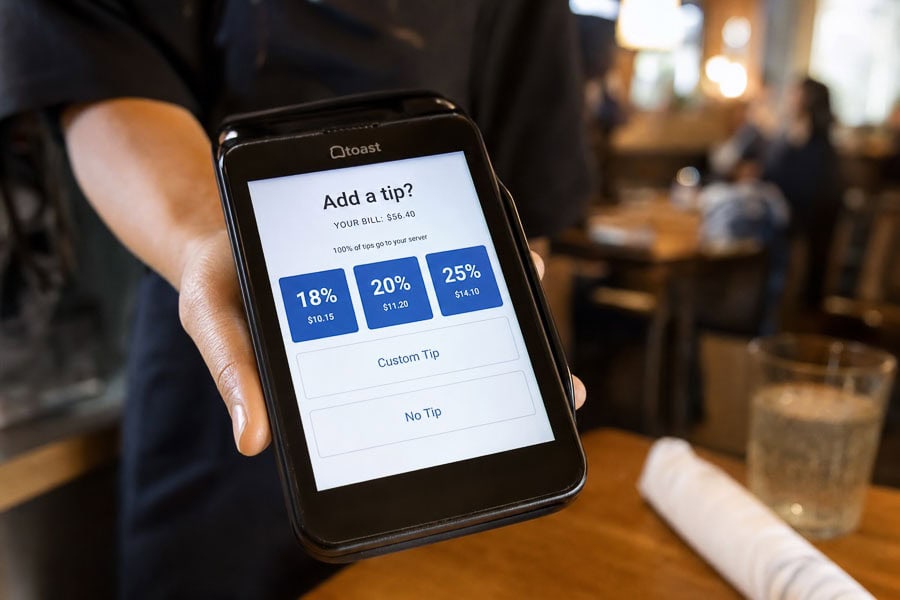
And that, I’d argue, is what started the shift over here. As more American travelers crossed the Atlantic and kept tipping the way they do at home, they quietly reset the baseline. A waiter who receives 20 percent from one table starts to expect it from the next one as well. And over time, that expectation hardens into a norm that never really existed before. Even the travel guides that once told you not to bother now hedge, and advise leaving something. The culture didn’t drift on its own; it was gently pushed.
So now, if you travel through Europe and leave no tip, or just round up the way locals always have, you may get a raised eyebrow you wouldn’t have a decade ago. And if you’re clearly a traveler, that’s even more likely to happen.
How Much to Tip in Europe by Service
Before we go country by country, one thing worth knowing: there’s no single “official” tip in Europe. Outside the places where a service charge is required by law, tipping is custom, not a fixed rule. The figures that follow track what Travel + Leisure and Rick Steves report, along with local guidance from Prague. So the amounts are real, but think of them as the upper end of what’s expected, not a target. Locals tend to leave less, or simply round up.

Tipping in Restaurants
As a general rule, tipping at restaurants in Europe is a gesture, not an obligation. But here is the thing: there is no single formula for tipping. Outside the few countries where a service charge is required by law, tipping is a custom, not a rule. In most European countries, servers are paid a regular wage, so tips are a bonus, not their livelihood.
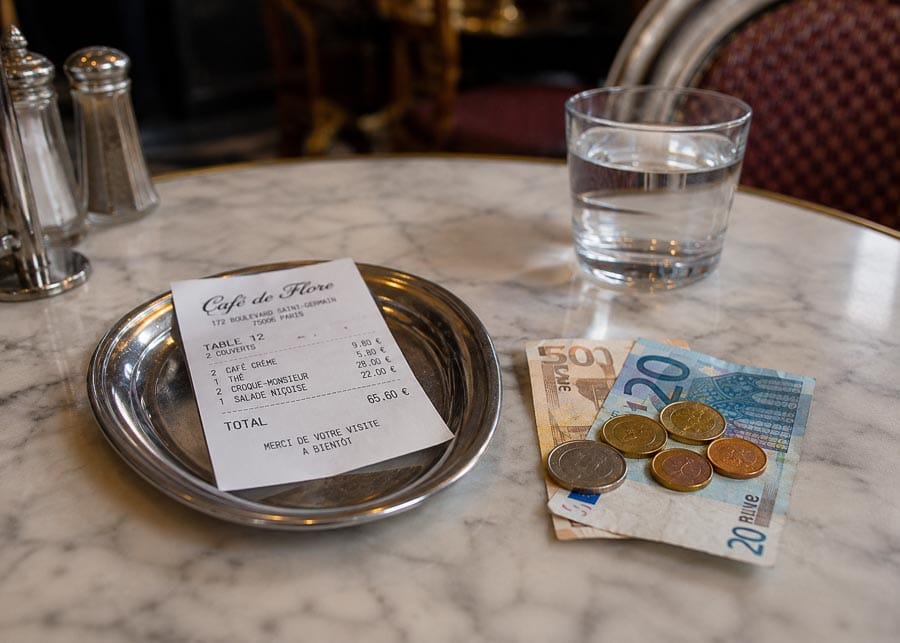
What changes from place to place is the how. France, for instance, has the service already “baked” into the menu price, so you should barely tip at all. In Italy you’ll see a coperto, which is a cover charge that goes to the restaurant, not the waiter.So if the service was good, round up or leave a euro or two for the server. In Germany and most of Central Europe you don’t leave coins on the table; you tell the server the total as you pay. And almost everywhere, 10% is plenty. Tipping more will make you look clueless or extravagant. The rule of thumb is simple: round up, stay modest, and tip cash for service that genuinely earned it.
NOTE: In the UK, many restaurants add a “discretionary” service charge of about 12.5%. Discretionary means suggested, and you can ask for it to be removed. But if you leave it, that’s your tip, so don’t add more.
Tipping in Europe at a Glance
| Country | The rule | Customary tip on top |
|---|---|---|
| France | Service is included in the price by law; no fixed percentage | None needed; round up for exceptional service |
| Italy | Coperto €1–3 per person goes to the restaurant, not the server | No %; round up or €1–2, more at fine dining |
| Spain | No mandatory service charge; rare and not customary, so you can ask for it to be removed | 10% in nicer spots; not above |
| Germany | No mandatory charge | 5–10%, told to the server as you pay |
| Central Europe (Austria, Czechia, Poland, Hungary) | No mandatory charge; high-end Hungarian spots may add 12–15% | About 10%, told to the server as you pay |
| UK | Discretionary ~12.5% often added | None if already added |
| Nordic countries | Service typically included | Not expected |
For contrast, the US baseline is 18–22% at full-service restaurants—the standard that’s quietly leaking into the figures above.
Tipping in Taxis
This one’s simple. Taxi tipping in Europe is not regulated. There is no official percentage, no matter what the guides claim. The fare is the fixed part; the tip is entirely optional.
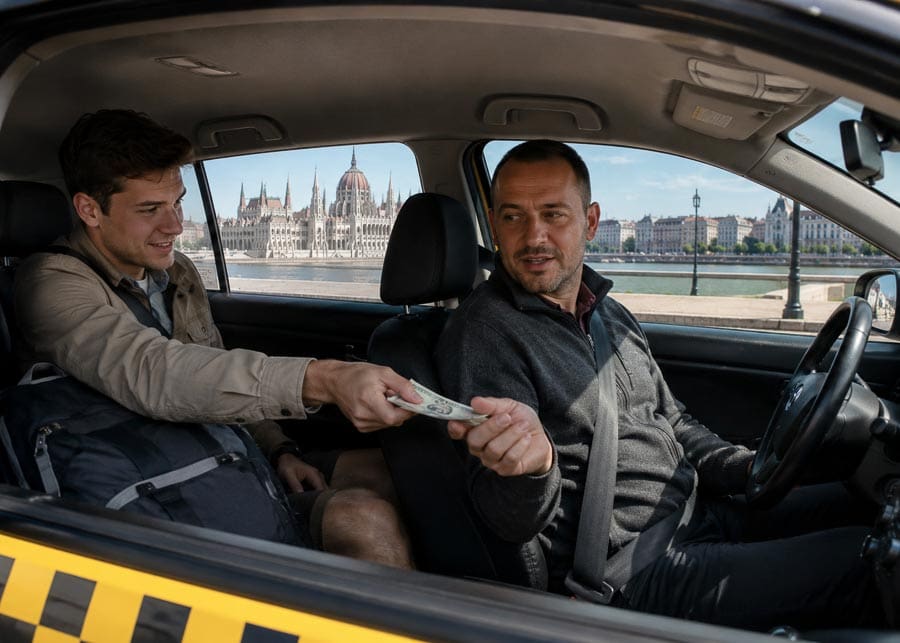
The local habit is just to round up to the nearest euro and let the driver keep the change. If they wrestle your suitcase out of the trunk or go out of their way, an extra euro or two is a nice gesture, but not an obligation.
I’ll tell you when I realized the rules had shifted: in Paris, when I handed a bellboy €5 for two small suitcases. That was more than any guide recommends. But the look I got from him could have curdled milk! By every printed standard, I’d over-tipped—but not in Paris, apparently.
Here is what is actually customary now:
- Porters: €1–2 per bag.
- Housekeeping: €1–2 per night, left in the room when you leave.
- Concierge: Nothing for simple questions; €5–10 if they pull off something real, like a hard reservation.
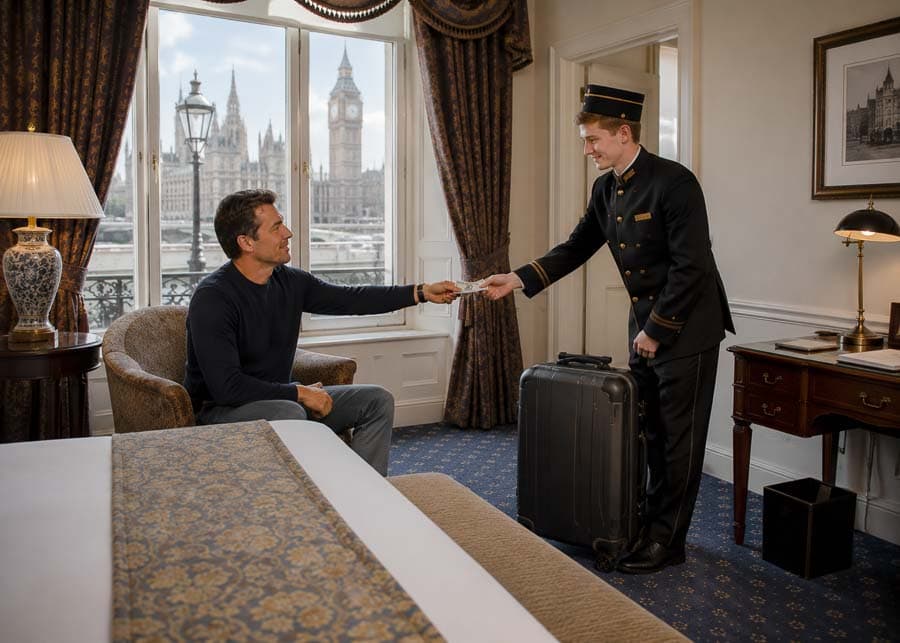
The catch my bellboy taught me: in pricey cities and luxury hotels used to big-tipping international guests, those modest numbers can land as stingy even when you’ve followed the book. Read the room: a family-run inn and a five-star in Paris aren’t playing by the same rules anymore.
Tipping for Other Services
For everything else, the European rule is refreshingly loose: a euro or two for a genuinely good job, nothing for the routine.
- Bars and cafés: No tip needed. Round up or leave the coins—and nothing at all for counter service or takeaway.
- Hairdressers: Customary in France and the UK, less so in the Netherlands or Sweden—it really is country by country.
- When in doubt: Ask a local. They’ll tell you straight, and it’s the most authentic way to get it right.
- Tour guides: A few euros per person is fair, more for a full day. On free walking tours, the tip is the guide’s real pay, so don’t skip it.
How Americans Reshaped the Rules of Tipping in Europe
It saddens me to say, but I’ve watched this happen in real time. You sit down somewhere in Europe and you can tell which table has American tourists. Not by the language they speak, or the accent, but by how the waiter reacts when the payment comes back. That little flicker of happy surprise gives it away. And the service was perfectly fine, but nothing special. Americans leave 15-20% on instinct, even when nobody expected a cent. And doing that resets what everyone expects next time.

The numbers back up what we have felt for years. A 2023 YouGov survey found that two-thirds of Americans tip more than 10%, and our single most common tip is a flat 20%. Europeans? Most leave 5% or 10%, and almost nobody goes higher. We are not just tipping a little more, we’re playing an entirely different game, and we brought it with us across the Atlantic.
That’s how the baseline creeps. Today, leaving a 10% tip in a high-end restaurant in Budapest is just normal, while a decade ago a 5% tip was considered generous. And the travelers coming after us inherit the bill.
What Has Changed
Quite a bit has changed recently when it comes to tipping in Europe. The way you’re asked, how often, and how much have all shifted, and not everyone is going along with it.
The Electronic Guilt Machine
If you stepped into a restaurant in Europe recently, I’m sure you must have noticed that traditional paper pads and printed checks have largely been replaced with handheld POS (Point of Sale) terminals. So now, the pressure isn’t coming from waiters anymore. It’s coming from the screen they hand you. The new card machines now prompt you to tip before you’ve stepped away, often defaulting to 15, 20, or 30%. And before you ask, yes, the POS terminals came from America!

The design isn’t an accident. It’s rather engineered to make you pay more, since on-screen prompts push average tips noticeably higher than cash does. There’s even a name for it now: guilt tipping, that quiet panic of tapping a number you don’t mean, while someone stands there watching.
The Backlash Has Begun
Ah, but here comes the part that gives me hope. People are finally getting tired of being pushed, one way or another, to tip endlessly. You can see it at home, where tip fatigue has become its own topic of conversation, and where more of us are quietly settling back into 15% or less for a sit-down meal. It turns out the guilt only works until enough people decide they’ve had enough, and I think we’re about to reach that point.
The Zero-Tip Movement: Is That a Good Idea?
Some restaurants, on both sides of the Atlantic, are trying to skip the tip altogether and just pay the waiters a living wage instead. Owners are split on whether it helps or hurts, and a few say that service may slip without the carrot. But what carrot? The carrot is already gone, when the tip is coerced by default. The waiter gets it whether they hustle or not, so why bother? Nonetheless, I’m not sure that doing away with tips altogether is the answer to the problem.
Tips have existed in human society since forever, and they encouraged people to do better. Way back when, those in the service industry knew that if they did well, if they made you feel pampered, they would be rewarded. And that was good. How much you tipped was up to you, not up to a restaurant owner or manager who decided to dig into your pocket to make up for what they don’t want to pay their workers. I always tipped my hairdresser because she went out of her way to make me look pretty, but I did it on my own terms, with no screen lighting up and no one standing over my shoulder waiting to see the number.
Don’t Overthink It
You don’t have to sweat it. In most of Europe, round up or leave 5 to 10%, and only when the service genuinely earned it. For counter service, a quick grab-and-go, or a screen shoved in your face, zero is perfectly acceptable. And when you do tip, leave cash, so it actually reaches the person who served you rather than the machine.
The System is Broken, So How Do We Fix It?
Here’s the part nobody wants to say out loud. None of this was ever really about the waiter, or the tip. It was about a system that quietly shifted the cost of paying staff off the owner and onto you, one prompt at a time. And now it’s hard to undo, because everyone has gotten comfortable: the owner saves on payroll, we keep tipping out of guilt, and the waiter has watched those tips pile up night after night.
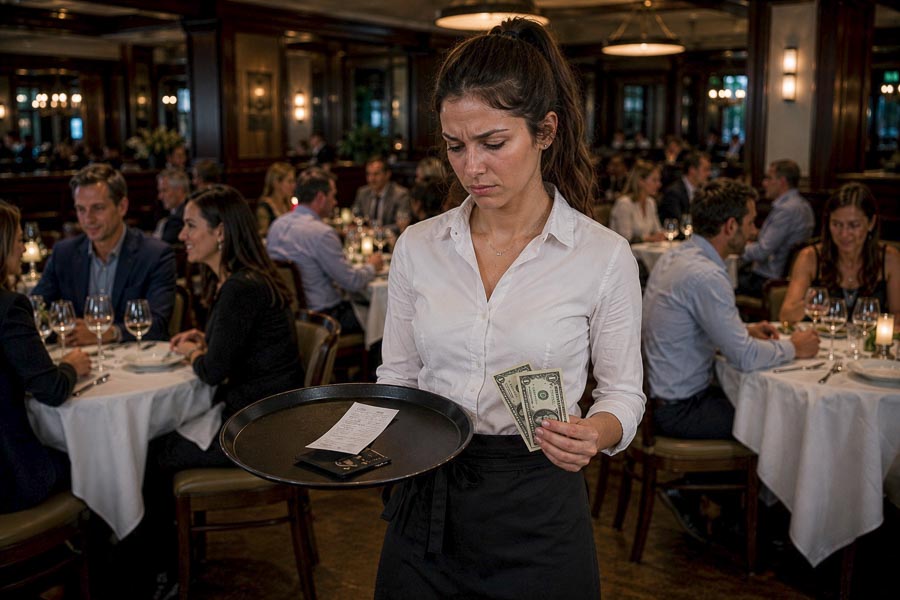
That’s the real obstacle. Try telling a waiter today that the tips are gone but the paycheck will rise to a fair, guaranteed wage, and watch the reaction. Especially in the US, where tipped workers can now deduct up to $25,000 in tips from their federal taxes through 2028. After years of cash stacking up at the end of a shift, a steady salary doesn’t feel like fairness. It feels like a loss. We can argue about wages and laws all we want, but you can’t legislate away a habit that profitable.
So if the system is broken, and it is, then we all have a hand in putting it back together, because we all had a hand in breaking it. We didn’t change the rules with a vote. We changed them one oversized tip at a time, and we are the only ones who can change them back.
YOU MAY ALSO LIKE:
 Sustainable Travel: Why It’s Mostly Theater, Not Reality





Manaow
Tipping in Europe can definitely be confusing for travelers. As a Thai chef who visits Europe sometimes, I appreciate how you explained the differences between countries. Your guide is very helpful for anyone planning a trip.
Anda
Thank you, I appreciate it.
Stephen Suskie
On a trip to Scotland recently I had the opposite problem. I left a carryon bag at a train stop realizing it only minutes after boarding the train. We got off at the next stop…called the taxi that dropped us at the station…explained the problem and asked to be taken back to the stop to get my bag. That bag had everything of value to me when I travel. It had cash, medications, all my credit and bank cards, extra hearing aids and the charger, extra glasses, etc. Without that bag it would have been very difficult to continue the trip. When the taxi driver showed up he had already gone by the train stop and picked up my bag. What a relief! In all my many travels around the world this simple act, stopping for the bag, was far and away the nicest thing anyone had ever done. It was the most tip worthy gesture ever. The Scottish driver politely refused the tip which we thought he certainly earned. We’re still trying to figure out a way to reward him for his kindness.
Anda
Wow, what a story! The driver definitely deserved a tip and the fact that he refused it only shows how kind some people still are in a world that’s constantly changing for worse. Glad you recovered your suitcase.
Laurie
Great article! I will hang onto this link for future reference.
Val
Thank you! This was a thoughtful and informative article.
I, too, am in the crowd of feeling fed up with the current tipping culture. A couple years ago I tried Botox for the first (and last) time. I was in the room with the aesthetician for maybe 15 minutes max. The bill came to $650. Checking out, I was handed the POS machine, with 18%, 20%, and 22% tip options. I absentmindedly hit 18% (the lowest option available), which brought my bill to $767! Yes, a $117 tip for 15 min of service!!! I stammered out a request to the receptionist to help me return to the previous screen, and hit “custom” to leave a $15 tip ($1/min) — but felt soooo embarrassed and cheap (hence, that being my first and LAST time there).
To me, Botox is sort of in the category of professional services, so I wonder what’s next?–Tipping requests from your dental hygienist? Surgeon? Banker?
Anda
Exactly! They have some nerve to ask for a tip for this kind of service. My reaction to the POS machine is 0 tip! I feel inclined sometime to give a tip for some kind of services, but if you stick the POS machine under my nose you’ll get nothing. I wish everybody would start thinking like me.