Prague vs Budapest is one of the hardest choices travelers face when planning a European itinerary, especially if they only have time for one city. Both capitals are equally popular and count themselves among Europe’s most beautiful cities, which makes choosing one vs the other really difficult. This guide compares Prague and Budapest in terms of costs, food, sights, vibe, and crowds, and helps you decide which city fits your travel style, or whether you should try to visit both.
Compact, fairytale‑like medieval “open‑air museum,” very polished and touristy.
Grand, lived‑in imperial city with a slightly rough‑around‑the‑edges authenticity.
Size & feel
Smaller, easy to walk, but feels more crowded because sights are concentrated.
More spread out, requires transit, but feels less crowded even in peak season.
Architecture
Strong medieval and Baroque core, original buildings that survived WW2.
Mix of Neo‑Gothic, Art Nouveau, and Art Deco with wide boulevards and monumental buildings.
Cost
Higher lodging and restaurant prices; beer is extremely cheap.
Generally cheaper overall for food, lodging, and everyday costs.
Food & drink
Improving restaurant scene; excellent beer culture and comfort food.
Strong food scene and famous Hungarian cuisine; great wine and ruin‑pub culture.
Best for
First‑timers, photographers, short city breaks, Christmas markets.
Longer stays, spa and nightlife lovers, foodies, people who like “living” in a city.
Hospitality
Friendly, polished reception from the start.
Hungarian hospitality comes across as reserved at first but genuinely warm once you engage
Which City to Choose: Prague or Budapest?
We visited Prague and Budapest quite a few times and we already made up our mind about which one we like better. However, our tastes and preferences may be different from yours. Therefore I’ll try to break down what’s special about each city.
I’ll also tell you what are the similarities and differences between them. Hopefully, by the time you finish reading this, you’ll be able to decide whether to choose Budapest or Prague for your next city break.
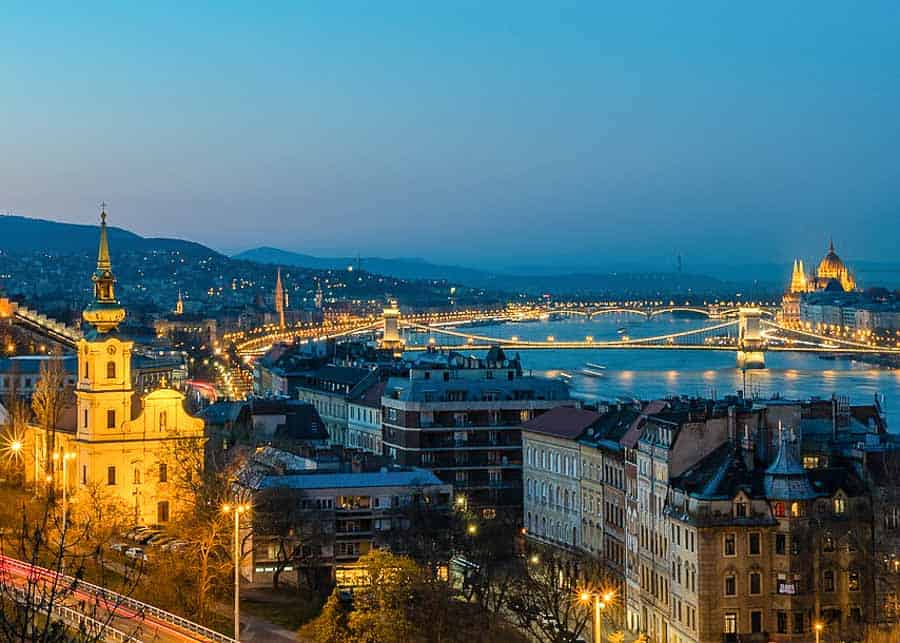
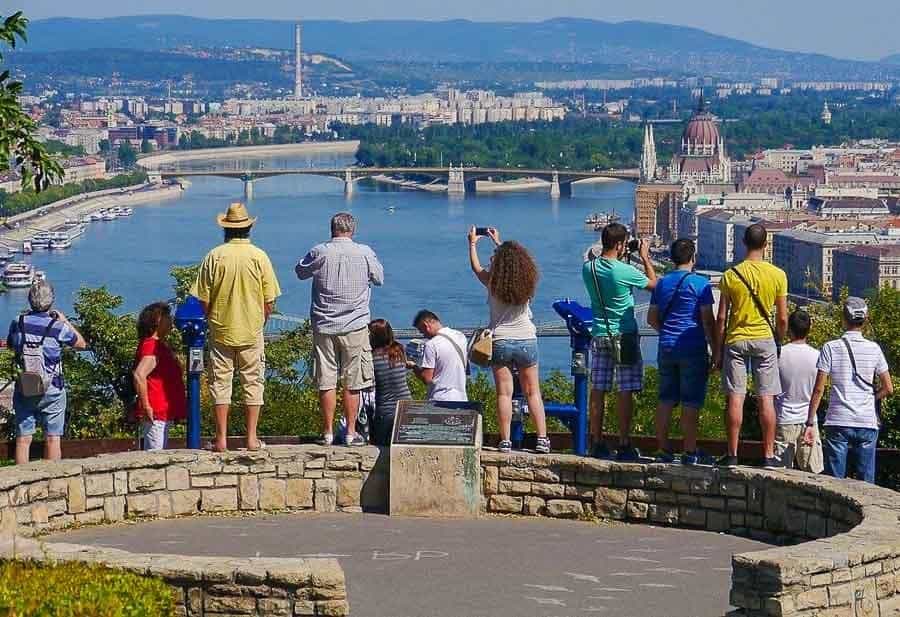
View of Budapest downtown
Prague vs Budapest: Key Similarities and Differences
Prague and Budapest are both marvelous cities in their own way. They each have character and charm galore.
In terms of similarities, both cities have rivers running through them, castle districts, Jewish Quarters, famous bridges, and beautiful squares. But that’s about where the similarities end. Although comparable, Prague and Budapest are actually more different than they are alike, which is why liking one vs the other is only a matter of taste. Visiting the two capitals is also a completely different experience.
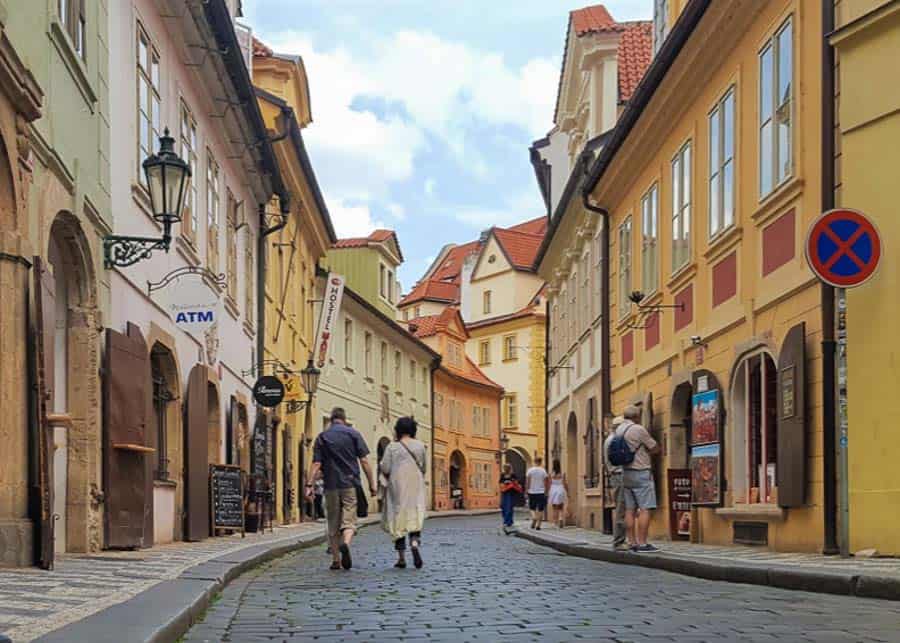
Prague – the capital of the Czech Republic – is like a museum. Everything is neat and in its place. The city retained a much more medieval feel and look than Budapest, with more Baroque style buildings.
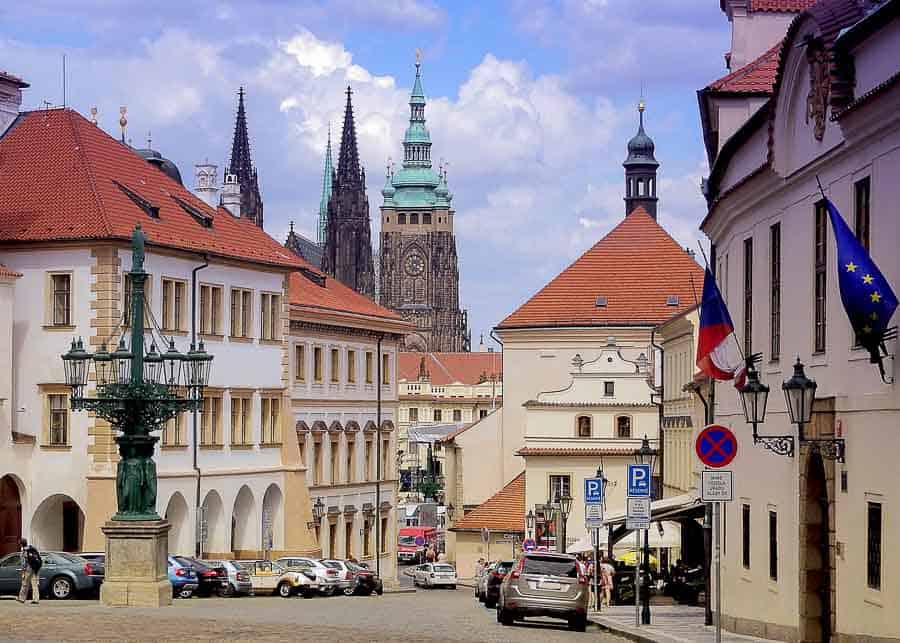
Prague architecture
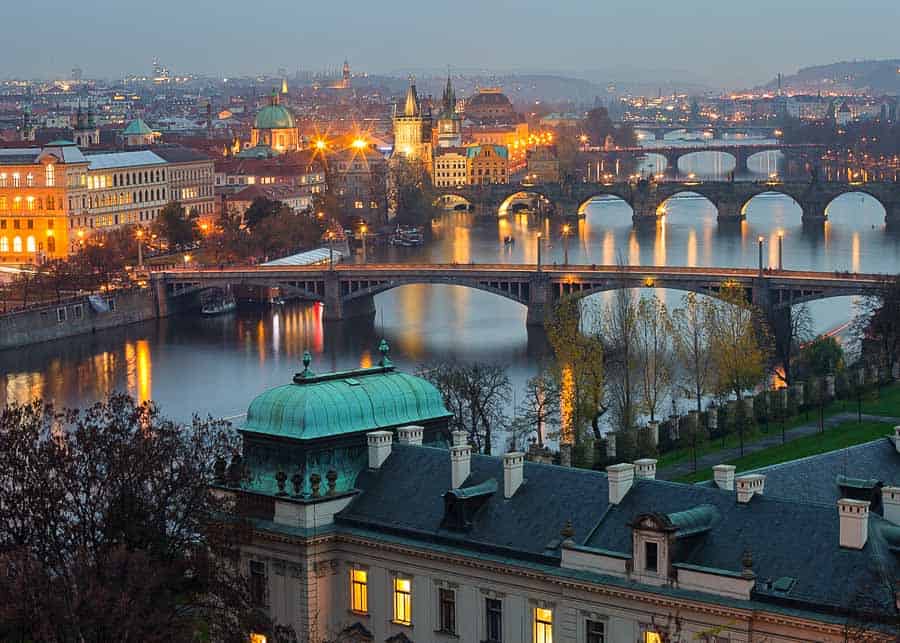
Prague is generally considered more picturesque than Budapest, thanks to the many medieval buildings that are still standing today. Particularly around the historic city center surrounding the Old Town Square. Prague is smaller and has an intimate charm that Budapest doesn’t have.
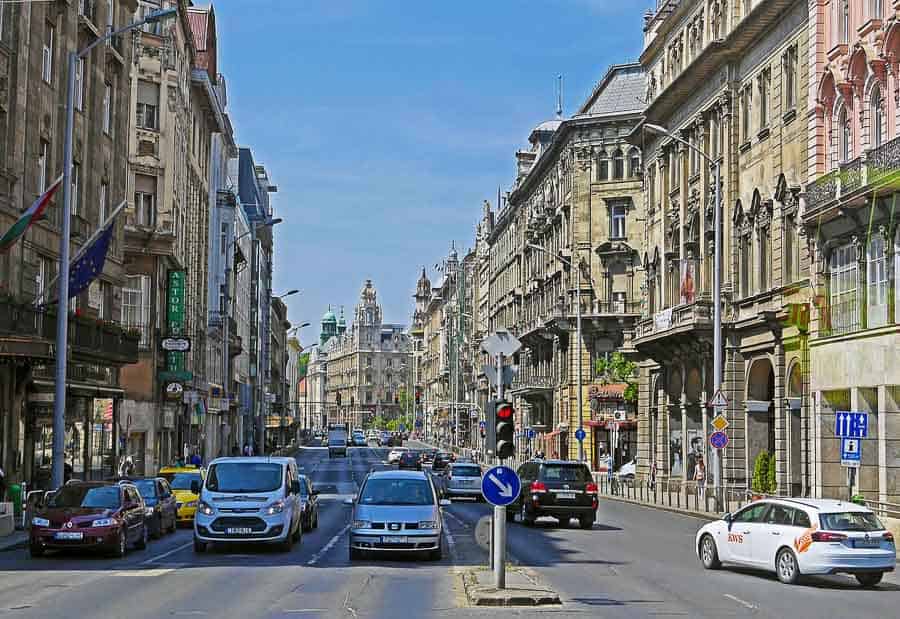
Budapest – Hungary’s capital on the other hand – looks more like a real city. It feels more authentic in a way that Prague does not. The city has a wealth of beautiful architecture, although a little rough in a few places that hadn’t fully recovered from the Communist occupation.
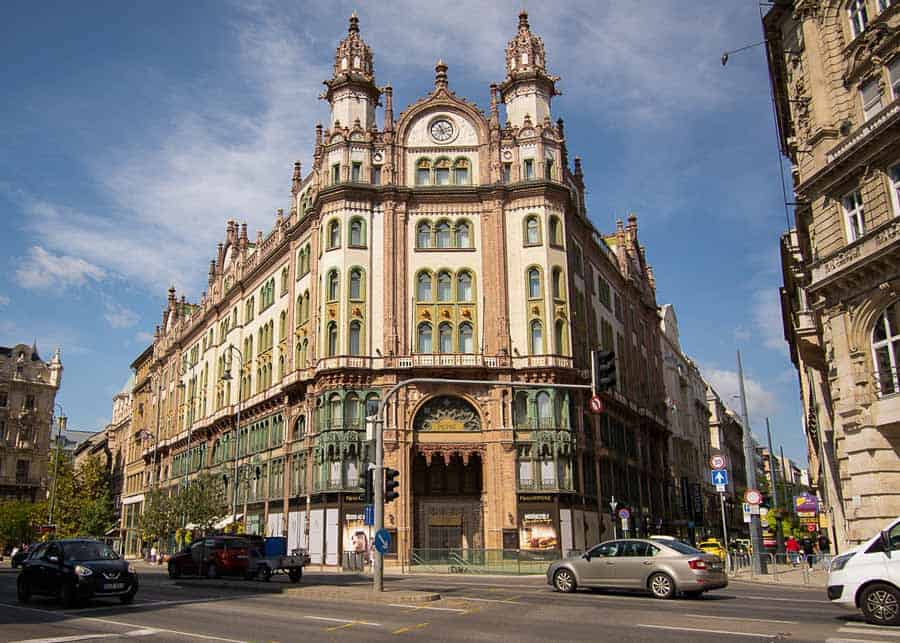
Budapest is truly remarkable for the homogeneity and harmony of its urban design. The result is a city built in a grand imperial style – street after street of Renaissance-style buildings, with a mixture of fanciful Art Nouveau and Art Deco architecture.
Building in Budapest
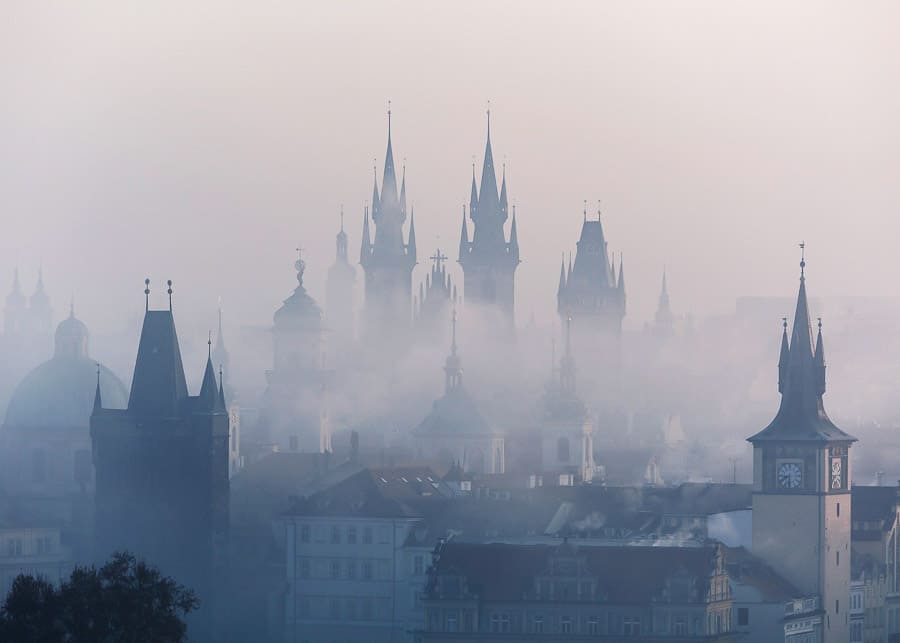
In terms of atmosphere, Budapest is at its best during summer and over the Holidays. Prague, on the other hand, seems as beautiful in good weather as it does when it’s rainy or overcast. I feel that darkness and fog add a bit of mystery to the medieval character of the city.
Prague in fall
What Makes Prague Unique
Prague is a historic, byzantine city founded in the Middle Ages. A maze of cobbled streets lined with Romanesque chapels and cellars, Gothic cathedrals, Baroque palaces and gardens. But the city also boasts sophisticated Art Nouveau buildings and unique Cubist architecture.
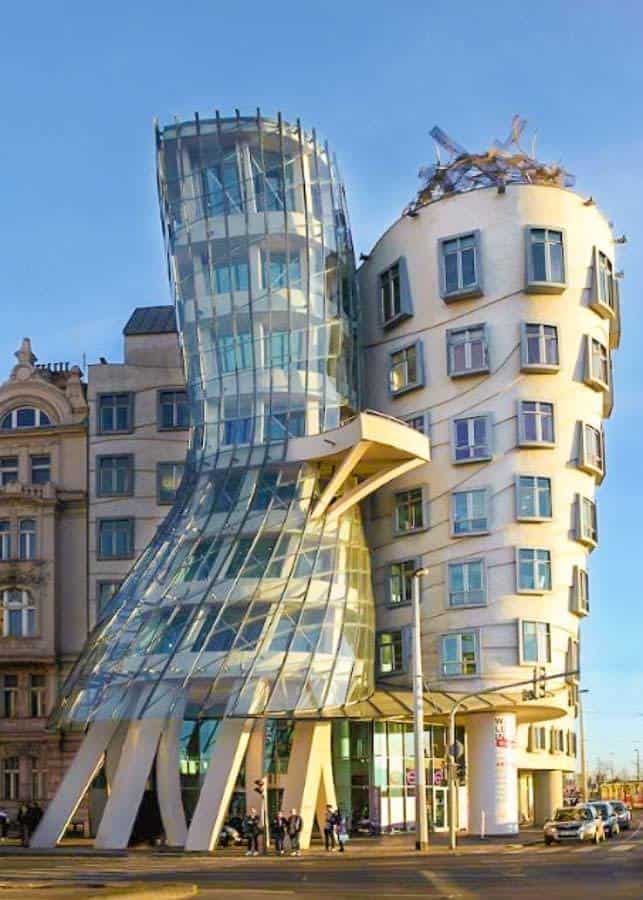
The Dancing House in Prague
Unlike the vast majority of European cities that didn’t survive the bombing of World War II, Prague was given the chance to grow old. And unlike Dresden, whose main landmarks have been completely rebuilt after the war, Prague still has the original churches and monuments dating back centuries ago.
Landmarks That Make Prague Famous
There is no lack of culturally significant sites and attractions in Prague. Like Malá Strana (Lesser Town district) which is home to many old churches, palaces and beautiful gardens.
The Old Jewish Cemetery, one of the world’s oldest Jewish burial grounds, whose crumbling headstones clustered together are quite a site!
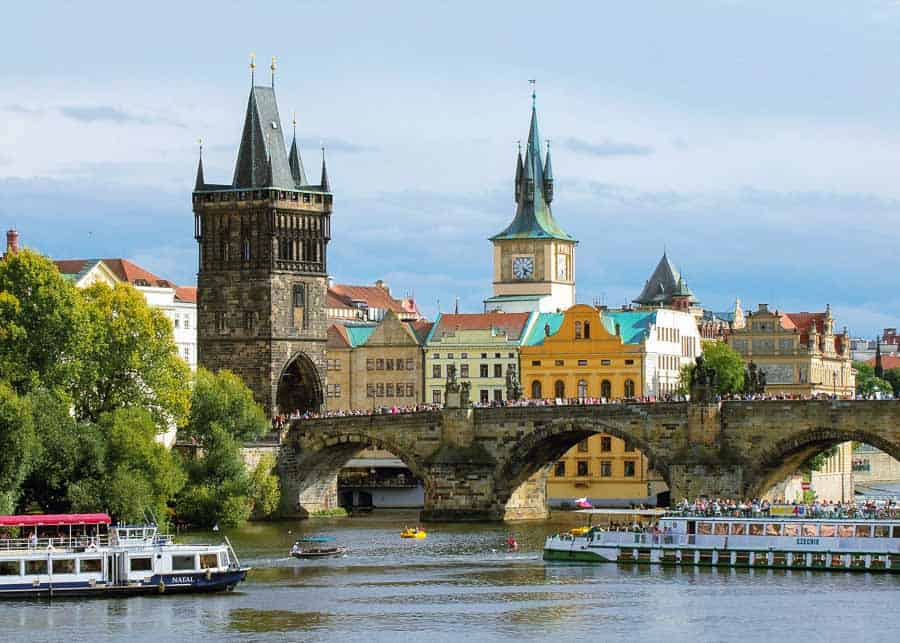
Charles Bridge, a medieval stone arch bridge fortified with towers at each end.
Charles Bridge
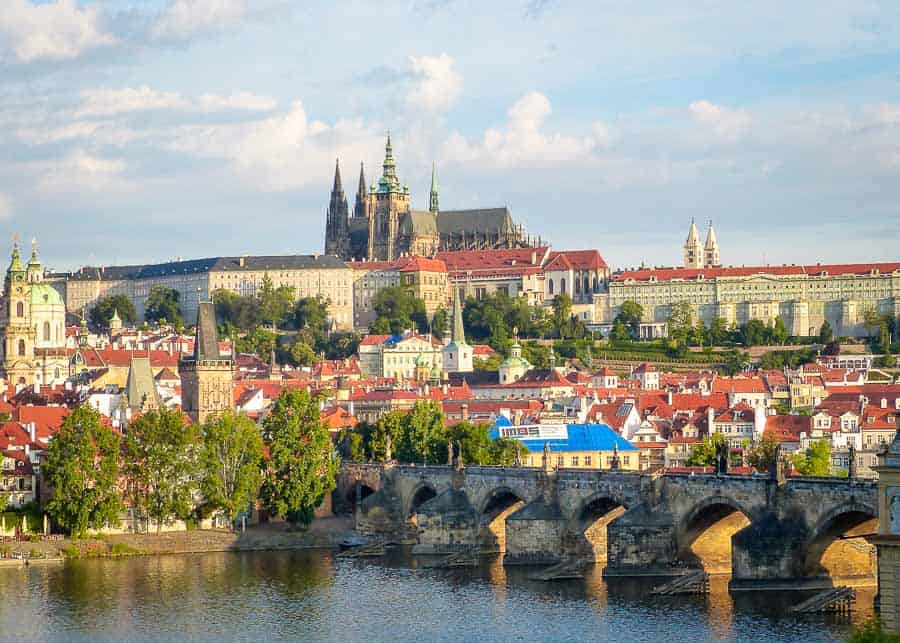
Or Prague Castle, which is the largest palace in the world. The Castle dates back to the ninth century and spans an impressive 18 acres.
Prague Castle
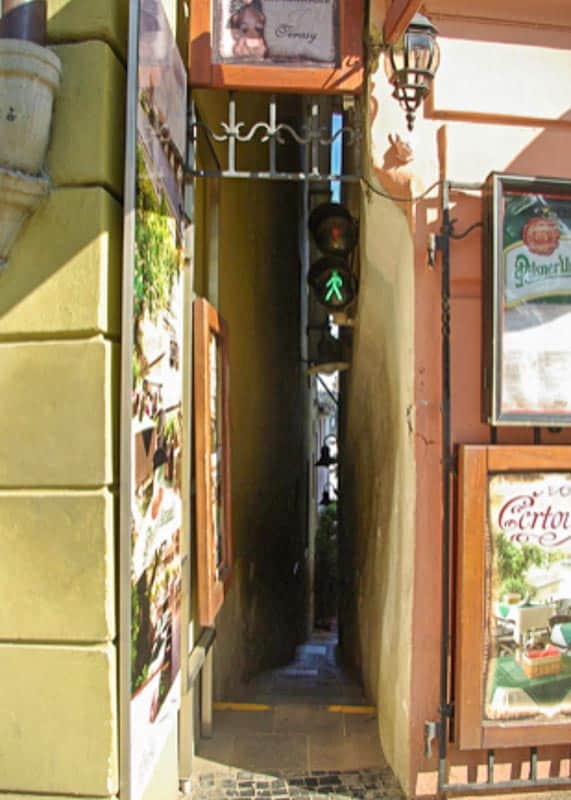
The city is also home to the narrowest street in Europe – Vinarna Certovka – which is only 50 cm (20 inches) wide. Because it’s so tiny, the street has traffic lights at both ends in order to help prevent people from getting stuck in the middle and not being able to pass each other.
Vinarna Certovka street in Prague
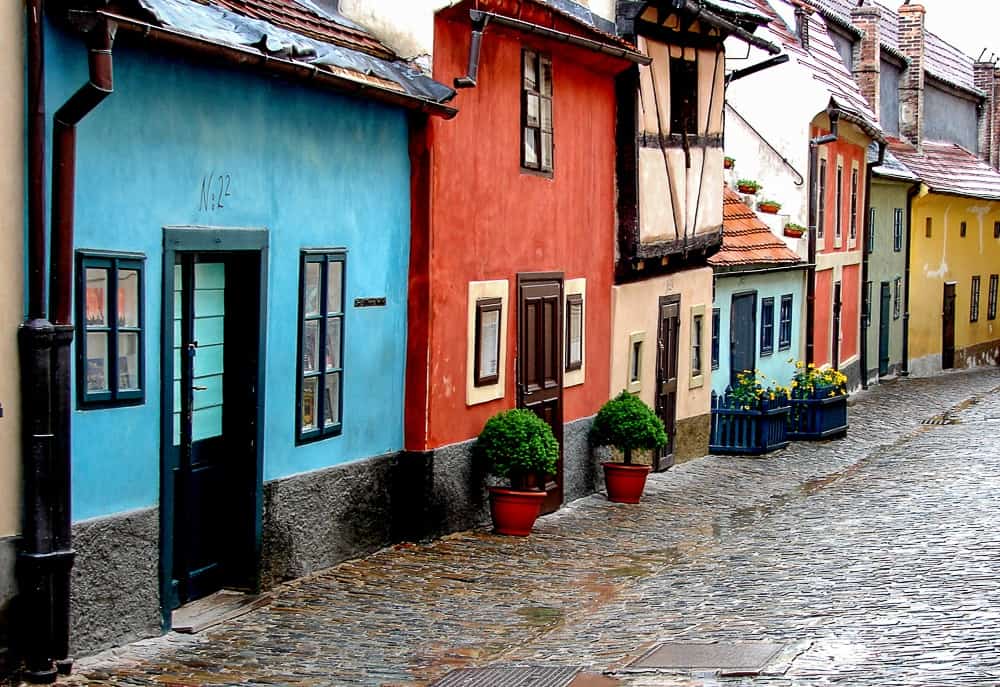
Another unique attraction in Prague is the Golden Lane (Zlatá ulička), a picturesque street named for the goldsmiths who lived here during the 17th century. The street is lined with colorful, tiny houses that look like out of a fairy tale.
Golden Lane
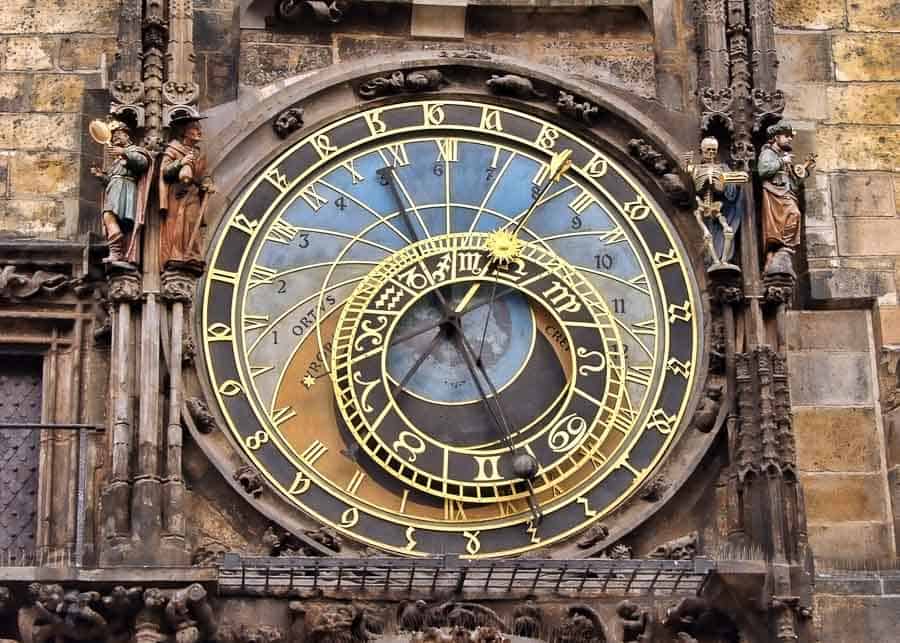
But perhaps the city’s most famous landmark is the Astronomical Clock, a complicated oroloj that attracts huge crowds every time it strikes.
Astronomical Clock in Prague
What Makes Budapest Unique
Budapest is one of the most photogenic cities in Europe, boasting a dramatic skylines and heart-stopping river panoramas.
The city is famous for its first-class cultural venues, amazing Hungarian cuisine, underground caves, and for being the Spa Capital of the World. Budapest is also known for its quirky Ruin Pubs and the many food and wine festivals that gather crowds from all over the world.
Budapest
Landmarks That Make Budapest Famous
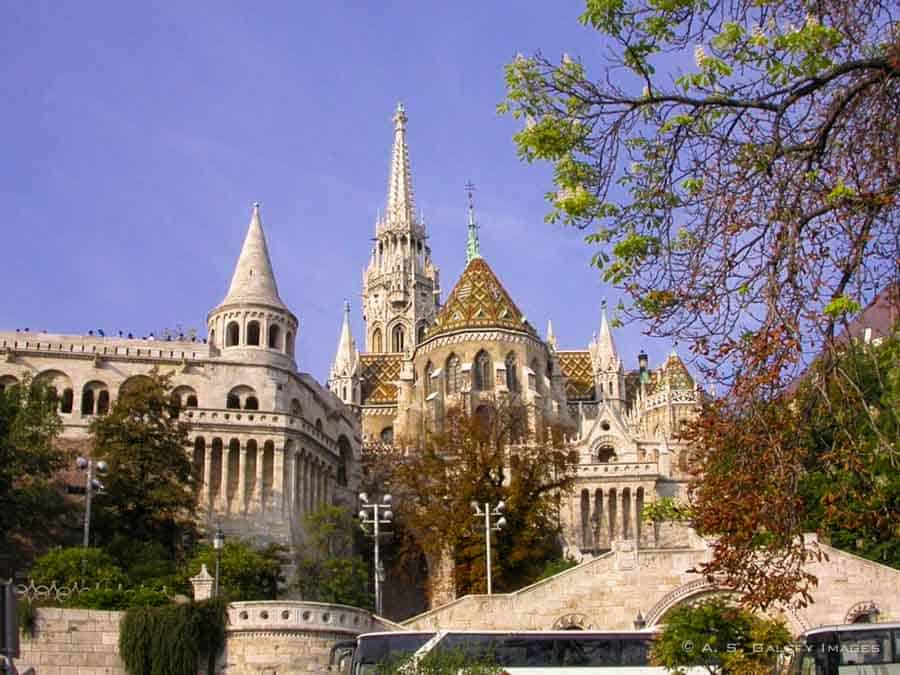
Budapest landmarks are spread around the two parts of the city – Buda and Pest. In Buda, the historic part of the city, you will find the Old Town attractions: Buda Castle, Matthias Church, and the Fishermen’s Bastion, with its enchanting terraces.
Also in the Castle District is theBudavári Labyrinth – a complex of caves and cellars that were created a long time ago as an effect of the hot water springs.
Fishermen’s Bastion with Matthias Church in the back
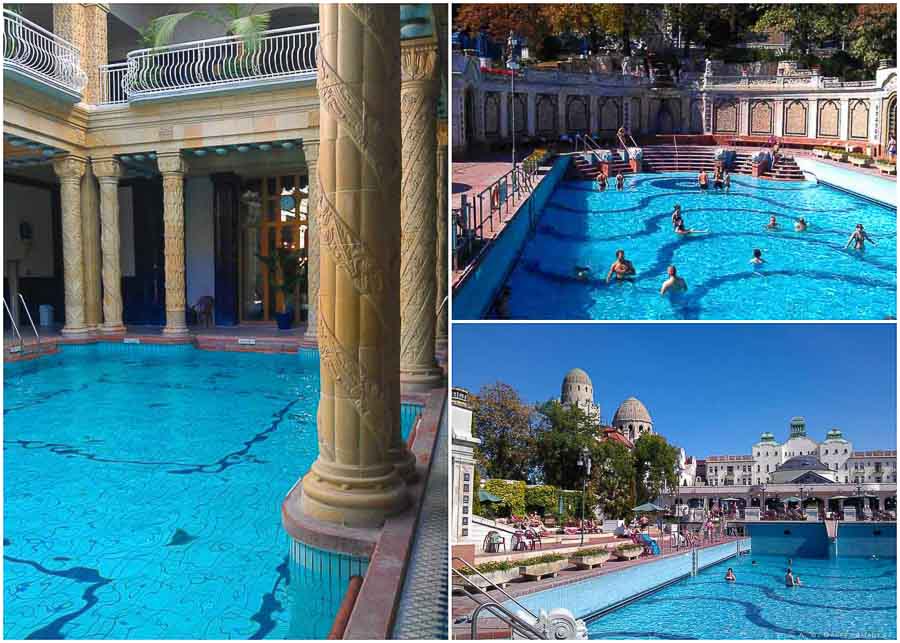
One of the most popular attractions on this side of Budapest are the Gellert Baths, a favorite for locals and visitors alike.
Gellert Baths
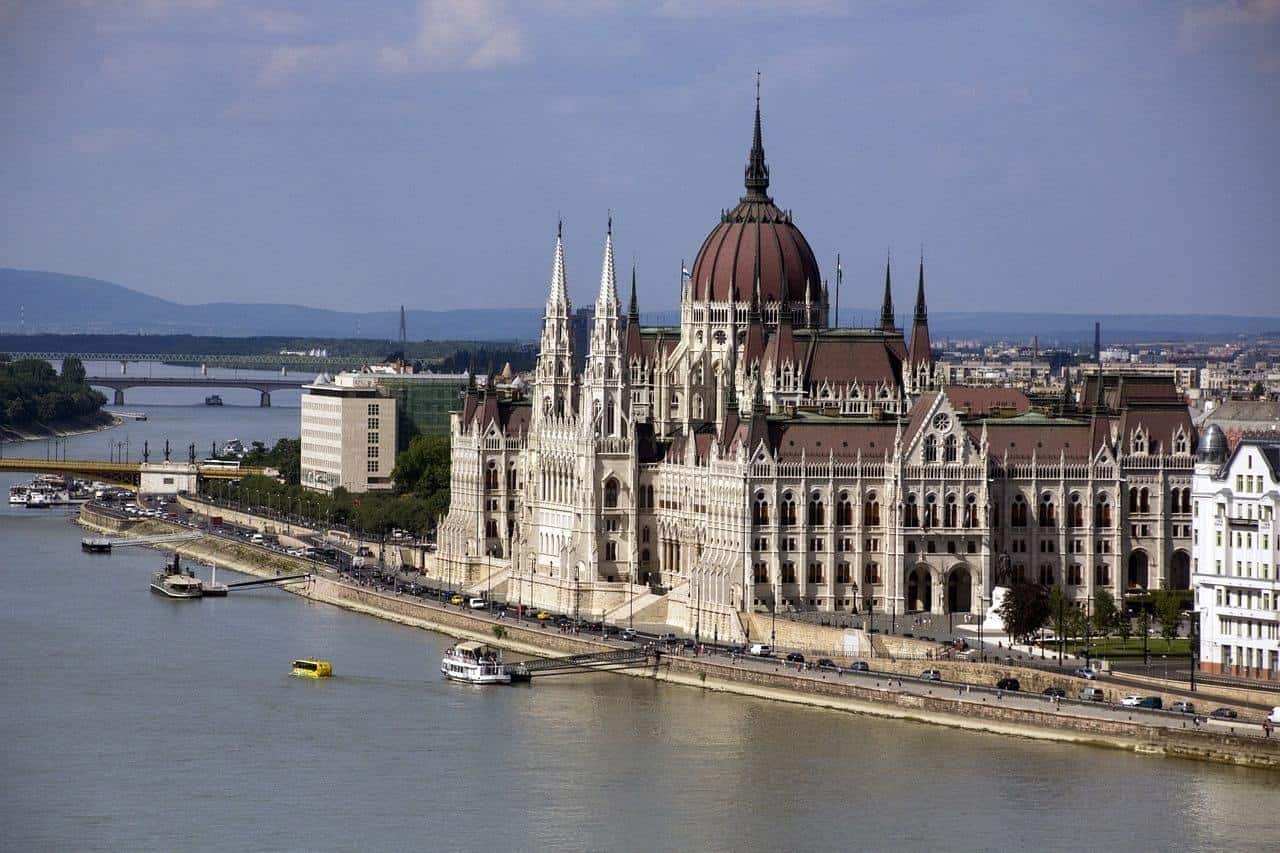
On the other side of the Danube (in Pest) you can see the famous building of the Hungarian Parliament, the city’s most beloved landmark. The Neo-Gothic style building was completed in 1902 and it is currently the largest and tallest building in Budapest.
The Hungarian Parliament building
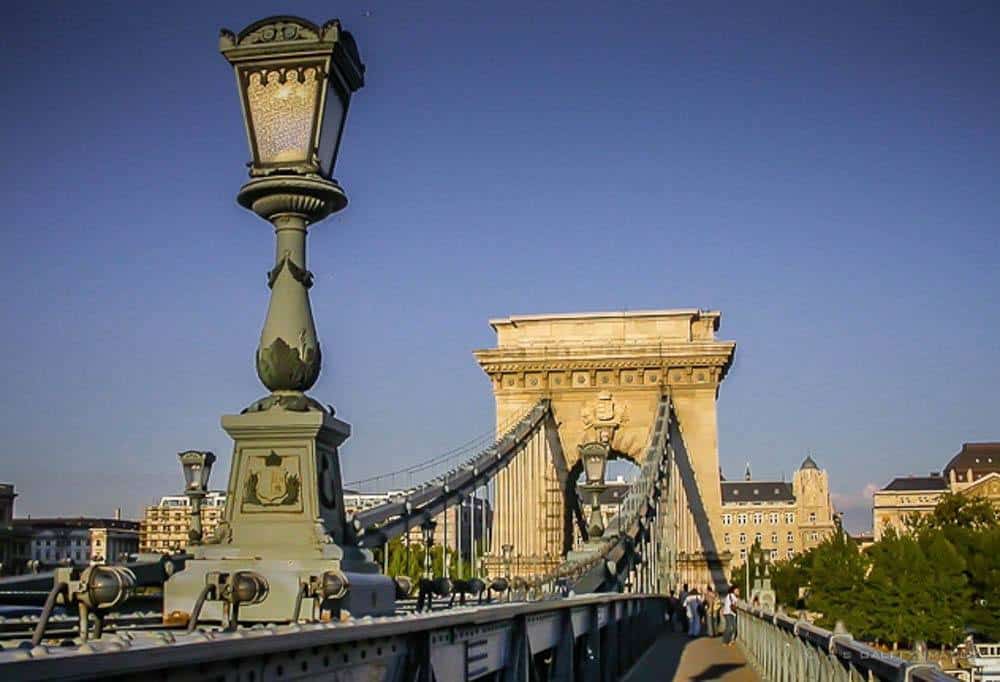
Another famous attraction on this side of the city is the Chain Bridge, Hungary’s first permanent bridge across the Danube.
Chain Bridge
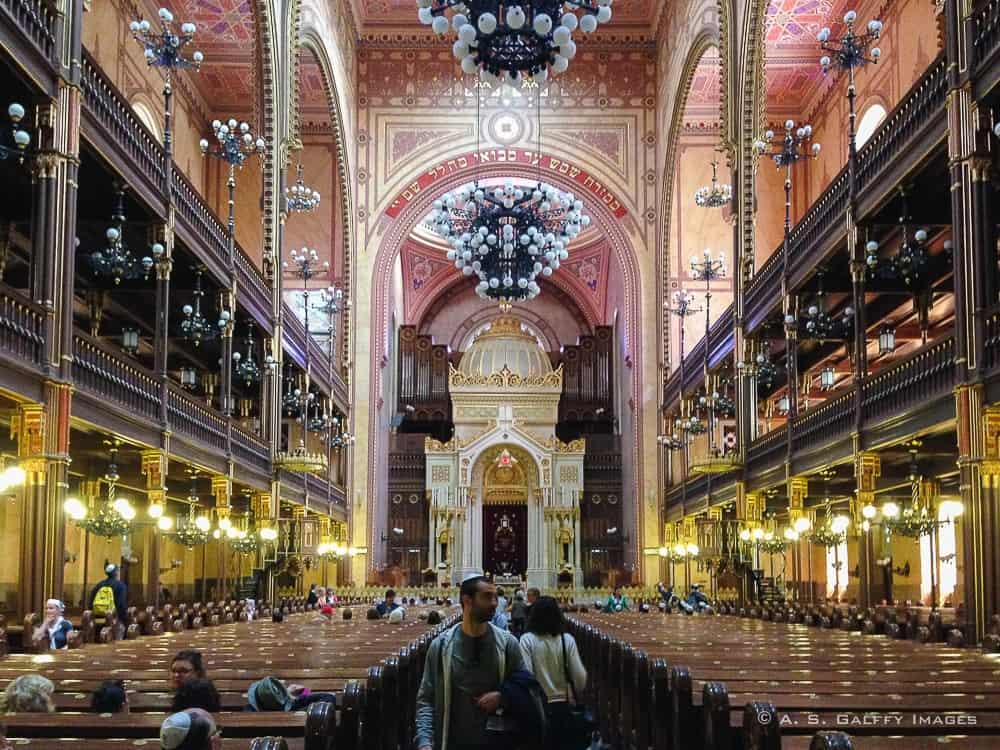
Other landmarks in Downtown Budapest include St. Stephen Cathedral, the Great Jewish Synagogue, the Great Market Hall, Széchenyi Baths, and Vajdahunyad Castle, which is a replica of the Vajdahunyad Castle in Romania.
Getting Around in Prague vs Budapest: Which is Easier?
Budapest is more spread out, so it may take more time to do it justice. It’s a big city with many different faces, neighborhoods, and places that will surprise you. But because is more spread out, Budapest seems less crowded than Prague, even during the peak season.
Both the Old Town area and the Downtown can be explored on foot. But moving between the two sides of Budapest – Buda and Pest – may require the use public transportation. But that shouldn’t be a concern, as Budapest has one of Europe’s most efficient public transportation systems.
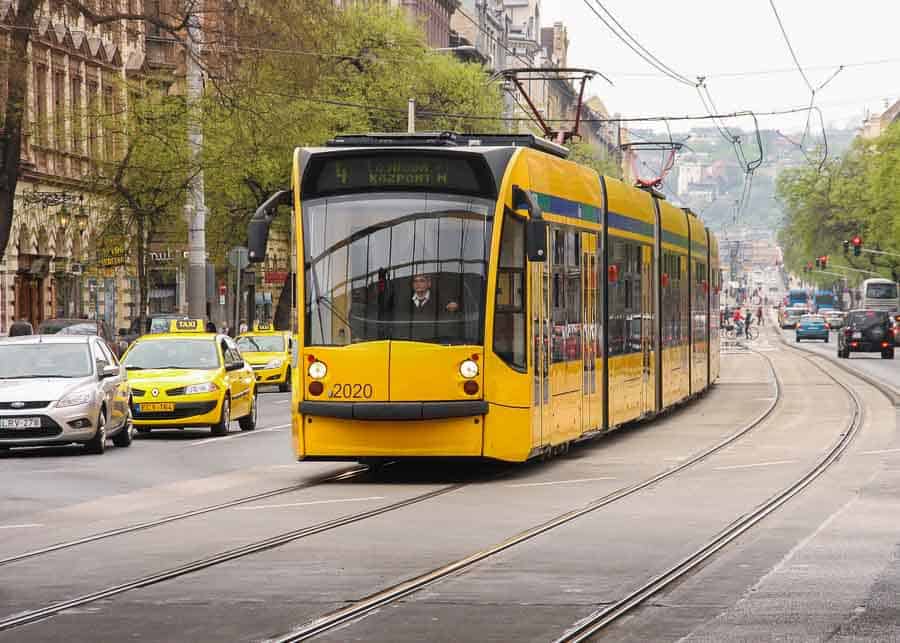
Budapest public transportation
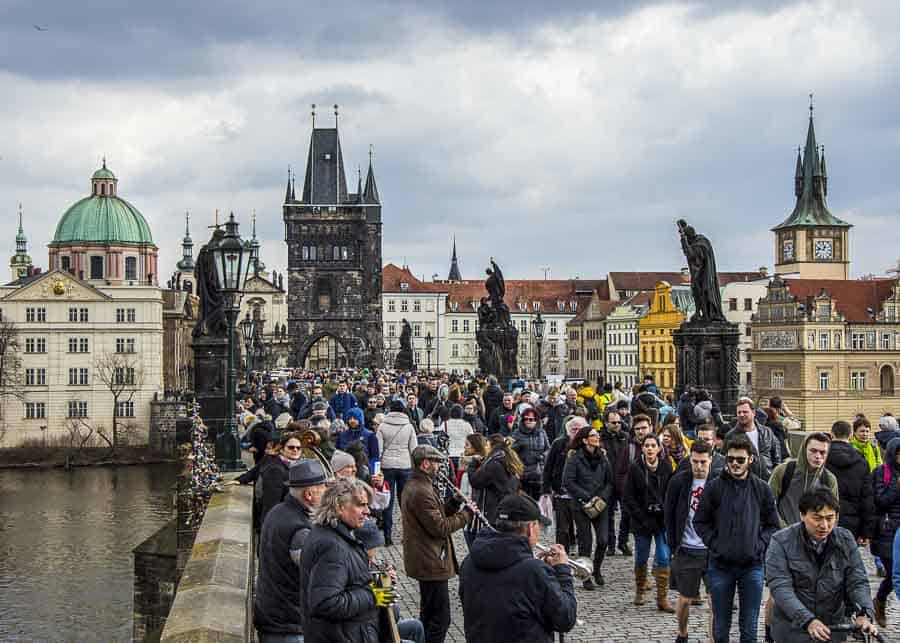
As opposed to Budapest, Prague is smaller and more compact. The city’s landmarks and places of interest are concentrated in a small area, so you can easily walk between them. But because it’s smaller, Prague seems always crowded. There are always swarms of tourists around, so much so that it’s sometimes difficult to take a picture. Especially around the main attractions, like the Old Town Square and Charles Bridge.
Hungarian vs Czech Food: Which City Is Better for Foodies?
When comparing food in Budapest vs Prague, Budapest wins. Finding good food in Budapest it’s not a problem. There are countless cafés, bistros and restaurants in Budapest serving both international and Hungarian cuisine.
Food in Budapest
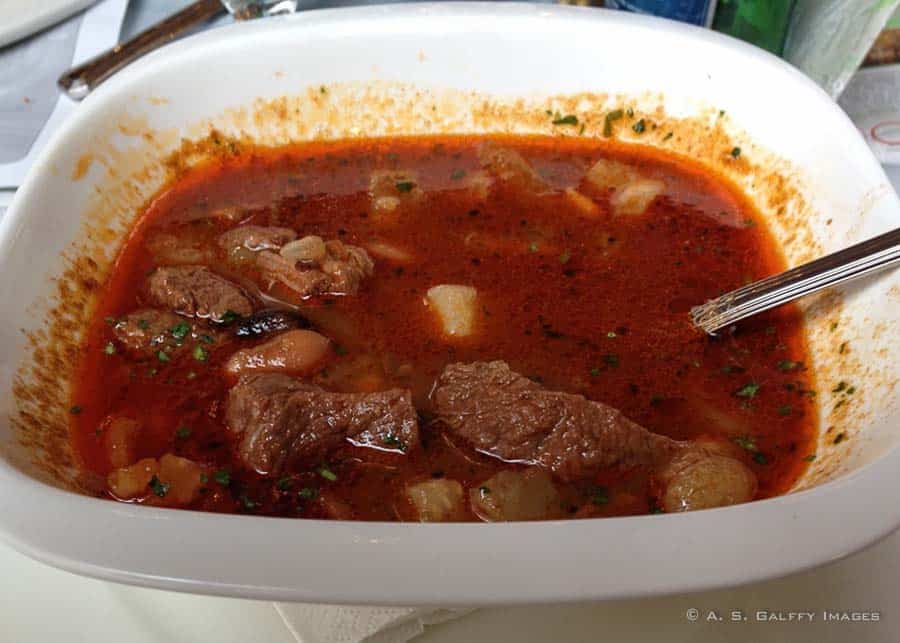
Hungarian food may seem heavy, but it’s rich in flavor and aroma and it’s very tasty. Hungarians use a lot of sour cream, lard, fried garlic and onion when preparing their food. Hungary’s signature dish is goulash – a stew, made with beef, potatoes, tomatoes, onion and paprika.
Goulash
Other authentic Hungarian dishes include chicken/veal paprikash, meat pancakes, and Lecsó – a thick vegetable stew made with peppers, tomato, onion, garlic and paprika.
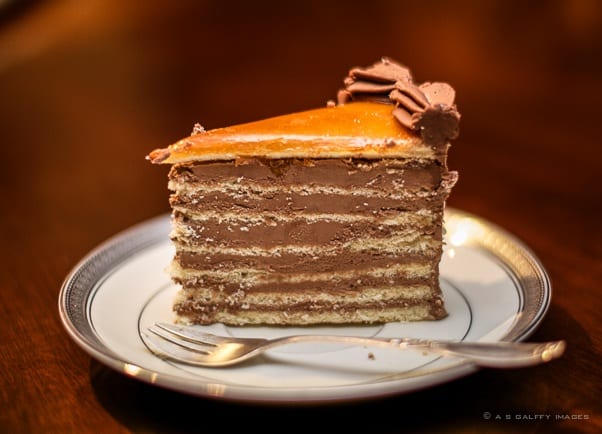
Hungarian cuisine is also famous for the delicious deserts, like the tasty Dobos cake, or the sour cherry strudel.
Dobosh Torta
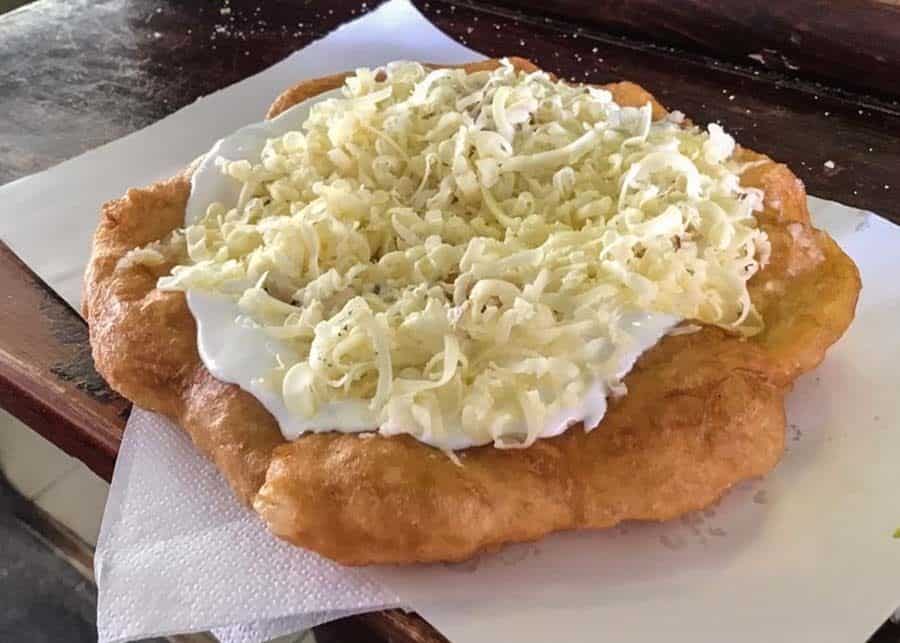
The most popular street food is the langos – a deep fried dough topped with sour cream and cheese. The best place to sample some of these traditional dishes is the Great Market Hall.
Languish
Food in Prague
As opposed to Budapest, food in Prague is not outstanding. But if you’re looking for good comfort food, you’ve come to the right place. We visited the city several times over the years, but eating out was always a hit-and-miss affair. You could get cheap pork and dumplings in small pubs. Or expensive pork and dumplings in fancy restaurants, and that was about it.
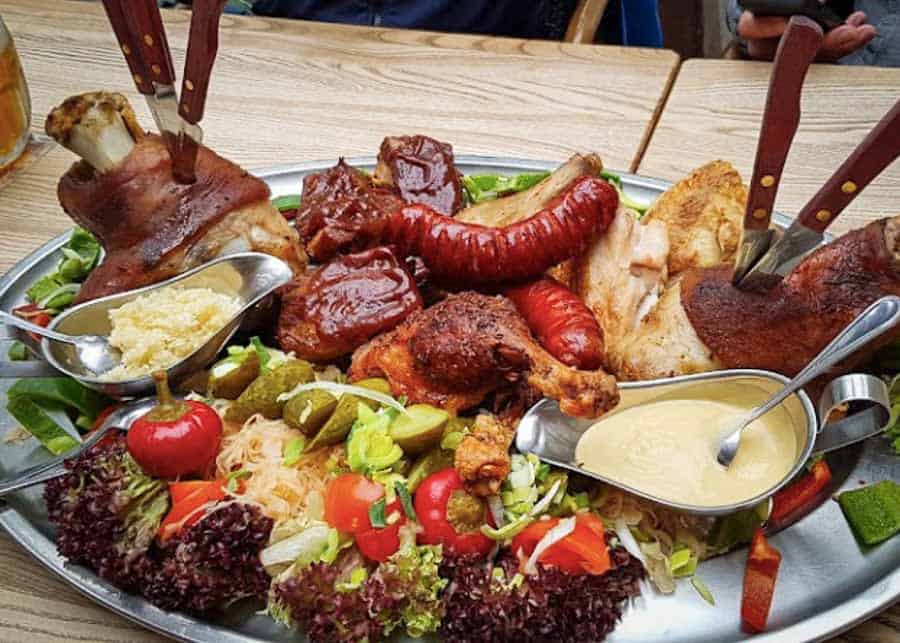
In the last decade however, Prague’s food scene has changed for the better. They now have many innovative restaurants, ranging from the local chain of Czech pubs to the Michelin-starred restaurants. Some of Prague’s specialties include the steak tartare and the traditional Czech sausages with bramboraky (potato pancakes.)
Czech sausages
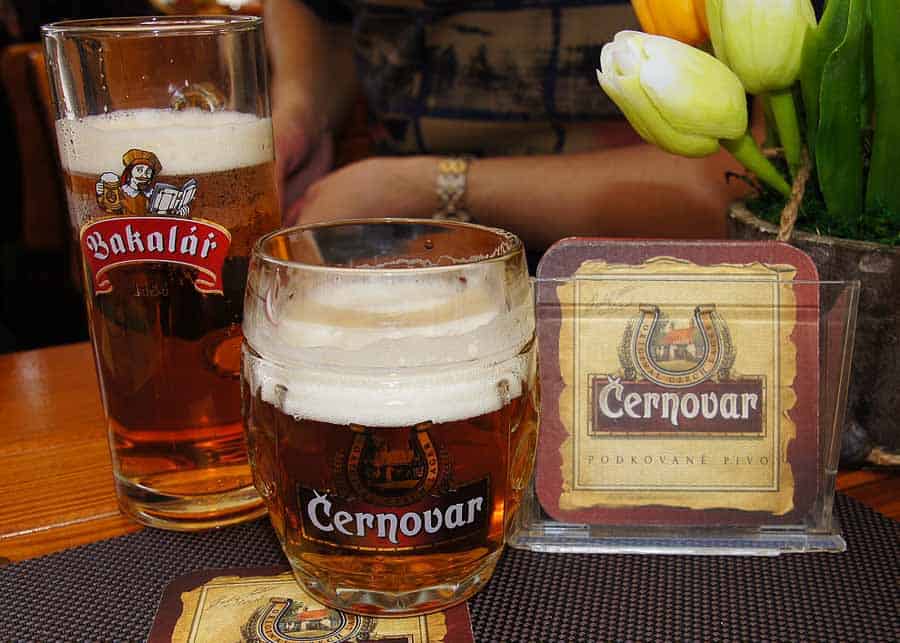
What makes Prague stand out is the beer, which is cheaper and better than just about anywhere else on earth! Particularly the Pilsner-style beer. Maybe that’s because Pilsner was born there. Or because the country’s brewing history can be traced back to the 6th century.
Beer in Prague
In the Czech Republic beer is literally cheaper than bottled water.
Prague vs Budapest: Costs and Crowds
When it comes to costs, Budapest usually wins on overall value. Accommodation and restaurant prices tend to be lower than in Prague, especially once you move beyond the most touristy streets. Everyday expenses like coffee, casual meals, and public transport are typically a little cheaper in Budapest as well. Prague can feel noticeably pricier for hotels right in the Old Town and around the main sights, where you pay a premium for the location and intense demand. Beer is famously inexpensive in both cities, but Prague’s pub culture makes cheap beer particularly visible.
Overall, Budapest is usually cheaper than Prague, especially for accommodation and dining.
In terms of crowds, Prague often feels more saturated. The historic center is very compact, so most visitors concentrate around Charles Bridge, Old Town Square, the Astronomical Clock, and the main streets connecting them. That makes these areas extremely busy in peak season and during weekends, and it can be hard to find quiet corners or take photos without people in the frame. Budapest, by contrast, spreads its visitors out over a larger area—between Buda Castle, the Parliament, the baths, ruin pubs, and different neighborhoods—so outside a few hotspots, the city usually feels less overwhelmed, with a better balance between locals and tourists.
Overall, Budapest generally feels less crowded than Prague, where the compact historic center concentrates most visitors into a very small area.
Crowds in Prague
Best Time to Visit Prague and Budapest
Both Prague and Budapest share very similar weather patterns, with warm summers, cold winters, and distinct spring and autumn shoulder seasons. Because the climate is almost the same in both cities, the real difference is how each season feels in terms of crowds, atmosphere, and prices rather than temperature itself.
Spring (April–May) and fall (September–October) are ideal if you want comfortable sightseeing weather with fewer tourists and better value on accommodation. Summer brings long days and lots of events, but Prague’s compact center can feel extremely crowded, while Budapest tends to absorb visitors a bit more easily. Winter is colder and darker, but Prague is magical around Christmas with its markets and medieval squares, and Budapest is wonderful if you like soaking in steaming thermal baths when it’s chilly outside.
Is Prague or Budapest Better for a First Visit to Europe?
If you’re planning a very first trip to Europe and want that classic fairytale feeling with minimal effort, Prague usually has the edge. Its historic center is compact, extremely walkable, and packed with spires, cobbled streets, and old squares, so you get a strong “this is Europe” impression in just a day or two without having to master a big public‑transport network. English is widely spoken in the main tourist areas, and most first‑time visitors find it easy to navigate and understand.
Malá Strana neighborhood in Prague
Budapest is just as rewarding but in a slightly more complex, big‑city way. The city is larger and more spread out, which means you’ll use trams and the metro to reach baths, Buda Castle, different neighborhoods, and nightlife areas, so it can feel a bit more demanding for a very first European city. On the other hand, Budapest offers thermal baths, ruin pubs, a strong food scene, and a more “lived‑in” local atmosphere, which many travelers appreciate if they’re comfortable with city travel.
Big boulevard I Budapest
Nightlife and Entertainment
Like most European capitals, Prague has a vibrant nightlife scene. There are countless bars, lounges, and dance clubs for partying hard, if that’s what you are looking for. You’ll also find plenty of live music spots, particularly in the Old Town area. In addition to those, there’s also a wide range of old style Czech pubs where you can have a traditional meal and some amazing beer.
Old style pub in Prague
The city has more than 75 museums museums, along with numerous theaters, galleries, cinemas, and other entertainment options. Some of Prague’s most bizarre museums include the Gallery of Steel, the tactile Museum of the Senses, and the infamous Sex Toys Museum, which is accessible only to people over 18.
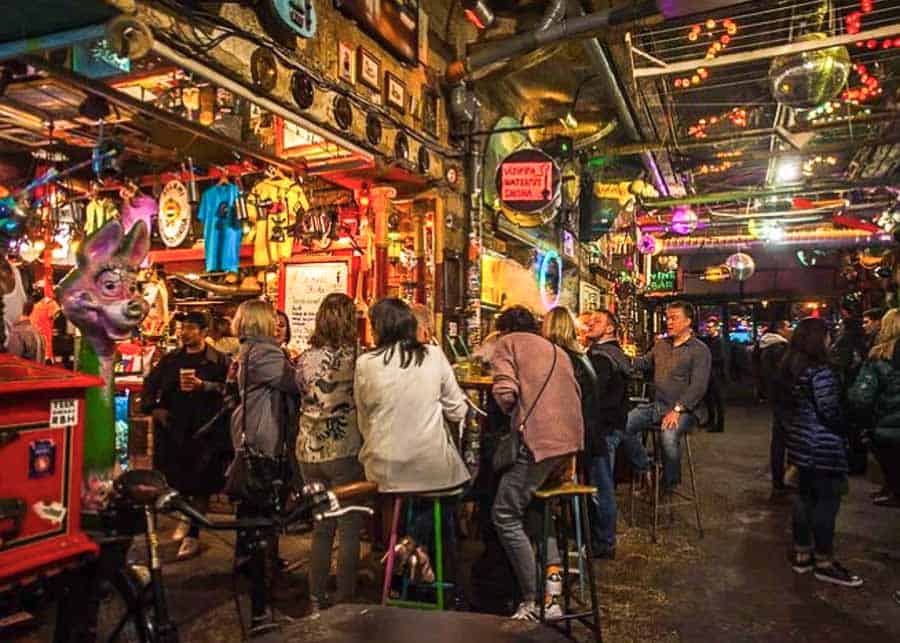
Budapest on the other hand, is more of a party city than Prague, with a complex and eccentric nightlife. From rooftop bars and decadent spa parties to jam-packed discos, Budapest has an abundance of places where you can slam a drink or shake your booty. The city’s unique feature are the Ruin Pubs, a chain of funky bars that have been forged in the shells of some old, derelict apartment buildings.
The famous Ruin Pubs in Budapest
There are also many cultural venues in Budapest, from museums, and galleries, to theaters and concert halls. A quick count shows that Budapest has over 56 museums. The most unique ones are the magical House of Houdini, the interactive Metal Art Gallery, the House of Terror, and the Chocolate Museum.
Safety & Tourist Experience
Both Prague and Budapest are generally safe cities for visitors, with the usual big‑city caveats. Petty crime like pickpocketing can occur in crowded tourist areas, on public transport, and around major sights, so it’s wise to keep valuables secure, avoid displaying expensive gear, and be cautious of common scams such as inflated taxi fares or distraction techniques.
In Prague, the extremely popular historic center means you’ll often find yourself in dense crowds, especially around Charles Bridge, Old Town Square, and the Astronomical Clock; this can feel a bit “theme‑park‑like” at peak times, and it’s exactly where you should be most alert to pickpockets and over‑priced tourist traps. Budapest feels more spread out and less saturated with tourists in most neighborhoods, so outside a few hotspots—like the area around the Parliament, Buda Castle, and the ruin pubs—the atmosphere is more relaxed and local, though basic precautions still apply.
Overall, solo travelers, couples, and families usually feel comfortable walking around both cities, including after dark in busy central areas. In Prague, the main “tourist experience” challenge is dealing with crowds and occasional over‑tourism fatigue; in Budapest, it’s more about navigating a larger, less instantly polished city while enjoying a more authentic, everyday‑life feel.
Prague vs Budapest: Help Me Decide
Choose Prague if…
You only have 2–3 days and want to walk almost everywhere without relying much on public transport.
You dream of a fairytale medieval old town with cobbled streets, spires, and a very photogenic historic core.
You’re a first‑time visitor to Europe and want something simple, safe, and easy to navigate.
You love Christmas markets and winter city breaks, with lights and atmosphere concentrated in a compact center.
You prefer short, gentle days of sightseeing where major attractions (castle, Old Town, Charles Bridge) are close together.
You don’t mind crowds in peak season if it means having a dense cluster of iconic sights in one small area.
Choose Budapest if…
You have 3–4+ days and enjoy exploring different neighborhoods, cafés, markets, and viewpoints at a slower pace.
You’re excited about thermal baths, ruin pubs, and a strong food and wine scene as key parts of your trip.
You prefer a larger, more local‑feeling city that’s less polished but more “real” and lived in.
You’re a value‑conscious traveler who wants generally lower prices for accommodation and dining than in Prague.
You don’t mind using trams and the metro to get around in exchange for grand river views and big‑city grandeur.
You’re visiting with friends, a partner, or older kids/teens who will enjoy baths, nightlife, and varied activities.
My Personal Opinion
I’ve had a long love affair with Budapest that started about 18 years ago, when I visited the city for the first time. After my second visit, I fell even more in love with Budapest and eventually convinced my husband that we should buy an apartment there.
While the city is not perfect, the fact that my husband is Hungarian and we have a place of our own makes me feel very much at home in Budapest. Interestingly, although I don’t speak the language, I feel more at home in Budapest than I do in Bucharest, where I was born.
The two of us enjoying Budapest
Overall, my personal opinion is that Budapest is a nicer city than Prague, and the cost of living is slightly lower. So if I had to choose between Prague vs Budapest, I would pick Hungary’s capital without a doubt. However, that choice is based on the preferences and experiences I’ve shared above.
That said, if you love compact medieval old towns and storybook streets, Prague may still be a better fit for you. Budapest will likely appeal more if you value baths, food, and a more lived‑in big‑city feel.
Prague vs Budapest FAQ
Is Prague or Budapest better for a weekend trip?
Prague is usually better for a weekend because the historic center is compact and walkable, so you can see most highlights in 2–3 days without much transit.
Is Budapest cheaper than Prague?
Budapest is generally cheaper than Prague, especially for accommodation and dining, while both remain good‑value compared with Western European capitals.
Which is more beautiful, Prague or Budapest?
Prague feels more “fairytale” and picture‑perfect in a small area, while Budapest is striking for its river panoramas and grand boulevards; many travelers give Prague a slight edge for sheer charm.
Which is more walkable: Prague or Budapest?
Prague is generally considered more compact and easier to walk, with most major attractions concentrated in the center. Budapest is spread out and often requires using its excellent public transit system to get between districts.
Is Prague or Budapest better for families?
Both work well, but Prague is simpler with kids for short stays because everything is close together, whereas Budapest offers more activities (baths, cruises, funicular) but requires more use of public transport.
Can you visit Prague and Budapest on the same trip?
Yes, they combine very well: there are direct trains of about seven hours and frequent flights, so you can comfortably visit both in a week to ten days.
Anda is an award-winning travel writer based in California, born and raised in Europe. A member of the Society of American Travel Writers (SATW) and the North American Travel Journalists Association (NATJA), she has earned Gold and Silver Awards from NATJA for excellence in travel writing.
Nice article! We are planning to visit both Prague and Budapest taking a car ibetween them. We then will go to Venice. Do you have any write ups on Venice? Thanx, FJ
Thank you, Anda! This was a great read and very useful for someone like me trying to decide between the two locations. I’m going with Budapest after reading this!
Hi, Ana. Interesting stuff. I have myself compared these two cities a lot in the later years. I have also been trying to figure out why Prague attracts a double amount of tourists. I am also a bigger fan of Budapest, and I have been half-jokingly describing Prague as the same, just tighter and less variety in color.
One thing Prague has going for itself is the Local purchasing power, which I think matter when staying a long time in places. Locals in Prague don’t have such a tough life on average as many Hungarians do. I think I could have enjoyed Budapest more if many of the locals didn’t have such a hard life.
One similarity you didn’t mention is cobblestones, a lot of tourists are noticing this about these two cities. But maybe they have a lot of them in Bucharest, meaning you are very used to seeing them? I think they cover more of the area in Prague than Budapest though. Cobblestones have a longer lifespan than asphalt, so it seems economy may be the reason.
Do you have a guess as to why Prague attracts(at least before the pandemic) a lot more visitors Than Budapest?
Hi John, thanks for taking time to comment on my post. Regarding your question as to why Prague attracts more visitors, my guess is that Prague is more compact and therefore easier to explore. Budapest is more spread out, which is why you need time to discover it. The average time spend in Budapest 3-5 days, which is not enough to visit all the attractions. There are a lot of hidden gems in this city that many visitors never discover, unless they know a local.
The language barrier is also a problem. In Prague English is spoken almost everywhere (probably because it’s more touristic). As opposed to Budapest, where only the younger generation speaks English. At any rate, for me Budapest has the vibe of a metropolis, which is why I like it. Prague is cute, very authentic, but more ‘provincial’ (not in the bad sense of the word).
Hi, Anda, I’m Judit from Budapest, but we like to visit Prague very much. I find Prague fabulous a place from a talebook, very mysterious. We rarely visits ruinpubs at Budapest, but I like the surrounding Hills in the Buda side with great view and trekking opportunities and caves. Thank you for your interesting article.



 Christmas Traditions in America and How They All Started




Jeff
What a wonderful read! Truly. Helped make my fantasies all the more real. Thanks for the fun and the incite.
Fred
Nice article! We are planning to visit both Prague and Budapest taking a car ibetween them. We then will go to Venice. Do you have any write ups on Venice? Thanx, FJ
Anda
Sadly, I don’t. I’ve been in Venice only once, over 25 years ago.
Sainabou
Thank you, Anda! This was a great read and very useful for someone like me trying to decide between the two locations. I’m going with Budapest after reading this!
Anda
Glad to hear it helped.
John
Hi, Ana. Interesting stuff. I have myself compared these two cities a lot in the later years. I have also been trying to figure out why Prague attracts a double amount of tourists. I am also a bigger fan of Budapest, and I have been half-jokingly describing Prague as the same, just tighter and less variety in color.
One thing Prague has going for itself is the Local purchasing power, which I think matter when staying a long time in places. Locals in Prague don’t have such a tough life on average as many Hungarians do. I think I could have enjoyed Budapest more if many of the locals didn’t have such a hard life.
One similarity you didn’t mention is cobblestones, a lot of tourists are noticing this about these two cities. But maybe they have a lot of them in Bucharest, meaning you are very used to seeing them? I think they cover more of the area in Prague than Budapest though. Cobblestones have a longer lifespan than asphalt, so it seems economy may be the reason.
Do you have a guess as to why Prague attracts(at least before the pandemic) a lot more visitors Than Budapest?
Anda
Hi John, thanks for taking time to comment on my post. Regarding your question as to why Prague attracts more visitors, my guess is that Prague is more compact and therefore easier to explore. Budapest is more spread out, which is why you need time to discover it. The average time spend in Budapest 3-5 days, which is not enough to visit all the attractions. There are a lot of hidden gems in this city that many visitors never discover, unless they know a local.
The language barrier is also a problem. In Prague English is spoken almost everywhere (probably because it’s more touristic). As opposed to Budapest, where only the younger generation speaks English. At any rate, for me Budapest has the vibe of a metropolis, which is why I like it. Prague is cute, very authentic, but more ‘provincial’ (not in the bad sense of the word).
Judit
Hi, Anda, I’m Judit from Budapest, but we like to visit Prague very much. I find Prague fabulous a place from a talebook, very mysterious. We rarely visits ruinpubs at Budapest, but I like the surrounding Hills in the Buda side with great view and trekking opportunities and caves. Thank you for your interesting article.
CJ
Grandmaster Polgar? It is very nice to see your comments about Prague here. Thanks!